
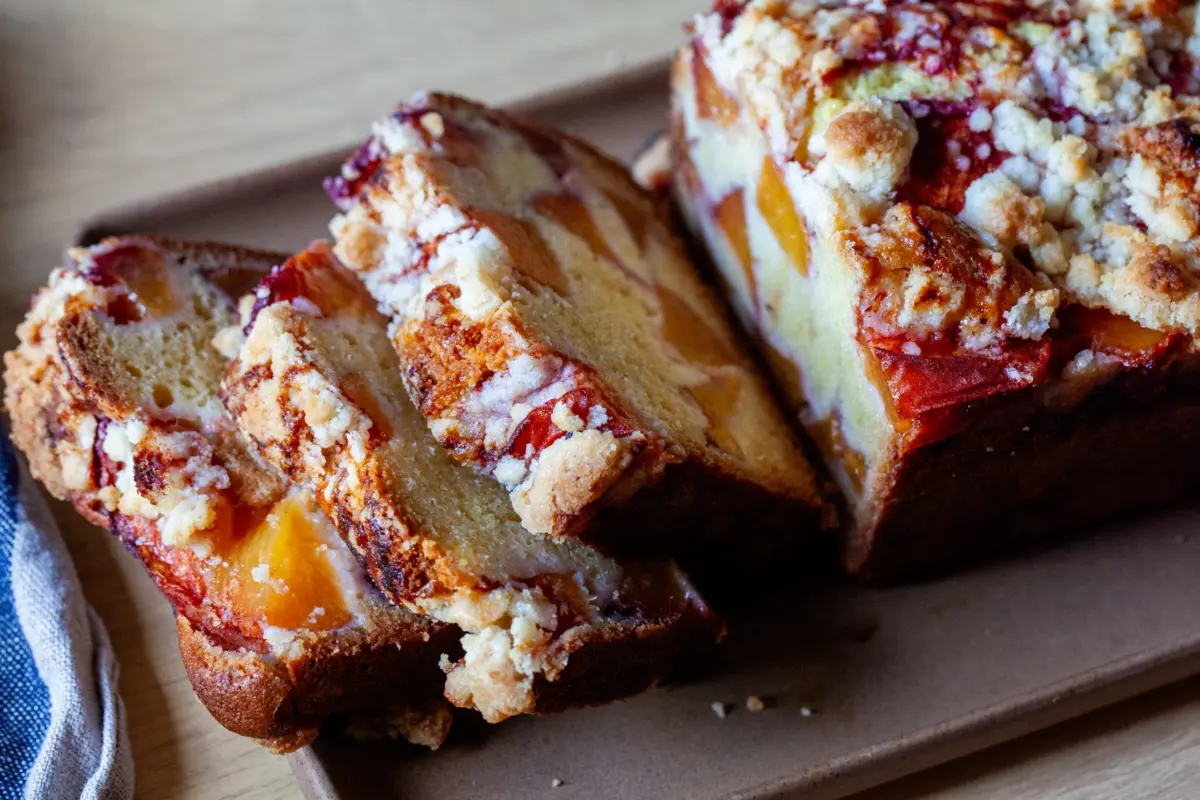
When asked recently how long it takes to perfect a new baking recipe, the only honest answer is that it takes as long as it takes. While many home bakers and professional pastry chefs might prefer to adjust their expectations, make peace with a result that is merely close enough, or simply move on when a concept refuses to cooperate, human nature often binds creators to their original visions. For one dedicated baker, that stubborn persistence culminated in a multi-year culinary quest that has finally yielded what may be the definitive peach cobbler loaf, just as the final weeks of the summer stone fruit season draw to a close.
In the interest of full transparency, the journey to this exact recipe consumed the last six summers. Countless fresh peaches were surrendered to iterative versions that ultimately fell short of expectations. Each stone fruit season brought a familiar routine of rigorous experimentation and the accumulation of copious notes—most of which boiled down to variations of the phrase "this wasn’t it." The obstacles were varied and frustrating: diced peaches frequently baked down into a bland texture, while thinly sliced alternatives seemed to disappear entirely into the crumb. Attempts to infuse spices directly into the batter resulted in a dull beige color without adding any meaningful depth of flavor. Inevitably, every previous season reached an impasse, leading the baker to fold their cards and wait another year for the harvest to return.

The primary challenge lay in refusing to compromise on the core structural and textural demands of the bake. Achieving a balance where the cake remained moist without becoming soggy, where the fruit retained its integrity and flavor, and where a proper streusel topping could crown the loaf without sinking required an exacting approach. It demanded an understanding of how fruit juices interact with a rich, yogurt- or sour-cream-based batter, how different pan sizes alter the baking dynamics, and how to harness the peak ripeness of late-summer peaches before the window closed entirely.
Even as the calendar indicates that peach season is down to its final moments, the finished cake remains indifferent to the changing months. Fully realized and thoroughly tested, the recipe is now ready for home bakers willing to invest the time and attention it requires.

Peach Cobbler Loaf
Crucial to the success of this recipe is the precise size of the loaf pan. The batter will fill every available space before the baking process is complete, and fruit juices have a tendency to trickle over the edges, making a supporting sheet pan an absolute necessity. The recommended pan holds six liquid cups, translating to roughly 1,420 milliliters, measuring eight by four inches at the bottom and nine by five inches at the top. For bakers utilizing a smaller vessel, pouring off a muffin cup amount or two to bake separately will prevent messy overflows.
The baking process begins by preheating the oven to 375 degrees Fahrenheit, or 190 degrees Celsius. A standard loaf pan should be lined with parchment paper, extending it up two sides to assist with removal later, while any unlined portions of the pan are coated lightly with nonstick spray. Positioning the loaf pan on a larger baking sheet provides a reliable safety net for any bubbling juices.

Preparing the cake foundation starts with finely grating fresh lemon zest into a large mixing bowl, where it is set aside to release its essential oils. Fresh peach wedges are placed in a separate medium bowl, accompanied by a squeeze of juice from the lemon half to brighten the fruit’s natural flavor. A dusting of cinnamon and one tablespoon of brown sugar are added to the peaches, which are then gently tossed to ensure even coating before being set aside.
In the large bowl containing the lemon zest, six tablespoons of melted butter are combined with one-third cup of granulated sugar and one-third cup of brown sugar, whisked together until fully incorporated. Yogurt or sour cream is introduced next, followed by whole eggs, which are beaten thoroughly into the mixture. The dry leavening agents—specifically baking powder, baking soda, and a pinch of salt—are sprinkled directly across the surface of the batter and whisked vigorously, with a few extra rotations to ensure an even rise. Finally, one and a third cups of flour are folded in just until the dry streaks disappear.

The streusel topping requires melting the remaining two tablespoons of butter in a small bowl, then stirring in two tablespoons of granulated sugar, a pinch of salt, and the remaining quarter cup of flour until coarse crumbs form.
Assembling the loaf involves layering the components with deliberate care. Half of the cake batter is poured into the prepared pan and spread into an even layer. Half of the seasoned peaches are arranged over the batter in a single layer. The remaining batter is then spooned carefully over the fruit and smoothed out, followed by the second half of the peaches arranged across the top. Any sweet juices that have accumulated in the peach bowl are poured directly over the fruit, and the entire surface is crowned generously with the prepared streusel.

The loaf is baked on its supporting sheet pan for sixty to seventy minutes. Doneness is tested by inserting a wooden tester into the center of the cake as well as underneath the top layer of peaches, where unbaked batter has a tendency to linger. If necessary, the baking time can be extended by up to five additional minutes. Once removed from the oven, the cake is left to cool on a wire rack.
Serving the cake involves running a knife along any unlined sides of the loaf pan and utilizing the extended parchment paper wings to lift the entire loaf out cleanly before slicing into thick portions. While the cake is undeniably enjoyable on its first day, resting it through the second and third days allows the flavors to mature even further. Storage is best managed by keeping the loaf in its pan at room temperature, unwrapped, though tucking it inside a quiet microwave or oven acts as a makeshift bread box that protects the delicate crunch of the streusel top.