
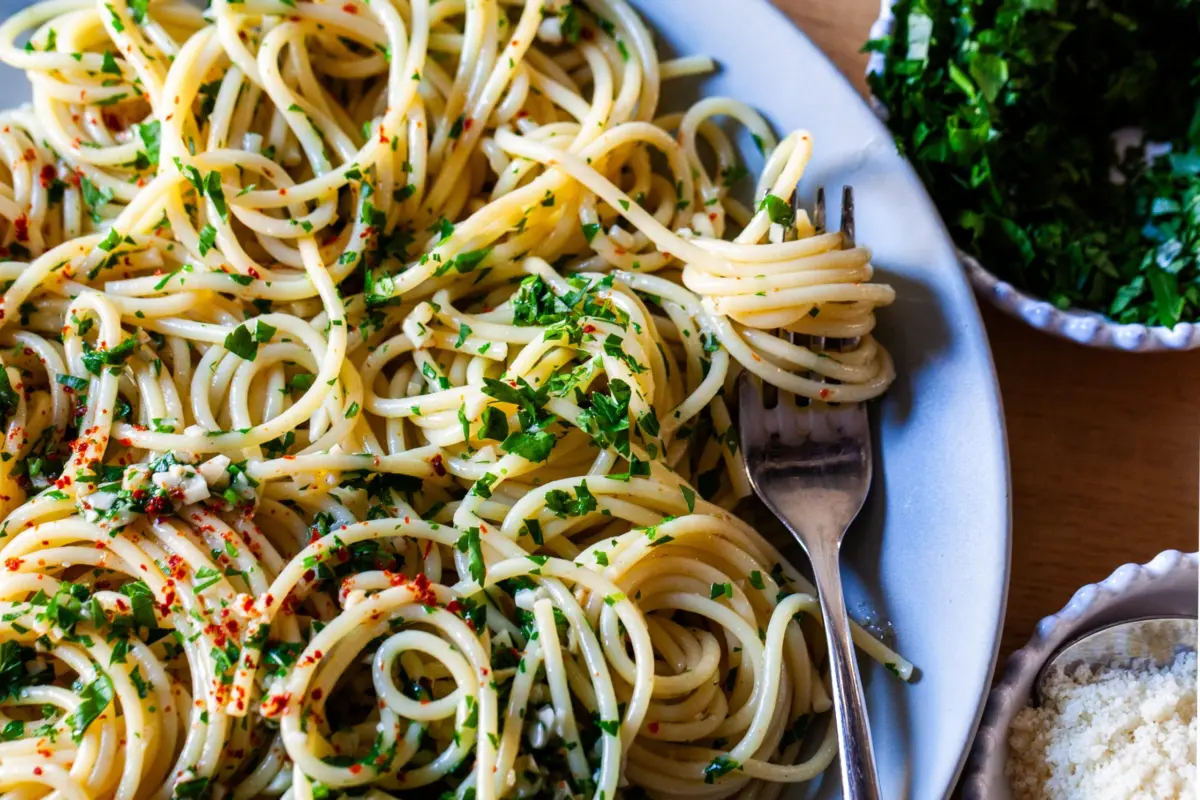
As the long, lazy days of summer reach their peak, millions of home cooks find themselves facing a universal culinary dilemma: peering into nearly empty refrigerators, calculating the depleted energy reserves left for cooking, and wondering how to pull together a satisfying meal. For anyone who has ever stared down a sparse pantry, felt completely drained by the day’s heat, or perhaps made the conversational miscalculation of explaining the concept of emotional burnout to a middle-school-aged relative shortly before being uninvited from future family gatherings, the solution is often surprisingly simple. It usually involves boiling a pot of spaghetti, tossing the noodles with garlicky olive oil, and proudly calling it dinner.

While this minimalist approach might feel like a desperate weekday fix, it actually boasts an authentic, centuries-old lineage. There is an official, revered name for this humble preparation: spaghetti aglio e olio. Hailing originally from the vibrant coastal city of Naples, Italy, this iconic pasta dish has quietly amassed legions of devoted fans among exhausted home cooks far and wide. Its enduring appeal lies in its remarkably short list of ingredients—staples that most people already keep stocked in their pantries—and the disproportionately high amount of flavor, comfort, and culinary joy it yields from them.
There is perhaps no time quite like the dog days of summer—or those challenging stretches spent cooking within the quirky confines of an ill-equipped vacation rental house kitchen—to remind people of a fundamental truth about home cooking. It truly does not matter how many complex, elaborate techniques a cook has mastered over the years; nothing quite manages to get people to look up from their glowing screens, rouse themselves from post-beach slumbers, and peer around the corner with instantly piqued interest quite like the aromatic wizardry of garlic gently sizzling in good olive oil. That unmistakable, savory scent invariably prompts the classic household question: "Ooh, what’s that?"

For many culinary enthusiasts, aglio e olio serves as a reliable, year-round back-pocket recipe. Over the years, adaptable home cooks have enjoyed it in its purest, simplest form alongside a crisp green salad, paired with a side of whatever looked freshest at the local farmers market that week, or tossed with a scattering of diced roasted vegetables that had been lingering on their last legs in the crisper drawer. For those looking to elevate the dish into a more substantial meal, it can easily be topped with lemony grilled shrimp or seared chicken thighs.
Yet, despite its versatility and incredible flavor profile, many cooks inexplicably forget that the dish exists for months at a time. Rediscovering it always brings a wave of genuine enthusiasm, making it a welcome return to the weekly meal rotation. As the calendar presses deeper into the heart of August, the seasonal ethos encourages working a little less hard, both inside and outside of the kitchen—a sentiment that aglio e olio captures to absolute perfection.

Spaghetti Aglio e Olio
The preparation of this classic Neapolitan dish relies heavily on technique rather than a lengthy ingredient list, transforming basic pantry items into a glossy, flavorful masterpiece.
To begin, a pot of well-salted water is brought to a rolling boil, where spaghetti is added and cooked until it is roughly one to two minutes shy of its package instructions for al dente perfection. Crucially, before draining the pasta, approximately one cup of the starchy cooking water is set aside for later use, after which the remaining water is drained from the noodles.

In the empty cooking pan, a combination of olive oil, thinly sliced or minced garlic, and red pepper flakes is brought together. Notably, the heat is kept off until the ingredients are combined in the cold pan; starting the garlic in cold oil is the secret technique that prevents it from cooking too quickly and turning bitter. Once assembled, the heat is turned to medium, and the mixture is cooked while stirring constantly until the garlic begins to take on an even, golden hue.
The drained pasta is then added directly into the pan alongside about half of the reserved pasta cooking water. The mixture is heated together over medium heat while stirring vigorously, allowing the starchy pasta water and the garlic-infused oil to emulsify and create a rich, glossy coating that clings to every strand of spaghetti. Additional reserved pasta water is splashed in as needed to maintain a loose, fluid sauce—most cooks finding they use the entirety of that second half-cup. Finally, a handful of fresh parsley is tossed in along with any final adjustments for seasoning, and the dish is served immediately, finished with an extra drizzle of fresh olive oil on top. While purists note that finishing the dish with grated Parmesan cheese is not strictly traditional, home cooks operating under the casual philosophy of modern dining continue to embrace the motto that it is your house, and therefore your rules.