
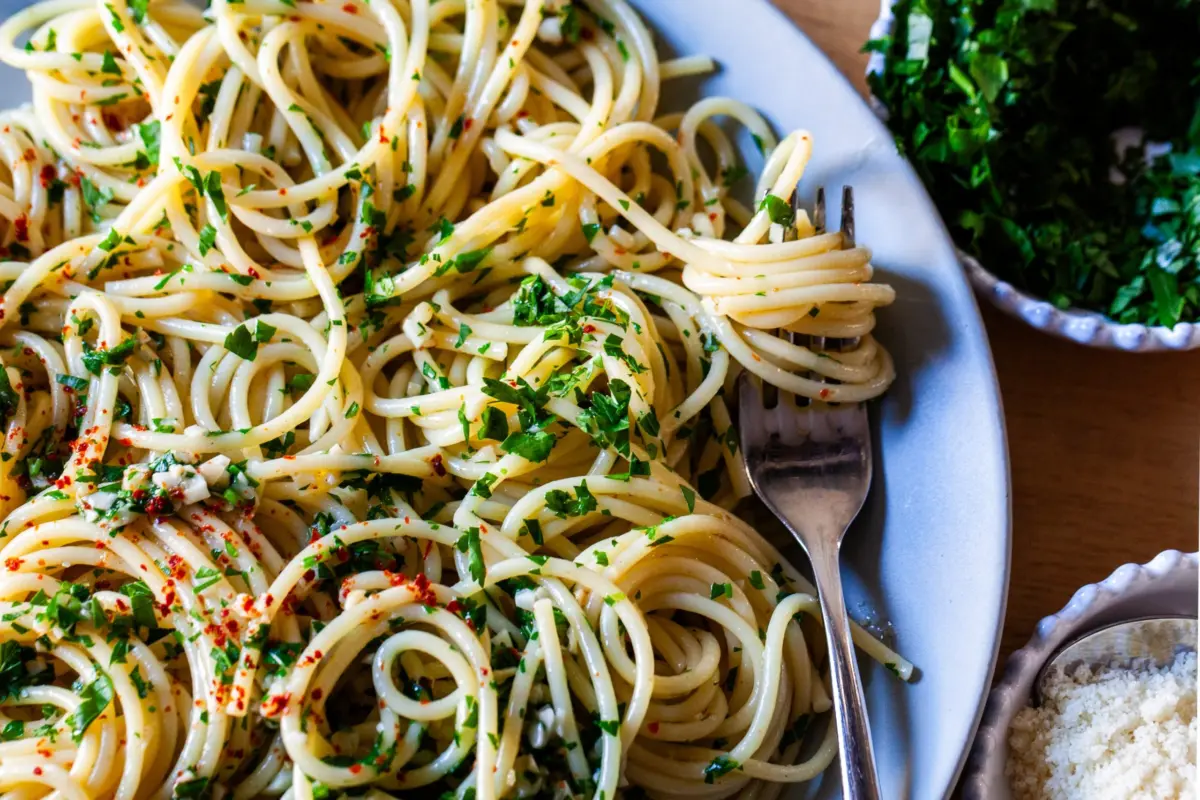
Do you ever look around the kitchen, assessing the remaining ingredients, the dwindling energy left for the cooking process—or perhaps, as one beleaguered cook recently explained to a medium-sized child shortly before becoming uninvited from future family events, the sheer amount of emotional bandwidth you have left to give from your metaphorical bucket of patience—and ultimately decide to simply boil a pot of spaghetti, toss it with garlicky olive oil, and call it dinner?

There is, of course, an actual, official name for this time-tested culinary masterpiece, and it is spaghetti aglio e olio. There is arguably no time quite like the grueling dog days of summer—or those particular moments spent at the mercy of an ill-equipped vacation rental house kitchen—to remind us of a fundamental truth about human nature. It simply does not matter how many complex, elevated, or avant-garde dishes you know how to master; nothing on earth gets people to instantly look up from their glowing screens or rouse themselves from post-beach slumbers to peer around the corner with sudden, piqued interest quite like the unmistakable, aromatic wizardry of garlic sizzling gently in olive oil. An immediate, collective chorus inevitably follows: "Ooh, what’s that?"
Originating from the historic coastal city of Naples, Italy, aglio e olio has quietly amassed legions of devoted fans among exhausted home cooks far and wide. Its enduring popularity stems from a brilliantly brief list of pantry-staple ingredients that most people likely already have on hand, combined with a disproportionately high amount of culinary satisfaction and pure joy yielded from them. For years, seasoned home cooks have relied on this dish as a reliable backpocket recipe, eating it simply as-is alongside a crisp green salad, pairing it with whatever looked vibrant and fresh at the local farmers’ market that week, or folding in a scattering of diced roasted vegetables that had been lingering on their absolute last legs in the vegetable crisper. For those looking to elevate the humble dish further, it can easily be topped with lemony grilled shrimp or succulent chicken thighs.

Yet, despite its versatility and ease, it is a recipe that many people curiously manage to forget exists for months at a stretch. When it is finally rediscovered and brought back into the regular meal rotation, households are invariably thrilled by its triumphant return. Consider this a timely seasonal nudge. The month of August is specifically designed for working less hard both inside and outside of the kitchen, and that is precisely where this comforting classic aims to find everyone this season.
Spaghetti Aglio e Olio
In a large pot of well-salted boiling water, cook your spaghetti until it is roughly one to two minutes shy of its package-directed doneness. Before draining the pasta, carefully scoop out and set aside one full cup of the starchy pasta cooking water, then drain the remainder of the pasta.

In your empty cooking pan, combine a generous amount of olive oil, freshly sliced or minced garlic, and red pepper flakes, ensuring you start with a cold pan before turning the heat to medium. Starting this mixture cold is the crucial trick to keeping the garlic from cooking too quickly or burning and turning bitter. Cook the mixture, stirring frequently, until the garlic just begins to take on a warm, inviting golden color.
Add the drained pasta directly to the pan along with approximately half of the reserved pasta cooking water. Heat everything together over the burner while stirring vigorously, allowing the starchy pasta water and the garlic-infused oil to emulsify and create a glossy, cohesive coating for every strand of spaghetti. Incorporate more of the reserved pasta water gradually as needed to keep the sauce loose and fluid—most cooks find they utilize nearly the entire second half-cup. Finally, toss in fresh parsley and any additional seasoning if needed, and serve immediately with an extra finishing drizzle of olive oil on top. While adding Parmesan cheese on top may not be strictly traditional, the golden rule of home cooking applies: your house, your rules.