
The theory of voice serving as the next major computing interface has captured the imagination of the technology sector, accompanied by a massive surge of financial backing. Investors are pouring billions of dollars into voice artificial intelligence startups, fueling innovation across a broad spectrum of applications. These range from foundational model makers and enterprise customer service providers to intelligent meeting note-takers and advanced AI-powered dictation tools.
Every single week seems to bring the announcement of a new model or tool release, with developers frequently claiming that their systems can sound entirely human and converse with natural fluidity. However, industry insiders suggest that the reality on the ground may be somewhat different. Despite the rapid pace of commercial deployment and technical achievement, the voice AI sector has yet to experience its definitive "ChatGPT moment"—the cultural and technological threshold where mainstream adoption explodes and capabilities radically shift public perception.
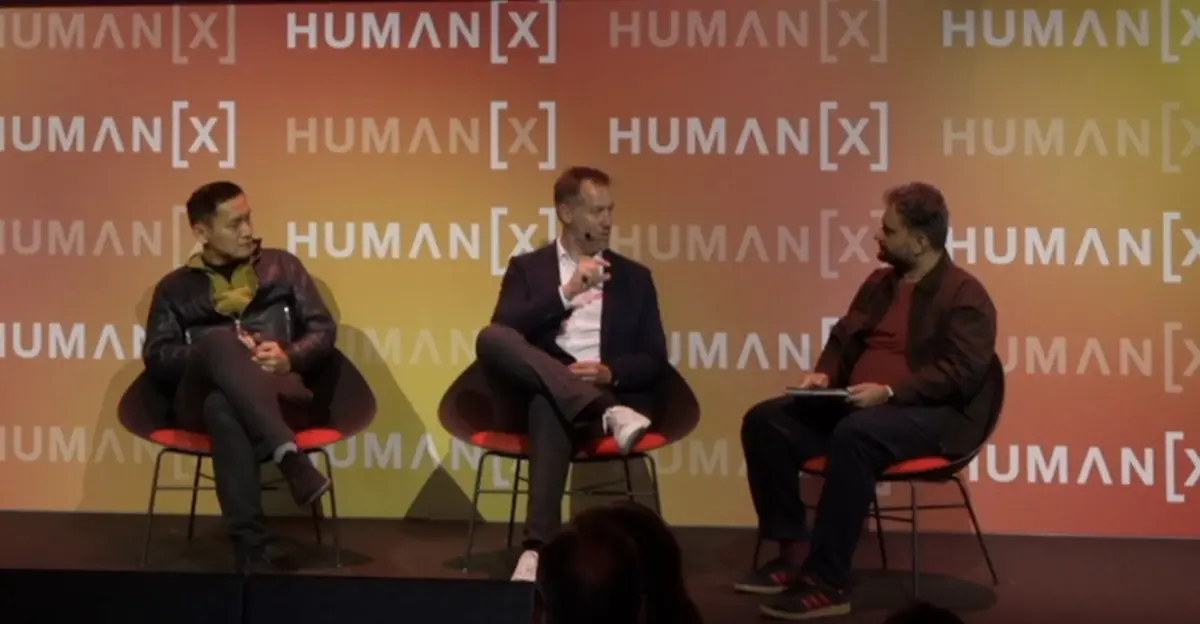
Shawn Wen, chief technology officer of PolyAI, an enterprise voice AI platform, believes that the industry is still waiting for that breakthrough, even as underlying technical milestones are rapidly achieved. Speaking on stage at the HumanX conference last month, Wen outlined the current state of voice technology and the distinct hurdles that remain before conversational agents can truly match human interaction.
"We have reached the milestone of developing full-duplex models. The next challenge is to make reasoning very fast, so that the models can fetch answers quickly and the conversation feels natural," Wen told the audience during his conference appearance.
Full-duplex models represent a significant technical leap forward, enabling AI systems to speak while simultaneously listening to a user, much like two humans engaged in a dynamic conversation. In older, half-duplex architectures, users often had to wait for the system to finish generating an entire response before speaking again, or the system would abruptly cut off if interrupted. Full-duplex capabilities remove these rigid turn-taking constraints, allowing for overlapping speech, immediate back-and-forth dialogue, and a far more organic pacing.
Yet, Wen noted that mastering duplex communication is only part of the battle. The real bottleneck now lies in computational speed and reasoning latency. For a conversation to truly feel natural, the underlying AI models must process complex queries, search databases, and formulate appropriate responses in milliseconds. Any noticeable delay shatters the illusion of human-like fluidity and reminds the user that they are talking to a machine.
Beyond mere conversational timing, Wen emphasized that AI agents deployed in customer service environments must be designed to build genuine trust with callers. Rather than sounding robotic, scripted, or overly mechanical, these voice agents need to project competence and reliability, giving callers the confidence that their specific problems are actually being resolved.
"I think the next stage will be slightly different because once the voice is good enough, like, and the customer is willing to engage with them for the first two or three turns, they start to build confidence, and over time, they will feel like I probably don’t have to talk to a human if the agent can solve my problem," Wen explained.
This perspective highlights a crucial shift in enterprise strategy. For years, automated phone trees and early interactive voice response systems were universally reviled by consumers as frustrating obstacles designed to prevent them from reaching a human representative. The modern generation of voice AI aims to flip that dynamic by offering agents that can autonomously handle complex troubleshooting, account management, and transactional tasks from start to finish, provided the user trusts the system’s competence.
A similar emphasis on emotional resonance and relational depth is driving developments in the productivity and collaboration space. Alex Gay, chief marketing officer for meeting transcription and note-taking platform Otter, shared his insights on how voice and audio intelligence are evolving beyond basic transcription into sophisticated automation and digital representation.
According to Gay, effective speaker identification, accurate intent capture, and the ability to seamlessly tie that information back into an organization’s existing knowledge base are critical steps for enabling genuine workplace automation. Otter is actively exploring advanced frontiers, including the development of digital twins—virtual personas designed to represent individual people in meetings when they cannot attend in person. For technologies of this nature to succeed, Gay argues that the output voice must capture the subtle emotive expressions and nuanced delivery characteristic of a real human participating in a corporate discussion.
"If you think about the meetings that you’re in right now, the best conversations that you have are where you can have debate, and strategic discussions, and when you feel like there’s a relationship that underpins it. If you aren’t able to have that with an avatar, then it’s just a q and a chatbot," Gay noted.
Voice AI’s Understanding and Transparency
While the underlying models powering voice assistants and meeting tools have made undeniable strides in recent years, significant technical and experiential friction remains. Users frequently encounter situations where an AI assistant fundamentally misunderstands a request, or where a meeting note-taker generates an incorrect transcript or a flawed summary. These errors highlight the persistent gap between marketing claims and everyday execution.
Shawn Wen pointed to Automatic Speech Recognition (ASR) models as a primary source of these persistent challenges. According to Wen, ASR systems frequently miss important keywords, misinterpret acoustic cues in noisy environments, and fail to capture the broader context of a conversation. Because speech is inherently messy—filled with interruptions, crosstalk, colloquialisms, incomplete sentences, and overlapping thoughts—extracting precise meaning remains a formidable technical hurdle.
Otter’s Alex Gay echoed these sentiments, noting that his company continuously dedicates engineering resources to refining and improving its transcription pipelines. He acknowledged that language understanding and processing remain a core area where voice models must dramatically improve if they are to fulfill their productivity promises.
"For Otter, you know, transcription was never the end point. It was just the layer that we could start to drive some of the productivity gains on the back of. But if your original transcription didn’t have the accuracy that you needed, all the follow-up actions that you have become flawed. And the minute that starts to take action, that is wrong. You lose trust in the platform. It is critical for us to continue to improve that ASR model because all of the downstream impacts are significant," Gay said.
The consequences of transcription inaccuracies extend far beyond a messy document. In modern workplace tools, the transcript serves as the foundational data layer for downstream automation tasks, such as generating action items, assigning tasks to team members, drafting follow-up emails, and updating project management software. If the initial speech-to-text conversion contains critical errors, every automated step that follows is tainted by those mistakes, potentially leading to miscommunication, missed deadlines, and a rapid erosion of user trust.
Alongside these technical hurdles, the rapid proliferation of advanced voice tools has brought pressing questions of transparency and consent to the forefront of the industry. As synthetic voices become increasingly indistinguishable from real human speech, industry leaders stress that tools must clearly declare their nature to participants. Users have a fundamental right to know when they are being recorded, analyzed, or directly conversing with an artificial intelligence rather than a human being.
Otter is actively working on ways to instill deep trust among all participants in a meeting environment. Even in scenarios where an automated bot is not physically present in the virtual conference room, the company is exploring methods such as notifying everyone in the associated chat interface that the proceedings are being recorded and processed by AI.
Similarly, PolyAI’s Shawn Wen underscored the absolute necessity of establishing clear boundaries during enterprise calls, ensuring that callers are explicitly informed from the outset when they are interacting with an AI agent. As regulatory scrutiny increases and public awareness of synthetic media grows, maintaining transparent disclosure is quickly becoming a non-negotiable requirement for commercial voice AI deployment.