
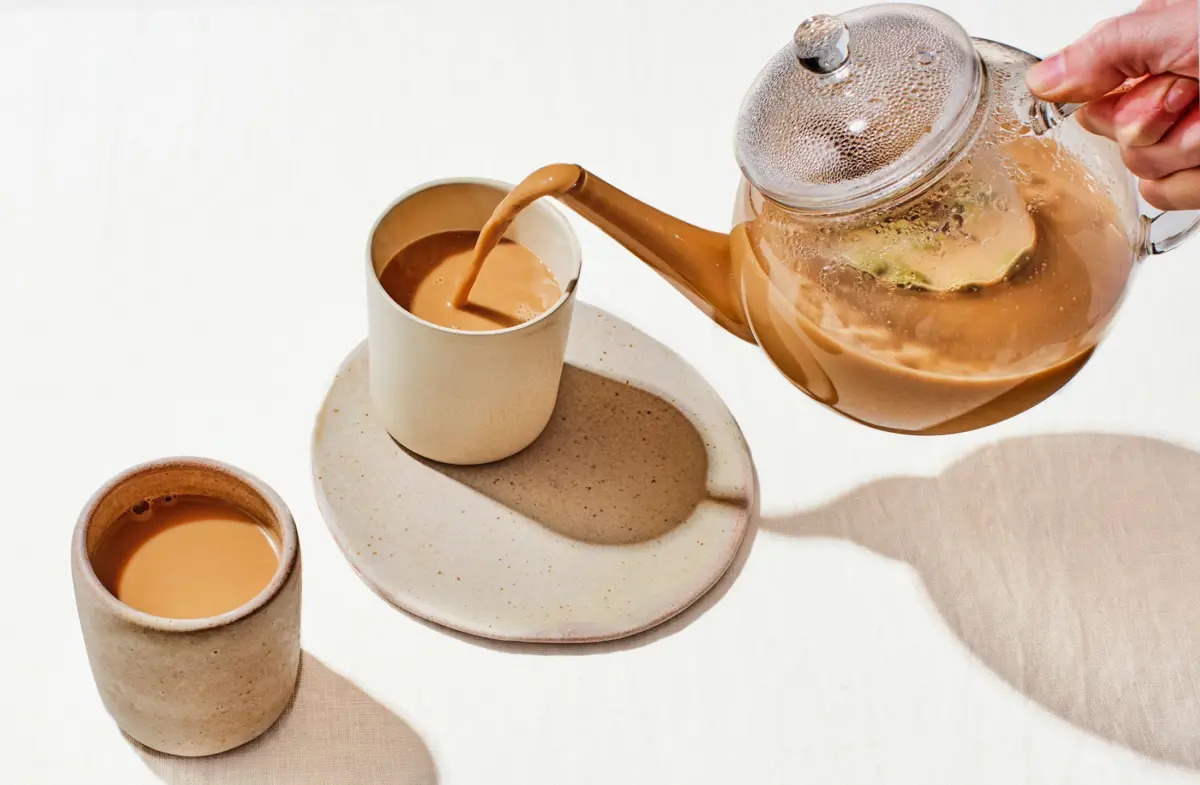
For food writer and recipe developer Zaynab Issa, the aroma of simmering black tea, cracked cardamom pods, and cinnamon sticks is inextricably linked to the most cherished moments of the holy month of Ramadan. Growing up, a gleaming glass kettle filled with a rich, golden brew known as karak chai was an absolute fixture of her family’s iftar table, providing a soothing, highly anticipated anchor after a long day of fasting. Today, that deeply personal family tradition is finding a wider audience through Issa’s cookbook, Let’s Eat, where she shares a streamlined, comforting version of the beverage designed to bring a taste of home to kitchens everywhere.
Karak chai, with a name that translates simply to strong tea in Hindi, is a distinct style of masala chai that sets itself apart through its signature creamy richness, which is traditionally derived from evaporated milk. While traditional masala chai can often feature complex, heavily layered blends of numerous warming spices, karak chai generally keeps the spice profile more focused and minimalist. However, because it is deeply rooted in domestic comfort and regional heritage, exact recipes and spice proportions tend to vary significantly from family to family and region to region.
In Issa’s adapted recipe, the approach remains elegantly simple. Rather than overwhelming the palate with an expansive spice cabinet, she relies on a carefully curated foundation of robust black tea, aromatic cardamom pods, cinnamon sticks, and a subtle touch of vanilla to provide an extra layer of warmth and depth. This deliberate simplicity allows the core components of the tea and milk to shine through, creating a balanced cup that is both comforting and intensely flavorful.
Central to achieving the signature characteristic of authentic karak chai is a surprisingly patient preparation method. Unlike standard black tea that is steeped for a matter of minutes, karak chai relies on an extended simmering process. In Issa’s recipe, the ingredients are allowed to gently simmer on the stove for approximately 30 minutes. This unhurried cooking time serves a vital culinary purpose: it concentrates the flavors of the tea and spices while reducing the liquid to produce a remarkably creamy texture and a deep, inviting caramel color. As culinary tradition dictates, the longer the mixture simmers, the stronger and creamier the resulting beverage becomes, though cooks must maintain a watchful eye to prevent the milk-based tea from boiling over unexpectedly.
The choice of dairy is equally critical to the final outcome of the drink. While evaporated milk is the classic ingredient responsible for the characteristic density and slightly cooked, caramelized undertones of authentic karak chai, home cooks have room for adaptation depending on their pantry inventory and personal preferences. According to culinary guidelines accompanying the recipe, those without evaporated milk on hand can easily substitute an equal amount of half-and-half or whole milk.
While alternatives work well, they do introduce slight variations to the final profile of the beverage. Opting for half-and-half will yield an even richer body, whereas whole milk produces a lighter cup. However, substituting fresh dairy does mean sacrificing a portion of that concentrated, distinctly cooked flavor that only evaporated milk can authentically provide. Similarly, when it comes to preparing the spices—specifically the cardamom pods—the technique is designed to be straightforward rather than tedious. Cooks do not need to meticulously extract individual seeds from their pods; instead, a light crushing of each pod is entirely sufficient. The goal is simply to split the outer shell open just enough to expose the seeds within, allowing their aromatic oils to infuse the simmering liquid before the whole pods are finally strained out right before serving.
The inclusion of this recipe in Let’s Eat reflects a broader cultural appreciation for the ways in which everyday domestic rituals and family food traditions carry profound meaning. For many communities, particularly during religious observances like Ramadan, the preparation and sharing of food and drink serve as powerful cultural touchstones that foster connection, comfort, and a sense of continuity. By demystifying karak chai and presenting an approachable version for home cooks, Issa bridges the gap between specialized cultural traditions and everyday accessible cooking.
The publication and adaptation of the recipe also highlight the ongoing evolution of how culinary heritage is documented and shared in contemporary food media. Recipes that were once passed down exclusively through oral history and domestic practice are increasingly finding permanent homes in published cookbooks and digital publications, allowing diverse culinary traditions to be celebrated by broader audiences. Yet, despite this wider reach, the core appeal of dishes like karak chai remains rooted in the intimate, sensory experiences they evoke—the gentle hum of a simmering kettle, the rich amber hue of milk and black tea mingling on the stove, and the shared warmth of gathering around a table with loved ones.
As readers continue to explore recipes adapted from Let’s Eat, the enduring popularity of beverages like karak chai demonstrates that simplicity, when paired with history and intention, often creates the most lasting impressions. Whether enjoyed during a quiet afternoon break or as a central element of an evening gathering, this comforting cup offers a direct connection to a cherished family tradition, preserved through the simple act of simmering tea, milk, and spices together.