
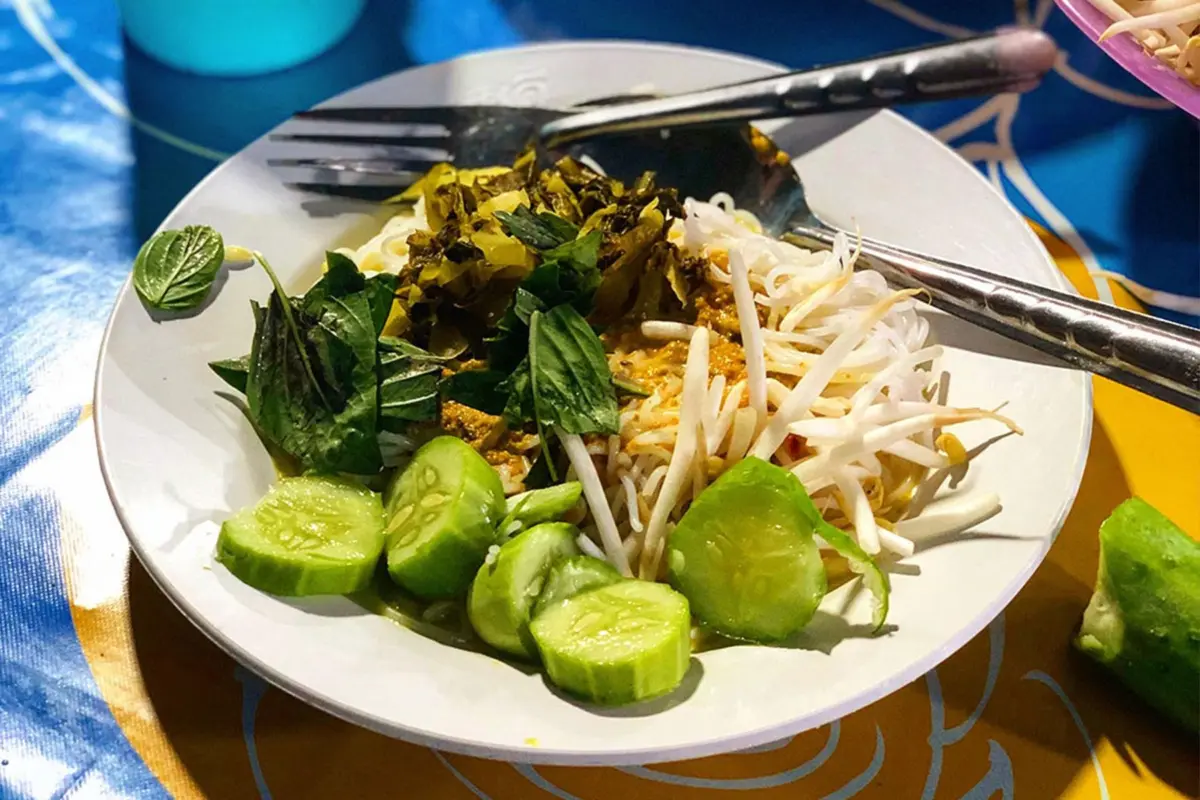
When chefs Justin Ahn and Alex McCoy first launched Alfie’s as a temporary pop-up restaurant back in 2016, they anticipated a fleeting culinary experiment. They certainly did not expect the road to a permanent brick-and-mortar location to stretch across nearly an entire decade. The original D.C. pop-up, where the duo served vibrant northern Thai cuisine to the city’s tight-knit service industry and a growing circle of devoted regulars, was intended to stay open for just a few months. When those doors closed, Ahn and McCoy transformed the concept into a roving culinary project, taking Alfie’s on the road to temporary residences across the globe. Now, after years of international travels and relentless searching, the team is finally making a permanent return to Washington, D.C., with a new venue tucked away in Georgetown.
The newly opened space is an intimate, 25-seat venue nestled inside an alleyway just off the bustling corridor of M Street. Inside, the restaurant bridges two worlds: it serves sophisticated Thai dishes crafted primarily with fresh Mid-Atlantic ingredients, paired alongside natural wines produced just across the river in Virginia. Despite finally settling down into a permanent home, the core elements that defined the original pop-up—such as its run-and-gun style of service and a dynamic chalkboard menu that shifts daily based on what local purveyors have in season—remain fully intact. Recently, Liz Provencher sat down with Alex McCoy to discuss how the team successfully translated a scrappy, temporary pop-up model into a permanent brick-and-mortar concept without losing the raw, energetic spirit that made it a cult favorite in the first place.
The Origins of a Cult Sensation
Reflecting on the early days of the project, McCoy explained why the team initially opted for a temporary format. At the time, they already had a permanent space in the Petworth neighborhood that was actively undergoing construction for their planned brick-and-mortar restaurant. However, another restaurant space further down the street was slated for demolition, prompting the duo to approach the landlords to see if they could utilize the interim vacancy. The landlords agreed, telling them the space was theirs to use until their own project was ready or the demolition process began. For Ahn and McCoy, it felt like an ideal opportunity to train their staff, test out recipes, and work through prospective menu options while their permanent location was being built.
Situated in a relatively quiet part of town, the pop-up was initially envisioned as a fun, low-stakes project. Instead, it rapidly evolved into a full-scale cultural sensation. Long before opening day, the reservation book was packed for months in advance. Major culinary publications took notice, with Vogue profiling the project and Bon Appétit naming it one of the top new restaurants in America. Yet, despite the massive acclaim and overwhelming demand, the pop-up lasted for a total of only about six months before closing its doors in 2017.
Complicating matters further, the planned Petworth space ultimately fell through, forcing the team back to square one in their search for a permanent venue. In the interim years, McCoy and Ahn kept the concept alive by executing pop-up residencies across New York, Washington, and London. They spent significant periods overseas, with some of their largest and most influential pop-ups taking place in London alongside their peers at Carousel. According to McCoy, that extended time spent operating abroad ultimately refined and shaped the brand into what it is today.
Adapting the European Model for Modern Dining
The landscape of the restaurant industry shifted dramatically in the wake of the COVID-19 pandemic, leaving operators across the board struggling to figure out sustainable financial models. With operational expenses and staff costs rising continuously, many restaurants turned toward creative, cost-cutting service styles characterized by leaner front-of-house teams, reduced table service, and a heavy reliance on digital QR code menus. To McCoy, the traditional American restaurant math simply was not adding up anymore.
Instead, McCoy found inspiration across the Atlantic, looking to the operational models of small, independent hole-in-the-wall eateries scattered throughout Paris and London. In those European cities, chefs do not typically manage sprawling multi-unit restaurant groups spanning half a dozen locations. Instead, they remain embedded in a single kitchen, working side-by-side with a tiny team of one or two people. That ethos aligned perfectly with the original heart and soul of Alfie’s, and McCoy recognized it as the most viable path forward for the brand’s long-term survival and identity.
After wrapping up their final overseas pop-up residency in London, the team finally stumbled upon a distinctive space in Georgetown—a neighborhood McCoy notes feels the most European of anywhere in the District. Tucked away in an alleyway directly behind the high-traffic retail strips of M Street, the venue offers an incredible 25-seat footprint characterized by a certain raw charm. Describing the location, McCoy points out its gritty, atmospheric appeal: visitors step down into an alleyway where they must navigate passing cars, entering a funky space brimming with character. The moment they saw it, the team knew it was the right fit. It captured the exact ambiance, feeling, and dynamic energy they had spent years trying to cultivate.

Maintaining the Pop-Up Mindset in a Permanent Home
Transitioning from a temporary roving project to a permanent establishment has done little to dilute the original operational philosophy. The restaurant is still heavily anchored by a pop-up mindset, driven primarily by McCoy, Ahn, and sous chef Ian, who together comprise roughly 90 percent of the entire restaurant staff.
From a culinary perspective, maintaining a strict 25-seat capacity is considered ideal because it allows the kitchen team to meticulously pore over small batches of food. When preparing a daily curry, for instance, the kitchen produces only about 30 orders total. This setup empowers the chefs to evaluate the menu on a daily basis, making immediate adjustments depending on what fresh ingredients arrive from local suppliers. If a local fishmonger brings in a handful of pristine sea breams, the chefs can simply feature them on the menu on the spot, enjoying the scrappy flexibility to pivot without needing to retrain a massive front-of-house or kitchen staff.
This flexible approach directly mirrors the market culture traditionally found in Thailand, which serves as the foundational ethos of the Alfie’s brand. The team deliberately challenges themselves to build dishes around whatever ingredients are seasonally available in the Mid-Atlantic region, incorporating items like rockfish, soft-shell crab, foraged asparagus from the Eastern Shore, and wild morel mushrooms.
The beverage program follows a similarly localized philosophy. In wine-producing regions across France or Italy, patrons sitting down at a local establishment routinely drink wines produced right in their immediate town or surrounding countryside. Observing a lack of this localized drinking culture in Washington—despite world-class Virginia wineries operating just a 15-to-20-minute drive away—Alfie’s decided to bridge that gap. The vast majority of their wines by the glass originate from Virginia, complemented by a curated selection of over 2,000 bottles sourced from local producers.
Pricing strategy is another deliberate reflection of the team’s casual, welcoming philosophy. Most bottles are priced between $35 and $75, with only a select few exceeding that range. McCoy notes that many diners go out to eat with a lingering sense of dread when the check finally arrives, but he wants guests at Alfie’s to lose themselves in the experience instead. By keeping bottles reasonably priced, diners do not have to second-guess taking a chance on an unfamiliar varietal, nor do they need to obsess over the mounting cost of their meal while dining.
Building Community Through a Unique Wine Club
For a concept that has historically cultivated a dedicated following of regulars, fostering a neighborhood living-room vibe remains paramount. To cater directly to wine enthusiasts who want to spend significant time at the restaurant, Alfie’s established an exclusive wine club. Limited to just 19 spots, the club charges a monthly fee of $150, which grants members a dedicated wine rack inside the restaurant. Members can bring in bottles from their own personal home collections or rely on the culinary team to curate a custom wine locker tailored to their specific tastes. Through this arrangement, members can purchase hard-to-find or high-end bottles at a steep discount compared to standard restaurant markups, granting them access to special selections that are otherwise too expensive to feature regularly on the standard menu.
When the restaurant finally released its initial batch of reservations, the response was immediate and overwhelming, yielding 700 bookings almost instantly. While McCoy hesitated to claim he expected such a massive surge, he admits he was hoping for it and could sense the mounting momentum. In an industry where operators can often feel when a concept is poised to resonate, the high level of social media interest in the weeks leading up to opening day signaled that heavy demand was on the horizon, prompting the team to prepare accordingly.
Ultimately, McCoy believes Alfie’s scratches a specific itch that Washington diners have lacked since 2020. As the city experiences widespread fatigue over independent small businesses continuously vanishing and being replaced by large corporate restaurant groups, Alfie’s positions itself as the literal antithesis of that trend. When guests walk through the door, they are greeted directly by McCoy and Ahn working side-by-side in the kitchen, ready to say hello and personally run dishes out to the tables. It is an authentic, hands-on neighborhood energy that the local dining scene has missed for years.