
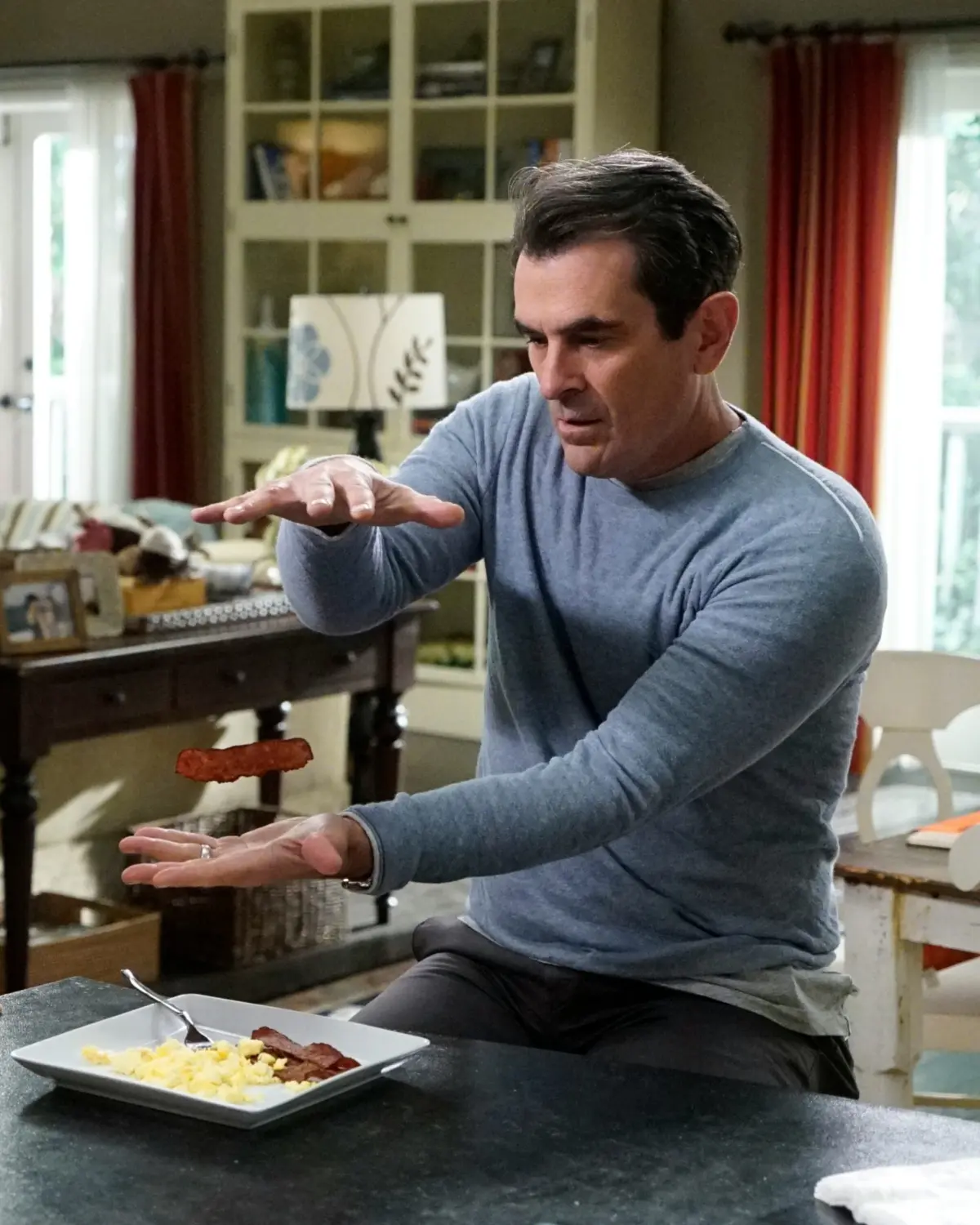
Let’s be honest: Ty Burrell, indelibly known to television audiences as the endearingly goofy Phil Dunphy from the long-running hit comedy Modern Family, possesses a rare kind of cultural charisma. He could stand before a crowd and deliver a deeply detailed lecture on the finer points of latex paint, and most people would gladly cozy up to listen. He is simply that kind of presence—disarmingly affable, effortlessly sincere, and naturally funny.
That inherent charm is proving to be a powerful asset as Burrell takes on a much more serious topic: meningitis. Yes, meningitis—the often-overlooked and potentially devastating bacterial and viral infection that most people do not realize kills roughly one in ten individuals who contract it. Furthermore, approximately one in five survivors are left facing severe, lifelong health consequences, including permanent brain damage, hearing loss, and limb amputation.
Medical data shows that adolescents and young adults aged 16 to 23 experience the highest rates of the infection. This stark reality is what brought Burrell, a father of two teenagers, into the conversation. In partnership with pharmaceutical giant GSK and their ongoing "Ask2BSure" educational campaign, Burrell has teamed up once again with his former Modern Family co-star Julie Bowen, alongside a stand-in teen actor, to recreate a dynamic television mom-and-dad team. Their goal is clear: raise crucial public awareness about meningococcal disease while using their signature humor to break the ice on an intimidating subject.
Leading up to the launch of the campaign, Burrell sat down for an interview to discuss his own journey parenting two teenage daughters, how he navigates the notoriously difficult developmental stages of adolescence, the practical advice he offers to parents of pre-teens, and how he has learned to happily accept his role as the supportive, watchful "doorjamb" of his household.
America’s Dad Takes on Meningitis
When asked why an actor widely regarded as "America’s dad" decided to use his platform to speak out about meningitis, Burrell explains that the advocacy felt entirely organic to his life.
"Well, it’s pretty organic, actually. I have teenage girls, and unfortunately, the most vulnerable population is, actually, I guess, teens to college, 16 to 23," Burrell explains. "And that’s doing in large part to the teen lifestyle. My girls play sports, and there’s a lot of water bottle swapping. And once you’re in college, it’s dorm rooms and it’s kissing and all of it. And there’s a lot of bugs that go around in that environment."
Despite the severe risks, meningitis rarely enters everyday parental discourse as often as it should. Burrell notes that recent outbreaks, such as a notable Meningitis B outbreak in the United Kingdom, highlight how quickly the disease can spread in communal environments. Given the potential for catastrophic outcomes—including death and permanent physical or cognitive disabilities—Burrell felt compelled to join forces with GSK for the Ask2BSure campaign. The initiative aims to demystify meningococcal disease and encourage proactive conversations between parents, young adults, and healthcare providers. To bridge the gap between a frightening medical condition and an approachable public health message, the campaign features a humorous, lighthearted video designed to educate without inducing pure panic.
For parents navigating the turbulent waters of raising teenagers, striking the right balance between humor and gravity is a delicate tightrope walk. When discussing a recent medical check-in with a 14-year-old where the topic of meningitis was raised, it became clear that many parents may be unaware of the recommended vaccination timelines, often discovering they are years ahead or behind schedule.
Burrell emphasizes that while the public service announcement serves as a valuable conversation starter, parents should always consult directly with healthcare professionals regarding the full scope of medical basics. He points out that while multiple vaccine strains exist—covering strains A, C, W, and Y—many teenagers have not yet received the specific Meningitis B vaccination.
"That was true of my 16-year-old. And I did the same thing. When I started to learn more about how serious this was, I had a conversation with our doctor and she hadn’t had B yet, so that’s now scheduled," Burrell shares. "And I mean, as far as my knowledge about it, it would be that and really just encouraging people to have a conversation with their doctor about the risks of meningitis and about vaccination, and if that’s an option."
Navigating the Three-Sentence Window of Parental Influence
Every parent of a teenager eventually learns the humbling reality of teenage communication: the window of actual parental influence shrinks dramatically, often limited to just a few sentences before a teenager’s attention span resets or their brain short-circuits out of sheer frustration.
When discussing whether it is possible to smoothly transition from a serious medical discussion like meningitis into other necessary adolescent safety talks—such as the realities of dating, hygiene in dorm rooms, or navigating social pressures—Burrell acknowledges the universal struggle.
"Man, that’s a great question," Burrell says, noting the inherent difficulty of avoiding an outright lecture. "I don’t know what it’s like for you, but I feel like the window in which I actually have any influence for them is three sentences. And I don’t know if that’s a lack of attention span because of phones or screens or what have you, or it’s just time-honored parenting, that you just have the floor for a brief moment before you are tuned out."
As teenagers quickly grow frustrated with perceived lectures, parents often have to divide and conquer. For Burrell, his wife frequently takes the lead on certain vital conversations, leaving him to handle other parental domains—such as warning them about the less-than-sanitary realities of college dormitories.
The Toughest and Best Parts of Raising Teenagers
Reflecting on the dual realities of parenting a 16-year-old and a 14-year-old, Burrell highlights the constant tension between a teenager’s natural, intense craving for independence and a parent’s legal and moral obligation to keep them safe and healthy.
"I think that the really natural want for independence, especially our 16-year-old… Well, actually both of them, we have a 16 and a 14-year-old, but I think they are both craving more independence and more of their own choices and more of their own time. And yet we’re still on the job. We are the ones that have to keep them healthy and safe," Burrell explains. "And so I feel like, I don’t know if you feel this way, but I feel like the challenge is really making them feel heard and seen and giving them as much freedom as I possibly can. And still, which it’s hard to do because once they experience some of that freedom, it’s very hard for them to then have you say, ‘But not this thing, that’s dangerous,’ or ‘That’s unhealthy,’ or whatever that is."
This dynamic often clashes with a parent’s natural desire to be liked by their children. Burrell admits that he shares significant personality traits with his famous television alter-ego, Phil Dunphy, particularly the deep-seated desire to be his children’s best friend. However, he has learned that being a friend is simply not always an option when health and safety are on the line.
"This is very hard for me because I want to be my kid’s best friend. This is where I share personality traits with Phil Dunphy. I really want to be their friend, but you really can’t… It’s not always an option. It just isn’t always an option," Burrell says. "At a lot of points, you have to actually say, ‘No, you are going to be mad at me, but this is about health and safety.’ That’s the hardest thing."
To maintain a connection while respecting their adolescent need for separation and autonomy, Burrell relies on advice he found years ago in the book The Wonder of Girls. The author’s core guidance was simple yet profound: teenagers are going to push back and occasionally be difficult, but parents should not take it personally—they simply need to stay nearby.
"Metaphorically, I’m kind of by the doorjamb of the room. Are you thirsty? Everything okay in there? You safe? But yeah, it’s not easy," Burrell notes. Even when teenagers act as though they want nothing to do with their parents during the day, familiar rituals like bedtime tuck-ins often reveal that the underlying bond remains firmly intact.
Despite the challenges, Burrell points out that raising teens comes with remarkable rewards, particularly the emergence of nuance, wit, and perspective in conversation. While his 16-year-old approaches the world with the stoic economy of a leading man in a Western film, his 14-year-old has long possessed a sharp sense of irony and humor. Witnessing a teenager begin to perceive the world’s contradictions, unfairness, and inherent absurdities for the first time offers a uniquely intimate and rewarding parenting experience.
Looking back on his parenting journey, Burrell offers a final piece of pragmatic advice for anyone currently raising younger children: bend, rather than break, and give children as much slack as safely possible as they explore their identities. Yet, at the end of the day, health and safety remain the ultimate priority.
"No matter whether they consider me a friend or not, I do have to keep them safe," Burrell concludes. "And we’ve already had lots of bugs go through the family from their interactions with other teens, including mono and all kinds of stuff. But if you get meningitis, that’s a whole different ballgame."