
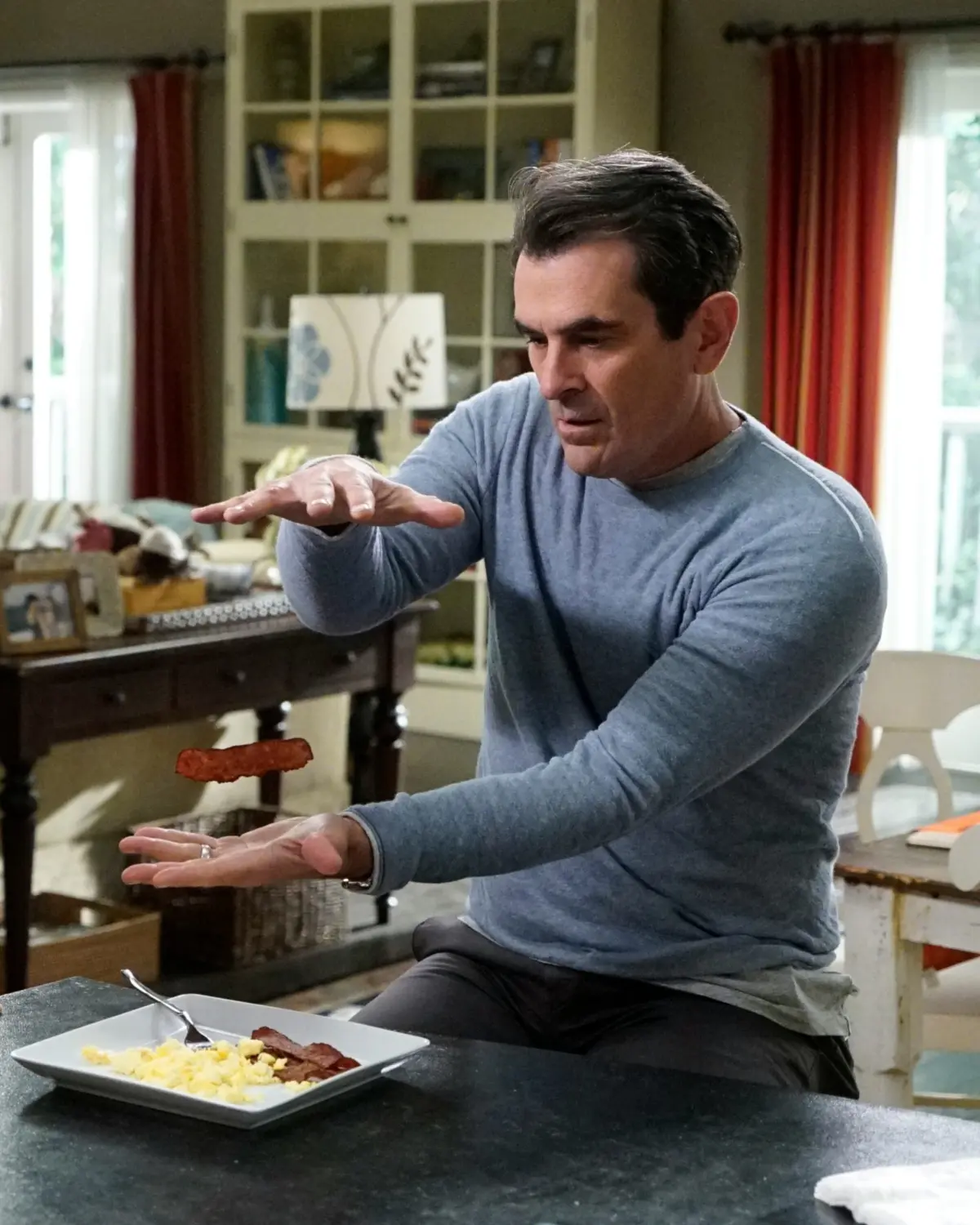
To millions of television viewers, Ty Burrell will forever be associated with the lovable, well-meaning, and endearingly goofy Phil Dunphy from the long-running hit sitcom Modern Family. He is the kind of performer who could command an audience’s undivided attention while explaining the minute details of latex paint, radiating a disarming blend of affability, sincerity, and humor. That innate charm is precisely why Burrell is currently using his platform to address a much more serious topic: meningococcal disease, a frequently overlooked bacterial infection that carries devastating potential consequences.
Meningitis is a severe condition that kills roughly one in ten individuals who contract it, while leaving one in five survivors with permanent, life-altering health complications such as brain damage, hearing loss, and limb loss. Medical data indicates that adolescents and young adults aged 16 to 23 experience the highest rates of infection, driven largely by common social environments and lifestyle factors typical of high school and college years.
This stark reality is what prompted Burrell, a father of two teenagers, to take action. In partnership with pharmaceutical company GSK for the "Ask2BSure" awareness campaign, Burrell has reunited with his former Modern Family co-star Julie Bowen and a stand-in teen actor to recreate a familiar family dynamic. Together, the television mom and dad are combining public health advocacy with their signature humor to educate families about the risks of meningitis and the importance of vaccination.
Ahead of the campaign’s launch, Burrell sat down for an interview to discuss the realities of raising teenagers during such a notoriously challenging developmental stage, the valuable lessons he has learned as a parent, and why public health protection ultimately supersedes the desire to be a child’s best friend.
Why "America’s Dad" Is Talking About Meningitis
When asked how he transitioned from sitcom patriarch to public health advocate, Burrell explains that the partnership was entirely organic, rooted directly in his everyday life as the father of teenage daughters.
"I have teenage girls, and unfortunately, the most vulnerable population is, actually, I guess, teens to college, 16 to 23," Burrell notes. "And that’s doing large part to the teen lifestyle. My girls play sports, and there’s a lot of water bottle swapping. And once you’re in college, it’s dorm rooms and it’s kissing and all of it. And there’s a lot of bugs that go around in that environment."
Despite the severe risks—highlighted by recent outbreaks, such as the Meningitis B outbreak in the United Kingdom monitored by the World Health Organization—meningitis rarely receives the public attention it warrants. The potential outcomes include severe long-term disabilities, ranging from loss of sight to amputations, alongside a significant mortality rate. These sobering statistics motivated Burrell to collaborate with GSK on the Ask2BSure campaign, utilizing an educational video designed to inform the public through a lighthearted approach.
Navigating Teen Vaccination and Healthcare Conversations
Addressing the complex medical landscape can be intimidating for parents, particularly when attempting to time preventative measures correctly. Burrell points out that while various vaccine strains exist to combat meningococcal disease—covering strains A, B, C, W, and Y—many teenagers remain unprotected against the specific strain B vaccination.
He shares that this gap in protection was an eye-opener in his own household. When he began researching the disease more thoroughly, he consulted his family doctor regarding his 16-year-old daughter, only to discover that she had not yet received the Meningitis B vaccine. The appointment was promptly scheduled, highlighting the simplicity of bridging the gap through proactive medical consultations. Burrell emphasizes that parents should consult healthcare professionals directly to understand the full scope of risks and determine the appropriate vaccination options for their adolescents.
The Realities of Parenting Teenagers
Beyond public health advocacy, Burrell opens up about the delicate balancing act of parenting teenagers who are actively striving for independence while still requiring parental guidance for their health and safety. With a 16-year-old and a 14-year-old at home, Burrell describes the daily challenge of making his children feel heard, seen, and granted as much personal freedom as safely possible, while drawing a firm line when potential dangers arise.
"They’re craving more independence and more of their own choices and more of their own time," Burrell explains. "And yet we’re still on the job. We are the ones that have to keep them healthy and safe. And so I feel like the challenge is really making them feel heard and seen and giving them as much freedom as I possibly can. And still, which it’s hard to do because once they experience some of that freedom, it’s very hard for them to then have you say, ‘But not this thing, that’s dangerous,’ or ‘That’s unhealthy,’ or whatever that is."
This dynamic often conflicts with the natural parental desire to remain a child’s closest confidant. Burrell admits that he shares a key personality trait with Phil Dunphy—a strong desire to be his kids’ friend—which makes setting firm boundaries difficult. However, he acknowledges that friendship is not always an option when health and safety are on the line.
Drawing inspiration from parenting literature, specifically the book The Wonder of Girls, Burrell found solace in advice that reframed how he handles teenage friction. The core message was simple: teenagers will inevitably direct frustration toward their parents, but adults must not take it personally and instead simply remain physically and emotionally accessible. Burrell humorously compares his parental role to standing near the doorjamb of a teenager’s room, occasionally checking in to ensure they are hydrated, safe, and secure.
The Joys and Surprises of Raising Teens
Despite the challenges of maintaining influence during narrow communication windows—which Burrell jokes often shrink to a mere three sentences before a teenager’s attention shifts or their brain short-circuits—he finds profound rewards in watching his daughters mature.
For parents of younger children approaching adolescence, Burrell offers reassurance by highlighting the evolving intellectual and emotional depth of conversation. While his 16-year-old maintains a stoic, economical demeanor reminiscent of a leading man in a Western film, his 14-year-old possesses a sharp sense of irony and humor. Observing a young person begin to recognize the world’s contradictions, unfairness, and inherent absurdities provides a remarkably rewarding interpersonal dynamic.
Reflecting on his journey thus far, Burrell notes that if he could alter his parenting approach, he would focus on flexibility, offering more latitude for self-discovery while remaining vigilant about physical and mental well-being. Ultimately, whether navigating the nuances of adolescent communication or partnering with public health campaigns to raise awareness about meningococcal disease, Burrell returns to the fundamental responsibility shared by all parents.
"No matter whether they consider me a friend or not, I do have to keep them safe," Burrell concludes.