
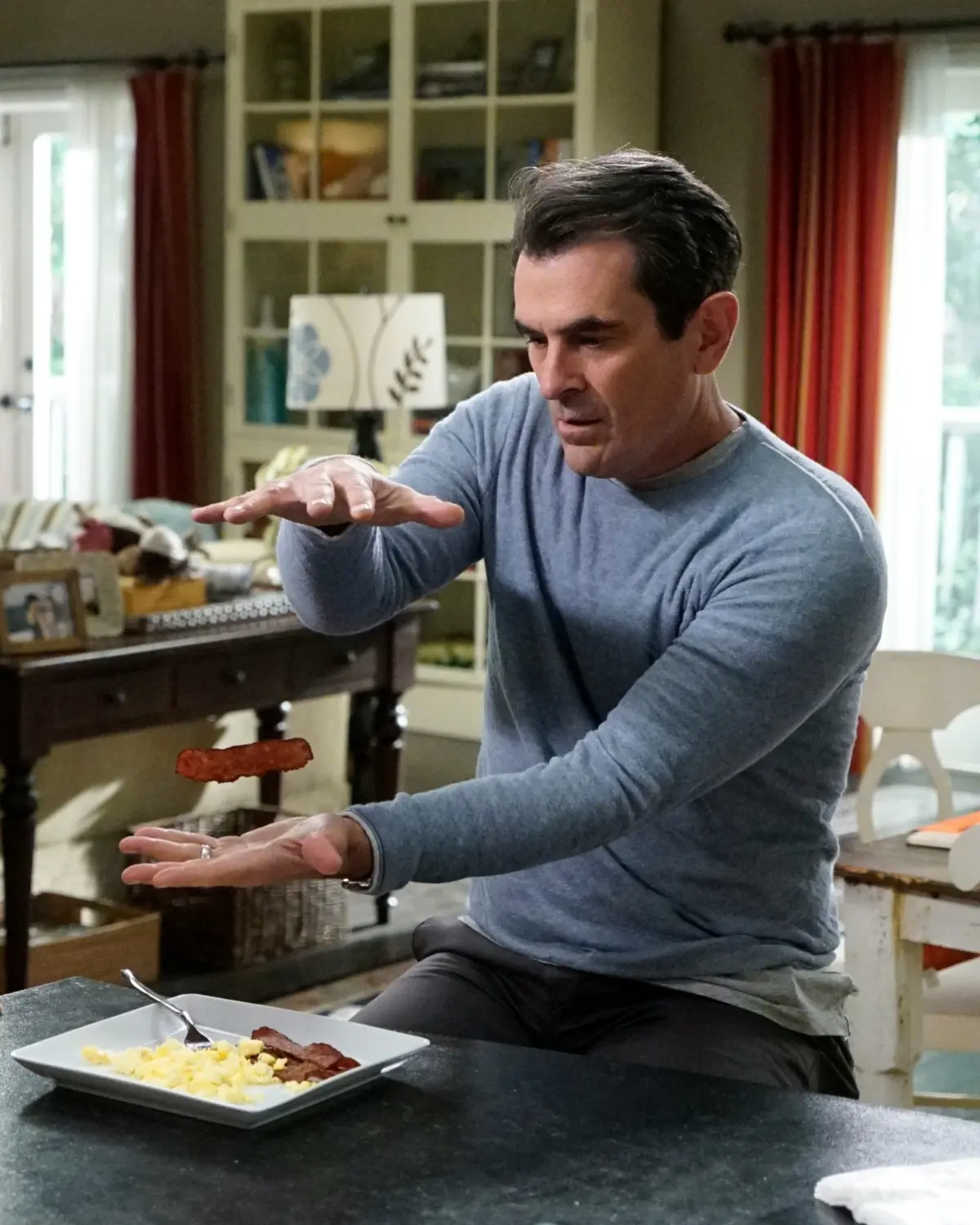
Let’s be honest: Ty Burrell, best known for playing the delightfully optimistic and well-meaning Phil Dunphy on the hit sitcom Modern Family, possesses a rare kind of charm. He is the sort of public figure who could hold an audience captivated while explaining the finer points of latex paint or home improvement supplies, simply because he comes across as disarmingly affable, genuinely sincere, and naturally funny. That innate likability is proving to be a valuable asset right now, as Burrell turns his conversational prowess toward a much more serious topic: meningitis.
It is an overlooked and dangerous infection that many people fail to realize carries severe consequences. According to health data, approximately 1 in 10 individuals who contract the illness will not survive, while 1 in 5 face lifelong health complications ranging from brain damage and hearing loss to limb loss. Furthermore, adolescents and young adults between the ages of 16 and 23 experience the highest rates of infection.
This startling reality is what prompted Burrell, a father of two teenagers, to take action. Partnering once again with his former Modern Family co-star Julie Bowen and a stand-in teen actor for a new public service initiative, Burrell has joined forces with pharmaceutical giant GSK for the "Ask2BSure" campaign. The project aims to raise crucial awareness about the risks of meningococcal disease among teens and young adults while maintaining a lighthearted, approachable tone that incorporates trademark humor to help the message land effectively.
Leading up to the nationwide rollout of the campaign, Burrell sat down for an interview to discuss his own journey parenting two teenage daughters, navigating the notoriously challenging adolescent years, sharing advice for parents bracing themselves for the preteen transition, and embracing his role as the metaphorical "doorjamb" of his household—a position he has come to accept with characteristic grace.
Why America’s Dad Is Talking About Meningitis
When asked why he chose to champion a cause as grave as meningitis, Burrell explains that the partnership felt entirely organic given his current stage of life. With teenage daughters at home, he is acutely aware that the demographic most vulnerable to the disease spans from their mid-teens through early college years—specifically ages 16 to 23. Much of this vulnerability is driven by the realities of the modern teen and college lifestyle. Between high school sports involving shared water bottles and the close-quarters environment of college dorm rooms, where social activities like kissing and communal living are commonplace, various bugs and infections circulate rapidly.
Despite these risks, meningitis rarely enters everyday parental conversations as often as experts believe it should, particularly in light of recent outbreaks, such as the meningitis B outbreaks reported in parts of Europe. Because the potential consequences include long-term disability or death, Burrell felt compelled to lend his voice to GSK’s Ask2BSure campaign. The goal, he notes, was to produce a video that uses humor as a bridge to educate families and encourage proactive conversations before health emergencies arise.
Navigating Vaccine Realities and Medical Discussions
For parents of adolescents, approaching medical topics can often feel daunting or mistimed. While many parents assume vaccinations are automatically covered during standard pediatric visits, timing is critical. Burrell shares that his own experience involved discovering a gap in his 16-year-old daughter’s immunization schedule.
While vaccines cover multiple strains—including A, B, C, W, and Y—many teenagers have not yet received the meningitis B vaccination. Upon learning more about the severity of the disease, Burrell consulted his family physician, discovered his oldest daughter had not yet received the B strain, and promptly scheduled it. His primary takeaway for other families is simple: encourage parents to stop guessing, consult healthcare professionals directly, and have direct, open conversations about the risks of meningococcal disease and whether vaccination is appropriate for their children.
The Fine Line Between Parenting and Lecturing
For parents attempting to impart wisdom to teenagers, the window of influence can feel remarkably brief. Burrell humorously echoes a sentiment familiar to many parents of adolescents: the feeling that any lecture or serious talk must be condensed into three sentences or less before a teenager’s attention span shifts or their brain effectively short-circuits out of frustration.
Faced with the challenge of transitioning from a casual remark about hygiene or social habits into a broader safety discussion, Burrell admits that balancing the role of an authoritative parent with a desire to remain a close friend to his children is an ongoing tightrope walk. While he humorously notes that his wife often shoulders the heavier conversational lifting regarding certain teenage realities, he acknowledges that the fundamental duty of a parent remains unchanged regardless of how receptive teenagers are in the moment.
The Toughest and Best Parts of Raising Teenagers
Reflecting on the realities of raising a 16-year-old and a 14-year-old, Burrell points out that the most challenging aspect is managing their natural, pressing craving for independence while adults still bear the ultimate responsibility for keeping them healthy and safe. The daily struggle lies in making adolescents feel genuinely heard and seen, granting them as much personal freedom as safely possible, and then stepping in when safety or health is compromised—even when that intervention inevitably sparks teenage frustration.
Burrell admits that sharing personality traits with his television character, Phil Dunphy, means he naturally wants to be his children’s best friend. However, experience has taught him that friendship is not always an option when health and safety are on the line.
To maintain a connection during a developmental stage where teenagers naturally try to pull away to find their own voices, Burrell relies on advice he found years ago in the book The Wonder of Girls. The core guidance—realizing that teenagers are going to push back, refusing to take their transient hostility personally, and simply staying nearby—has become a guiding philosophy for his household. Metaphorically speaking, Burrell describes his parental role as standing near the doorjamb of his children’s rooms, checking in to ensure they are hydrated, safe, and secure, even if the interaction is met with characteristic teenage sighs.
Despite the daily friction, Burrell finds profound rewards in parenting adolescents. For parents of younger children looking toward the future with apprehension, he highlights the emergence of nuance in conversation as a distinct highlight. While his 16-year-old tends to be stoic and economical with her words, his 14-year-old possesses a sharp sense of irony and a keen perspective on the world. Observing a child begin to notice the contradictions, unfairness, and inherent humor in how seriously adults take themselves offers a remarkable and intimate glimpse into their developing worldview.
Looking Back and Moving Forward
Offering pragmatic reflections on his own parenting journey, Burrell notes that if he could go back and re-parent with the benefit of hindsight, his primary adjustment would be to bend rather than break, giving his children slightly more latitude while they explore their identities.
Ultimately, campaigns centered on health risks like meningitis serve to ground the daily parenting experience. No matter whether teenagers view their parents as close confidants or figures of occasional frustration, the foundational bottom line for any parent remains the same: keeping their children safe from preventable harm.