
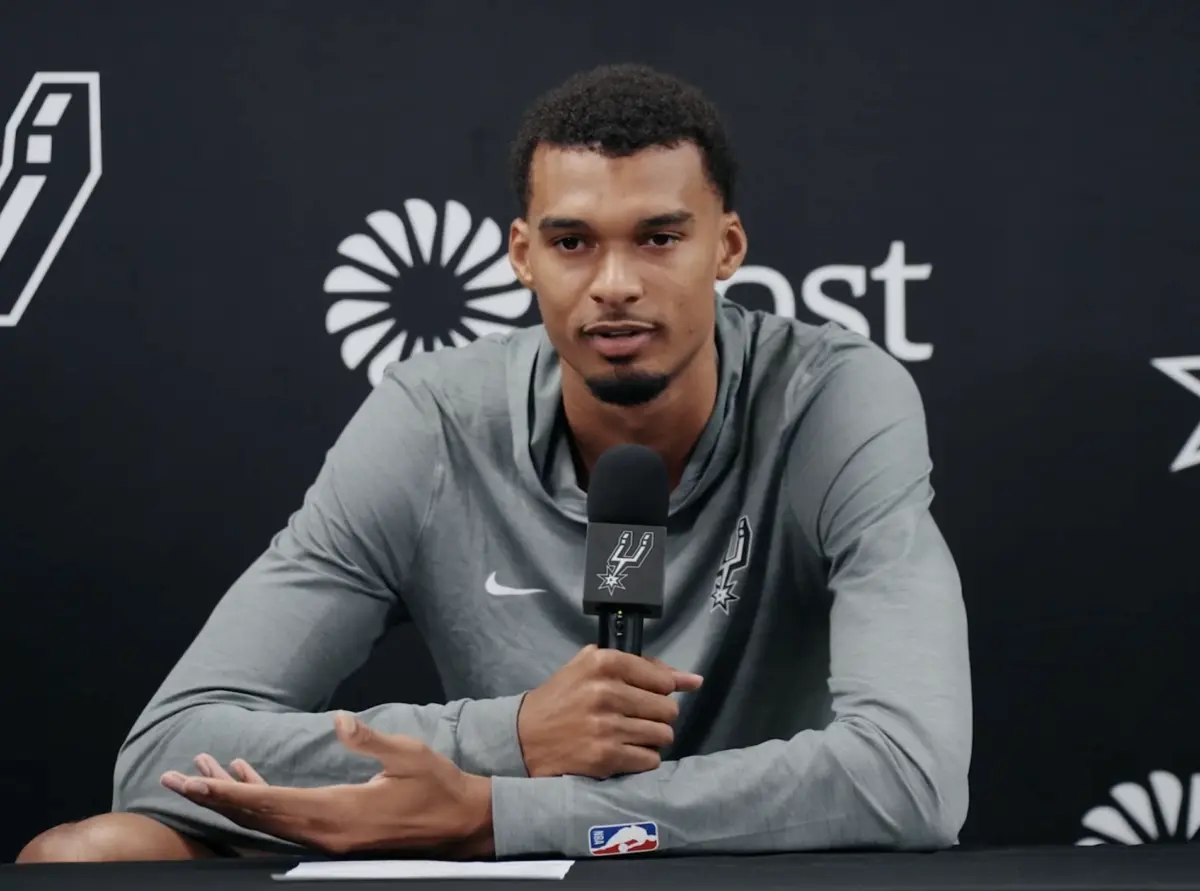
San Antonio Spurs superstar Victor Wembanyama has never been shy about sharing his views on social issues away from the basketball court. The 22-year-old phenom has consistently used his massive global platform to address matters extending far beyond sports, cementing his reputation as one of the most socially conscious young athletes in the modern professional sports landscape. Growing up in suburban Paris, Wembanyama maintains a deep connection to his home country, which explains why he has closely followed and openly shared his thoughts on the massive protests currently sweeping across France.
These demonstrations, organized primarily by young students fighting for increased education funding and better learning conditions, have quickly turned into one of the biggest international news stories of the week. Wembanyama addressed the situation publicly following a Spurs preseason game against the Atlanta Hawks, offering a strong and unequivocal statement of solidarity with the French youth. Speaking to reporters, the young basketball star made it clear that he understands the root causes of the unrest and stands firmly behind the students demanding systemic change.
“These are systemic inequalities,” Wembanyama said when discussing the French youth fighting for access to better education. “I hear them and I support them.” His full statement quickly circulated across social media platforms, garnering tens of thousands of likes and widespread public attention within hours of its release.
Wembanyama’s comments carry a personal weight, given his own upbringing and proximity to the very environments where these kinds of civil demonstrations frequently take place. In his transcribed remarks, the NBA star elaborated on his personal history and how the current protests mirror experiences from his own formative years.

“What touches me is that this isn’t something completely unfamiliar to me,” Wembanyama explained. “I was in high school in Nanterre, which was already a stronghold of the blockades at the time. I was a high school student not so long ago. I was lucky enough to get out, it’s a situation I’m fortunate enough not to experience anymore.”
Reflecting further on the deeper structural issues driving the movement, Wembanyama emphasized the necessity of youth activism and voiced hope that institutional leaders would take notice of the grievances being expressed on the streets. “These are systemic inequalities, such deep-seated problems… I’m glad that high school students, young people in general, are making their voices heard, because I hear them and I support them. And I hope that the people at the top will do the same.”
The protests currently roiling France have been fueled by widespread anger over government budget cuts in local high schools. These financial restrictions have resulted in severe teacher shortages and deeply inadequate physical conditions inside educational facilities, many of which suffer from broken infrastructure and lack basic climate control systems such as heating or air conditioning. Students across the country have reported enduring extreme circumstances, including classrooms becoming “boiling hot” during severe national heat waves while simultaneously dealing with teacher absences that have left them without instruction for several weeks at a time. The frustration has boiled over into the streets, leading to mass demonstrations and frequent clashes between student protesters and local police forces.
This latest intervention into sociopolitical discourse is part of a growing pattern for Wembanyama, who has routinely used his voice to comment on major controversies outside of basketball. Earlier this year, the San Antonio Spurs center came out strongly against ICE following the high-profile killings of Alex Pretti and Renee Good by federal immigration enforcement officers. Furthermore, Wembanyama has drawn praise from advocacy groups and fans alike for taking a firm stand against the booming sports betting industry, explicitly stating that he will never promote a sports gambling company, despite the lucrative partnership opportunities traditionally associated with professional athletes in major sports leagues.
While Wembanyama’s immense talent on the hardwood has made him a transcendent figure in the NBA, his competitive style has occasionally drawn scrutiny from opposing fanbases. On the court, some rival supporters view him through a more critical lens, particularly following physical incidents such as an elbow to the head of Naz Reid and controversial plays during the NBA Finals involving the New York Knicks where some analysts felt he avoided strict officiating penalties. Nevertheless, these on-court moments exist alongside his active engagement with civic and social issues, establishing a complex public profile for one of basketball’s brightest young stars. As the NBA season progresses and social movements continue to intersect with the lives of professional athletes, observers and media outlets will undoubtedly continue tracking Wembanyama’s statements and activism both on and off the court.