
Louisiana’s offshore wind industry has one specific date firmly circled on the calendar: January 21, 2029. That date marks the first day after President Donald Trump is constitutionally scheduled to leave office, and for a sector currently caught in the crosshairs of federal policy shifts, it represents a distant horizon of hope.
Federal policies enacted during Trump’s second term have brought offshore wind development to a near standstill across the United States. In an effort to dismantle the sector, the administration has paid developers roughly $4 billion in federal funds simply to walk away from their existing projects. Yet, in Louisiana, leaders within the maritime, engineering, and energy sectors are fighting to preserve their accumulated expertise, specialized supply chains, and specialized workforce. Their goal is to keep the infrastructure intact so they can quickly revive offshore wind projects under the next presidential administration.
"Come January 21st, 2029, we all get to wave goodbye," said state Representative Joe Orgeron, a Republican from southeastern Louisiana who previously worked in the offshore wind industry. "The current administration has been a one-man stopping show. I’m pretty confident, and I’m hopeful that it’ll change."
Orgeron later summarized the industry’s immediate, defensive strategy with stark simplicity: "Just wait for the clock to run out."
His views were echoed by other prominent wind energy experts participating on a panel at Tulane University’s Future of Energy Forum. Panelists detailed the profound challenges facing a sector that, just a few short years ago, was poised to transform the industrial landscape of the American Gulf Coast.
"The Trump administration has been pretty openly hostile to seeing the advancement of the offshore wind industry," said Madelyn Smith, a program manager with the Southeastern Wind Coalition, a nonprofit organization that actively supports the development of wind power across 11 states.
A Rapid Federal Retreat
The Trump administration’s second-term efforts to halt the growth of offshore wind in the United States began on his very first day in office last January. Through a series of executive orders, the administration moved swiftly to withdraw federal waters from new offshore wind leases and halt the federal permitting process for any additional projects.
Furthermore, the federal government issued a wave of stop-work orders targeting all offshore wind projects that were already under construction. When those sweeping directives inevitably sparked aggressive legal challenges and courtroom battles from developers and environmental advocates, the administration shifted its tactical approach. Instead of protracted legal warfare, the federal government began offering substantial financial payouts to offshore wind developers, encouraging them to voluntarily walk away from their leases and projects entirely.
"For many reasons, it’s very compelling," Smith said, describing the government’s payout offers to corporate developers. "And there’s no real pathway for progress in the next two to three years, and some of these leases are quite expensive."
According to industry data, developers have relinquished 12 major offshore wind leases in exchange for these federal payouts. Among the casualties is a massive 2-gigawatt wind farm originally planned for development in the Gulf of Mexico, located south of Lake Charles, Louisiana.
"About $4 billion of taxpayer money has been spent to remove those from the pool," Smith noted during the Tulane panel discussion. "And those projects also represented about 21 gigawatts of potential capacity."
That lost generation capacity represents enough clean electricity to power more than 5 million American homes.
The Gulf Coast Connection
The sudden freeze on offshore wind is particularly painful for Louisiana, where several companies that historically served the offshore oil and gas industry had successfully diversified. Drawing on decades of specialized marine engineering experience, these local businesses had shifted their focus to helping plan, supply, and build massive offshore wind farms along the densely populated East Coast.
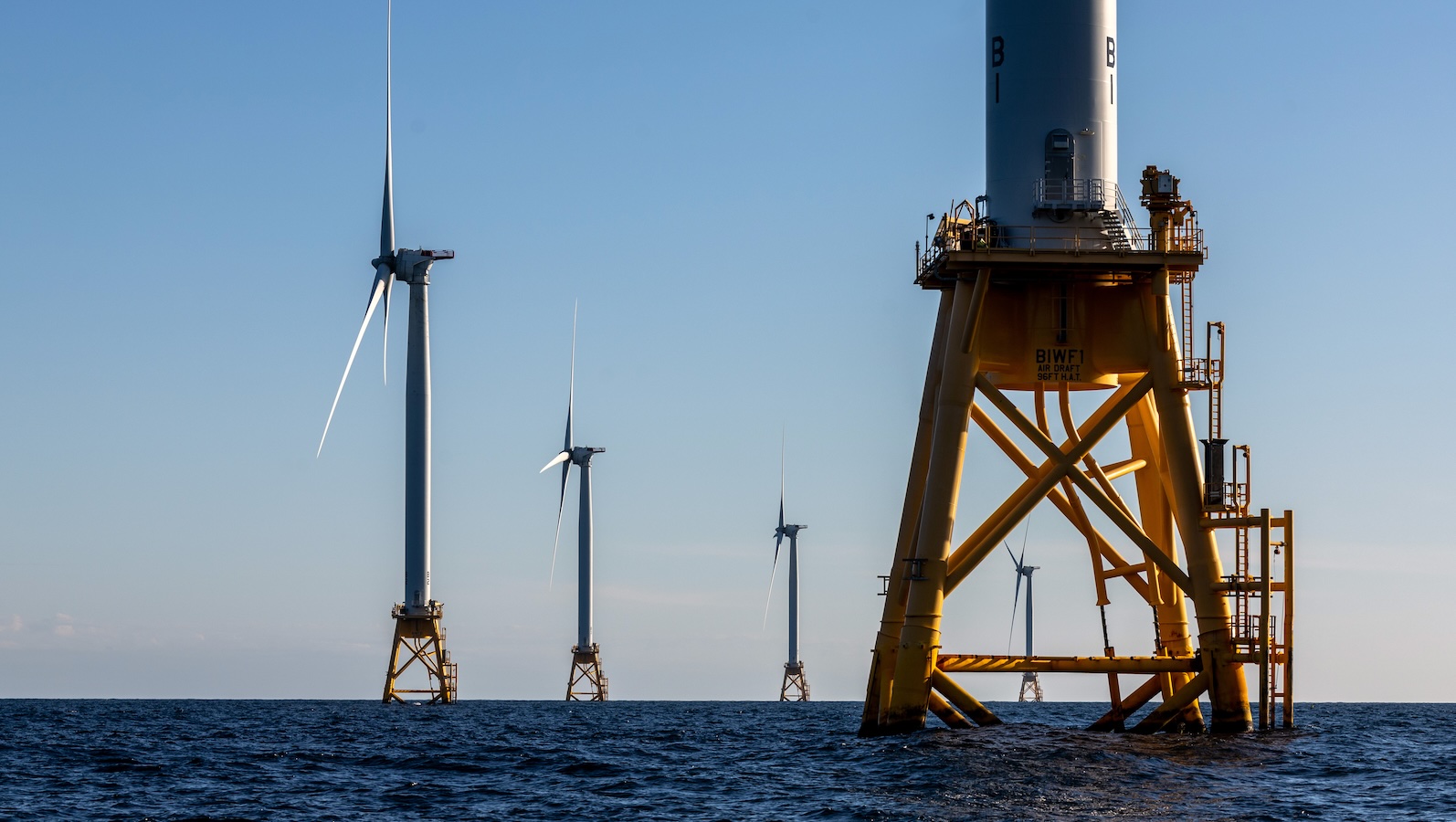
Orgeron’s own family-owned supply boat business, alongside a network of Louisiana-based marine engineers and metal fabricators, played an instrumental role in building the United States’ very first commercial offshore wind farm near Block Island, Rhode Island, back in 2016.
For years, the pivot paid off, and the work continued to grow. By 2024, nearly a quarter of all offshore wind work contracts in the United States had been awarded to Gulf-based firms. According to the Oceantic Network, an industry trade group, roughly $1 billion in vital investments had flowed directly into the region’s shipyards and fabrication facilities.
Educational institutions across the state similarly adjusted their educational pipelines to meet the surging demand for skilled labor. Nunez Community College in Chalmette established an innovative two-year turbine technician program, while the University of New Orleans launched its dedicated Wind Energy Hub, offering specialized engineering scholarships and formal internships with leading offshore wind developers.
The German energy giant RWE was among the major international players looking to tap into this specialized local workforce. RWE had planned to construct its expansive 2-gigawatt project roughly 44 miles south of Lake Charles with a target completion date of 2035. The company had even secured a crucial local customer for the green energy it intended to produce, reaching a supply agreement with Entergy to deliver electricity to an estimated 350,000 homes across Louisiana and Texas.
A Longstanding Political Opposition
President Trump’s opposition to wind energy is not a recent development; it spans two decades and stems from both political ideology and personal grievances. His public hostility toward wind turbines dates back at least to 2006, when he initiated a decade-long legal and public relations battle against the Scottish government over an offshore wind farm that he argued would spoil the scenic views from a golf course he was developing in Aberdeenshire.
Since entering national politics, Trump has frequently derided wind energy on the campaign trail and from the executive office. He has routinely portrayed wind turbines as severe threats to property values, commercial shipping lanes, and local wildlife populations. He has also made various unconventional claims about the technology, asserting at times that wind turbines drive food prices up, cause health issues, or produce environmental impacts that go far beyond standard industrial development.
While those political talking points have long resonated with his base, industry leaders argue that the real-world consequences of his administration’s policies are devastating to American manufacturing and technological leadership.
"It’s been a big pause button on what was a sleeping giant of an industry," said James Martin, CEO of Gulf Wind Technology, an Avondale-based company that specializes in building and testing advanced wind turbine blades. Martin spoke alongside other industry leaders at the Tulane forum, expressing deep frustration over the sudden reversal of fortune for local businesses that had invested heavily in the sector’s future.
In response to the federal roadblocks, Martin’s company and others have been forced to pivot once again, scrambling to find work in adjacent fields such as the aerospace and defense sectors to keep their doors open. Less fortunate businesses have been forced to implement severe budget cuts and widespread layoffs.
"There’s huge layoffs in the wind space, and some of the best engineers on the planet — they’re giving up," Martin said.
For now, the engineers, fabricators, and maritime workers who built a thriving hub of renewable energy expertise along the Gulf Coast are left with few options. As the political landscape remains hostile to their trade, their strategy has been reduced to endurance: keeping their networks intact, protecting their specialized knowledge base, and waiting for the political clock to run out.