
Louisiana’s offshore wind energy sector has a single, definitive date circled on calendars across the state: January 21, 2029. That date marks the first day after President Donald Trump is constitutionally scheduled to leave office, and for an industry currently caught in the crosshairs of a federal regulatory crackdown, it represents a distant horizon of hope.
For now, however, developers, suppliers, and local leaders are adopting a strategy of survival. With the current administration’s policies having brought offshore wind development to a near standstill nationwide—highlighted by an unprecedented federal buyout program offering developers roughly $4亿元 to walk away from projects—Louisiana’s green energy pioneers are striving to preserve their expertise, talent, and intricate supply chains. The overarching goal is simple: keep the foundational elements of the industry alive so they can be rapidly revived when the political landscape shifts.
“Come January 21st, 2029, we all get to wave goodbye,” said state Representative Joe Orgeron, a Republican from southeastern Louisiana who previously worked in the offshore wind industry. “The current administration has been a one-man stopping show. I’m pretty confident, and I’m hopeful that it’ll change.”
Orgeron later encapsulated the regional industry’s immediate, defensive strategy with stark pragmatism: “Just wait for the clock to run out.”
His sentiments were shared by fellow energy experts during a panel discussion at Tulane University’s Future of Energy Forum. Panelists detailed the severe headwinds facing clean energy infrastructure under the current administration, which has targeted renewable energy development with a series of aggressive policy measures.
“The Trump administration has been pretty openly hostile to seeing the advancement of the offshore wind industry,” said Madelyn Smith, a program manager with the Southeastern Wind Coalition, a nonprofit organization that advocates for wind power expansion across 11 states.
The administration’s concerted effort to halt the growth of the U.S. offshore wind sector began immediately upon Trump taking office last January. Through a succession of executive orders, the administration moved swiftly to withdraw vast stretches of federal waters from consideration for new offshore wind leases while abruptly halting the permitting process for any projects still in development.
When these actions inevitably sparked fierce legal battles in federal courts, the administration pivoted toward a novel and financially heavy-handed tactic: offering substantial federal payouts to offshore wind developers to incentivize them to permanently surrender their leases and walk away from their investments.
“For many reasons, it’s very compelling,” Smith said of the federal buyout offers, pointing out that developers face a frustratingly bleak regulatory horizon. “And there’s no real pathway for progress in the next two to three years, and some of these leases are quite expensive.”
According to Smith, developers have already relinquished 12 major offshore wind leases in exchange for these federal settlements. Among the casualties is a massive, highly anticipated 2-gigawatt wind farm planned for the Gulf of Mexico, situated in federal waters south of Lake Charles, Louisiana.
“About $4 billion of taxpayer money has been spent to remove those from the pool,” Smith explained to the audience at Tulane University. “And those projects also represented about 21 gigawatts of potential capacity.”
That staggering lost figure represents enough clean electricity to power more than 5 million homes across the United States.
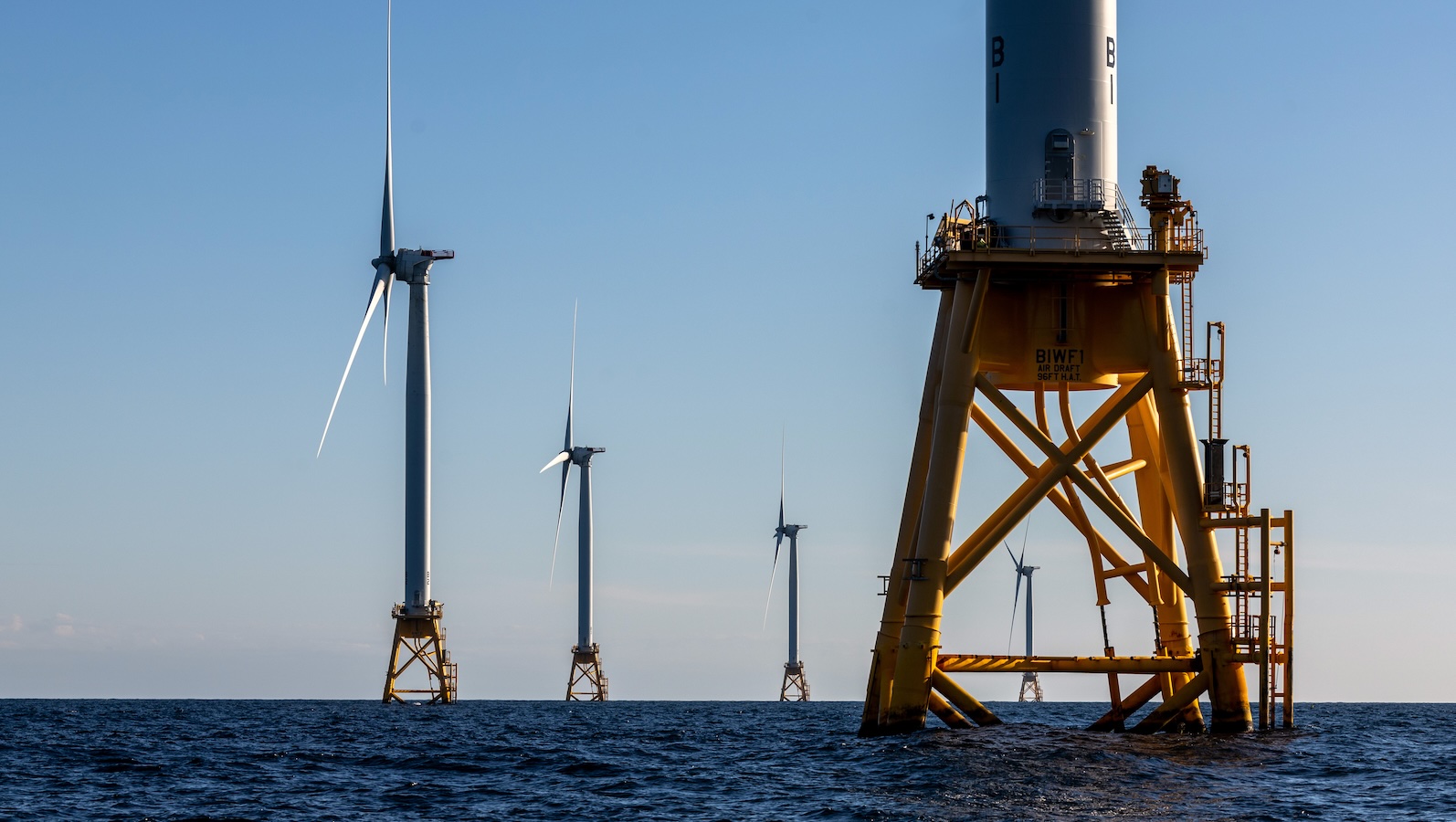
The federal rollback deals a particularly bitter blow to Louisiana, a state traditionally known as the heartbeat of the nation’s offshore oil and gas industry. Over the past decade, numerous Louisiana-based companies successfully leveraged their deep maritime engineering expertise, specialized vessels, and skilled labor force to pivot toward planning and constructing offshore wind farms along the U.S. East Coast.
Representative Orgeron’s family-owned supply boat business, alongside several prominent Louisiana engineering firms and metal fabrication shops, played a vital role in building the nation’s very first commercial offshore wind farm near Block Island, Rhode Island, back in 2016. That pioneering project proved that Gulf-state maritime workers possessed the exact skills needed to anchor a new American energy frontier.
As the East Coast market expanded, the work kept flowing southward. By 2024, nearly a quarter of all offshore wind supply chain and construction contracts in the United States had been awarded to firms based in the Gulf of Mexico region. According to data from the Oceantic Network, an industry trade association, roughly $1 billion in direct investments had successfully poured into local shipyards and fabrication facilities across Louisiana.
Recognizing the economic momentum, Louisiana’s educational institutions quickly restructured their academic offerings and training programs to meet the surging demand for specialized technical labor. Nunez Community College in Chalmette established a dedicated two-year wind turbine technician program, while the University of New Orleans launched its comprehensive Wind Energy Hub, which provided engineering scholarships and formalized internship pathways with leading offshore wind developers.
Among the major international players drawn to the region was RWE, the German energy giant behind the thwarted 2-gigawatt project in the Gulf. RWE had intended to utilize Louisiana’s robust workforce to construct its massive wind farm approximately 44 miles south of Lake Charles, with an anticipated operational date by 2035. The company had even secured a crucial local customer for the power, finalizing an agreement with Entergy to deliver electricity to an estimated 350,000 homes and industrial facilities across Louisiana and Texas.
However, as the offshore wind sector gained significant traction during the Biden administration, Donald Trump emerged as a vocal and persistent critic, repeatedly pledging to dismantle the industry if reelected. Trump’s personal animosity toward wind energy stretches back nearly two decades, originating in 2006 when he launched a bitter, decade-long legal and public relations battle against the Scottish government over an offshore wind farm that he argued would mar the scenic ocean views from a luxury golf course he was developing in Aberdeenshire.
Since that dispute, Trump has frequently disparaged wind power in public rallies and policy speeches. He has routinely characterized offshore turbines as severe threats to coastal property values and marine wildlife, while also making controversial and scientifically unfounded claims that wind technology can drive up food and bacon prices, cause cancer, and somehow drive nearby residents insane.
These policy stances and rhetoric have translated into tangible disruptions for Louisiana enterprises that invested heavily in retooling their business models for the clean energy transition, notes James Martin, CEO of Gulf Wind Technology, an Avondale-based company specializing in the design, construction, and testing of advanced wind turbine blades.
“It is a shame,” Martin remarked during the panel at Tulane University, reflecting on the abrupt halt to years of strategic growth. “It’s been a big pause button on what was a sleeping giant of an industry.”
To survive the current federal freeze, Martin’s company has been forced to adapt defensively, scrambling to secure alternative contracts within the aerospace and defense sectors to keep its doors open and its engineers employed. Other regional supply-chain businesses have not been as fortunate, forced to dramatically trim operating budgets, shelve expansion plans, and implement painful layoffs.
“There’s huge layoffs in the wind space, and some of the best engineers on the planet—they’re giving up,” Martin warned.
Despite the profound economic friction and the loss of billions of dollars in potential energy infrastructure, business leaders and political figures in Louisiana maintain that the foundational assets of their workforce remain intact. Shipyards, technical colleges, and specialized engineers are simply holding their collective breath, banking on the idea that the regulatory pendulum will eventually swing back, leaving them positioned to resume construction the moment the clock finally runs out in January 2029.