
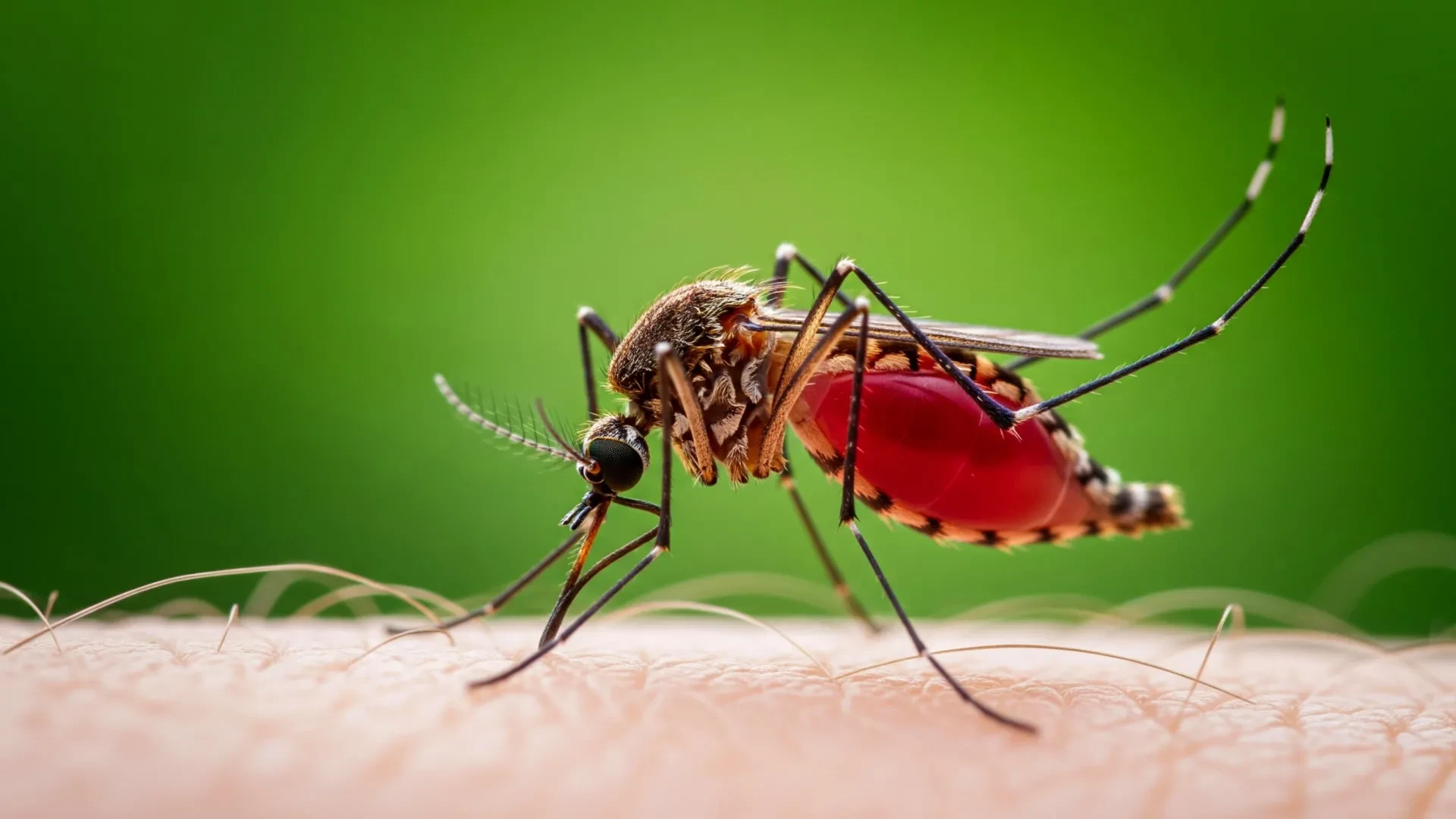
For centuries, individuals who seem to attract mosquitoes wherever they go have resigned themselves to a summer of relentless itching, often wondering why their companions escape unscathed. Popular wisdom has long pointed to vague notions about sweet blood, diet, or simply being an all-around "mosquito magnet." However, groundbreaking new research reveals that the reality is far more complex and fascinating than previously understood. Whether a person serves as a prime target for biting insects depends heavily on which specific species of mosquito is doing the hunting.
In a study recently published in the scientific journal iScience, researchers at Florida International University (FIU) tested how three of the world’s most dangerous mosquito species responded to a diverse pool of 119 human volunteers. In what proved to be a surprising twist for the research team, not a single participant acted as a universal magnet for all three species. Instead, each mosquito species favored an entirely different group of people, with their choices largely dictated by individual body chemistry and natural skin odors.
This significant discovery could fundamentally change how scientists and public health officials approach the prevention of mosquito-borne diseases across the globe. Because different mosquito species respond to distinct chemical signals emanating from human skin, researchers may eventually be able to develop next-generation, species-specific repellents. These advanced formulas would offer much more targeted and effective protection than the broad-spectrum deterrents currently available on the market.
"Isolating the components of human odor that attract or repel mosquitoes could lead to novel strategies to combat vector-borne diseases," said Matthew DeGennaro, a neurogeneticist who leads the research team and directs the Biomolecular Sciences Institute at FIU, Miami’s state university.
Different Mosquito Species Prefer Different People
The laboratory investigation focused on three prominent mosquito species responsible for spreading serious and potentially life-threatening illnesses, including yellow fever, dengue, Zika, West Nile virus, and other pathogens. The species evaluated in the study were Aedes aegypti, Aedes albopictus—commonly known as the Asian tiger mosquito—and Culex quinquefasciatus, the southern house mosquito. Each of these vectors poses unique public health challenges across different geographic regions and urban environments, making a deeper understanding of their host-seeking behavior a vital priority for researchers.
Led by Ph.D. student Kaylee Marrero, the investigation marked a major milestone as the first study to directly compare how multiple mosquito species react to the exact same human participants under controlled conditions. The findings revealed unexpected variations in the chemical and microbial signals that each species appears to rely upon when making the critical decision of whom to bite.
"We didn’t expect the species to prefer different people when we started the study," Marrero said, reflecting on the complexity of the insect behavior observed in the laboratory. "Each species having a distinct microbial signature that they use as a cue was so surprising to me."
While general assumptions have long held that mosquitoes share a uniform appetite for human blood, the data collected by the FIU team demonstrated that each mosquito species maintained its own distinct preferences among the 119 volunteers. Rather than overlapping in their choices, the insects exhibited specialized targeting behavior that pointed toward deep-seated evolutionary differences in how they perceive human hosts.
The Hidden Chemistry Behind Mosquito Attraction
The science of human body odor is far more complicated than it might initially seem to the casual observer. The human skin acts as a living ecosystem, releasing a complex mixture of more than 1,000 volatile organic compounds into the surrounding air. Many of these chemical compounds remain poorly understood by science, and researchers are still working to map out the full spectrum of substances produced by the human body.
During the study, the research team found that the three mosquito species did not share a common preference for particular individuals within the volunteer pool. Instead, each species consistently favored its own unique subset of volunteers. This consistent pattern strongly suggested that different mosquito species have evolved distinct methods for detecting, filtering, and interpreting human scent in their search for a blood meal.
To investigate the underlying factors that made certain people more appealing to specific insects, the team collected comprehensive samples of the participants’ body odors and skin microbiomes alongside the active mosquito preference tests. By analyzing these samples in the laboratory, the researchers were able to examine which specific chemical compounds and microorganisms were present on each individual, as well as measure their relative abundance.
The analytical results revealed strong, unmistakable connections between the mosquitoes’ feeding preferences and the variations in the chemical and microbial makeup of the volunteers’ skin. These correlations provided a clearer picture of how invisible biological factors influence insect behavior on a micro level.
"This connected so well with the differences in skin bacteria and odors," DeGennaro said. "It is clear to me now that our skin microbiomes define our human odor signature. Each species found its own way to decode that signature."
Could This Discovery Lead to Better Mosquito Repellents?
Gaining a precise understanding of why one mosquito species finds a particular person attractive while another remains indifferent could unlock entirely new possibilities for preventing dangerous infections. As global climate patterns shift and vector-borne diseases continue to expand into new territories, the demand for innovative prevention tools has never been more urgent.
By identifying the specific chemical compounds and skin bacteria that either attract or discourage different mosquito species, the FIU researchers are helping to establish a solid scientific foundation for the development of more precisely targeted repellents. Instead of relying on a one-size-fits-all approach, future insect-control products could be tailored to block the specific sensory receptors that particular species use to home in on human targets.
Furthermore, these findings have the potential to significantly improve public health strategies on a broader scale. Armed with this knowledge, communities and health agencies could focus their mitigation and prevention efforts on the specific mosquito species that are locally responsible for spreading disease in their region, rather than applying generalized tactics that may miss the mark.
Rather than continuing to operate under the assumption that all mosquitoes are drawn to the same people for the exact same reasons, future prevention methods may soon be designed around the distinct chemical preferences of each individual species. As researchers continue to decode the complex relationship between human skin chemistry and insect behavior, the days of universally scratching an unexplained mosquito bite may finally begin to fade.