
You can tell a lot about someone by the way they talk about ranch dressing. Do they express a fierce Midwestern passion for the creamy condiment, or do they view it with coastal-elite distaste? Do they strictly limit its usage to crisp iceberg lettuce salads, or do they become a jester of unexpected pairings, drizzling the iconic sauce over steak, pasta, and even cereal?
This cultural litmus test has taken on new dimensions as ranch transitions from an everyday household staple to a darling of upscale culinary innovation. Across the country, chefs are transforming the underdog condiment into a marquee menu item, often infusing it with culturally specific spins and deeply personal flair.
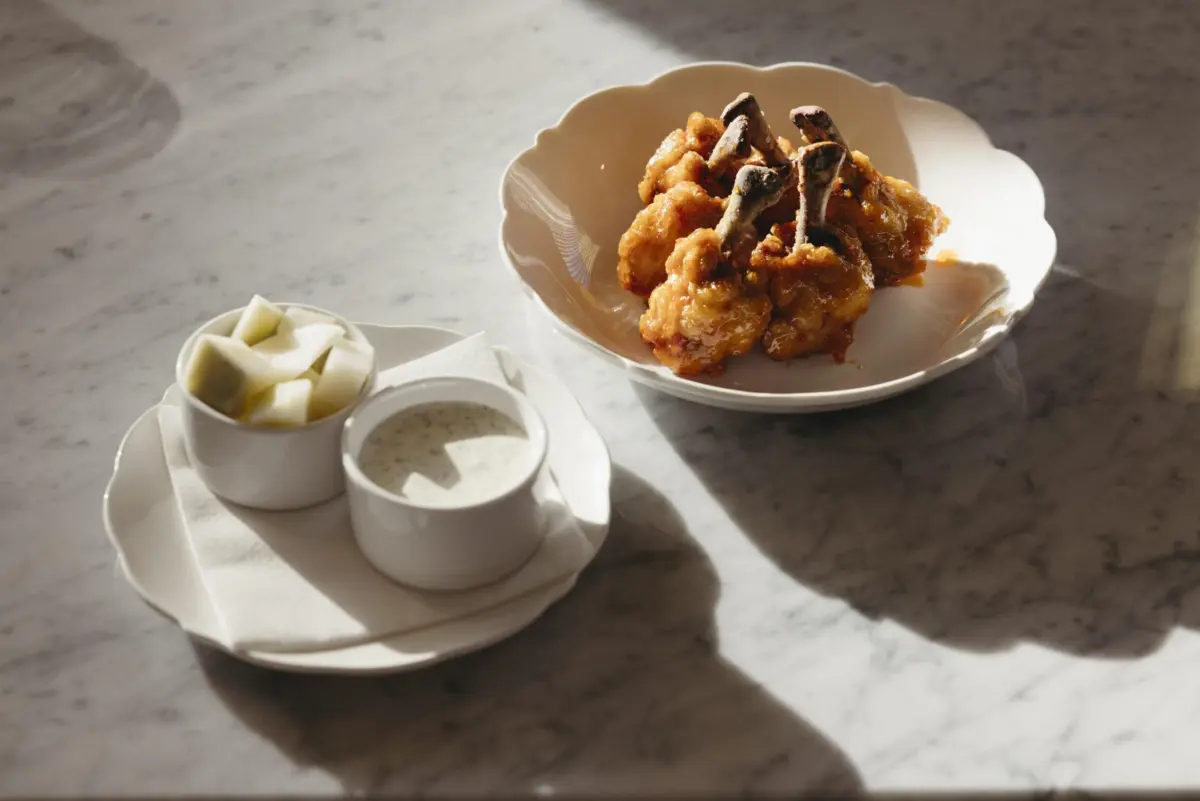
At Lapaba, a Los Angeles Korean-Italian restaurant, chef McKenna Lelah serves lollipopped fried chicken wings accompanied by a yuzu kosho ranch that has quickly garnered fervent fans. Lelah admits she initially hesitated to keep it on the menu.
“I love ranch, but I’m also one of those nostalgic kids of the 1990s,” she laughs. “I almost removed ranch from the menu after hosting a friends and family night because some of my colleagues weren’t sure if it made sense on the menu. But we kept it, and it’s been a hit. Kismet.”
Lapaba’s ranch retains classic elements, such as dill, but it is elevated with crème fraîche for extra tang, yuzu juice for acidity, and yuzu kosho for a distinct hit of citrusy heat. For Lelah, the sauce transcends the traditional boundaries of a condiment.
“When I’m eating ranch,” she says, “I’m mostly using the food as a vehicle to get the ranch to my mouth, you know? But I also don’t see it as a condiment. I see it as a main.”
Lelah is far from alone in her elevated approach. At Bistro Amasa in Santa Barbara, California, chef Julian Martinez consistently crafts dishes that riff on Y2K comfort and snack food classics. Currently, that philosophy manifests as a Cool Ranch Dorito-inspired crudo, featuring delicate cuts of hamachi dotted around a buttermilk-lime crème lake enhanced with garlic oil, masa, cilantro, and crunchy serrano pepper slices.
Similar creative takes have proliferated across the San Francisco Bay Area. Seafood destination Popis Oysterette offers a "fancy ranch" blending dill, chives, rice vinegar, and black pepper, while Prubechu, the city’s sole Chamorro restaurant, serves a distinctive wasabi ranch. Meanwhile, at Crispy Gai, a Thai restaurant in Portland, Maine, diners can dunk fried chicken into Nam Jim Seafood Ranch, a sauce that retains the creamy buttermilk base of classic ranch while incorporating the sharp kick of garlic, green chile, lime juice, fish sauce, and cilantro as a nod to traditional nam jim seafood sauce.
The story of ranch dressing began in 1954, when a plumbing contractor named Steve Henson invented the recipe, which originally consisted of buttermilk, mayonnaise, and a blend of herbs and seasonings. Henson initially served the dressing to his workers to liven up their salads. As its popularity soared, he began serving it out of a rustic, 1800s stagecoach-turned-restaurant called Cold Spring Tavern in the Santa Ynez mountains of California, where it remains on the menu today. Early do-it-yourself packets of the sauce, whipped up at Henson’s Hidden Valley Ranch—which is a real place—were marketed as a party dip, foreshadowing the dressing’s enduring crowd-pleasing capabilities.
With the exception of minor market competition from Italian dressing in the 1990s, ranch’s popularity has remained remarkably consistent, experiencing a notable upswing following COVID-19 pandemic lockdowns. According to consumer research firm Mintel, condiment consumption surged during the pandemic, offering a moment for shelf-stable products to shine, and demand simply never receded.

The current culinary movement, often dubbed the "Rancheissance," rides this wave alongside the broader "Great Chickening"—a term writer Bettina Makalintal coined to describe diners’ surging appetite for comfort foods like rotisserie chicken and chicken tenders, which naturally beg to be paired with ranch. Among New York City’s buzziest reservations has been Cleo Downtown, a rotisserie-chicken-focused restaurant created by the co-owners of Montague Diner and Margot. The Lebanese-inspired establishment serves twists on comfort food, including cornbread with harissa honey butter and a signature labneh ranch.
The international profile of ranch expanded even further during the 2026 FIFA World Cup, which provided a global stage for the condiment amid a broader wave of interest in American food and cultural cliches. The tournament featured viral moments from international visitors experiencing domestic food culture, from a German soccer fan praising Waffle House to a Scottish tourist vlogging about cream soda. Most prominently, social media feeds filled with videos of international travelers packing their suitcases with ranch dressing.
While the BBC later reported that the virality of the tourist obsession was amplified by users reposting older footage, the internet phenomenon had tangible consequences. Kraft responded by creating TSA-compliant mini bottles of Hidden Valley Ranch, and Buffalo Wild Wings debuted Poppin’ Ranch, a Pop Rocks-style candy designed to recreate the sensation of crispy, ranch-covered wings. Suddenly, the sauce was not only raising eyebrows on sophisticated menus but making headlines in major financial and news publications declaring that ranch had won the summer.
Despite its ubiquity, ranch has long endured as a frequent culinary punching bag. Online communities like Reddit feature ongoing debates regarding its status as an economic flavor savior, often accompanied by a hint of self-awareness.
“It goes with everything savory and helps to make up for the complete lack of flavor that most foods have,” one user commented in a discussion questioning personal taste preferences, adding, “If I weren’t broke…”
Another user shared a personal "dressing theory," suggesting that preferences for certain condiments can reveal baseline personality traits.
Chef Lelah believes this enduring duality in ranch’s cultural reputation stems from two distinct factors, noting that she grew up in a household where certain condiments were standard table fixtures regardless of the meal.
“As a chef, you want to innovate, and you can deal with a lot of insecurity,” Lelah reflects. “But nostalgia is important. What people feel tied to is important.”
For millions of consumers, ranch reliably enhances the enjoyment of food. Yet, the open admission of loving that simplicity has historically clashed with cultural narratives rooted in restrained or demanding work ethics.
“There’s a weird shame around ranch,” Lelah says. “But, ultimately, you don’t really have anything worth keeping on your menu unless it resonates with your diners, right? That’s the whole basis of the restaurant business. Of why we do it at all.”