
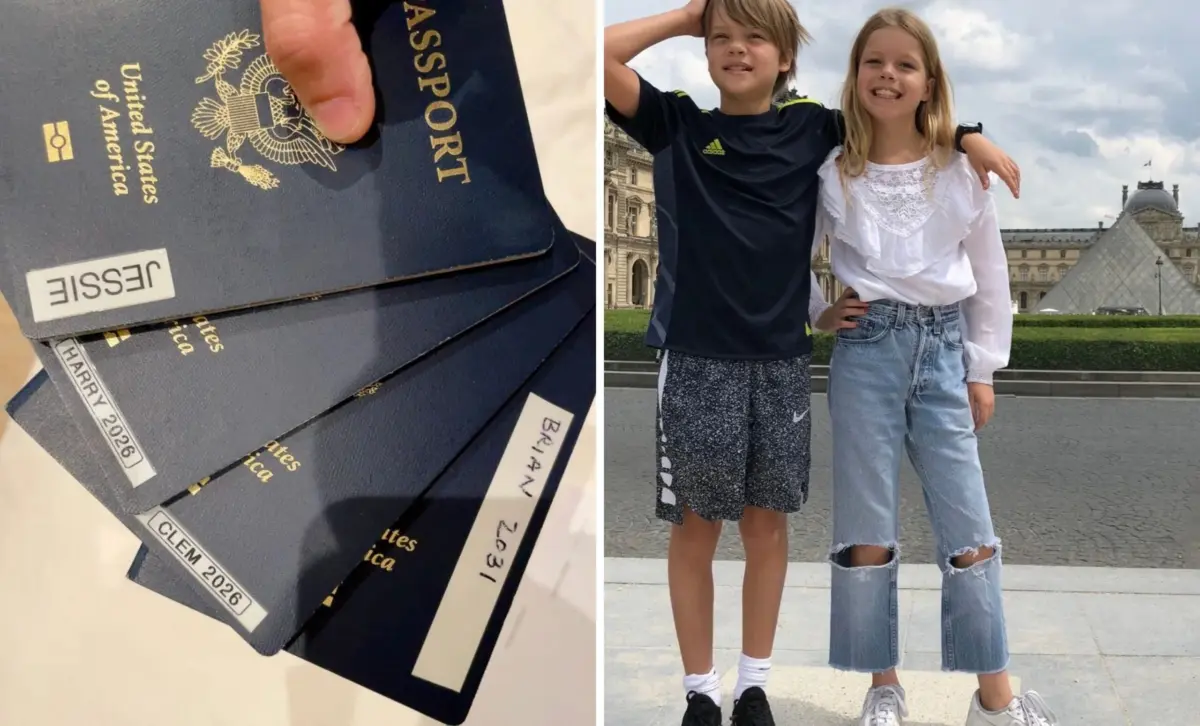
For many families, the excitement of an upcoming vacation can quickly give way to frantic last-minute preparations, document checks, and the universal anxiety of airport security lines. Even the most seasoned travelers occasionally overlook the fine print of travel logistics until it is nearly too late. This common scenario was highlighted recently by designer and writer Jessie Randall, who shared a simple yet remarkably effective organizational strategy designed to eliminate one of the most stressful aspects of family travel: tracking expiration dates and identifying documents on the fly.
Reflecting on a stressful travel mishap from several years ago, Randall recalled realizing that her passport was set to expire just days before a major family trip. The sudden panic forced her to rush to an expediter service to secure an emergency renewal. The consequence of that rushed visit was a passport photograph featuring an expression of pure terror—a permanent fixture she was forced to live with for years every time she crossed an international border.
Determined to never repeat that experience or subject herself and her family to the same logistical nightmare, Randall devised a straightforward preventative system. She began labeling her name and the exact passport expiration date directly on the outside cover of her passport. Finding the method transformative for her own travel routines, she expanded the practice to include clearly marked labels bearing the names and expiration dates on the outside of her husband’s and children’s passports as well.
Beyond preventing unexpected expiration emergencies, the physical labels serve a critical practical purpose during the chaotic navigation of airport security checkpoints. Juggling multiple carry-on bags, electronic devices, boarding passes, and identification documents for a family can easily overwhelm even the calmest travelers. By placing clear, easily readable external labels on every family member’s booklet, Randall noted that it becomes significantly faster and easier to instantly recognize whose passport is whose while moving through security lines, customs, and immigration counters.
The strategy addresses a frequent pain point for parents and group travelers alike. Standard passport covers often look identical, particularly when issued by the same country, leading to frustrating delays as travelers flip through multiple identical booklets to find the correct document for a specific child or spouse. External labeling bypasses this step entirely, allowing travelers to grab the right document immediately under pressure.

Randall’s shared insight has resonated broadly within travel communities, prompting discussions among families and frequent fliers regarding the small, everyday habits that make international travel smoother and more manageable. While major travel disruptions often dominate news cycles, experienced globetrotters frequently emphasize that the difference between a seamless journey and a stressful headache often comes down to micro-organization before leaving the house.
The conversation around practical travel enhancements underscores a broader cultural interest in simplifying family mobility. Whether through strategic packing choices, advanced document management, or preventative scheduling, travelers continually look for grassroots methods to streamline the airport experience. As family travel continues to rebound and airport security environments remain high-pressure zones, small preventive measures like external document labeling offer a tangible way to reduce anxiety and keep journeys moving forward without unexpected interruptions.