
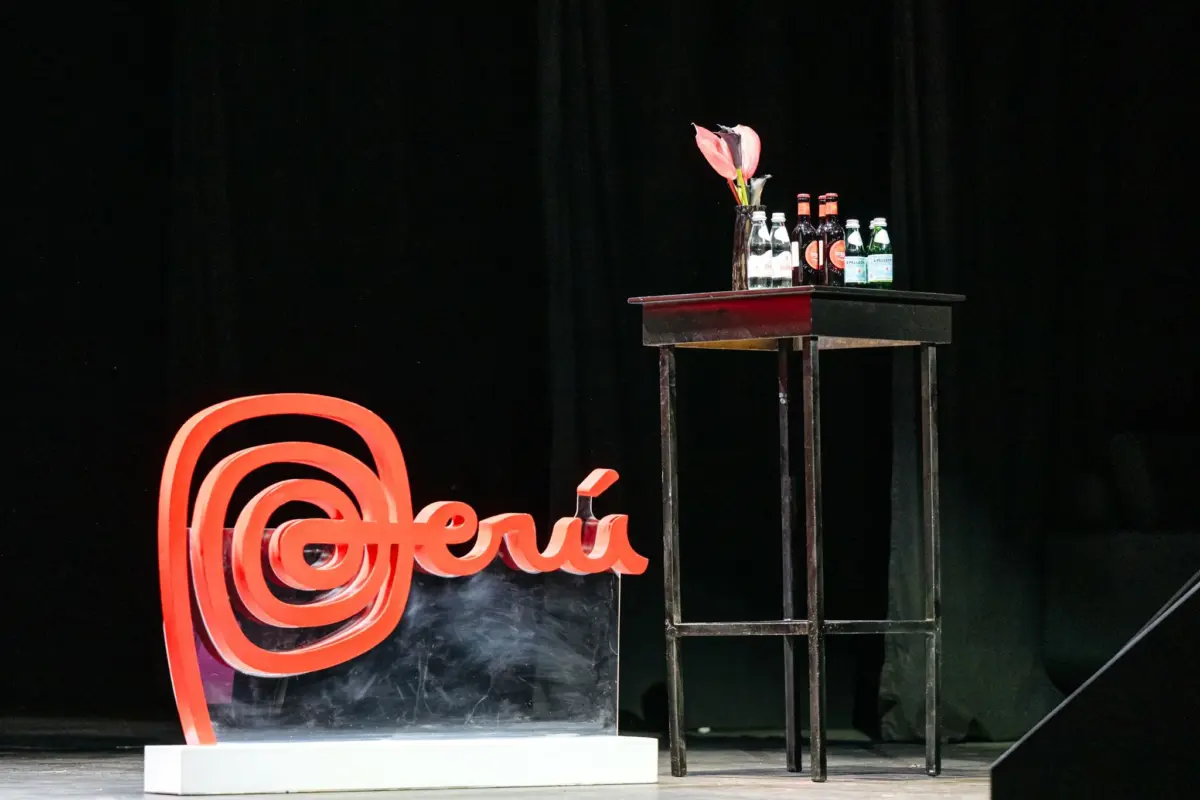
LIMA, Peru — In a celebration that shifted the global culinary spotlight to South America for the first time, Spain’s revered Asador Etxebarri was named the world’s best restaurant on Wednesday night. The prestigious accolade was revealed during an annual awards ceremony hosted by The 50, the prominent international dining organization formerly known as 50 Best.
Nestled in the lush hills of the Spanish Basque Country between Bilbao and San Sebastián, Etxebarri has long commanded international reverence. At the helm is master griller Bittor Arginzoniz, whose meticulous technique involves matching the specific characteristics of various woods with the plants and proteins sizzling over his custom-engineered flames. Moving up from the No. 2 spot it held in the previous year’s rankings, the restaurant maintains a single Michelin star while continuing to draw culinary pilgrims from around the globe, with tasting menus priced around $337.
The ceremony, marking the first time The 50 has hosted its flagship event in South America, proved to be a banner night for international gastronomy. New York’s acclaimed Atomix secured the No. 11 spot and was officially named the Best Restaurant in North America, while chef Junghyun Park took home the coveted Chef’s Choice Award.
Securing a coveted placement on The 50 remains one of the highest individual honors a dining establishment can achieve within the global hospitality industry. The list has historically leaned toward the upper echelons of expensive, elaborate fine dining, frequently celebrating tasting menus rooted in molecular gastronomy alongside the elemental elegance of a traditional Spanish grill, the precise sourcing missions of high-end South American steakhouses, or the laidback cool of modern Parisian neo-bistros.
This year’s event, however, arrived against a backdrop of logistical shifts and industry debate. Earlier in the year, the organization faced notable controversy following the initial announcement that the ceremony would take place in Abu Dhabi, a location that drew criticism from various corners over human rights concerns. Organizers subsequently reversed course, announcing in June that the event would instead be hosted in Peru. The South American nation is home to Maido, the celebrated Lima restaurant that claimed the No. 1 rank last year. Under the organization’s guidelines, Maido was ineligible for this year’s active ranking, transitioning instead into the "Best of the Best" hall of fame alongside previous champions such as Barcelona’s Disfrutar and New York’s Eleven Madison Park.
Who were the other contenders?
The upper tiers of the 2026 ranking featured heavy hitters and innovative kitchens from across the globe. Securing the No. 4 spot was Quintonil, the two-Michelin-starred Mexico City destination led by culinary power couple Jorge Vallejo and Alejandra Flores. The restaurant serves a multi-course prix-fixe menu—priced around $327 per person—that reimagines local, pre-Hispanic ingredients in vibrant and unexpected ways. Recent seasonal iterations have featured inventive creations such as lobster served in a pipián verde with makrut lime, alongside heirloom white corn tamales prepared with ayocote beans and young corn cream.
Up in Scandinavia, Copenhagen’s Alchemist claimed the No. 3 position. Overseen by chef Rasmus Munk, the restaurant offers an avant-garde dining experience that borders on science fiction, incorporating theatrical elements and dishes designed to mimic human brains and eyeballs. The immersive theatrical production boasts up to 50 distinct impressions, blending edible creations with purely experiential art. Alchemist holds two Michelin stars and previously ranked fifth overall.
Meanwhile, Bangkok’s Gaggan captured the No. 2 spot, while also earning the regional title of Asia’s Best Restaurant on the strength of Gaggan Anand’s creative, genre-bending approach to modern Indian cuisine.
How does a restaurant get on The 50 best?
As the prestige of the list has grown, so too has scrutiny regarding its mechanics. Critics of the World’s 50 Best have frequently raised questions regarding its voting practices, specifically noting that voters are not explicitly required to pay out-of-pocket for their meals.
Defending its methodology, the organization notes that the ranking is determined by a vast voting body consisting of more than 1,100 independent experts across 28 global regions, with a quarter of the panel replaced annually. The demographic is evenly divided among chefs and restaurateurs, food journalists, and seasoned, well-traveled gourmets. With the exception of designated Academy Chairs, the identity of the voting members remains strictly anonymous.
While the organization maintains that every style of restaurant worldwide is technically eligible for consideration, the final roster overwhelmingly reflects high-end fine dining, even as competing guides have increasingly integrated casual formats and street-food vendors into their respective accolades.
Who is the chef sitting out of the awards?
The glossy exterior of the awards gala was tempered this year by notable public criticism from within the culinary community. Ana Roš, the chef-patron behind Slovenia’s three-Michelin-starred Hiša Franko, published a candid statement on Instagram ahead of the Lima ceremony detailing her decision to boycott the event.
"Success within the ranking has come to depend increasingly on visibility within the system," Roš wrote, pointing to a broader systemic shift. "When visibility becomes the currency, the ability to promote a restaurant in this system risks becoming as important as the work happening inside it."
Roš, who was named the world’s best female chef by the organization in 2017, elaborated on the pressures facing modern operators, noting that restaurants and regional tourism boards frequently find themselves navigating informal campaigns, often absorbing the costs of travel, meals, and specialized hospitality extended to anonymous voters in an effort to boost their standing.
"With more rules and a little bit more control, this list can really shine again," Roš said in a subsequent interview.
Despite her absence from the gala, Hiša Franko appeared at No. 60 on the extended 51-100 ranking revealed in the lead-up to the event, following positions at No. 69 last year and No. 48 in 2024. Characterizing any placement on the exhaustive global list as a fantastic result, Roš extended her well-wishes to her peers gathering in Peru.
The full ranking for the year placed establishments from Sydney to Copenhagen across the map. The final countdown concluded with Saint Peter in Sydney rounding out the list at No. 50, working upward through prominent international destinations like London’s Ikoyi at No. 48, Buenos Aires staple Don Julio at No. 44, Copenhagen’s Jordnaer at No. 40, and Paris dining room Plénitude at No. 10, before culminating with Asador Etxebarri taking the crown at the very top.