
Traditional travel has long followed a familiar script. Vacationers drop into a foreign destination, check off a list of standard landmarks photographed by millions before them, dine at guidebook-recommended restaurants, and briefly patronize local nightlife. Tourists often take structured sightseeing tours to learn about regional history and heritage, hoping to occasionally cross paths with residents. Yet, despite these efforts, most travel remains inherently extractive and passive. Travelers pass through a destination without ever truly going beneath the surface.
Even long-term travelers who pride themselves on not being typical tourists often fall into the exact same routine. They simply move at a slower financial and geographical pace, attempting to stretch their budgets while traversing the globe. While travelers universally imagine dropping into a foreign culture, instantaneously befriending locals, and experiencing cinematic adventures, reality rarely aligns with these expectations. Because travelers are merely passing through, residents rarely have the desire or incentive to cultivate deep friendships with temporary visitors. For the most part, everyday locals do not actively interact with tourists, making profound cultural integration the exception rather than the norm.
Achieving a genuine, transformative travel experience requires a fundamental shift in approach. Understanding a destination demands time, physical presence, and the willingness to stay long enough to build authentic relationships. The most impactful and memorable journeys frequently involve contributing directly to a host community rather than treating a country as a temporary backdrop. Becoming truly embedded in a local environment allows travelers to transcend the superficial barriers of traditional tourism.
Encouraging modern travelers to give back during their journeys has become a central focus for industry advocates. In previous decades, identifying legitimate, thoroughly vetted organizations and opportunities that genuinely improved the lives of local residents presented a significant logistical challenge. Today, however, a growing sector of specialized organizations helps travelers secure meaningful volunteer positions, paid employment, and structured international placements. Among the most prominent organizations facilitating these opportunities is Global Work and Travel, which provides comprehensive placement services across the globe.
What Global Work & Travel Does
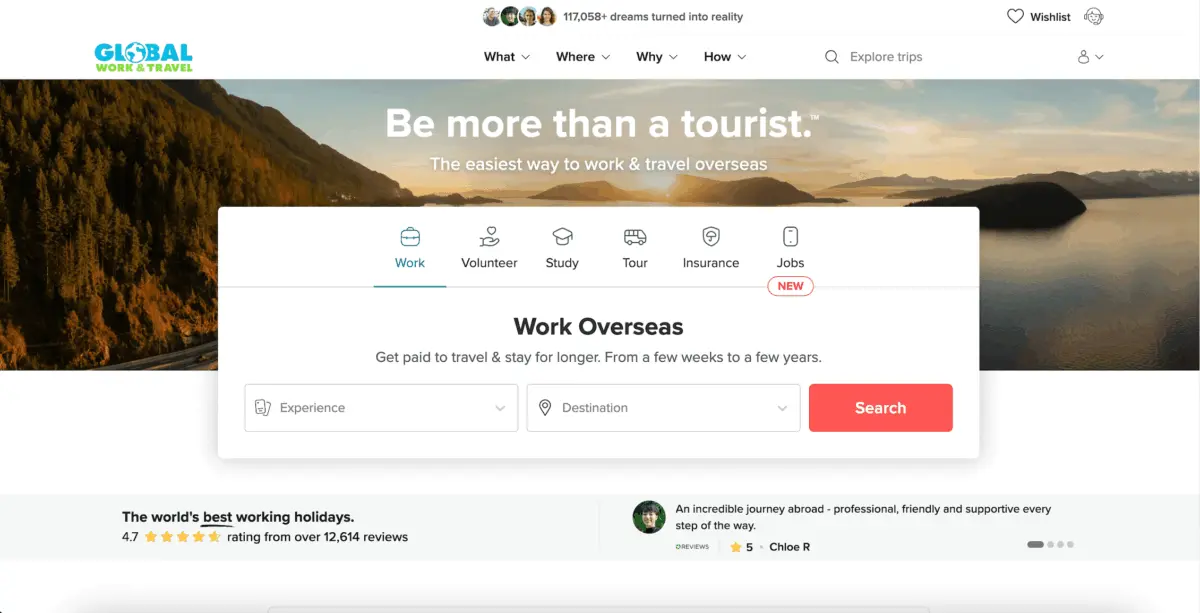
Operating as the world’s largest gap year and international placement organization, Global Work and Travel has spent nearly two decades placing participants in working holidays, volunteer programs, teaching positions, and professional internships. To date, the organization has facilitated international placements for over 116,000 individuals across diverse destinations spanning the United Kingdom, Europe, the Americas, Asia, Africa, and the Pacific.
Despite the romanticized appeal of moving abroad, the logistical reality can prove daunting even for seasoned travelers. Securing legal employment independently, finding permanent housing without getting trapped in costly shared rooms for months, calculating volatile urban transport costs, and competing against local candidates in job interviews represent only a fraction of the hurdles confronting long-term travelers. These complex variables often deter aspiring adventurers before they even book a flight.
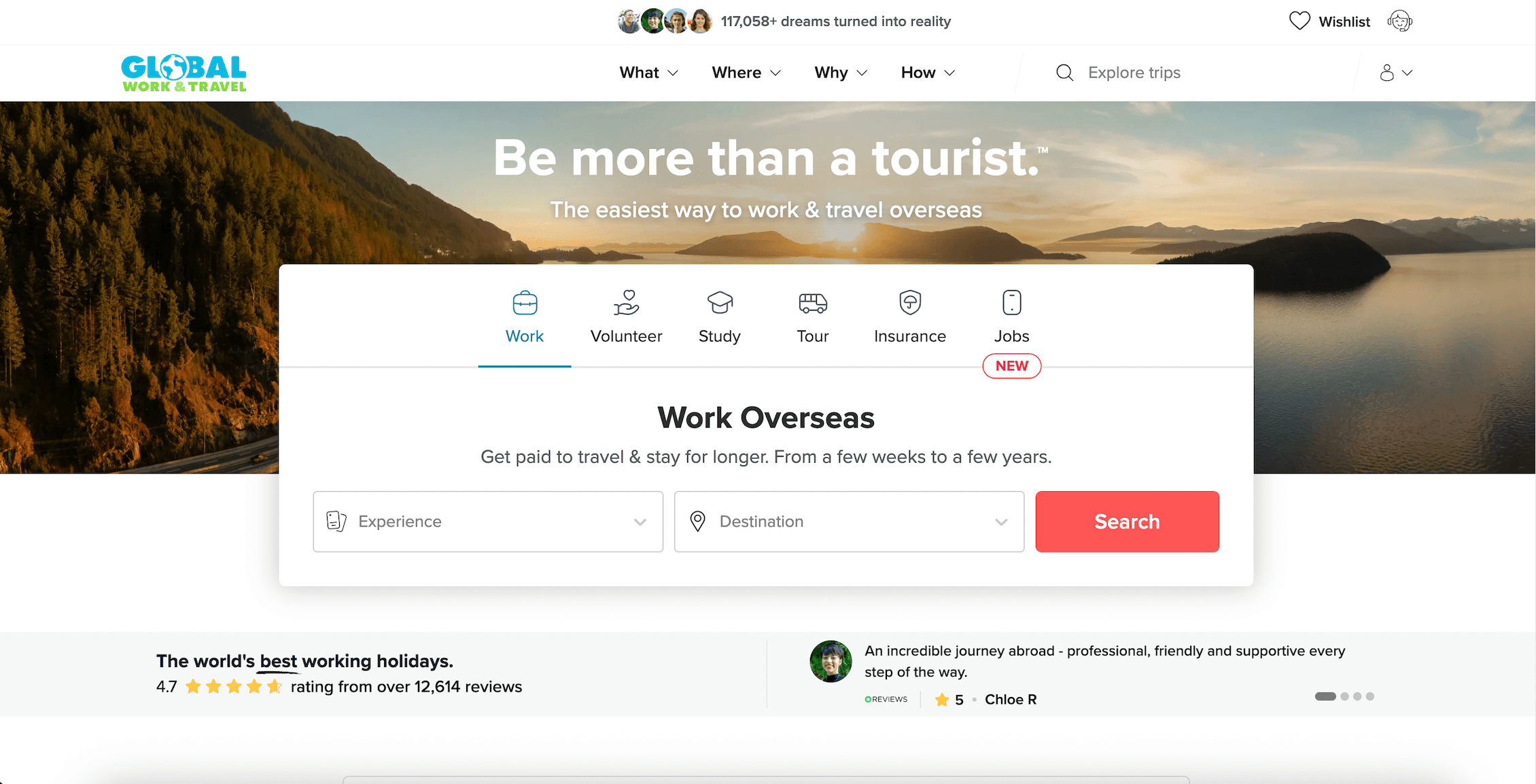
To mitigate these obstacles, structured international programs provide essential logistical scaffolding and safety nets. Organizations like Global Work and Travel handle critical elements such as job matching, pre-departure support, visa guidance, official placement, and ongoing assistance. Much of this coordination is managed through integrated digital platforms like the gWorld portal, a personal trip management application designed to keep travel documentation and scheduling organized in a single location. For first-time travelers venturing abroad independently, having a reliable support structure often dictates whether a journey becomes a reality or remains an unrealized ambition.
Why Working Holiday Makers Are the New Digital Nomads
For the past decade, the concept of the digital nomad has dominated aspirations for long-term travel. The established model promotes working remotely, earning an income in a strong currency, residing in a lower-cost destination, and repeating the cycle indefinitely. However, this lifestyle inherently serves only a small demographic. Sustaining digital nomadism requires remote employment viability, a dependable income threshold, and a level of career stability that younger travelers or those transitioning between life stages rarely possess.
Working holidays completely reverse this formula. Instead of attempting to bring an existing remote job across international borders, participants secure legal employment upon arrival. This approach integrates travelers directly into the local economy rather than leaving them floating above it as isolated outsiders. Participants build social networks through daily workplace interactions rather than relying exclusively on coworking spaces or transient hostels. Consequently, they establish a grounded, sustainable life complete with daily routines, professional colleagues, and compelling reasons to remain in a destination well beyond a standard vacation window.
In many respects, working holiday makers experience a more authentic, grounded version of the lifestyle often romanticized by digital nomads. Participants maintain a steady work schedule, establish genuine roots, and unlock opportunities for lifelong personal connections. Furthermore, this pathway remains vastly more realistic for the general population. Aspiring international workers do not require a pre-established remote business or years of professional seniority; they simply need a willingness to relocate and the proper administrative setup to ensure a smooth transition.
This evolving preference reflects a broader shift within the global travel community. Travelers are asking fewer questions about how to sustain remote work and focusing more intently on how to legally live and work abroad for extended periods. Structured international programs directly address this demand by dismantling major administrative barriers—such as securing employment, navigating complex visa frameworks, and managing initial housing logistics—enabling participants to transform conceptual travel plans into tangible experiences.
Why Volunteering Matters
International volunteering has historically carried a complicated reputation, necessitating an honest evaluation of industry standards. The global volunteer market features numerous programs that fail to deliver tangible community benefits, functioning instead as profit-driven campaigns designed primarily to make travelers feel virtuous without creating lasting structural change. Vetted organizations address this issue by carefully reviewing programs across wildlife conservation, community development, education, and healthcare to ensure legitimacy and measurable local impact.
When structured ethically and managed responsibly, volunteering yields powerful outcomes. Working alongside local communities in regions like Zanzibar to address self-defined regional priorities, participating in conservation efforts across South Africa, or supporting elephant rescue and rehabilitation initiatives in Thailand fundamentally alters a traveler’s global perspective. Participants not only contribute meaningful labor to host regions but also gain a profound understanding of the daily struggles, systemic needs, and environmental realities facing local ecosystems and populations. Additionally, dedicated initiatives like the Global Animal Welfare Fund channel financial resources directly into conservation projects at partner sites, ensuring that community impact extends far beyond individual volunteer placements.
What I Love About Working Holidays
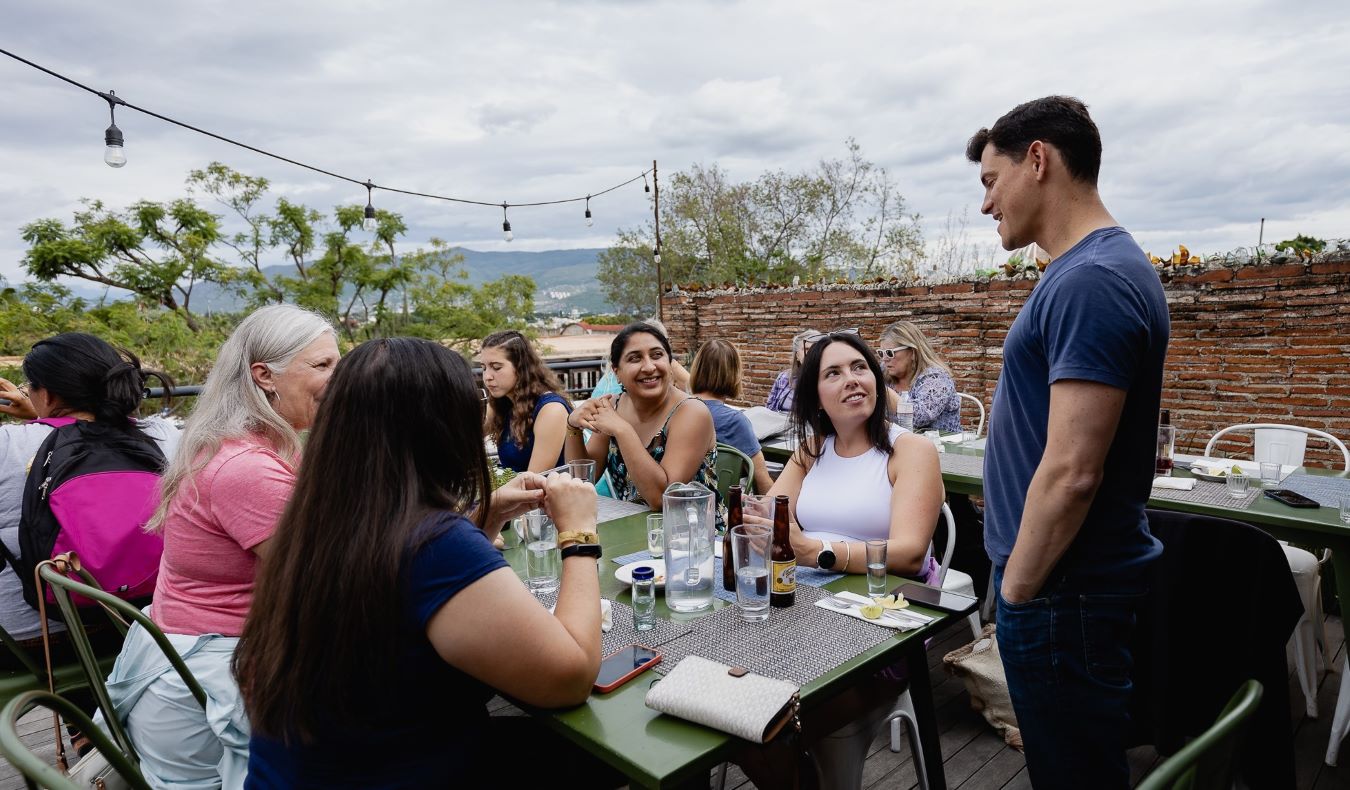
Working holidays transform international travel from a brief holiday into an immersive lifestyle. By living like a resident on a day-to-day basis, participants engage deeply with regional cultures, forge authentic friendships with both locals and fellow travelers, and extend their journeys significantly beyond the traditional two-week timeframe. Earning local wages helps offset living expenses, making extended travel financially viable while allowing participants to uncover hidden regional gems and develop genuine cultural literacy. Simultaneously, working abroad enhances professional resumes with valuable international experience, equipping travelers with cross-cultural communication skills that traditional tourism simply cannot provide.
What I Like About How Global Work & Travel Operates
As a leading organization in the long-term travel sector, Global Work and Travel maintains a comprehensive suite of offerings tailored for individuals seeking extended international stays, volunteer opportunities, and structured work placements. The organization’s operational framework is designed to alleviate the primary logistical burdens associated with international relocation.
Frequently Asked Questions
Most international work programs require little to no prior professional experience beyond basic foundational work history. Specialized teaching programs incorporate formal TEFL training, while standard volunteer placements are generally accessible to individuals with no prior field experience. The minimum age requirement for the vast majority of programs is 18. While working holiday visas typically impose upper age limits ranging up to 35 depending on the destination country, structured volunteer and teaching programs remain open to participants aged 18 to 80.
The preparation timeline varies depending on the specific program and destination chosen. Most participants initiate their booking process six to twelve months in advance to ensure adequate time for logistical planning, job matching, and compliance with strict government visa quotas. Flexible entry options allow travelers to reserve placements with minimal initial deposits. To protect participants against unexpected life changes or geopolitical disruptions, structured policies such as lifetime deposit guarantees ensure that initial payments do not expire, while comprehensive consumer protection memberships offer additional financial security. Solo travelers represent a significant portion of program participants, utilizing integrated community portals and group-oriented placements to connect rapidly with peers sharing similar itineraries.
Ultimately, travel achieves its highest value when it transcends passive sightseeing. The experiences that endure in memory years later rarely stem from standing in queues outside famous landmarks; instead, they arise from active human connection and meaningful participation. Organizations that streamline the logistics of long-term international engagement make deep cultural immersion accessible to a broader demographic than ever before, turning the aspiration of living abroad into a sustainable reality.