
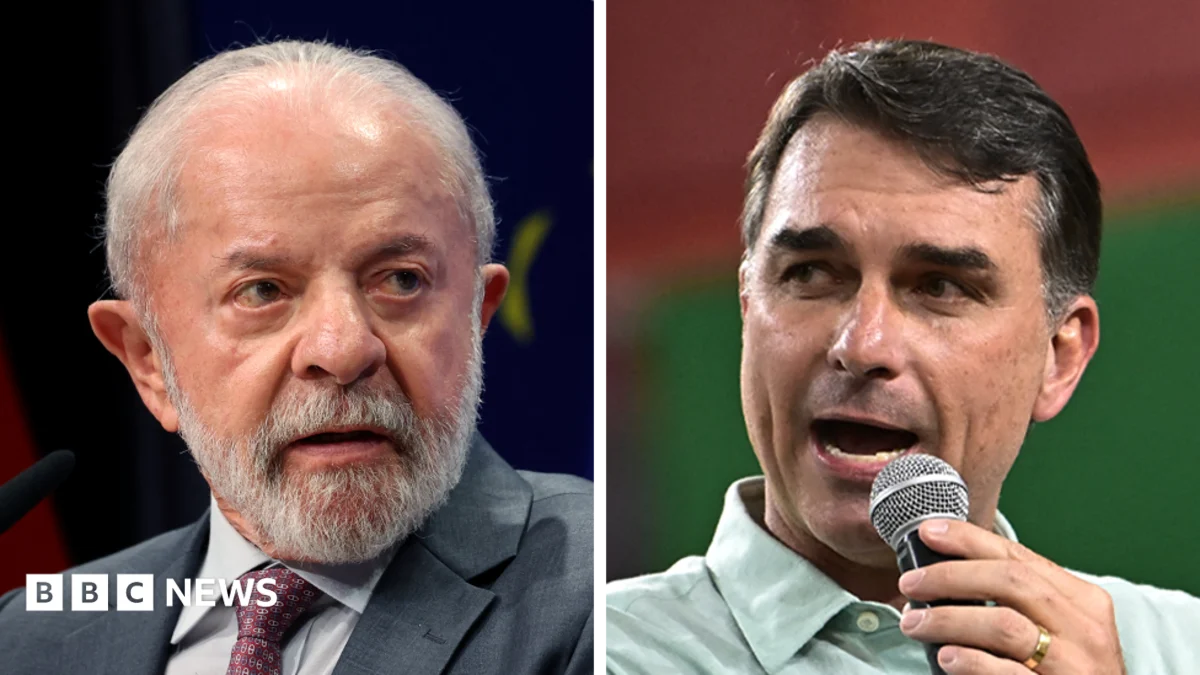
Polls across Brazil have officially closed after millions of voters endured long lines at polling places throughout the country to cast their ballots in a fiercely contested first round of the presidential election. The high-stakes contest pits the incumbent left-wing president against a prominent right-wing challenger, capping off a dramatic and deeply polarized political campaign that has captured global attention and underlined the profound ideological divisions within Latin America’s largest democracy.
After casting his ballot earlier in the day, Brazil’s 80-year-old left-wing President Luiz Inácio Lula da Silva framed the choice before the electorate in stark, historic terms. Speaking to reporters after voting, Lula warned that the fundamental question facing the country went far beyond routine partisan disagreements, asserting that voters were deciding between the preservation of democracy and a slide into what he characterized as "barbarism." His message reflected the intense gravity with which his campaign has approached the race, positioning his candidacy as a vital bulwark for democratic institutions and social stability.
On the opposing side of the political spectrum, his primary rival, 45-year-old right-wing politician Flávio Bolsonaro, presented a dramatically different vision for the country’s political future. Upon casting his vote, Flávio Bolsonaro declared that his overarching objective in seeking the presidency was to "free the Brazilian people." Representing a conservative platform focused on economic liberation and a rejection of left-wing governance, his campaign has sought to mobilize conservative voters and tap into deep-seated discontent with the incumbent administration.
Electoral forecasts and final pre-election polling indicate that the race is poised to be exceptionally tight. According to the poll aggregator maintained by BBC Brazil, the gap separating Lula and Flávio Bolsonaro stands at just two percentage points, leaving the outcome well within the margin of error as election officials begin the counting process. Under Brazilian electoral law, if no single presidential candidate manages to secure more than 50% of the valid votes in this initial round, the contest will proceed to a head-to-head run-off election scheduled for 25 October.
The sheer scale of the voting process reflects Brazil’s standing as one of the world’s largest democracies. Data released by Brazil’s Superior Electoral Court (TSE), the official body responsible for overseeing national elections, shows that more than 158.7 million Brazilians are registered and eligible to participate in this election. That total includes approximately one million citizens residing abroad who are registered to vote from foreign countries, making the overseas electorate an increasingly visible component of the broader national tally.
While national attention has focused primarily on the head-to-head battle between the incumbent president and his top conservative challenger, the ballot itself featured a wider field of contenders. President Lula faced challenges from 11 distinct candidates representing a wide variety of political parties and platforms across the ideological spectrum. However, data compiled by the BBC Brazil poll aggregator revealed that all third-party candidates combined were expected to capture only about 10% of the total vote share. This concentration of support behind the two main contenders underscores the entrenched two-pole dynamic that continues to dominate contemporary Brazilian politics.
Following the formal closure of polling stations across the country’s various time zones, attention has turned quickly to the Superior Electoral Court and the processing of votes. Although the TSE has not established a fixed, predetermined time for the official declaration of the final results, the outcome is expected to become clear within hours. Brazil relies entirely on a fully electronic voting system, which has been refined over successive election cycles and historically allows election authorities to tallies millions of ballots swiftly once the polls close.
Beyond its enormous domestic ramifications, the outcome of the presidential race carries significant geopolitical implications for foreign relations across the Americas and around the globe. A victory for Flávio Bolsonaro would mark a major political shift that could extend a recent wave of electoral victories by right-wing candidates across Latin America. Many of these conservative leaders have positioned themselves in close alignment with United States President Donald Trump, sharing similar economic ideologies and political strategies.
Conversely, the re-election of President Lula would maintain the current administration in the Planalto Palace, potentially prolonging diplomatic friction between Brasilia and Washington. Lula’s government has repeatedly clashed with political leadership in the United States over major foreign policy matters, including international trade agreements, regional economic alliances, and security policy. The election outcome is therefore being monitored closely by foreign diplomats and international observers assessing the future trajectory of Latin American foreign policy and global trade dynamics.
Even before domestic polling locations had closed across Brazil’s primary time zones, preliminary vote count data began to emerge from overseas voting locations in countries where polling had wrapped up hours earlier. Under Brazilian electoral rules, citizens living abroad are permitted to cast ballots for the presidency at designated diplomatic posts and consulates, providing an early snapshot of political preferences among the diaspora population.
In China, early official returns showed a decisive victory for President Lula, who secured 56.63% of the valid overseas votes cast in the country. Flávio Bolsonaro finished in second place among voters in China, gathering 31.33% of the vote share. Preliminary results from several other international locations also showed strong performances for the incumbent president, with Lula securing victories among voters residing in South Korea, New Zealand, and Saudi Arabia.
However, the overseas vote revealed equally sharp ideological splits across different foreign capitals and regions. In Israel, Flávio Bolsonaro achieved a commanding victory, winning 74.40% of the valid votes counted at diplomatic voting stations. The right-wing challenger recorded another overwhelming win in Japan, where he captured 71.59% of the valid votes. These contrasting international figures highlight the distinct political tendencies present within different segments of Brazil’s global diaspora.
In addition to deciding the presidency, voters participating in today’s national election are also determining the future political balance of the national legislature. Crucially, the election will shape the composition of the Federal Senate from February 2027 onwards. A total of 54 seats out of the 81 seats in the upper chamber of Congress are being contested in this election cycle, representing two-thirds of the Senate’s total membership.
The outcome of the legislative races will have a profound effect on whichever presidential candidate ultimately occupies the presidency, determining the executive branch’s ability to pass legislation, confirm judicial appointments, and navigate national policy. Currently, the largest political bloc in the Senate is controlled by Flávio Bolsonaro’s Liberal Party (PL). The second-largest political force in the upper house is the Social Democratic Party (PSD), which has participated in a governing coalition with President Lula’s administration. The reshuffling of these 54 seats will fundamentally alter congressional power dynamics for years to come.
The intense backdrop to today’s vote is deeply tied to the dramatic events of Brazil’s previous presidential campaign four years ago. In that election, Lula achieved a remarkably narrow victory over Flávio Bolsonaro’s father, then-President Jair Bolsonaro, in a second-round run-off that exposed deep fissures throughout Brazilian society. The fallout from that election subsequently plunged the nation into one of its most serious political crises in recent history.
Following his defeat four years ago, Jair Bolsonaro challenged the legitimacy of the election results, setting off months of intense turmoil. The political unrest culminated in an unprecedented assault on the nation’s democratic institutions, when thousands of Jair Bolsonaro’s supporters stormed and vandalized the Brazilian Congress, the Supreme Court, and the presidential palace in Brasilia. Subsequent official investigations into the uprising led to serious criminal charges against the former president, culminating in Jair Bolsonaro’s conviction for plotting a coup d’état to overturn the democratic outcome.
As a result of his conviction, Jair Bolsonaro was sentenced to 27 years in prison and legally barred from standing for elected office, removing him directly from the national political stage. However, due to recurrent and severe health problems, the former president is currently serving his sentence under house arrest rather than inside a prison cell. Under the strict judicial terms of his house arrest, Jair Bolsonaro has been explicitly prohibited from making public statements or posting on social media platforms.
Despite the severe legal penalties, physical confinement, and communication bans imposed on the former president, there is little doubt among observers that Flávio Bolsonaro’s presidential bid carries his father’s full political backing and heritage. By putting forward his 45-year-old son as the right-wing flagbearer, the Bolsonaro political movement has sought to maintain its influence and offer its conservative base a direct line of continuity. As the electronic counting machines tally tens of millions of votes across the nation, Brazilians now await the official verdict that will decide whether that conservative movement returns to power or whether Lula secures a second consecutive term.