
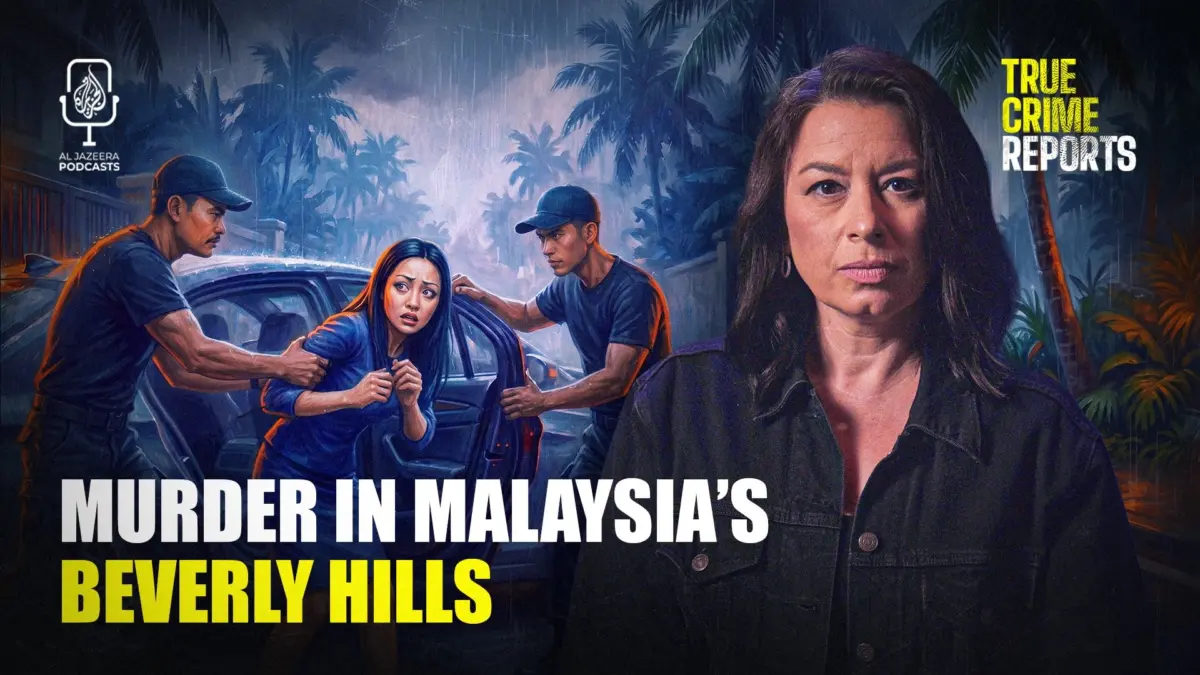
In late 2006, a horrific crime occurred in Malaysia that would send shockwaves through the country’s political establishment and leave an enduring shadow over its judicial landscape. Altantuya Shaariibuu, a young Mongolian woman, was abducted from outside a residence in an affluent neighborhood of Kuala Lumpur. She was driven deep into the surrounding jungle, shot twice in the head, and her body was subsequently destroyed using military-grade explosives. The sheer violence and calculated nature of the killing immediately signaled that this was no ordinary crime. Instead, it quickly escalated into one of Malaysia’s most notorious and high-stakes political scandals—a mystery defined as much by the brutal nature of the act as by the lingering questions regarding who orchestrated it and why.
Nearly two decades after her death, the central questions surrounding the case remain intensely debated: Who ultimately wanted Altantuya Shaariibuu dead, and how far did powerful interests go to cover up the truth? The initial police investigations and subsequent legal proceedings exposed a web of connections reaching into the highest echelons of political power, yet critical gaps in the narrative left the public demanding deeper accountability. While individual actors were named and charged in connection with the physical execution of the crime, the overarching mystery regarding the ultimate mastermind behind the command has lingered in the public consciousness, making the case a watershed moment in Malaysian political history.
This complex and unsettling narrative is the subject of a comprehensive reexamination in a new episode of True Crime Reports, an investigative podcast series produced by Al Jazeera Originals. Hosted by veteran broadcaster Halla Mohieddeen and written by Ryan Gaffney, the episode revisits the timeline of events leading up to Altantuya’s disappearance, analyzing the intricate layers of secrecy, official narratives, and persistent allegations of a high-level cover-up. Through meticulous scriptwriting and detailed narrative reconstruction, the production seeks to provide audiences with a clear understanding of a murder that continues to symbolize the intersection of power, privilege, and institutional opacity.
The murder of Altantuya Shaariibuu captured global attention not only because of its gruesome execution, but because of what it revealed about the mechanics of authority and accountability. Abducted from a quiet, wealthy suburban area, her removal into the cover of the jungle represented a chilling deliberate effort to erase evidence and silence a key voice. The decision to use explosives to obliterate her physical remains underscored an extraordinary level of planning and access to regulated resources, fueling widespread speculation regarding the involvement of individuals with specialized training and high-level authorization.
As the episode of True Crime Reports details, the narrative surrounding Altantuya’s death quickly transcended the boundaries of a conventional murder investigation. It evolved into a landmark test for the independence of the nation’s political and legal systems. Throughout the legal proceedings that followed the discovery of her remains, critics and independent observers voiced concerns over missing evidence, shifting testimonies, and the apparent reluctance to thoroughly explore the ultimate motive behind the killing. The central query raised by the series—who wanted her dead—remains a powerful critique of the structural forces that can obscure truth in cases involving political figures.
In presenting this intricate story to a contemporary global audience, Al Jazeera Originals has incorporated innovative visual and audio techniques to enhance the storytelling experience. A notable element of the visual release accompanying the episode is the integration of modern digital technology. The visual illustrations featured in the video production were created by visual artists utilizing artificial intelligence-powered software. Directed by AI animator Osama Alsaadi and overseen by Head of Creative and Design Mohamad Darwiche alongside Post-Production Supervisor Nacho Cobella, this artistic approach provides a compelling, stylized visual representation of the events without compromising the solemnity of the subject matter. Video editor Isaac Bencid assembled these visual elements into a seamless narrative presentation.
The auditory environment of the episode was similarly crafted to reflect the gravity of the case. Music composition by Tom Biddle establishes a somber, reflective tone, working in tandem with the intricate sound design developed by Lizzy Andrews. Supervising sound editor Alan Leer ensured that the audio elements remain balanced, allowing host Halla Mohieddeen’s narrative delivery to lead the audience through the legal and political complexities of the investigation.
Maintaining strict journalistic integrity in re-evaluating such a politically sensitive case required an extensive factual verification process. Given the competing narratives, political sensitivities, and voluminous legal records associated with the 2006 murder and its aftermath, the production relied on a dedicated research and editorial team. Senior script editor Danylo Hawaleshka led the textual refinement, while fact-checking was thoroughly conducted by Catherine Nouhan, Zaina Badr, and Chiara Brambilla. This meticulous editorial oversight ensures that the project presents an accurate accounting of established facts while responsibly framing the unresolved questions that continue to surround the case.
The creation of the episode involved a large team of podcasting professionals within Al Jazeera Originals. The project was produced under the leadership of Jo de Frias, head of podcasts, and executive producer Ney Alvarez. Senior producers Fahrinisa Campana and Marthe van der Wolf guided the overall production strategy, working closely with producer Leo Danczak and assistant producer Catherine Nouhan. Operational continuity across the international production workflow was managed by production coordinator Ashley McCarry.
Beyond the initial broadcast, the episode aims to foster broader public dialogue around issues of justice, transparency, and impunity. Engagement producer Adam Abou-Gad leads the audience outreach strategy, encouraging listeners and viewers to join the ongoing conversation across digital platforms. Audiences can interact with the team and access supplementary content via @AJEPodcasts on X (formerly Twitter), Instagram, Facebook, and YouTube.
The enduring interest in the murder of Altantuya Shaariibuu highlights the role that investigative media plays in keeping unresolved political scandals in the public eye. Decades after her life was abruptly ended in the jungle outside Kuala Lumpur, the case remains an open wound for her family and a critical touchstone for those questioning the integrity of institutional power. By systematically unpacking the known facts, examining the mechanisms of the cover-up, and presenting the narrative through modern visual and audio storytelling, True Crime Reports ensures that the search for complete answers surrounding Altantuya Shaariibuu’s death remains active on the world stage.