
The formal conclusion of the United States military mission in Iraq has fundamentally altered the geopolitical landscape of the country, leaving the semi-autonomous Kurdistan Region of Iraq (KRI) facing an acute and dangerous security vacuum. While the departure of American forces marks a long-sought milestone for federal authorities in Baghdad and their regional allies, it has simultaneously dismantled the external security umbrella that has shielded Iraqi Kurdistan for more than two decades, exposing Erbil to unprecedented political, economic, and military vulnerabilities.
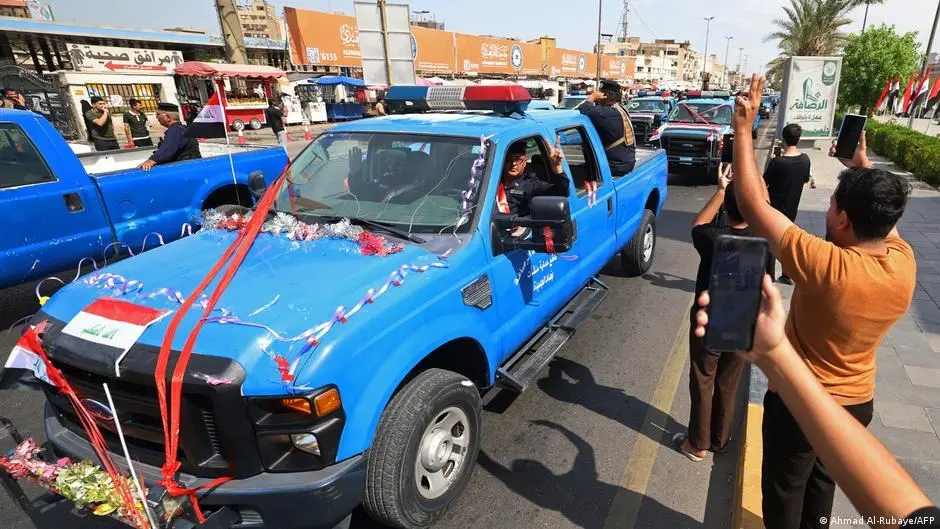
In the federal capital of Baghdad, political leaders greeted the conclusion of the American military deployment with widespread celebrations. Iraqi Prime Minister Ali al-Zaidi formally designated October 1 as a national "Day of Sovereignty and Independence," framing the end of the foreign military footprint as the restoration of complete national authority. The withdrawal was likewise met with public acclaim in Tehran, where leadership in the government, commanders within the Islamic Revolutionary Guard Corps (IRGC), and affiliated Shiite political factions and paramilitary forces in Iraq viewed the American exit as a decisive strategic victory.
However, three hundred miles to the north in Erbil, the capital of the Kurdistan Regional Government (KRG), the atmosphere is defined by deep apprehension and strategic uncertainty. Having maintained a close partnership with Washington since the 2003 invasion of Iraq—and having relied on Western deterrence to safeguard its self-governing institutions—the Kurdish region now finds itself caught at the center of multiple overlapping crises.
Without the physical presence of American troops acting as a buffer, the KRI is confronted with intensifying pressure from the federal government in Baghdad to centralize governance, alongside escalating military and political threats from neighboring powers, chief among them the Islamic Republic of Iran.
A Strategy of Containment
Regional security analysts emphasize that the primary hazard facing Iraqi Kurdistan in the post-withdrawal era is not an overt, conventional invasion by neighboring states, but rather a deliberate, multi-pronged campaign designed to erode its constitutional autonomy over time.
Hesam Dastpish, a Brussels-based Middle East analyst, characterizes Tehran’s overarching policy toward Erbil as an aggressive containment strategy. Rather than seeking the outright destruction of the region’s governance structures, the Iranian leadership aims to systematically diminish the political standing of the KRI, steadily transforming what has been a semi-independent, internationally engaged enclave into a weakened administrative territory with negligible sovereign power.
"Tehran’s goal is to turn the Kurdistan region into an institution with absolutely no room to maneuver," Dastpish said. He pointed to Iran’s recurrent ballistic missile and unmanned aerial vehicle (UAV) strikes inside the autonomous region, which Iranian authorities have repeatedly justified as operations directed against camps and infrastructure operated by exiled Iranian Kurdish opposition groups. In practice, these kinetic operations also function as a broader demonstration of coercive power, sending an unmistakable message to the authorities in Erbil regarding the limits of their sovereignty.
This assessment is reinforced by Salahuddin Khadiw, a political analyst based in Mahabad within Iran’s Kurdish region. Khadiw notes that neighboring regional powers do not necessarily seek the total dissolution of Kurdish administrative institutions, but rather the establishment of a "controlled and weak" Kurdistan that cannot challenge broader state interests or serve as a launchpad for external powers.
According to Khadiw, Tehran has long advanced this objective by engaging separately with the competing Kurdish power centers in Erbil and Sulaymaniyah. By maintaining distinct lines of political and security engagement with each faction, Iran has been able to exert sustained leverage across the entire territory while actively frustrating any effort to establish a unified, assertive Kurdish political authority along its western frontier.
Internal Fragmentation Remains a Fatal Flaw
While external pressures from Baghdad and Tehran continue to mount, observers widely agree that the most existential vulnerability facing Iraqi Kurdistan originates from within its own political architecture. Decades after the internal fighting of the 1990s, the political sphere in the KRI remains sharply bifurcated between the two dominant ruling parties: the Erbil-centered Kurdistan Democratic Party (KDP) and the Sulaymaniyah-based Patriotic Union of Kurdistan (PUK).
This enduring factional division has prevented the consolidation of a truly unified regional governance apparatus, leaving institutions—including the security forces, intelligence agencies, and civil administration—divided along partisan lines.
Hiwa Mahmoud Osman, an analyst specializing in Iraqi and Kurdish affairs, observed that foreign powers have consistently exploited these fault lines to advance their own regional agendas.
"Iran has spent decades mastering political influence inside Iraq," Osman said. "The Kurds’ biggest hurdle is their own fragmentation. Without a united front, foreign powers simply have more room to operate."
The lack of political cohesion has also crippled the KRG’s ability to negotiate effectively with Baghdad over contentious national issues, including the federal budget, hydrocarbons legislation, and the administrative status of disputed territories. As federal institutions in Baghdad push to centralize fiscal and administrative authority, the inability of the KDP and PUK to maintain a common front has progressively weakened the region’s bargaining power.
Ardeshir Pashang, a Middle East researcher based in Tehran, issued a stark warning regarding the trajectory of these internal disputes. He emphasized that if Kurdish political leadership fails to resolve its partisan divisions and construct a functional, institutionalized consensus, the persistent fragmentation could ultimately trigger the collapse of the Kurdistan Region as a viable autonomous political entity.
The Opposition Dilemma
Adding to the region’s strategic complications is the long-standing presence of Iranian Kurdish opposition organizations that have maintained bases, refugee settlements, and political offices in the mountainous border zones of the KRI for decades. These factions, which have historical histories of armed struggle against the Iranian government, have increasingly become a focal point of regional confrontation.
Tehran has continually applied intense pressure on both Baghdad and Erbil to disarm these groups, shutter their facilities, and relocate their members away from the international border. The presence of these dissidents has consistently provided the Iranian military and the IRGC with a rationale for carrying out cross-border artillery, rocket, and drone strikes into the KRI.
Dastpish noted that while regional authorities face severe pressure to comply with external security demands, Erbil cannot easily opt for total capitulation. Balancing the management of these groups is intertwined with domestic political legitimacy, pan-Kurdish public sentiment, and broader relations with international human rights observers.
However, the balance of power has shifted decisively against the Kurdish authorities. Kasra Qaredaghi, a political science researcher based in the United States, underscored that these opposition factions are now more exposed than at any point in recent history.
Qaredaghi pointed out that even when American forces were fully deployed across Iraq, Iran was able to conduct targeted strikes against opposition camps with relative impunity—a dynamic that ultimately compelled the signing of a comprehensive 2023 bilateral border security agreement between Baghdad and Tehran.
With the complete withdrawal of the American military presence, Qaredaghi argued, Erbil’s remaining leverage on the security front has effectively evaporated, granting Tehran substantially greater latitude to dictate terms and compel further concessions regarding the border zone.
Dollar Diplomacy is the United States’ Hidden Weapon
Despite the departure of its conventional military forces, the United States has not fully relinquished its strategic influence over Iraqi affairs. Instead, Washington’s engagement has shifted away from direct military deployment toward the use of international financial mechanisms and economic statecraft.
Qaredaghi described this shift as part of an evolving "realignment of power" across the broader Middle East, where the diplomatic and financial weight of the United States, alongside regional actors like Turkey and Saudi Arabia, continues to function as a natural counterbalance to Iran’s expanding geopolitical footprint.
Osman highlighted that Iraq’s economy remains structurally tethered to the international financial architecture, specifically through the global dominance of the US dollar and the mechanisms through which Iraqi oil revenues are processed and cleared. This financial integration provides the US Department of the Treasury with considerable indirect leverage over governance in Baghdad. Through the oversight of dollar transfers and banking regulations, Washington retains the capacity to shape federal budgetary decisions, including the timely disbursement of funds and civil service salaries to the Kurdistan Regional Government.
Khadiw similarly characterized this structural pivot as a transition in America’s regional posture, moving from its historical role as an active "military balancer" on the ground to that of a "powerful economic observer" operating through institutional and fiscal channels.
Yet, analysts maintain that international economic leverage alone cannot substitute for regional stability. With external containment pressures intensifying and the traditional American security shield no longer present, the leadership of Iraqi Kurdistan faces an urgent imperative to bridge its internal political divisions. Establishing a coherent, unified political and security structure remains the primary means by which the region can protect its constitutional autonomy and withstand mounting pressures from Baghdad and Tehran.