
Canada’s international development and humanitarian sector is expressing deep dismay after Prime Minister Mark Carney’s government tabled a federal budget that makes no mention of foreign aid, international development, or humanitarian assistance. The total omission of these terms marks a significant departure from long-standing parliamentary practice, representing the first federal budget in more than 15 years to entirely exclude international aid from its core financial document. In response to the silence, non-governmental organizations and international advocates across the country are calling on Ottawa to urgently clarify its global strategy in an upcoming foreign policy review.
A comprehensive review by The Canadian Press of every federal budget document tabled since 2010 revealed that key terms such as "international assistance," "foreign aid," and "international development" appeared consistently in every budget across the past decade and a half. By contrast, the budget presented on Thursday by the Carney government omits those concepts entirely. The few references to global issues in the document are narrow in scope: Ukraine is mentioned exclusively in relation to domestic drone production, while international aid workers receive only a brief, passing reference within a section detailing an existing administrative permit program that allows organizations to operate in foreign regions controlled by groups designated by Ottawa as terrorist entities.
The stark absence of broad international development commitments has sparked widespread concern among non-governmental organizations operating on the front lines of global crises. Leaders across the sector argue that turning away from explicit support for international development comes at a uniquely perilous time for global stability, economic security, and human rights.
Kate Higgins, head of Co-operation Canada—an umbrella coalition representing the vast majority of Canadian international development and humanitarian organizations operating abroad—voiced strong disappointment on behalf of the sector following the document’s release. She emphasized that the budget is largely silent on issues of international development co-operation and humanitarian action, arguing that such an omission represents the wrong approach at a time when the stakes around the world are exceptionally high.
According to Higgins, the aid sector currently operates under the assumption that the federal government will proceed with its previously announced plan, outlined last year, to cut $2.7 billion from Canada’s foreign aid budget over a four-year period. While non-profit leaders expressed initial relief that the Carney government did not introduce further unexpected spending reductions in Thursday’s budget, they stressed that silence is not a substitute for strategic vision.
Higgins emphasized that Ottawa must explicitly recognize the indispensable role that international development funding plays in responding to acute crises across the globe. She pointed to urgent situations requiring sustained international attention and resources, including the devastating humanitarian plight facing civilians in Gaza and the ongoing public health threats posed by the spread of the Ebola virus in the Democratic Republic of Congo.
Beyond addressing immediate emergency conditions, Higgins argued that funding for international development is directly intertwined with Canada’s broader strategic, economic, and security interests. She noted that international development co-operation directly addresses the very challenges that the federal government seeks to prioritize across its wider mandate—including national defence, regional stability, international diplomacy, economic partnerships, trade diversification, and the protection of a rules-based international order that upholds democracy and human rights.

The sector is now looking ahead to a comprehensive foreign policy review expected to be released later this month, hoping it will provide the clarity and commitments that were left out of the federal budget. Non-governmental organizations are urging the government to use the upcoming policy update to lay out a coherent blueprint for Canada’s international development assistance and humanitarian engagements moving forward.
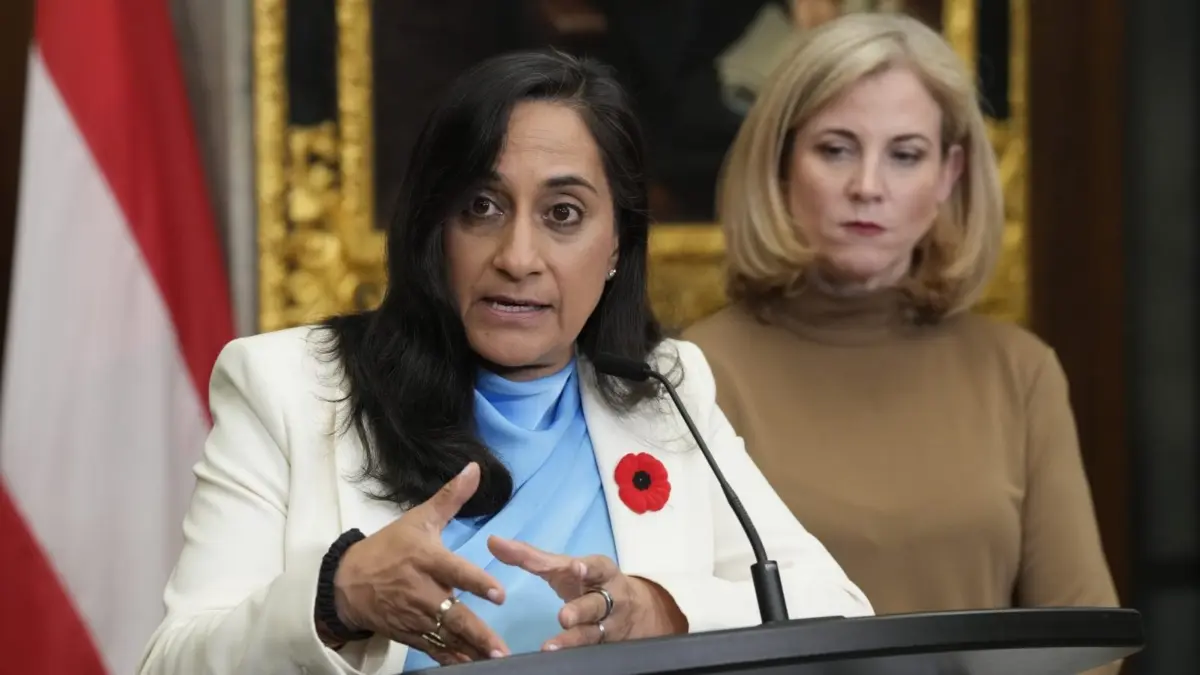
Addressing the growing concern during a news conference on Parliament Hill on Friday, Foreign Affairs Minister Anita Anand sought to reassure advocates and international partners. Anand announced that the government’s updated foreign policy strategy would be released in a matter of weeks and would explicitly outline Canada’s official approach to international development.
Anand defended the government’s track record, insisting that development assistance remains a central priority for Global Affairs Canada. She highlighted that the federal government has already deployed substantial humanitarian assistance this year alone to support vulnerable populations in several crisis-affected regions, citing targeted aid efforts directed to Cuba, Lebanon, Gaza, and Sudan, among others.
However, the budget’s total silence on international aid stands in sharp contrast to recent praise delivered by senior international diplomats. Just four days before the budget was tabled, Tom Fletcher, the United Nations’ global head of humanitarian issues, publicly commended Canada’s historical leadership on the world stage. Speaking ahead of the budget release, Fletcher praised Canada as a "humanitarian superpower" for the world’s most vulnerable populations and expressed his earnest hope that the country would continue to hold the line in maintaining its international aid commitments.
For domestic advocacy groups, the stark difference between those international expectations and the contents of the budget was both startling and disheartening. Results Canada, a prominent anti-poverty advocacy group, visually captured the sector’s disappointment shortly after the budget was released by sharing an image of a deflated balloon on social media.
Lindsay Sheridan, the policy director at Results Canada, described her team’s immediate efforts to analyze the budget document upon its release. Speaking during a video conference with supporters on Thursday, Sheridan explained that advocates searched the text for standard policy terms relevant to global health and poverty alleviation—including "international assistance," "foreign aid," "vaccines," "tuberculosis," and "famines"—only to find that continuous text searches yielded zero results.
Sheridan expressed surprise at the complete absence of these core terms, noting that the sector had anticipated the budget would provide clearer context and a better understanding of the direction the government intended to take. She noted that previous Canadian administrations had established clear, defining priorities in international development that earned global acclaim and mobilized international financial resources.
As examples of past strategic leadership, Sheridan pointed to the Stephen Harper government’s signature global focus on maternal, newborn, and child health, as well as the Justin Trudeau government’s dedicated push to secure quality education for children living in conflict zones. Both initiatives saw Canada take a leading role on the world stage, rallying support from G7 peer nations and major international financing institutions to drive targeted global outcomes.

Contrasting those historic initiatives with the current budget, Sheridan described the total absence of foreign aid priorities as a confusing and missed opportunity to establish a robust, well-rounded global strategy.
Other major child-focused and international development organizations echoed those concerns. UNICEF Canada expressed deep disappointment over the budget, releasing a statement asserting that Ottawa ought to explicitly include international development whenever it addresses its global response to rising geopolitical threats and international volatility. The organization stressed that international assistance plays a foundational role in helping children survive and thrive, while simultaneously strengthening the vital health, education, and social protection systems upon which peaceful, stable, and resilient societies depend.
Economic and global health advocacy groups also pressed the government to adopt a more ambitious financial framework. The ONE Campaign, an advocacy organization focused on building sustainable economic partnerships with African nations, urged Ottawa to formally commit to spending $5.5 billion annually on international development. The group argued that such a sustained funding commitment is essential for safeguarding critical global health and humanitarian investments that underpin long-term economic stability worldwide.
In a statement responding to the budget, The ONE Campaign added that Ottawa should strategically align its development, trade, and investment institutions. Doing so, the group argued, would support coordinated, mutually beneficial partnerships with African countries that advance both humanitarian goals and broader economic cooperation.
The complete absence of foreign aid provisions in the budget also stood in contrast to recommendations put forward by lawmakers prior to the document’s release. The House of Commons standing committee on finance had formally urged the federal government to use the budget to deliver greater transparency regarding where Canada’s foreign aid dollars are directed, while ensuring that federal funding remains strictly focused on assisting the world’s most vulnerable populations.
Critics across the political and development spectrum have increasingly argued that the Carney government must outline clearer priorities for its international aid expenditures and actively spearhead major multilateral initiatives alongside allied countries. As the sector awaits the government’s promised foreign policy update in the coming weeks, non-governmental organizations remain steadfast in their stance that long-term global stability, human rights, and humanitarian relief cannot be decoupled from Canada’s broader national interest.