
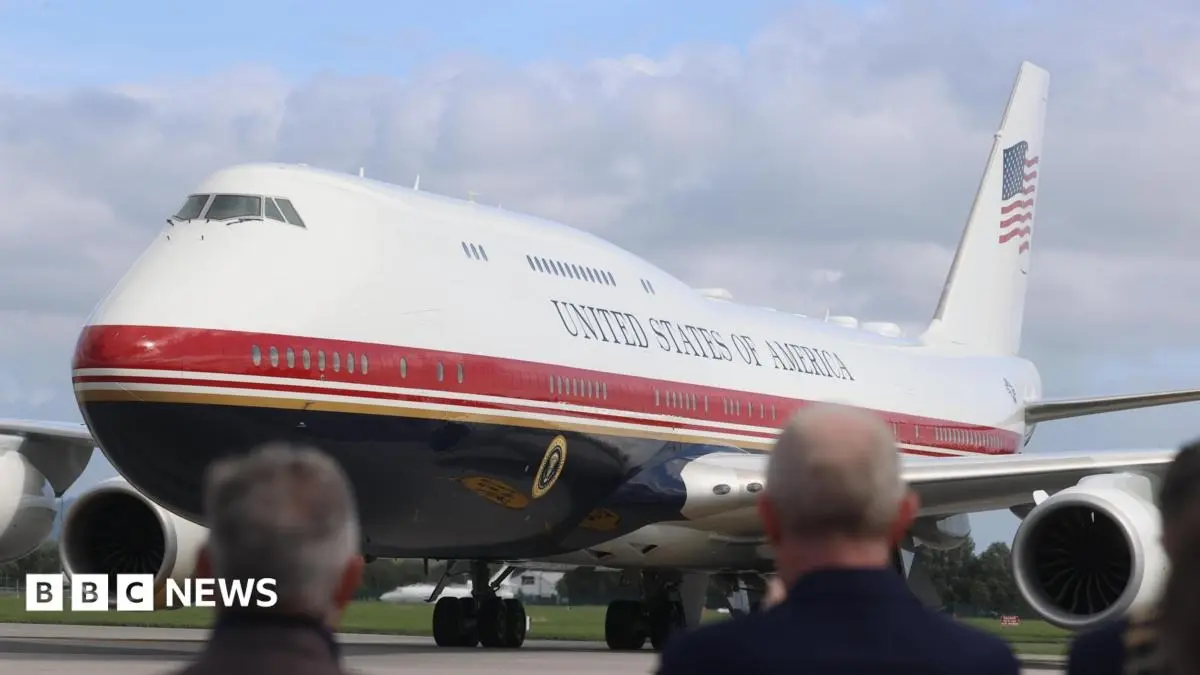
In the latest escalation of an ongoing confrontation between the executive branch and major news organizations, US broadcaster CNN has been barred from traveling aboard Air Force One with President Donald Trump for his scheduled trip to Tennessee on Saturday. The exclusion marks a fresh turn in a volatile, multi-front battle over presidential press coverage, unfolding just as the administration appeared to yield to judicial orders requiring the restoration of reporter access at the White House.
According to media travel plans released on Friday night, CNN had originally been scheduled to join the press pool traveling alongside the president to Knoxville, Tennessee, where Trump is set to attend a high-profile college American football matchup between the University of Tennessee and the University of Texas at Neyland Stadium on Saturday midday. However, when the White House issued its updated media schedule late Friday, the network was noticeably absent from the roster of traveling journalists.
Exclusion from the presidential aircraft is among the most consequential practical restrictions the White House can place on a news organization covering executive travel, as Air Force One carries a tightly coordinated pool of journalists responsible for documenting the president’s movements, public appearances, and real-time remarks for the broader press corps. CNN reported that no other news outlet was listed as taking its place on the president’s tentative travel schedule, leaving the press complement aboard the flight diminished without a direct replacement. Following the release of the schedule, the BBC submitted a request for comment to the White House regarding the decision to omit the network, though immediate explanations for the last-minute change were not provided.
The decision to deny CNN a seat on Air Force One follows a turbulent period characterized by sharp rhetoric, retaliatory restrictions, legal challenges, and broadcast protests. The dispute intensified dramatically last week when President Trump banned journalists from CNN, Politico, and MS NOW from accessing White House grounds. The president publicly justified the ban by accusing the three outlets of reporting "fiction or lies" regarding his administration, framing the restriction as a direct response to what he characterized as unfair and inaccurate reporting.
In response to their exclusion, CNN, Politico, and MS NOW swiftly announced that they were pursuing legal action against the administration. The news organizations filed legal challenges arguing that the White House had violated their constitutional rights guaranteed under the First Amendment, specifically citing protections for free speech and freedom of the press. The outlets contended that retaliating against news organizations over the tone or content of their reporting set a dangerous precedent and unconstitutionally infringed upon the public’s right to independent coverage of the presidency.
The administrative ban on the three organizations triggered a rare display of collective action across the national television news landscape. Four major television networks that participate in a daily rotation of White House coverage alongside CNN—ABC, CBS, Fox News, and NBC—took the extraordinary step of pausing their broadcasts of the president. The synchronized broadcast pause was carried out in explicit solidarity with the barred news organizations, effectively withholding standard live television coverage of presidential events to protest the White House’s punitive measures against their peer outlets.
Faced with a blackout from the major news networks, the White House responded by launching its own direct-to-consumer media platform. The administration rolled out a dedicated streaming channel, named "Trump TV," timed specifically ahead of the United Nations General Assembly in New York. The launch of the official streaming service allowed the White House to bypass traditional news outlets entirely, broadcasting presidential appearances, speeches, and events directly to the public on its own terms during a major international diplomatic gathering.
The standoff subsequently moved into the federal court system, where a federal judge evaluated the constitutionality of the administration’s actions. The judge issued a ruling determining that President Trump’s sweeping ban on news outlets from the White House was likely unconstitutional. As a result of the ruling, the judge ordered the administration to permit the excluded news organizations back into the White House complex, restoring their access at least on a temporary basis while broader legal arguments proceeded through the judicial system.
Following the federal judge’s directive, regular US television coverage of the president resumed on Friday after White House officials reopened access points and allowed reporters from the affected organizations back into press facilities. The resumption of regular broadcasts appeared to signal a momentary pause in the open confrontation between the White House and news networks, restoring the established pool mechanisms that govern daily reporting on the executive branch.
Despite the judicial ruling and the formal reopening of White House press facilities, friction between administration officials and targeted media outlets persisted behind the scenes. On Thursday, prior to the resolution that enabled Friday’s return to regular coverage, the White House selectively denied entry to specific reporters from CNN and MS NOW who had been assigned to cover guest arrivals for a high-profile state dinner honoring Chinese leader Xi Jinping. The denial illustrated that the administration remained willing to enforce localized access restrictions for key diplomatic and social events, even as broader access questions were being weighed in court.
The administration defended its selective management of press access through official digital channels. A White House communications account posted a statement on the social media platform X, firmly rejecting claims that media organizations were entitled to unrestricted entry across executive facilities. The post stated that "contrary to what the Fake News wants you to believe, they don’t just get to have free rein into every part of the White House, every event, and every press call." The official post underlined the White House’s position that executive staff maintain discretionary authority over which journalists are permitted into specific venues, meetings, and travel contingents.
The omission of CNN from Saturday’s flight to Tennessee demonstrates that the legal ruling restoring access to the White House complex has not fully resolved disputes over presidential travel and pooled coverage outside Washington. While reporters were permitted back into standard White House press spaces on Friday, access to the constrained physical space aboard Air Force One remains a distinct point of contention between administration officials and the press corps.
The travel restrictions come as President Trump prepares for a high-visibility public appearance in Knoxville, Tennessee. The president is scheduled to attend the college football game between the University of Tennessee and the University of Texas at Neyland Stadium, with kickoff and festivities slated to begin around midday on Saturday. Presidential visits to major sporting events typically involve extensive logistical planning, tight security protocols, and continuous coverage by a traveling press pool tasked with monitoring the president throughout the public outing.
With CNN removed from the Air Force One travel schedule and no alternative news organization designated to take its place on the tentative itinerary, the president’s journey to Tennessee highlights the lingering instability in relations between the White House press office and mainstream news organizations. As the administration navigates judicial orders, legal challenges from major news outlets, and ongoing public exchanges regarding press access, the logistical arrangements for presidential travel continue to reflect the deep underlying conflict between the White House and the press corps assigned to cover it.