
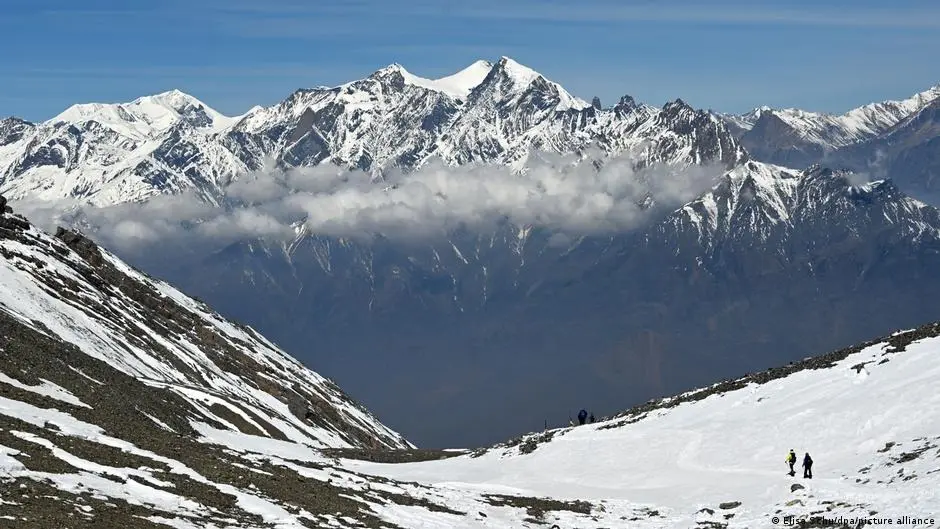
A catastrophic avalanche has struck the base camp of Mount Himlung Himal in northern Nepal, leaving at least two people dead and a minimum of 14 others missing. The disaster occurred early Sunday morning following days of relentless precipitation, which brought severe rainfall across the lower valleys and heavy snowfall to the high-altitude reaches of the Himalayas.
The avalanche swept down the slopes of the 7,126-meter (23,380-foot) peak, which sits in a remote region near the border between Nepal and the Tibet Autonomous Region. The disaster caught teams of local support personnel who were stationed at the camp to prepare logistics, tents, and essential supplies ahead of the arrival of paying international climbing clients.
According to mountaineering officials, all of the casualties and missing persons are local mountain guides and support staff employed by various Nepalese expedition agencies. These workers form the logistical backbone of the country’s mountaineering industry, venturing into hazardous terrain weeks in advance of commercial expeditions to establish camps, assemble kitchens, and secure ascending routes.
The Nepal National Mountain Guide Association confirmed the grim toll and clarified the initial search results. "There were a total of 14 kitchen staff members and two climbing guides from different companies who were missing," the association stated in a formal briefing on the incident. "The two climbing guides have been found, but sadly, both were found deceased."
The recovery of the two guides has intensified fears for the 14 kitchen workers who remain unaccounted for beneath the snow. Emergency operations were quickly initiated, but search teams have faced severe logistical hurdles caused by extreme weather, difficult high-altitude terrain, and compromised communication lines across the remote northern border zone.
Unclear how many are missing
In the immediate aftermath of the disaster, conflicting reports emerged regarding the exact headcount of personnel present in the disaster zone when the avalanche released. Because base camps often host multiple independent trekking and climbing agencies simultaneously, establishing an exact manifest of staff on the mountain has proven challenging.
Local police authorities indicated that at least 22 people were stationed at the Himlung Himal base camp when the snow mass collapsed onto the site on Sunday morning. With two fatalities confirmed and 14 kitchen staff actively listed as missing by guide associations, authorities are working to determine whether additional workers or porters may have been in the vicinity without formal registration.
Despite the harsh conditions, rescue coordinators have expressed cautious hope for the missing workers. Bibhuti Chand Thakur, head of the prominent trekking agency Himalayan Holidays Nepal, told news agency DPA that active search and rescue operations were under way on the mountain.
"The chance of survival remains high because of fresh snow," Thakur explained, noting that freshly fallen, uncompacted powder can sometimes leave air pockets that allow trapped individuals to survive longer than in dense, icy debris. However, Thakur cautioned that verifying the full extent of the tragedy remains exceptionally difficult. He stated that he did not yet have a definitive number of missing or survivors, as the area is geographically remote and has been entirely cut off from conventional communication networks due to the storm.
Search operations in this part of the Himalayas are inherently fraught with danger. Reaching Himlung Himal typically requires multi-day treks through rugged valleys or the deployment of high-altitude helicopters. Inclement weather, lingering cloud cover, and continued avalanche instability have severely restricted the use of aviation assets, forcing ground crews to navigate treacherous, snow-choked paths to reach the impacted camp.
Severe Weather Cripples Himalayan Routes
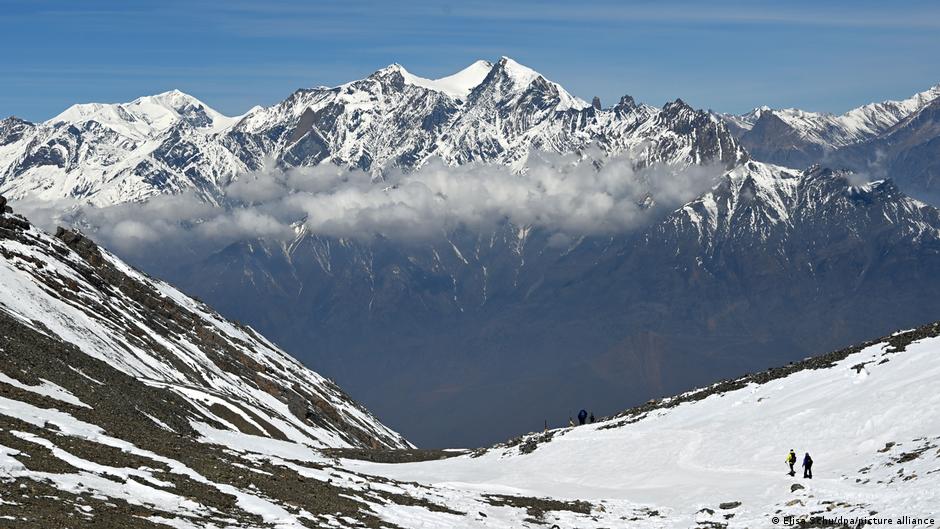
The deadly incident follows days of severe meteorological instability that swept across Nepal. National weather authorities had issued warnings late last week, alerting operators, mountain communities, and travelers to prepare for a powerful weather system tracking across the country.
Widespread rainfall began battering much of the nation on Thursday, while sub-zero temperatures at higher elevations transformed the moisture into heavy, sustained snowfall across northern mountain ranges. The sudden accumulation of thick snow over uncompacted underlying layers created ideal conditions for structural instability on steep alpine faces, culminating in Sunday’s avalanche.
The weekend storm caused widespread disruption far beyond the slopes of Himlung Himal. Heavy rains triggered flash flooding and landslides that damaged roads, severed supply lines, and blocked popular trekking routes in multiple districts. In response to the worsening conditions and elevated avalanche hazards, Nepalese authorities took preemptive steps to suspend climbing and trekking permits across several major peaks to prevent further casualties among commercial groups and independent trekkers.
While Mount Everest remains the most famous destination for global climbers, peaks in the 7,000-meter class like Himlung Himal attract substantial numbers of international mountaineers. These mountains serve as essential preparatory climbs for high-altitude veterans aiming for 8,000-meter peaks, as well as prime objectives for experienced alpinists seeking technically challenging summits away from the crowded commercial lanes of Everest.
Because autumn is a major climbing window in the Himalayas, hundreds of expedition staff are routinely positioned across various base camps during this time of year. When sudden storms strike, these support teams—who arrive first to construct base camps and stay behind to dismantle them—bear a disproportionate share of the environmental risks.
Mounting Pressure on Nepal’s Mountain Economy
The disaster at Himlung Himal highlights the delicate balance between Nepal’s vital tourism economy and the acute environmental hazards of the high Himalayas. The landlocked nation is home to eight of the world’s 14 peaks higher than 8,000 meters, making mountaineering and trekking an indispensable pillar of the national economy.
Foreign climbing permits, expedition logistics, hospitality, and guiding services generate millions of dollars annually and provide essential livelihoods for thousands of Sherpas, guides, cooks, and porters from rural mountain communities. However, the high-altitude workforce frequently operates in extreme conditions where sudden shifts in weather can quickly escalate into full-scale humanitarian crises.
The avalanche adds to a period of profound national distress for Nepal, which is still reeling from widespread natural disasters earlier in the year. In August, catastrophic monsoon-driven floods and landslides tore through urban centers, rural villages, and transit corridors across the country, killing more than 1,400 people and leaving thousands of others missing and displaced.
Those floods decimated critical infrastructure, washed away bridges, and crippled transportation networks, stretching the government’s emergency management resources to their limits. The compounding impact of the August flooding and the current weekend storm underscores the severe challenges Nepal faces in safeguarding both its local populations and its seasonal tourism operations against increasingly volatile and destructive weather events.
As rescue teams continue their efforts on the slopes of Himlung Himal, the priority remains locating the 14 missing kitchen staff and establishing stable communication links with the base camp. Expedition operators and guide associations are maintaining round-the-clock coordination with local police and district officials, hoping that the loose composition of the fresh snow will allow emergency crews to reach survivors before conditions deteriorate further.