
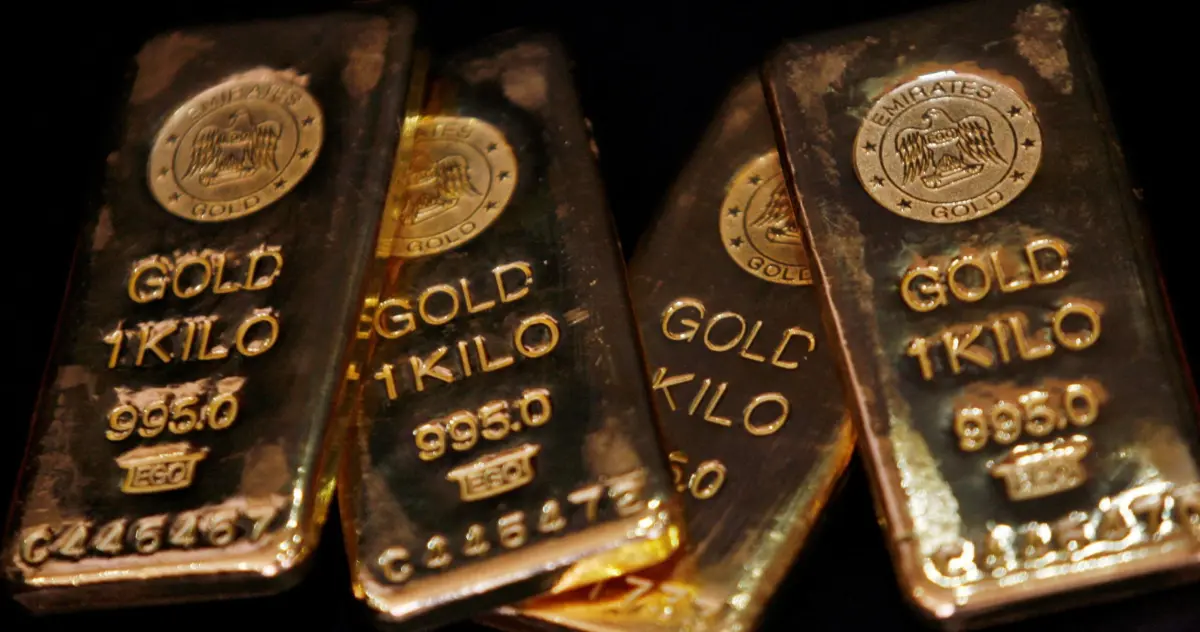
Spot gold prices fell sharply on Monday, hitting their lowest level in more than seven weeks as mounting fears of energy-driven inflation—triggered by the ongoing war between the United States and Iran—sent ripples across global financial markets. The prospect of sustained geopolitical instability and surging fuel costs has renewed concerns that central bank interest rates will remain elevated for longer, compounding pressure on non-yielding precious metals.
Spot gold tumbled by 3.3 percent to settle at $4,146.51 per ounce, marking the lowest valuation for the metal since August 5. United States gold futures experienced an identical decline, falling 3.3 percent to close at $4,178.40 per ounce. The sell-off was not isolated to gold; spot silver led losses across the broader precious metals complex, plunging nearly 5 percent as investors recalibrated their portfolios in response to rising bond yields and a robust US dollar.
The downturn reflects a growing market realization that while gold is historically viewed as a classic hedge against inflation, the macroeconomic climate created by soaring energy prices and tight monetary policy can significantly undermine its traditional appeal.
Geopolitical Escalation and Fuel Price Surges Spark Market Instability
The immediate catalyst behind the sudden shift in market sentiment stems from the military conflict between the United States and Iran, which has directly threatened global energy supplies and heightened financial market volatility. Energy markets reacted swiftly after US President Donald Trump rejected an offer presented by Iranian leadership aimed at resolving the armed conflict and reopening the strategically critical Strait of Hormuz.
The Strait of Hormuz serves as one of the world’s most vital maritime choke points for global oil transportation. President Trump’s rejection of the proposed resolution signaled to global markets that a quick diplomatic resolution remains out of reach, raising fears of prolonged disruptions to international maritime trade and crude exports.
Following the rejection, crude oil prices spiked by approximately 3 percent. The sharp uptick in oil values immediately amplified fears that rising fuel costs will filter through the broader economy, driving up transportation, manufacturing, and consumer expenses. This renewed surge in energy costs has stoked fears of persistent, widespread inflation, unsettling investors who had been anticipating a more stable economic outlook.
Instead of prompting a rush into gold as a safe-haven asset, the spike in fuel prices triggered a different financial reaction. Markets quickly began pricing in the likelihood that elevated inflation would force central banks to maintain aggressive monetary stances, pushing Treasury yields higher and strengthening the US dollar at the expense of commodities priced in the currency.
Federal Reserve Policy and a Resurgent US Dollar Create Headwinds
Adding to the pressure on precious metals is the prevailing direction of US monetary policy. The Federal Reserve raised its benchmark interest rates by a quarter of a percentage point earlier this month, seeking to curb stubborn inflationary pressures weighing on the national economy. Along with the rate hike, Fed officials flagged that at least one additional interest rate increase is likely to occur in the coming months if inflationary risks do not subside.
In the wake of recent energy price increases, several monetary policymakers have cautioned that inflation risks remain significantly elevated, suggesting that borrowing costs may need to rise further or stay at restrictive levels for an extended duration. Among the latest monetary officials to reiterate this hawkish stance was Cleveland Federal Reserve Bank President Beth Hammack, who warned that persistent price pressures necessitate a firm monetary response.
These hawkish signals from Fed officials pushed the US dollar steady near a two-month high, while simultaneously driving US Treasury yields upward. Because gold and other precious metals are denominated in US dollars, a stronger greenback renders them more expensive for international buyers holding foreign currencies, dampening global demand.
At the same time, rising Treasury yields increase the opportunity cost of holding assets that pay no yield, encouraging investors to rotate out of metals and into fixed-income instruments that offer guaranteed returns.
Jim Wyckoff, a senior market analyst at the American Gold Exchange, noted that the simultaneous rise in bond yields and currency strength created an extraordinarily difficult environment for precious metals trading. According to Wyckoff, higher Treasury yields and the strong US dollar are "creating a perfect storm to push the metals prices sharply lower."
Investor Shifts and the Dynamics of Non-Yielding Assets
The sharp decline in gold prices underscores an ongoing market paradox regarding how bullion behaves during periods of high inflation. While gold has long been regarded by retail and institutional investors as a reliable store of value when purchasing power declines, its performance is heavily dictated by the prevailing interest rate environment.
In an environment where central banks respond to inflation by raising interest rates, the appeal of holding physical gold diminishes. Unlike government bonds, corporate debt, or dividend-paying equities, physical gold does not yield interest or generate ongoing cash flow. Consequently, when Treasury yields rise alongside interest rates, investors frequently abandon non-yielding commodities in favor of yield-bearing assets that offer fixed income.
Sherif Othman, Chief Executive Officer of Maryland-based Poise Investment Advisors, explained how these shifting dynamics affect market participants and individual investors who recently sought refuge in the metal.
“There might be no notable direct impact on regular people due to that. However, investors who had turned to gold will see a hit, especially under the current high inflation rates,” Othman told Al Jazeera in an interview regarding the market plunge.
Othman emphasized that the underlying mechanic driving the sell-off comes down to the competing returns offered by government debt instruments versus physical commodities during periods of tight monetary policy.
“Gold does not yield interest, so when Treasury yields go up, investors turn away from gold, impacting its value,” Othman added.
For investors who shifted capital into gold specifically to insulate their portfolios against persistent inflation, the simultaneous combination of falling metal prices and high inflation rates presents a dual challenge, reducing portfolio returns at a time when living and operational costs remain elevated.
Broad Sell-Off Hits Silver, Platinum, and Palladium
The downward momentum extended far beyond the gold market, inflicting heavy losses across the entire precious metals market on Monday. Industrial and precious metals alike suffered from the combined pressure of a rising US dollar, escalating yield rates, and fears over global economic growth amid the ongoing US-Iran war.
Spot silver registered the steepest decline among major metals, plummeting by 4.7 percent to reach $61.27 per ounce. Silver, which functions both as a monetary metal and as an essential industrial commodity used in electronics, solar technology, and manufacturing, faced compounded pressure from both tight financial conditions and worries that sustained inflation could dampen global industrial output.
Platinum group metals were similarly caught in the market downturn. Spot platinum declined by 2.9 percent on Monday, sliding to $1,726.30 per ounce. Meanwhile, spot palladium dropped by 4.4 percent to trade at $1,211.45 per ounce.
The widespread losses across gold, silver, platinum, and palladium highlight how comprehensively macroeconomic factors—namely interest rate expectations, yield trajectories, and geopolitical developments—are dictating sentiment across global commodity markets. As the war between the US and Iran continues to impact fuel markets and fuel inflationary worries, investors remain intensely focused on upcoming monetary policy decisions and energy market developments to gauge the future path of precious metal valuations.