
Diplomatic relations between Ethiopia and Eritrea have suffered a complete collapse, marking a dramatic escalation in regional tensions as violent conflict re-ignites across northern Ethiopia and explosions rock the federal capital. The rapid breakdown in formal ties between the Horn of Africa neighbors has raised severe anxieties among international observers, who warn that the deteriorating security climate threatens to ignite a wider regional catastrophe across an already volatile peninsula.
The diplomatic rupture unfolded in rapid sequence on Thursday when the Ethiopian government announced that it was immediately shutting its embassy in the Eritrean capital, Asmara. Simultaneously, federal authorities in Addis Ababa issued an explicit order directing 10 Eritrean diplomats to leave Ethiopian territory within 48 hours. Ethiopian officials justified the abrupt expulsion by accusing the diplomatic personnel of engaging in covert activities that posed a direct and imminent threat to Ethiopia’s national security.
Eritrea responded late Thursday by formally severing all diplomatic relations with Ethiopia, characterizing the expulsion order and embassy closure from Addis Ababa as an "astounding" measure. In a statement released by its ministry of foreign affairs, Asmara declared that Ethiopia’s unilateral actions left it with no viable alternative other than to enact an equal measure of retaliation. The Eritrean foreign ministry confirmed that it was severing all remaining diplomatic channels with its neighbor, while issuing a stern warning regarding the inevitable "negative corollaries" that would flow from Ethiopia’s decision.
This sharp diplomatic crisis transpired just hours after a series of powerful overnight explosions reverberated across the Ethiopian capital of Addis Ababa late Wednesday. The blasts occurred in close proximity to critical government infrastructure, including the headquarters of Ethiopia’s military and its national intelligence service. Residents living in two distinct districts of the capital reported hearing massive detonations during the night, with one resident situated near the intelligence headquarters describing a force powerful enough to set off car alarms throughout the surrounding neighborhood.
The explosions in the capital immediately followed an emergency security measure instituted by Ethiopia’s National Intelligence and Security Service, which had imposed an indefinite ban on all civil and non-authorized drone flights over Addis Ababa and its surrounding metropolitan areas. Security officials cited the imperative to safeguard senior government figures, vital state infrastructure, and public gatherings as the rationale behind the airspace restriction.
While Ethiopian federal authorities have refrained from officially confirming the precise cause of the late-night explosions, and no official figures regarding casualties or structural damage have been released, a source connected to a newly formed opposition coalition told the Reuters news agency that anti-government forces had executed targeted drone strikes within the capital. Independent verification of the claims regarding the explosions remains exceptionally difficult due to strict state information controls.
The public breakdown of diplomatic relations represents the culmination of months of steadily worsening friction between the two nations. At the core of the political row are direct allegations from Prime Minister Abiy Ahmed’s government in Addis Ababa accusing Asmara of covertly organizing, training, and supporting an alliance of armed insurgent groups currently locked in combat against Ethiopian federal troops. Eritrea has repeatedly and emphatically denied supplying material or strategic assistance to anti-government forces within Ethiopia.
In a rare interview conducted with BBC Tigrinya shortly before the final severance of diplomatic relations, Eritrean Information Minister Yemane Gebremeskel forcefully dismissed the allegations from Addis Ababa. He argued that Ethiopia’s ruling Prosperity Party was purposefully manufacturing external scapegoats and accusing neighboring states in a calculated bid to divert domestic and international focus away from internal political fractures, internal armed insurgencies, and systemic administrative failures inside Ethiopia.
The current hostility represents a stark and bitter reversal in the trajectory of Ethiopia-Eritrea relations. Just a few years ago, during the devastating two-year war in Ethiopia’s northern Tigray region between 2020 and 2022, the two sovereign nations functioned as close military allies. Throughout that conflict, Eritrean national defence forces fought directly alongside Ethiopian federal troops and regional security allies in a joint campaign aimed at crushing the Tigray People’s Liberation Front (TPLF). That bloody internal war claimed an estimated 600,000 lives, according to assessments previously provided by an African Union mediator, before a formal peace agreement halted major combat operations in late 2022.
However, the strategic alliance formed during the Tigray war dissolved rapidly following the cessation of major hostilities, giving way to profound mistrust. The primary catalyst for the recent breakdown in relations stems from Prime Minister Abiy’s public and persistent campaign demanding direct sovereign access to the Red Sea for landlocked Ethiopia. Ethiopia was left completely landlocked in 1993 when Eritrea formally declared independence following a decades-long war, cutting off Ethiopia’s direct territorial access to major coastal ports.
Prime Minister Abiy has consistently asserted that secured, permanent access to a maritime port on the Red Sea constitutes an essential, non-negotiable imperative for Ethiopia’s long-term economic survival and national security interest. In contrast, officials in Asmara view Addis Ababa’s rhetoric regarding sea access as an increasingly aggressive policy designed to undermine Eritrean sovereignty. Eritrea has repeatedly accused the Ethiopian government of harboring illicit territorial ambitions over its strategically located coastal ports, viewing Ethiopia’s public stance as a direct existential threat.
This systemic geopolitical strain has coincided with a dramatic resurgence of heavy fighting across multiple regions in northern Ethiopia, effectively shattering the fragile stability achieved after the 2022 peace accord. The security landscape inside Ethiopia shifted dramatically last month when the TPLF officially entered into an overarching military alliance with six other armed opposition movements. Prominent among these newly unified movements is the Fano militia, a powerful group originating from the neighboring Amhara region that has been actively fighting federal forces. The declared political objective of this newly formed multi-faction alliance is the total removal of Prime Minister Abiy’s administration from power.
Ethiopian government officials have asserted that Eritrea is actively assisting this multi-front insurgent alliance in its operational push against federal forces. Adding weight to these allegations, a pro-government militia commander engaged in active combat within the Tigray theater told the BBC that Eritrean military personnel had crossed the border and were actively participating in frontline combat operations alongside anti-government fighters. Media organizations, including the BBC, have noted that these claims regarding direct Eritrean troop deployments could not be independently verified.
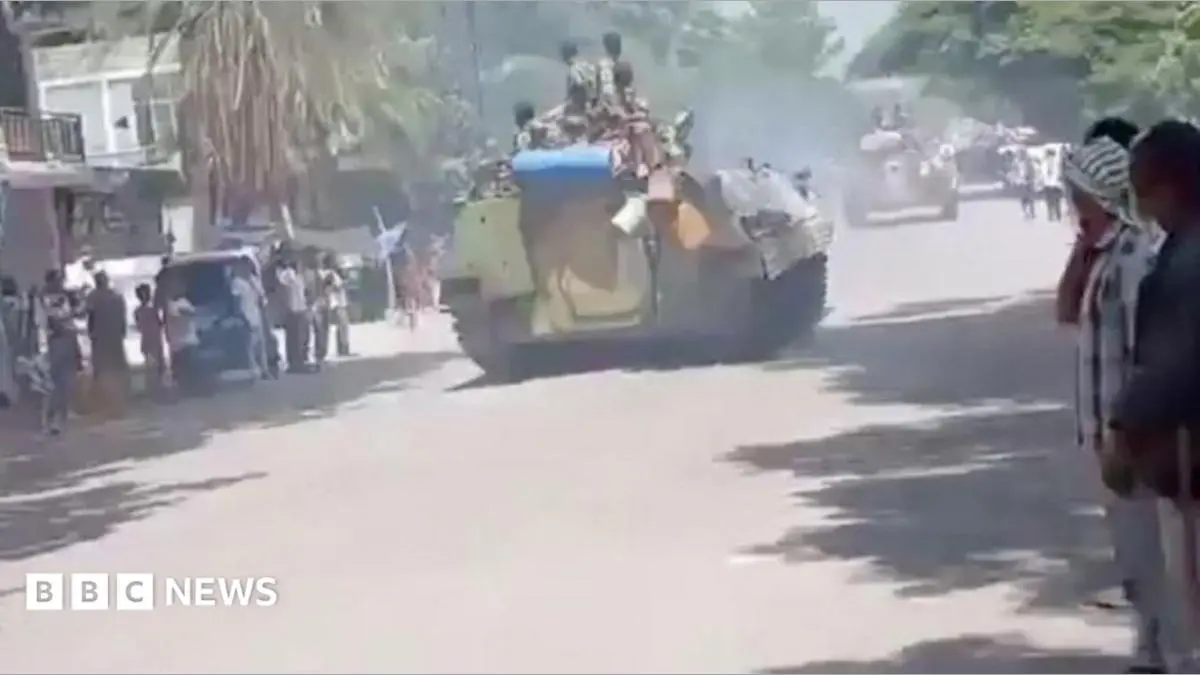
On the ground, combat operations across northern Ethiopia have intensified significantly. Federal armed forces and their regional militia partners have launched extensive military operations, making operational advances across southern Tigray and pushing along key transport arteries toward Mekelle, the regional capital of Tigray. The human cost of the renewed offensive has risen rapidly. In the southern Tigrayan town of Alamata, a local medical doctor reported to the BBC that at least 52 civilians were killed during three days of relentless, heavy artillery bombardment and infantry fighting.
At the same time, heavy combat operations involving TPLF forces have spilled directly into the neighboring Afar region. The movement of combat into Afar carries immense strategic consequences, as the region hosts the primary, vital transport and logistics corridor connecting landlocked Ethiopia to the port infrastructure of neighboring Djibouti. The ongoing clashes along this critical commercial artery have triggered massive civilian displacement, with tens of thousands of local residents forced to abandon their homes to escape the advancing front lines.
As the violence expands, both the Ethiopian federal government and Tigrayan regional authorities continue to trade blame over responsibility for initiating the latest round of widespread hostilities. Officials in Tigray maintain that their armed forces were forced to mobilize and engage in defensive operations to counter a coordinated federal ground offensive backed by destructive federal drone strikes. Conversely, authorities in Addis Ababa reject that narrative, maintaining that federal military actions were launched only after Tigrayan fighters initiated unprovoked assaults and forcibly seized control of several federally administered airport facilities located across the Tigray region.
Establishing an accurate, real-time assessment of the operational situation on the ground remains extraordinarily challenging. News organizations and international monitors face severe constraints, as journalists continue to be denied independent access to conflict zones across Tigray, Amhara, and Afar. Furthermore, physical infrastructure damage and state-imposed communications blackouts across vast swathes of northern Ethiopia have severed mobile and internet connectivity, concealing the full extent of civilian suffering and military movements.
The worsening political collapse and military escalation have triggered widespread warnings from regional bodies and international diplomatic institutions. The African Union has issued an urgent plea calling on Ethiopia, Eritrea, and Egypt to exercise maximum military restraint and immediately commit to resolving their escalating differences through established diplomatic channels. The continental body warned explicitly that any further military escalation or unilateral diplomatic provocations risk plunging the broader Horn of Africa into an unmanageable regional war.
Concurrently, the United Nations has issued dire warnings regarding the rapidly degrading humanitarian environment across northern Ethiopia, where months of expanding violence have severely hindered relief operations. UN spokesman Stéphane Dujarric highlighted that persistent air strikes, active artillery engagements, and persistent drone activity are placing innocent civilian populations, essential social infrastructure, and frontline humanitarian personnel in severe jeopardy.
Dujarric emphasized that widespread regional insecurity, accompanied by extensive combat-related road closures and security checkpoints, has choked off critical supply routes, preventing humanitarian agencies from delivering food, medical supplies, and basic life-saving assistance to vulnerable communities. The United Nations has issued an impassioned call to all combatants involved in the conflict to immediately guarantee safe, predictable, and unhindered humanitarian access to millions of civilians caught in the crossfire.