
As the global stock market continues to scale record highs and face mounting scrutiny over lofty valuations, investors are once again grappling with familiar anxieties. The driving force behind the current market surge—a massive, frenzied wave of artificial intelligence development and corporate spending—has many market participants wondering if a historic correction is on the horizon. For veterans of the early retirement and personal finance community, however, these cyclical panics are far from unprecedented.

Recently reflecting on more than two decades of early retirement, prominent online financial commentator known as Mr. Money Mustache addressed these widespread concerns. Drawing parallels to past market manias, including the dot-com boom of the early 2000s and the 2008 housing bubble, the veteran commentator argues that the underlying panic surrounding the AI boom stems less from rational economic forecasting and more from a deeply ingrained human tendency toward fear.

The commentary, which serves as the basis for a newly developed presentation delivered at Camp FI Midwest and slated for the upcoming Bogleheads conference in November, tackles the central question weighing on many retirees and prospective savers: Will the AI bubble ruin retirement?

Will the AI Bubble Ruin our Retirement?
To put current anxieties into perspective, the financial commentator recalled a conversation from twenty years ago, back in 2006. At the time, friends and followers frequently expressed profound dread about the state of the world, citing soaring national debt, persistent inflation, geopolitical conflicts in the Middle East, a housing market bubble, and fears that economic outsourcing to developing nations would hollow out the domestic workforce. There was even widespread debate over "Peak Oil," with many predicting that global fossil fuel consumption would inevitably outpace supply and plunge civilization into scarcity.

Looking back, those fears materialized in dramatic fashion, culminating in the Great Financial Crisis—the largest market crash since the Great Depression, triggered by overleveraged mortgage instruments and housing market exuberance. Yet, viewed through the lens of a twenty-year horizon, even that historic crash appears as a temporary dip in a broader upward trajectory. A standard market investment made during that period of peak anxiety still expanded significantly over the subsequent two decades.

Moreover, global metrics tracking human well-being experienced dramatic improvements rather than collapse. Over the same twenty-year span, the global proportion of people living in extreme poverty dropped from 20 percent down to 8 percent, while infant mortality rates were cut in half. At the same time, clean energy adoption surged, driven by a drastic reduction in solar panel manufacturing costs, and electric vehicle adoption expanded globally.

This historical contrast raises a fundamental question for modern investors: Is the current AI boom fundamentally different? Skeptics warn that the artificial intelligence mania exceeds previous bubbles and that the resulting market correction could permanently impair retirement portfolios, or that rapid technological advancement could lead to widespread labor displacement. However, financial observers note that pessimists frequently overlook a core economic principle—that long-term prosperity is ultimately driven by productivity rather than short-term fluctuations in financial systems.

Prosperity Comes from Productivity
The underlying argument posits that the stock market and modern financial systems are essentially human-constructed mechanisms designed to track value. When market systems experience systemic failures or valuation crashes, economies have historically demonstrated the resilience to reset, adapt, and continue forward. Real economic growth and improving standards of living stem from tangible human productivity, innovation, and problem-solving.

While new technological revolutions inevitably cause disruption—such as displacing entry-level office roles in software and finance—they simultaneously drive down the cost of goods and services while spawning entirely new industries. Much like the advent of the internet and the subsequent mobile application economy, artificial intelligence functions primarily as a powerful tool for cognitive efficiency.
However, the distribution of those economic rewards often favors asset owners and shareholders, contributing to the wealth concentration observed in modern public markets. For everyday investors holding diversified portfolios, participation in those broad market structures has historically provided a path to long-term financial security.

Confronting the Psychology of Fear
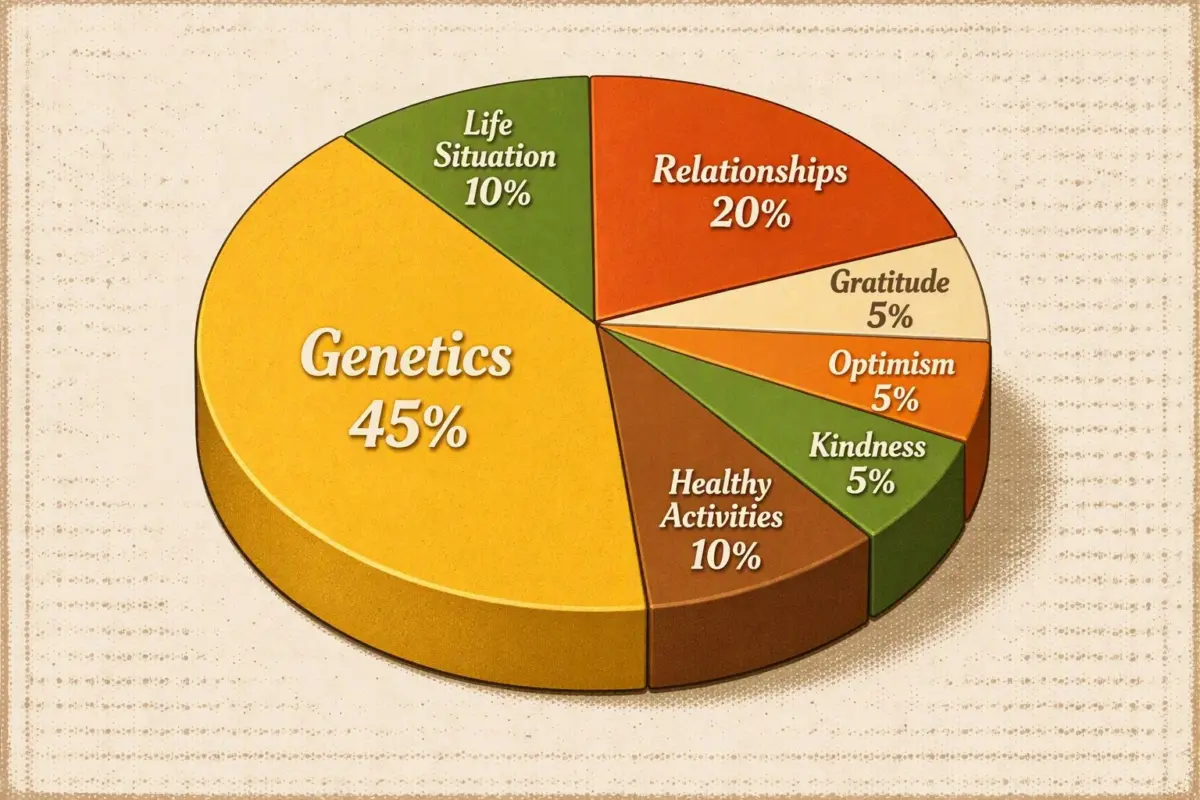
Beyond financial mechanics, the commentary emphasizes that persistent worry about economic futures is often rooted in human psychology rather than objective danger. Evolutionary biology has shaped humans into effective danger-detection machines. When immediate physical threats like predators or scarcity are resolved, that vigilance frequently shifts toward abstract concerns, ranging from economic uncertainty and societal changes to niche local disputes.
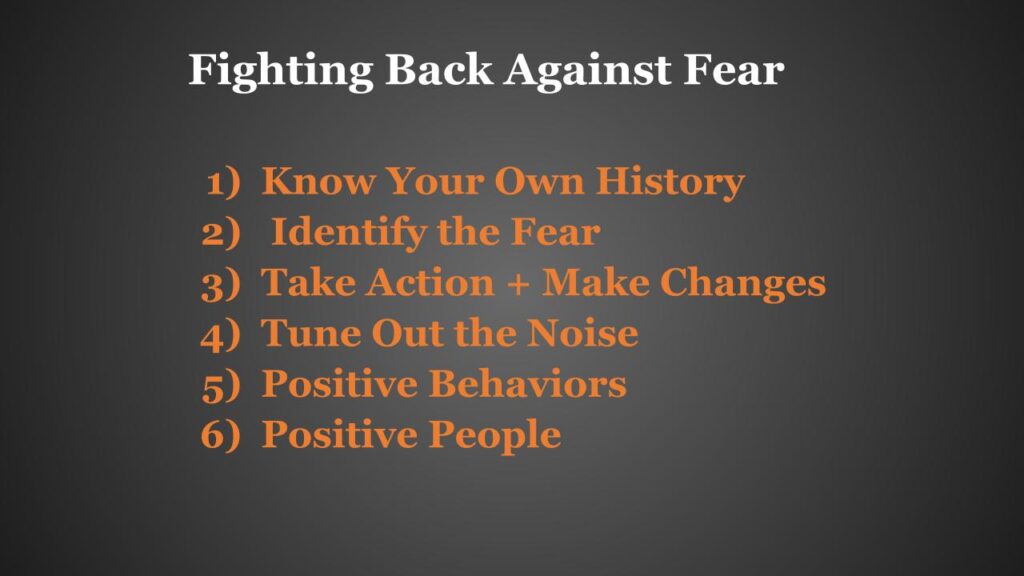
Addressing this pervasive anxiety requires recognizing personal history and emotional triggers. Individuals often inherit scarcity mindsets from previous generations who lived through economic depressions or personal hardships. By identifying specific financial fears, examining worst-case scenarios, and taking deliberate action, individuals can replace uncertainty with confidence and resilience.

Active engagement, continuous learning, and limiting exposure to sensationalized daily news cycles are highlighted as practical steps toward emotional and financial well-being. By treating major life transitions—whether changing a career, entering retirement, or navigating technological shifts like artificial intelligence—as manageable experiments, individuals can reframe uncertainty from a source of dread into an opportunity for growth.

Ultimately, the ongoing debate surrounding artificial intelligence and market valuations is viewed not as an existential threat, but as the latest chapter in the continuous evolution of commerce and technology. Navigating these transitions successfully relies less on predicting every market movement and more on understanding the psychological roots of fear, fostering adaptability, and focusing on long-term productivity.