
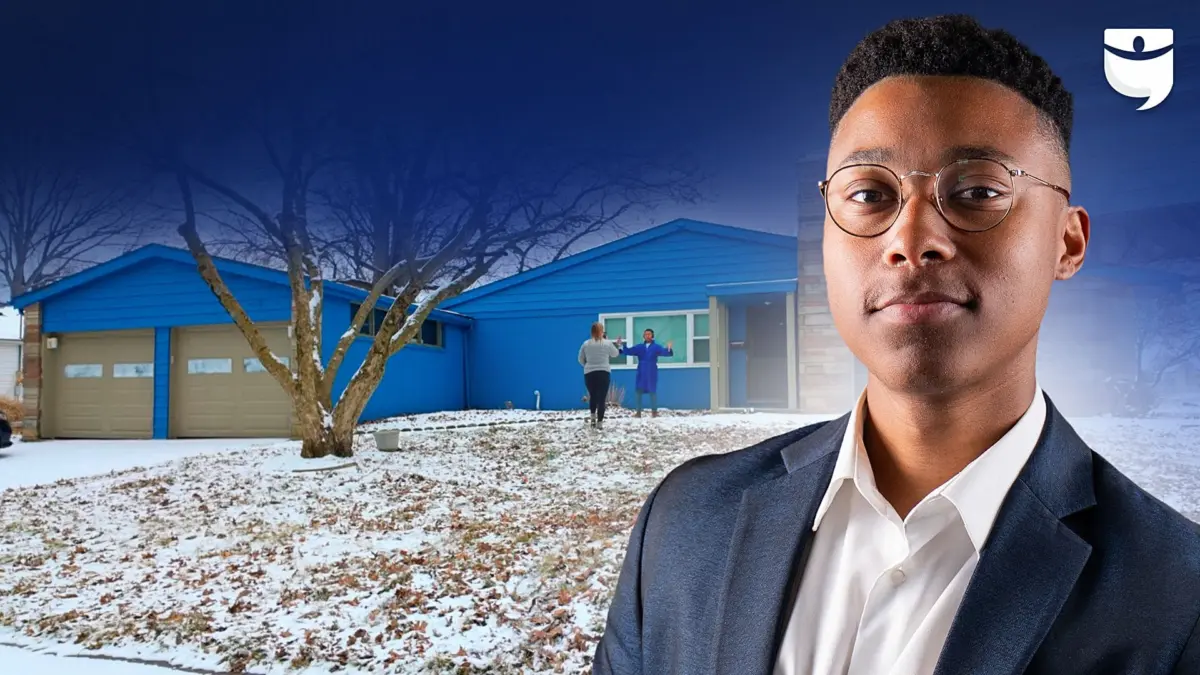
When Obi Johns was a teenager growing up in Columbus, Ohio, he witnessed a masterclass in missed opportunity. His parents had purchased their modest family home in the late 1990s for $80,000. Decades later, as fixer-uppers in a changing market, they sold it for roughly $230,000, walking away with a healthy $150,000 in market appreciation alone. To a young Obi, it felt like a remarkable windfall—until he watched the subsequent events unfold. Just three months after closing the sale, the investor who bought his childhood home resold it for a staggering $600,000, pocketing nearly $400,000 in profit with swift efficiency.
Looking at his family, the teenage Obi formed a core conviction: "That should have been us."
That formative moment planted a seed that would eventually shape his entire adult life. Today, at 28 years old, Johns has established himself as a top-performing real estate agent, house hacker, and innovative property flipper in the bustling Central Ohio market. Recently appearing on the BiggerPockets Podcast alongside hosts Henry Washington and Dave Meyer, Johns detailed his unconventional trajectory—from graduating college with a political science degree he rarely used into the teeth of the COVID-19 real estate boom, to pioneering a social media-driven design model he calls "vibe flipping."
Entering the Market Post-College
Johns graduated from Ohio State University right into the pandemic-era economy of 2020, facing historically low interest rates around three percent and a white-hot real estate market. Initially majoring in political science, he spent four years and thousands of dollars before realizing politics was not his true calling. Listening to real estate and passive income podcasts like BiggerPockets, he decided to make a decisive career pivot and pursue his real estate license.
Before officially becoming a licensed realtor, Johns dabbled in wholesaling, studying every corner of the industry to understand how the broader ecosystem operated. Once licensed, he dived straight into retail and investor agency work while simultaneously seeking his own property.
His first personal investment was a classic real estate move: house hacking a 100-year-old duplex located just three blocks away from his childhood home. Finding the off-market property through connections at a local real estate meetup, Johns secured the duplex with a modest five percent down conventional loan, utilizing a lender he frequently recommended to his own clients.
At the time, the rental market in Columbus was heating up due to proximity to the Ohio State University campus, with updated two-bedroom apartments commanding between $2,000 and $2,200 per month. While the mortgage on their new duplex sat at approximately $3,400, renting out one side for $1,800 left Johns and his wife paying roughly $1,600 out of pocket. For a growing family trading a cramped one-bedroom apartment for a spacious multi-family home, it was a massive victory.
However, real estate rarely goes entirely smoothly. Just months after closing, a sewer line collapsed on the property, requiring an unexpected $7,000 excavation. For a young couple who had just depleted much of their savings on down payments and furnishing extra rooms, the hit was painful. Yet rather than backing away, Johns used the setback as fuel to double down on his ambitions.
The Birth of "Vibe Flipping" and Going Viral
Working closely with investor clients who flipped homes for a living, Johns grew eager to understand the entire transactional lifecycle—from underwriting and contractor management to financing and final sales. He wanted to speak to his own agency clients from a place of firsthand experience.
For his first independent house flip, he acquired an unassuming property for $153,000, roughly 10 minutes from his home. Needing primarily cosmetic updates—including a finished basement, fresh paint, and minor roof and gutter work—he invested roughly $40,000 into the project.
What set this project apart, however, was Johns’ decision to document the entire journey on Instagram. Beginning on day one, when he walked into a house littered with abandoned belongings left behind by the previous owners, he recorded every daily hurdle, delayed shipment, and unexpected repair.
The transparency struck a profound chord online. The multi-part video series exploded, eventually accumulating over seven million views and netting him roughly 100,000 new followers within a matter of days. As the project neared completion, the viral exposure translated directly into hyper-local demand. When the home finally hit the market, it shattered neighborhood records by drawing 26 separate showings in a single day—the highest single-day showing count in the entire zip code for 2024.
The property generated 10 offers on its first day, with several coming from agents whose clients had followed the renovation journey online. Ultimately, the home sold for $25,000 over asking price, netting Johns a profit exceeding $44,000.
Rather than relying on the predictable, mass-market finishes that many weary buyers have come to resent—such as standard gray walls and identical white shaker cabinets—Johns took a different approach. He turned critical design decisions over to his social media audience through interactive polls. If 80 percent of his followers voted for a specific aesthetic choice, he reasoned that a similar majority of active home buyers would share that preference.
He dubbed this strategy "vibe flipping," a model designed to bypass cookie-cutter renovations in favor of authentic, cozy, and distinctive character. Subsequent projects, including a mid-century modern home that attracted an out-of-state buyer from Oregon via Zillow, continued to perform exceptionally well. Across his flips, Johns’ properties averaged just five days on the market in a region where the typical average stretched to 30 or 40 days. His most recent project generated a $57,000 profit while utilizing 100% outside financing, meaning he did not risk his own capital to execute the remodel.
Balancing Real Estate Agency and Investing
Despite the profitability of house flipping, Johns eventually chose to step back from executing multiple heavy renovations concurrently. While he appreciated the financial returns, he realized that the distinct brand of stress involved in contracting and construction did not bring him the same personal fulfillment as helping everyday clients achieve their homeownership goals.
Today, Johns operates as a top-producing agent in Columbus—ranking in the top 5 percent of his brokerage—while selectively managing a single flip per year to stay sharp on market trends and design shifts. The vast majority of his business now stems organically from the audience and reputation he built through social media.
Reflecting on his journey, Johns advises aspiring investors not to get paralyzed by the pressure of choosing the "perfect" initial path or needing massive capital reserves. By starting small with single-family properties, leveraging low down-payment options like house hacking, and remaining open to experimenting with wholesaling, agency work, and flipping, newcomers can navigate market risks intelligently.
Now settled in Columbus, preparing for a growing family, and expanding into short-term rentals, Johns continues to use his platform to guide clients through the realities of modern real estate, proving that transparency, unique design, and genuine storytelling remain powerful tools for building a sustainable business.