
It all began last winter when personal finance blogger and construction enthusiast Peter Adeney—better known by his pseudonym Mr. Money Mustache—innocently posted a five-star review on Amazon for a heated vest he had purchased to beat the winter cold. Satisfied with his new garment, he wanted to share his positive experience with other shoppers. But shortly after clicking submit, an email landed in his inbox with a subject line that would kick off a nine-month behavioral experiment: "Congratulations! You’ve been selected to join Amazon Vine for writing helpful reviews!"

Adeney was already familiar with the Amazon Vine program, having frequently spotted product reviews from other participants known as "Vine Voices." The fundamental premise of the program is straightforward: participants can order items from Amazon completely free of charge, provided they agree to review at least 80 percent of the products they request. At first glance, the proposition seemed harmless and even rewarding. Adeney reasoned that since he already wrote product reviews out of the goodness of his heart, being rewarded with free merchandise for doing so made logical sense. Without giving it much further thought, he accepted the terms and conditions and stepped into a consumerist rabbit hole that would ultimately challenge his core philosophies on frugality, time management, and modern digital addiction.
Reflecting on the experience months later, Adeney admitted that the program did deliver some tangible benefits. His original idea was partly to save money by acquiring items he genuinely would have purchased anyway. That objective was partially met, saving him at least a few thousand dollars on tools, materials for his construction business, and the MMM-HQ coworking space. Moreover, a driving motivation behind his participation was to conduct a live experiment to document for his readers. Yet, despite his decades-long dedication to intentional living and financial independence, he remained genuinely surprised by how effectively Amazon’s subtle nudges and behavioral incentives managed to bypass his well-honed frugality instincts, coaxing him into performing a significant volume of uncompensated labor.

Scarcity Brain and the Online Casino Effect
To understand how a seasoned financial independence advocate could fall into the trap of accumulating unneeded goods, Adeney turned to behavioral science, drawing parallels to Michael Easter’s book Scarcity Brain. Easter’s work explores the hidden ways modern gambling platforms, targeted marketing, and social media algorithms exploit evolutionary vulnerabilities rooted in human survival mechanisms—specifically, a tendency to hoard resources when scarcity is perceived, and a dopamine-driven response to unpredictable, variable rewards.

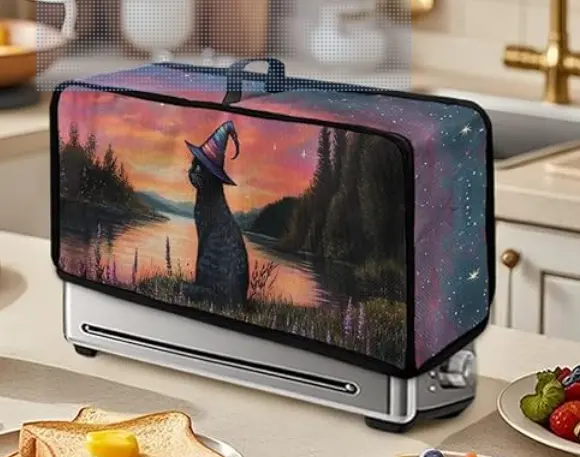
Looking back, Adeney realized that the Amazon Vine program shares the exact structural architecture of a digital casino or an endless social media feed like TikTok. Every time a participant logs into the exclusive, reviewers-only portal, a fresh rotation of available merchandise appears. Sometimes, the selection is completely devoid of utility—endless pages of pink plastic party plates or hyper-specific items like a toaster cover featuring a cat wearing a witch hat. But occasionally, genuinely useful items slip into the feed: high-end light fixtures, specialized plumbing parts, heavy-duty tools, EV chargers, and apparel. Among his notable scores were a stylized eagle shirt featured in a music video and a supply of realistic artificial plants that transformed the hard-to-water courtyard garden areas at MMM Headquarters.
Adeney even integrated friends and coworkers into the ecosystem, allowing them to request and review items they desired while keeping the bounty. While this added a communal element of shared labor and amusement at the absurdity of certain products, the underlying psychological machinery continued to churn. As spring and summer progressed, Adeney found himself hooked on the daily ritual of checking the Vine page, driven by the unpredictable reinforcement schedule. Even when he needed nothing, the fear of missing out on a valuable score prompted him to order items impulsively before they vanished.

The packages arrived with assembly-line regularity, leading to towering stacks of cardboard boxes and an overflowing recycling bin. Family members and colleagues began to gently mock his growing collection of frivolous gadgets, prompting him to discreetly tuck away boxes to evade scrutiny. The habit had morphed into a form of procrastination and intellectual laziness—ordering goods online offered a cheap imitation of productivity, distracting him from the activities that genuinely brought fulfillment, such as physical fitness, construction projects, and creative writing.
Evaluating the Real Cost of "Free"

Beyond the psychological toll, Adeney began to notice the deliberately reviewer-unfriendly design choices embedded within the Amazon Vine infrastructure. Far from treating participants as valued partners or VIPs, the system operates more like a low-wage digital assembly line. The search functionality is intentionally rudimentary, lacking sorting or filtering tools designed to save time. Instead, the platform relies on friction, forcing users to scroll through endless screens of trinkets, thereby maximizing user engagement at the expense of their time.
Furthermore, the bureaucratic AI-driven evaluation system frequently flagged entirely factual, mild reviews as violations of community standards without providing actionable feedback. Reviewers are often forced to randomly alter phrasing or punctuation simply to appease an automated gatekeeper. This dynamic underscored a broader realization for Adeney: the experience closely mirrored the traditional corporate structures he had long since escaped through financial independence. It highlighted what happens when individuals are handed a rigid set of rules within a system they cannot control, exchanging their time and labor for predetermined outputs.

The financial realities of the program also shattered the illusion of total gratuity. Amazon tracks the estimated retail value of all distributed items and issues a Form 1099 at the end of the year, meaning the merchandise is not truly free, but rather discounted by the recipient’s marginal tax rate. Reviewing his account data, Adeney noted that he had accumulated approximately $7,000 worth of goods, which could have triggered a tax liability of roughly $1,750 depending on his tax bracket.
However, approximately 75 percent of those acquisitions were absorbed by his business for commercial use, effectively converting them into legitimate operational expenses rather than personal tax burdens. For personal items, the calculation included genuine household necessities alongside roughly $1,000 worth of impulsive novelties. Fortunately, guidance from fellow online community members revealed a crucial tax strategy: participants can often reduce the estimated value of items by up to 80 percent before reporting, as opening and reviewing products drastically diminishes their resale market value, significantly lowering the actual tax penalty.

Breaking the Habit and Moving Forward
Recognizing that the habit had become an unwelcome distraction from his primary life goals, Adeney utilized a behavioral trick known as a "Keystone Habit" to break the cycle. Rather than formally canceling his account, he altered his digital environment by remapping his browser bookmark for the Vine portal directly to his daily routine tracker, which he calls his "Badassity Tracker." Now, whenever an automatic impulse drives him toward the review portal, the click instead serves as an immediate prompt to step away from the computer and engage in physical exercise or outdoor activity.

Reflecting on the nine-month experiment, Adeney noted that the underlying psychological pull of the Vine program shares striking similarities with the phenomenon known as "One More Year Syndrome," where individuals continue working long after achieving financial independence simply out of habit or psychological inertia. Ultimately, the experience served as a personal reminder to continuously evaluate routines, question hidden assumptions, and remain mindful of how modern consumer platforms subtly manipulate human behavior.