
By Staff Reporters
This coverage is made possible through a partnership between Grist and The Salt Lake Tribune, a nonprofit newsroom in Utah.
Cindy O’Neil understands the boom-and-bust cycles of heavy industry better than most. For years, her husband spent his days working deep inside Carbon County’s namesake coal mines, laboring in a region of central Utah where energy extraction and the local economy have long been intrinsically linked at great personal and communal sacrifice. Generations of families traded their health for the nation’s energy needs, enduring dangerous working conditions to keep the lights on across the American West.
“We’ve had the coal. We’ve dealt, the whole community, with black lung,” O’Neil recalled, reflecting on the grim legacy of the region’s industrial past. “The explosions, the fires, and all the things that came along with it.”
Now, a radically different type of industrial energy production is preparing to move near her rural home. But instead of bringing a sense of economic relief, O’Neil says the incoming wave has her and her neighbors feeling even more apprehensive and fearful than they ever were during their long, troubled history with coal.
“It’s all descending, these data centers,” said O’Neil, who actively tracks mysterious new projects working their way through local pipelines and shares the latest updates with anxious residents on Facebook community pages. “They’re setting these things within a couple of miles of homes.”
Her latest updates have fueled intense community chatter regarding Valar Atomics, an ambitious nuclear startup. The company has announced controversial plans to construct a massive mega-complex featuring 456 small modular reactors—a nuclear technology that remains largely untested and unproven for commercial deployment in the United States. According to reports, the project would be situated on vast tracts of Bureau of Land Management territory within the county and would include facilities for storing radioactive waste.
The installation is designed to power an array of heavy industrial activities, most notably massive artificial intelligence data centers. Dubbed “Project Beehive,” the nuclear initiative has already secured backing from the state of Utah, a partnership that will see the project incorporate a square mile of lucrative state-owned trust lands.
At the same time, another major data center complex is slated for Carbon County. Developed by Altigen Energy and dubbed “Jurassic Spark,” this project will sprawl across hundreds of acres and feature a massive natural gas power plant to supply the staggering amounts of electricity required by modern computing infrastructure.
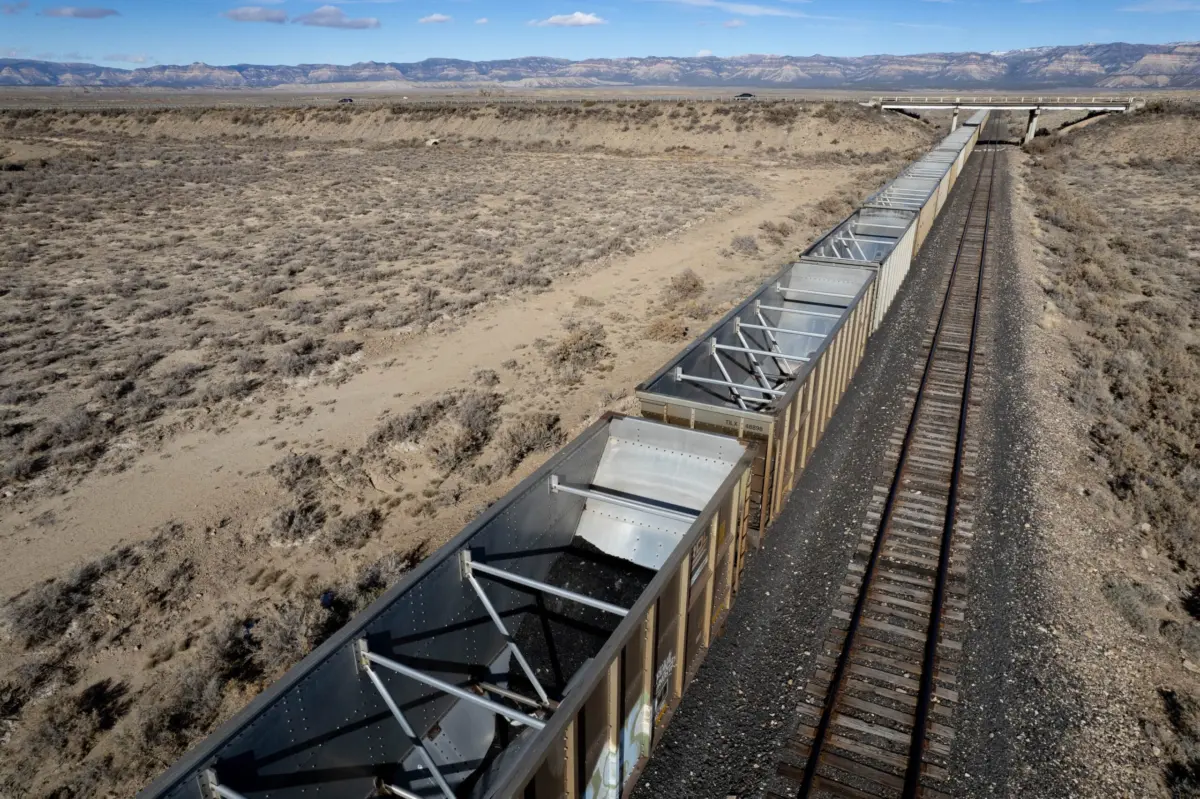
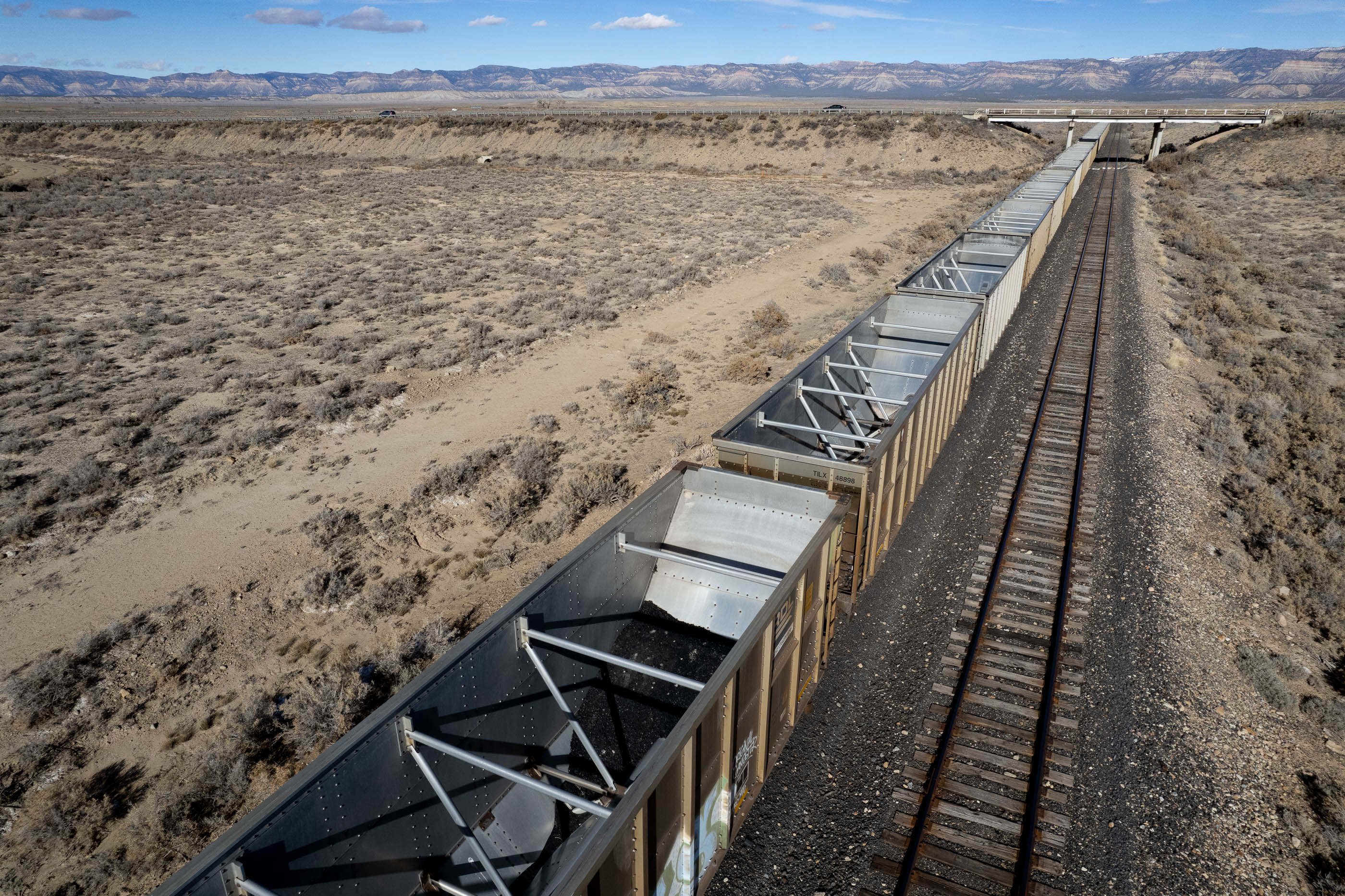
For Carbon County, the pivot marks an abrupt and jarring shift in identity. At its peak in 2006, local coal mines produced nearly 10 million tons of coal, powering local employment and supplying municipal revenues. However, a sweeping market shift toward cheaper energy alternatives—such as renewables and natural gas—combined with rapidly depleted supplies in the local coal seams, crippled the region’s economic engine over the course of just a few decades. By 2023, the decline was total: not a single pound of coal has been mined in Carbon County since.
For residents staring down the barrel of economic obsolescence, the choice feels impossible. “They say everything’s left us, and if we don’t grab these table scraps we’re not going to get anything,” O’Neil said. “I don’t think our county has to take the table scraps.”
None of Carbon County’s newly proposed data center initiatives call for burning coal. Instead, the Utah Trust Lands Administration recently finalized an agreement to lease a square mile of its state-owned land for up to 100 years to Valar Atomics. The nuclear startup intends to leverage this long-term lease to run a portion of its small modular reactors, process its proprietary uranium TRISO-fuel to feed the reactors, establish water desalination operations, manufacture steel, refine critical minerals, and provide immense computational power to data centers.
The financial arrangement is expected to generate roughly $35 million in lease rents over a 50-year period, according to presentations delivered by Trust Lands Administration staff to its governing board. Revenue collected from the project is earmarked to benefit Utah’s public schools. Despite the high-stakes nature of the project, the state agency declined to comment on the specifics of the Valar agreement.
During a September board meeting, three Carbon County residents who are either currently employed by Valar or anticipate working for the company spoke passionately in favor of the project. All three sitting Carbon County Commissioners also voiced their unconditional support for the nuclear development.
“We realize that this topic is a hot button now, along with data centers,” said Larry Jensen, one of the county commissioners, addressing the brewing controversy. “It’s important that you understand that the Carbon County Commissioners are committed to allowing these things to move forward. Even with the pushback—we realize that there are a few in our community who will push back—but the silent majority are the ones that we really represent.”
That assertion has drawn fierce pushback from local critics, including Cheryl Lupo, a lifelong resident of the county who launched a campaign for a seat on the county commission. Running as an unaffiliated candidate, Lupo was forced to collect 300 signatures to secure her place on the ballot. She noted that the sentiments she encountered from everyday citizens during her petitioning process were overwhelmingly opposed to the sudden influx of data centers and nuclear installations.
“People are up in arms,” Lupo said, describing the local mood. “Torches and pitchforks. Because they’re not being heard.”
High-ranking state and federal leaders have rolled out the red carpet for the emerging nuclear sector. Governor Spencer Cox, U.S. Senator John Curtis, and other prominent Utah officials welcomed Valar to the state earlier this year, clearing the way for the company to test its “Ward250” microreactor at the San Rafael Energy Lab in neighboring Emery County. Valar subsequently announced that it had achieved “self-sustaining criticality” in June—a complex physical process where atoms split and maintain a steady fission chain reaction without requiring an external feed of additional neutrons. The company also harbors plans to power a 30-megawatt, nuclear-driven AI data center in Emery County through a partnership with computer-chip manufacturing giant Nvidia.
Despite the political enthusiasm, small modular reactors have yet to be deployed for commercial use anywhere in the United States, leaving a shroud of uncertainty over their practical implementation. During a recent Trust Lands Administration meeting, board chair Mike Nelson appeared to acknowledge that the pact with Valar involved significant unknowns.
“We weren’t always sure what to ask about,” Nelson admitted while offering praise for the nuclear startup, “and probably still aren’t sure of everything to ask about because this is a first, right?”
For many in the region, the embrace of nuclear power stirs up deep generational anxieties. Utah carries a troubled, painful history with nuclear testing and radiation exposure. Lupo’s mother was only 38 years old when she passed away, an early death that Lupo firmly attributes to the downwind fallout effects of radioactive weapons testing conducted by the federal government in neighboring Nevada during the 1950s, while her family was living in Carbon County. She believes the atmospheric fallout was also responsible for her grandfather’s death.
“I will never, ever be a proponent of nuclear,” Lupo said.
Even before the formal proposal to construct Valar’s massive nuclear complex began generating controversy, persistent rumors had already begun swirling regarding the possibility of another sprawling data center campus in Carbon County.
Altigen, a developer specializing in building dedicated natural gas-fired power plants to supply energy-hungry data centers, selected a massive 1,200-acre site east of Wellington for its “Jurassic Spark” project. According to meeting minutes from the local Community Economic Development Board, the footprint of the Altigen project is nearly double the size of the Valar campus. Initial plans call for constructing a 250-megawatt natural gas plant to power the complex, but capacity could eventually scale up to produce a staggering 3 gigawatts of electricity, according to Commissioner Jensen. To put that figure into perspective, the entire state of Utah currently consumes about 4 gigawatts of electricity total. Altigen did not respond to repeated requests for comment on the project.
Data center developers across the country are increasingly turning to natural gas to power their massive operations as traditional utility grids struggle to keep pace with the relentless electricity demands of artificial intelligence servers.
Last year, the Utah Legislature passed Senate Bill 132, a measure designed to allow private companies with massive energy demands of 100 megawatts or more to construct their own self-contained generating stations. The legislative intent was to foster rapid business development, including data centers, without placing an undue strain on the electrical grid relied upon by residential and small-business consumers. The result, however, has been a sudden surge of industrial developers issuing construction plans and applying for permits to build gas-fired power plants across rural landscapes.
Environmental scientists point out that natural gas is a potent greenhouse pollutant primarily composed of methane, a gas that accelerates climate change while degrading regional air quality. Furthermore, natural gas generation facilities are capable of producing immense quantities of waste heat.
Nuclear facilities, meanwhile, can generate even greater amounts of waste heat than natural gas plants because they operate at lower thermodynamic efficiencies, according to Robert Davies, a physics professor at Utah State University.
“If you’re in a contained valley, it concentrates the problem,” Davies warned.
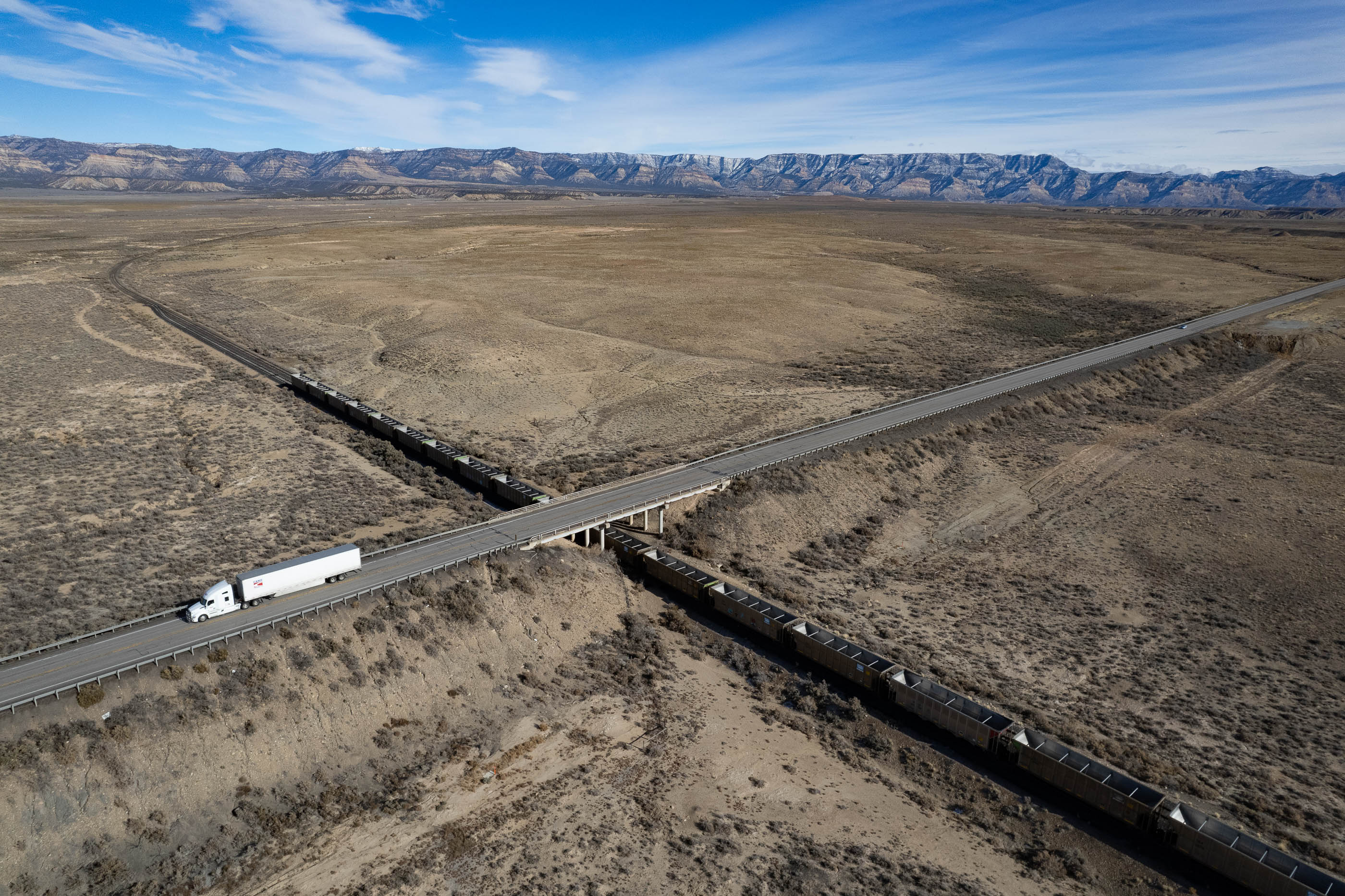
As geography dictates, the Wellington area sits squarely inside a restrictive valley, tightly hemmed in by the towering Wasatch Range to the west and the imposing Book Cliffs to the north and east.
“The heat island that the data centers produce, that concerns me,” said Aspen Westenskow, a lifelong resident of Carbon and Emery counties. “They go clear all this land, the brush, the trees. What helps cool the planet down? Not flat dirt.”
Westenskow noted that water availability remains her single greatest source of distress in an already arid region. The local watershed is severely strapped, with virtually every drop of available water fully allocated to existing agricultural, municipal, and industrial uses.
While representatives for Valar maintain that their advanced reactors utilize closed-loop helium cooling systems requiring minimal water resources, and data center developers have similarly asserted that their facilities will rely on low-consumption closed-loop cooling technologies, local skepticism remains high.
On July 3, Carbon County officials issued a public statement attempting to address mounting resident concerns. The region faces a harsh and difficult economic reality brought on by the permanent decline of the coal industry, the statement emphasized—a structural collapse that has inevitably shifted a larger share of the county’s property tax burden onto the shoulders of everyday homeowners and remaining small businesses. The data center proposals have ultimately earned the firm support of the commissioners because of their unmatched potential to infuse local tax rolls with much-needed revenue.
The statement also directly addressed resident frustrations regarding non-disclosure agreements signed between local officials and prospective industrial partners. “Without these agreements,” the county’s statement read, “some companies would choose not to explore projects in Carbon County.”
It remains unclear whether county officials executed formal non-disclosure agreements with Altigen or Valar specifically. However, such confidentiality pacts are known to be common practice for private entities exploring business ventures in Carbon County. Oran Stainbrook, a local resident, noted that he encountered several such agreements during his tenure serving on the county planning commission and economic development board. Stainbrook recently resigned from those advisory positions to take a new job in Colorado.
Although he stated he was not personally aware of any active non-disclosure agreements directly involving the newer data center proposals, Stainbrook expressed a belief that the county commissioners were acting in good faith to protect the community’s long-term economic interests by aggressively pursuing jobs and outside investment.
From her home situated along U.S. Highway 6, Cindy O’Neil sees the situation through a fundamentally different lens.
“You shouldn’t be hiding what you and the company are going to bring to a community,” O’Neil said, “and not tell the community until it’s too late and a done deal.”