
This coverage is made possible through a partnership between Grist and The Salt Lake Tribune, a nonprofit newsroom in Utah.
For generations, the economic pulse of Carbon County, Utah, beat in rhythm with the heavy thud of the coal industry. Cindy O’Neil knows those boom-and-bust cycles intimately; her husband spent years laboring away in the county’s namesake coal mines. In this secluded pocket of central Utah, reliable energy production and regional survival have long been intrinsically linked—often exacted at a devastating sacrifice to the health and well-being of local residents.
“We’ve had the coal. We’ve dealt, the whole community, with black lung,” O’Neil said, reflecting on the grim legacy of the mines. “The explosions, the fires, and all the things that came along with it.”
Now, a radically different industry and an entirely new breed of massive energy production are poised to move dangerously close to her rural home. O’Neil says the modern wave of development has her and her neighbors far more anxious and unsettled than they ever were during the decades when coal was king.
“It’s all descending, these data centers,” said O’Neil, who dedicates her time to tracking mysterious new industrial projects taking shape across the region and sharing critical updates with local residents via Facebook community pages. “They’re setting these things within a couple of miles of homes.”
Her latest digital dispatches and community discussions are consumed by chatter surrounding Valar Atomics, an ambitious nuclear startup. The company has drawn up controversial plans to build an unprecedented mega-complex consisting of 456 small modular reactors—a technology that remains largely untested and unproven at a commercial scale in the United States. According to reports from National Public Radio, the sprawling complex would be constructed on vast tracts of Bureau of Land Management territory within the county and would include facilities to store radioactive waste. The nuclear installation is designed to power a diverse array of heavy industrial activities, most notably massive artificial intelligence data centers.
Known as “Project Beehive,” the venture enjoys robust support from the state of Utah and is slated to incorporate a full square mile of state-owned trust lands. But Valar Atomics is not the only tech-infrastructure player eyeing the region. Another massive data center complex, dubbed “Jurassic Spark” and spearheaded by Altigen Energy, is planned for hundreds of acres in the county and features a massive natural gas-fired power plant to satisfy its immense electricity appetite.
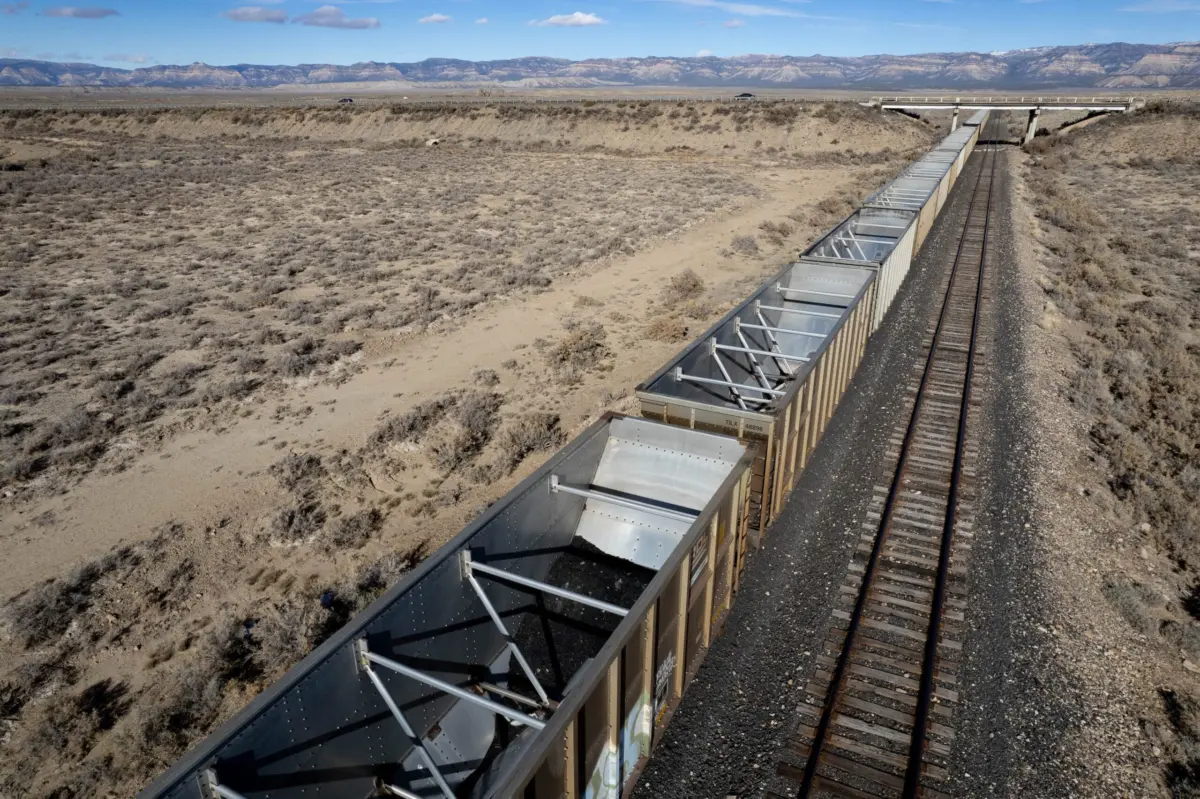
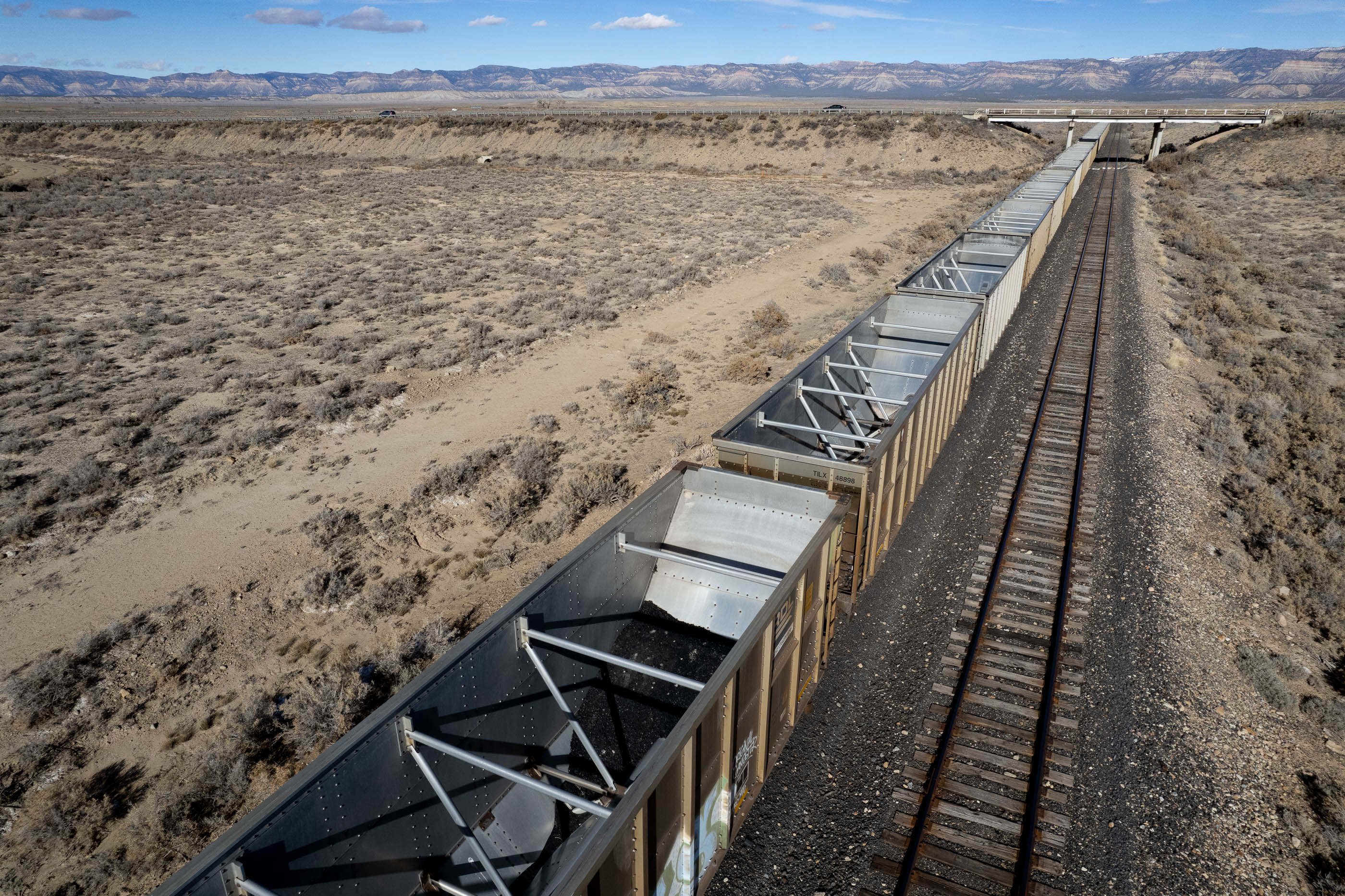
The transition marks an abrupt and jarring shift for a community that once defined the American energy landscape. At its peak in 2006, Carbon County’s underground coal mines yielded nearly 10 million tons of the fossil fuel. However, a sweeping regional and national shift toward cheaper energy alternatives—such as utility-scale renewables and natural gas—combined with heavily depleted supplies within the aging coal seams, rapidly choked off the region’s main economic engine over the course of just two decades. By 2023, the last remaining mines fell silent, and not a single pound of coal has been extracted from Carbon County since.
For many longtime residents, the arrival of tech giants and speculative energy startups feels less like a genuine economic revival and more like a desperate scramble for survival.
“They say everything’s left us, and if we don’t grab these table scraps we’re not going to get anything,” O’Neil said. “I don’t think our county has to take the table scraps.”
A New Footprint on State Trust Lands
None of the data center projects proposed for Carbon County rely on coal. Instead, the Utah Trust Lands Administration recently finalized an agreement to lease a square mile of its state-owned property for up to a century to Valar Atomics. The nuclear startup intends to leverage this long-term lease to operate a portion of its small modular reactors, process its specialized uranium TRISO-fuel on-site to feed the reactors, construct water desalination plants, manufacture steel, refine critical minerals, and provide steady electricity to energy-hungry data centers.
According to financial projections and data presented by the Trust Lands Administration staff to its governing board, the Valar site is expected to generate approximately $35 million in lease rents over a 50-year span. Revenue collected through these industrial leases directly benefits public education funding across Utah. Despite the significant financial implications, the state agency declined to comment publicly on the specifics of the Valar project.
During a turbulent board meeting last month, three Carbon County residents who are either currently employed or anticipate working for Valar Atomics spoke passionately in favor of the development. All three members of the Carbon County Commission also voiced their unequivocal backing for the initiative.
“[We] realize that this topic is a hot button now, along with data centers,” said Larry Jensen, one of the county commissioners. “It’s important that you understand that the Carbon County Commissioners are committed to allowing these things to move forward. Even with the pushback—we realize that there are a few in our community who will push back—but the silent majority are the ones that we really represent.”
That assertion drew fierce pushback from local residents, including Cheryl Lupo, a longtime county resident who is running for a seat on the county commission. As an unaffiliated political candidate, Lupo was required to gather 300 verified signatures just to secure a spot on the ballot. She noted that the sentiment she encountered from everyday citizens during her petitioning process was overwhelmingly hostile toward the influx of data centers and nuclear installations.
“People are up in arms,” Lupo said. “Torches and pitchforks. Because they’re not being heard.”
High-ranking state and federal officials, including Utah Governor Spencer Cox and U.S. Senator John Curtis, formally welcomed Valar Atomics to the state earlier this year. The political backing paved the way for the company to test its “Ward250” microreactor prototype at the San Rafael Energy Lab in neighboring Emery County. Valar proudly announced in June that it had achieved “self-sustaining criticality”—a complex physics milestone where atomic nuclei split and maintain a self-sustaining fission chain reaction without requiring external neutrons. The startup has also laid groundwork to power a separate 30-megawatt nuclear-driven AI data center in Emery County through a strategic partnership with computer chip titan Nvidia.
Despite the political enthusiasm, small modular reactors have yet to be successfully deployed for commercial electricity generation anywhere in the United States. During a recent meeting of the Trust Lands Administration board, board chair Mike Nelson appeared to concede that the agreement with Valar involved substantial, unquantified risks.
“We weren’t always sure what to ask about,” Nelson said, while offering praise for the fledgling nuclear enterprise, “and probably still aren’t sure of everything to ask about because this is a first, right?”
For many residents, Utah’s dark historical legacy with nuclear experimentation casts a long shadow over these modern promises. Lupo’s mother was only 38 years old when she passed away, a tragedy Lupo firmly believes was the direct result of downwind radioactive fallout from atomic weapons testing conducted by the federal government in neighboring Nevada during the 1950s. At the time, her mother and grandfather lived in Carbon County, and Lupo believes her grandfather’s death was likewise accelerated by the invisible radiation.
“I will never, ever be a proponent of nuclear,” Lupo said.
The Natural Gas Boom and Environmental Realities
Even before Valar’s nuclear ambitions began dominating local headlines, rumors had been swirling regarding a separate, massive data center campus slated for Carbon County.
Altigen, a specialized developer that constructs dedicated natural gas-fired power plants to service energy-intensive data hubs, selected a sprawling 1,200-acre site east of Wellington for its “Jurassic Spark” project. According to official meeting minutes from the local Community Economic Development Board, the project footprint is nearly double the physical size of the Valar campus. Initial plans call for constructing a 250-megawatt natural gas power plant to jumpstart the complex, though capacity could eventually scale up to a staggering 3 gigawatts of electricity generation, according to Commissioner Jensen. To put that figure in perspective, the total electricity consumption for the entire state of Utah hovers around 4 gigawatts. Altigen did not respond to multiple requests for comment.
Across the country, data center developers are increasingly turning to natural gas to fuel their operations because traditional regional utility providers have struggled to keep pace with the voracious electricity demands of artificial intelligence server farms.
To facilitate this trend, the Utah Legislature passed Senate Bill 132 last year, permitting private corporations with energy demands exceeding 100 megawatts to construct their own self-contained, independent power generation facilities. The legislative intent was to foster rapid commercial and technological development—particularly data centers—without straining the public electrical grid relied upon by everyday residential and commercial ratepayers. The policy immediately triggered a gold rush of builders issuing proposals and filing permit applications for gas-fired generation stations.
Environmental advocates point out that natural gas is a potent fossil fuel composed primarily of methane, a greenhouse gas that accelerates global climate change while degrading regional air quality. Furthermore, heavy industrial gas turbines generate immense quantities of ambient heat.
Scientists warn that nuclear facilities can generate even higher levels of waste heat than natural gas plants because they operate at lower thermodynamic efficiencies.
“If you’re in a contained valley, it concentrates the problem,” explained Robert Davies, a professor of physics at Utah State University.
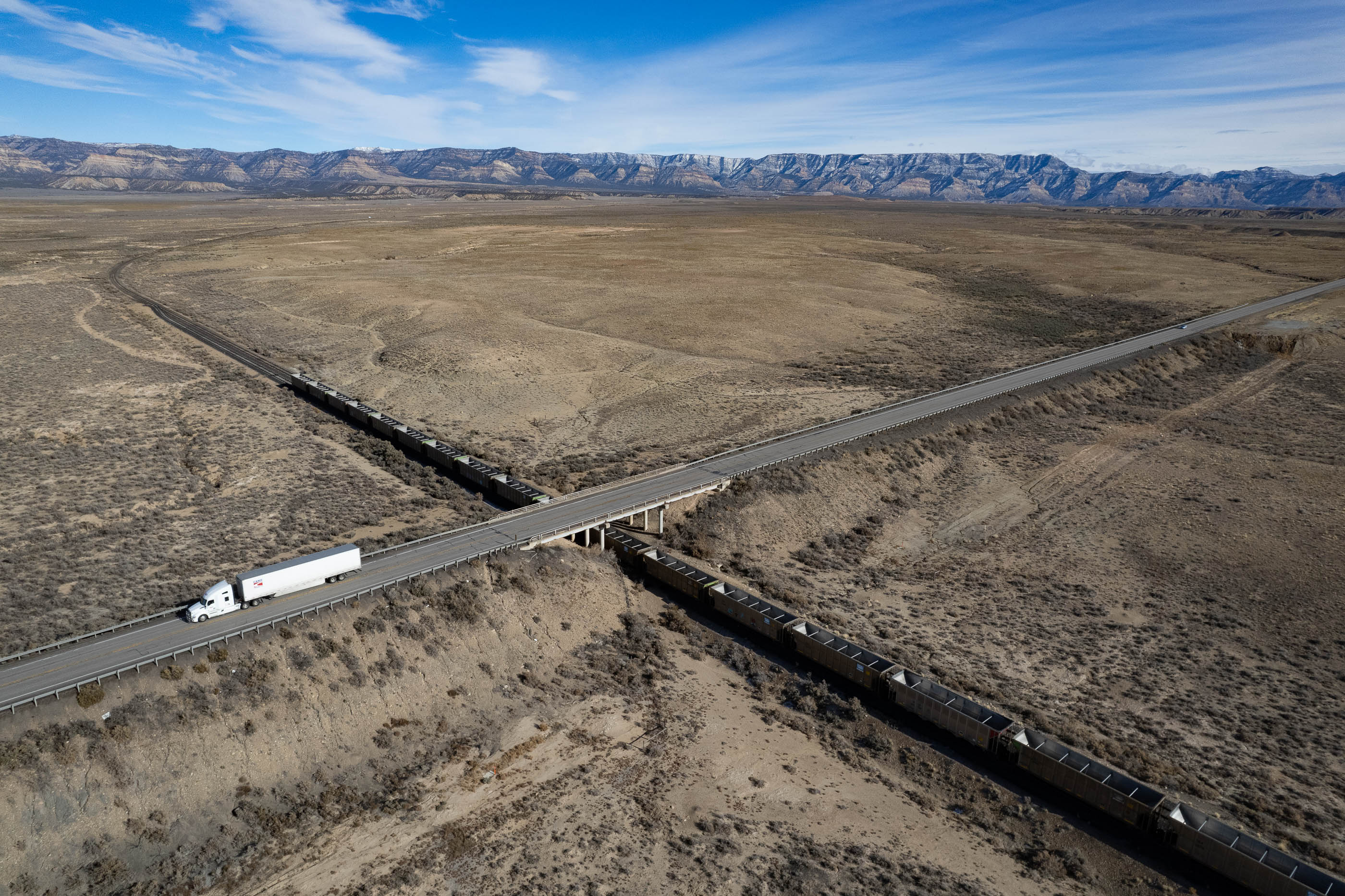
Geographically, the Wellington area is uniquely vulnerable to such phenomena, sitting snugly inside a desert valley hemmed in by the towering Wasatch Range to the west and the imposing Book Cliffs to the north and east.
“The heat island that the data centers produce, that concerns me,” said Aspen Westenskow, a lifelong resident of Carbon and Emery counties. “They go clear all this land, the brush, the trees. What helps cool the planet down? Not flat dirt.”
Beyond localized heating and air quality concerns, Westenskow noted that water availability remains her most profound source of anxiety in a region where every precious drop of arid desert water is already legally allocated.
Representatives for Valar Atomics maintain that their advanced reactors utilize closed-loop helium cooling systems that require minimal water resources, while data center developers have similarly asserted that their facilities will rely on closed-loop cooling technologies with exceptionally low water footprints.
Facing mounting local anxiety, Carbon County officials issued a formal public statement on July 3 addressing resident concerns. The statement emphasized that the region faces a brutal economic reality following the collapse of the coal industry, a contraction that has forced a disproportionate share of the county’s property tax burden onto homeowners and remaining small businesses. Data centers have earned the strong endorsement of the county commissioners precisely because they offer a rare avenue to inject substantial new revenue into local tax rolls.
The statement also directly addressed widespread public frustration regarding the non-disclosure agreements signed by local officials and corporate entities.
“Without these agreements,” the county statement reads, “some companies would choose not to explore projects in Carbon County.”
It remains unclear whether the county executed non-disclosure agreements with Altigen or Valar Atomics. However, such confidentiality clauses are standard operating procedure for corporate entities evaluating prospective investments in Carbon County. Oran Stainbrook, a former member of the county planning commission and economic development board who recently resigned to take a job in Colorado, acknowledged that he encountered several such agreements during his tenure.
While he noted he had no direct knowledge of specific NDAs tied to the current data center proposals, Stainbrook expressed confidence that the commissioners were acting in good faith to aggressively court jobs and outside capital.
Cindy O’Neil, looking out toward the horizon from her home along U.S. Highway 6, views the secretive maneuvering through a vastly different lens.
“You shouldn’t be hiding what you and the company are going to bring to a community,” O’Neil said, “and not tell the community until it’s too late and a done deal.”