

(This coverage is made possible through a partnership between Grist and WABE, Atlanta’s NPR station.)
The Georgia Public Service Commission has officially approved a novel agreement between Georgia Power and tech giant Google that could serve as a blueprint for how utility companies manage the surging electricity demands of the digital age. Under the new deal, which was greenlit following a commission vote last week, Google will help finance upgrades to the state’s existing nuclear reactors starting in 2028.
The arrangement represents a strategic shift in how large corporate energy consumers interact with regional power grids. Rather than constructing independent, fossil-fuel-burning generators or relying entirely on standard utility rate structures, major tech companies are increasingly stepping in to shoulder the capital costs required to modernize and expand carbon-free generation infrastructure.
State regulators welcomed the agreement with open enthusiasm, pointing to the financial relief it offers to standard ratepayers. During the discussions leading up to the vote, PSC Commissioner Stan Wise highlighted the distinct advantage of shifting the financial burden of clean energy expansion away from residential and small commercial customers. Addressing staffers shortly before the vote, Wise remarked on the arrangement to secure roughly 100 megawatts of carbon-free energy without straining public utility funds, asking why the commission couldn’t secure more deals of a similar nature.
The newly approved initiative centers on Georgia Power’s plans to upgrade four of its older nuclear reactors located at Plant Vogtle and Plant Hatch. These technical modifications are designed to increase the maximum energy output of the existing facilities, allowing them to generate more power without requiring the construction of entirely new, multi-billion-dollar power plants. While state regulators previously approved the Vogtle upgrades last year, the specific financial mechanisms and cost-sharing structures for the work had not yet been fully finalized. The recent commission vote moves ahead with the updates at Plant Hatch as well, while formally approving a new subscription program that enables large-scale commercial customers like Google to directly subsidize the costs of both projects.
Utility executives have praised the framework as a win-win for regional infrastructure development and corporate sustainability goals. Aaron Mitchell, senior vice president of strategic growth for Georgia Power, emphasized the collaborative nature of the initiative in a public statement. He noted that the utility appreciates Google’s ongoing leadership in the clean energy space and its partnership in developing a program that exemplifies how large-load growth can ultimately benefit all electric customers across the state.
Under the terms of the subscription program, Google will pay a recurring subscription fee on top of its standard monthly electricity bill to help cover the capital expenses associated with the nuclear reactor upgrades. In exchange, the technology company receives verified credits toward its corporate sustainability targets, specifically its ambitious goal of running entirely on carbon-free energy by the year 2030. Because nuclear energy generation does not rely on fossil fuels, the power produced qualifies under strict clean energy accounting standards. Furthermore, unlike intermittent renewable sources such as solar and wind power, nuclear plants possess the distinct advantage of being able to generate reliable electricity around the clock, regardless of weather conditions or time of day.
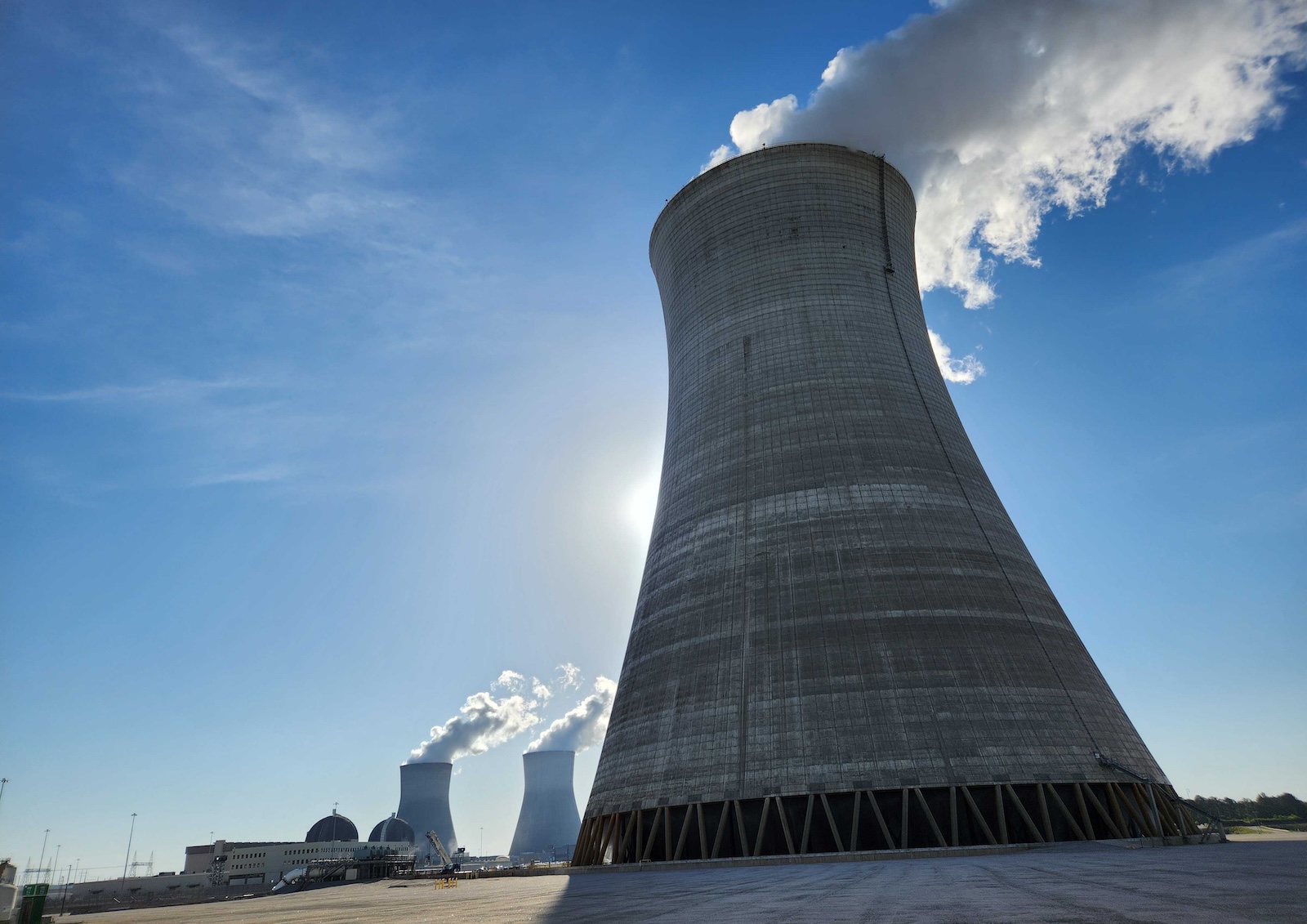
While the precise financial details and contractual specifics of the agreement between Google and Georgia Power remain confidential and have not been made fully public, the broad outlines project substantial regional advantages. According estimates provided by the utility, the agreement is expected to add approximately 96 megawatts of reliable nuclear capacity to the local grid while generating roughly $900 million in projected benefits to standard customers over the operational lifetime of the upgraded units.
Corporate representatives from the technology sector have similarly lauded the pact as a model for responsible infrastructure growth. Lucia Tian, director of advanced energy technologies for Google, noted in a statement that the collaboration with Georgia Power ensures that the rapid expansion of digital infrastructure goes hand-in-hand with positive local impacts. She emphasized that the partnership will help deliver hundreds of millions of dollars in direct customer benefits while supporting a more affordable, clean, and reliable energy system for all residents throughout Georgia.
The agreement in Georgia is part of a broader nationwide trend involving major technology companies securing clean energy sources to power expanding data center operations. Just last week, Google announced a separate major partnership with Constellation Energy to fund similar nuclear capacity upgrades at reactors located in Illinois, New Jersey, and Pennsylvania. That multi-state initiative is slated to add 890 megawatts of clean energy to the grid managed by PJM Interconnection, which serves as the largest grid operator in the country. Meanwhile, competitor Amazon has similarly announced a high-profile deal aimed at adding energy capacity to a Constellation nuclear facility in Maryland, illustrating a growing industry-wide reliance on nuclear power to satisfy the immense power needs of modern artificial intelligence and cloud computing infrastructure.
These clean energy investments arrive at a critical juncture for the American power sector. Across the country, utilities facing unprecedented spikes in electricity demand driven by the proliferation of hyperscale data centers have frequently turned to fossil fuels. Many regional providers have responded by building new natural gas generation facilities, extending the operational lifespans of aging coal-fired power plants, or assisting data center operators in establishing their own on-site fossil-fuel generation.
According to energy policy experts, however, the model pioneered in Georgia offers a viable and cleaner alternative. Priya Barua of the Corporate Energy Buyers Association, an organization that advocates for non-fossil energy solutions on behalf of corporate customers, notes that large energy consumers are increasingly evaluating all available options to support the creation of a reliable and affordable grid. Barua expressed confidence that the market will see a significant expansion of innovative financing models as corporations look broadly across the energy landscape to solve capacity challenges.
Beyond nuclear facility overhauls, Barua suggests that corporate capital could accelerate a wide array of grid-supporting tools, including advanced energy efficiency programs, high-voltage transmission line upgrades, and demand-response initiatives designed to temporarily reduce electricity consumption during peak usage periods to relieve pressure on local grids. Because these solutions can be scaled up relatively quickly when backed by substantial financial investments from major tech companies, they offer a speed advantage that could prove vital in the coming years.
That speed is becoming increasingly important as utilities grapple with logistical hurdles. Significant supply chain delays affecting the manufacture and delivery of natural gas turbines and other essential components have slowed down the expansion timelines for gas-fired infrastructure that utilities like Georgia Power had initially planned to rely upon to meet data center demand. Constructing an entirely new nuclear power plant can famously take decades from initial planning to commercial operation, but upgrading and uprating existing reactors can often be completed in a fraction of that time, typically around five years.
This acceleration of project timelines is viewed by industry analysts as a major advantage in the ongoing race to meet surging power demands without sacrificing long-term environmental commitments. Katie Southworth, also of the Corporate Energy Buyers Association, compared the current energy landscape to a competitive race where rapid deployment is essential. Programs like the partnership between Google and Georgia Power help mitigate project delays by establishing clear pathways for alternative clean energy resources to come online, ensuring that utilities and corporate buyers have the necessary framework to maintain grid reliability while advancing toward a decarbonized future.