
Beneath the surface of the ocean surrounding California’s Channel Islands lies a submerged landscape that can often feel like an entirely different world. Towering kelp forests sway with the ocean currents, patrolled by massive sheephead fish marked by striking shades of pink and black alongside prominent, protruding teeth. Refrigerator-sized giant sea bass share these waters with seals and sea lions that weave effortlessly through vibrant colonies of colorful sponges and delicate sea stars.
"We sometimes think of the Channel Islands as our Galapagos in California," said Doug McCauley, a professor of marine science at the University of California, Santa Barbara, capturing the remarkable biodiversity and ecological importance of the region.
However, this thriving cornucopia of marine wildlife has not always existed in such a vibrant state. Violet Sage Walker, chair of the Northern Chumash Tribal Council, vividly recalled historical documentary footage depicting the Channel Islands before modern conservation measures were put into place. During that era, intensive commercial fishing had severely degraded the delicate kelp forests and depleted key animal populations. "It looked like Mars, like a dead planet," Walker reflected, underscoring the severe toll that unchecked industrial and commercial activity once took on the coastal ecosystem.
That bleak trajectory began to shift dramatically in 2003, when state officials designated surrounding waters as California Marine Protected Areas, or MPAs. Functioning much like underwater state parks, this conservation strategy set aside roughly 150 square miles of protected waters. Today, these designated zones serve as vital sanctuaries for marine flora and fauna. They operate essentially as nurseries for vulnerable baby fish while safeguarding dozens of iconic species, including kelp bass, rockfish, and leopard sharks, giving them the space they need to reproduce and mature safely.
Now, for the first time in 15 years, California officials are actively considering ambitious proposals to establish entirely new protected zones and expand existing ones. This initiative forms a central component of the state’s first-ever comprehensive review of its entire MPA network. "This is a historic opportunity that we don’t want to miss," McCauley said, emphasizing the rare window of time available to fortify the state’s marine defenses.
Building California’s Marine Protections
Marine Protected Areas are officially designated ocean zones where targeted restrictions on high-impact activities—such as commercial fishing, oil and gas extraction, and other disruptive seafloor disturbances—are implemented to preserve fragile marine ecosystems and allow degraded habitats time to recover naturally. While specific protection levels and rules vary significantly from one site to another, the overarching results are well-documented.
In areas where these environmental disruptions are removed or heavily regulated, "you have larger fish, more abundant wildlife, and a healthier habitat," explained Sandy Aylesworth, director of the Pacific Initiative for Nature at the Natural Resources Defense Council, commonly known as the NRDC.
Among the prominent additions under consideration for 2026 are two groundbreaking proposals for protected zones along the state’s Central Coast: the Point Sal and Mishopshno State Marine Conservation Area proposals. Each of these vital sites is co-sponsored by a California Tribe in close collaboration with the NRDC. In the case of the Mishopshno proposal, the Environmental Defense Center, a Santa Barbara-based non-profit organization, has also joined as a co-sponsor.
These Tribally sponsored proposals represent a historic milestone for California’s MPA network. They offer the state a unique and overdue opportunity to formally recognize the longstanding, generational role of California Tribes as ocean stewards, while simultaneously making good on the state’s formal commitments to fostering genuine Tribal marine stewardship.
A Rare Convergence of Habitats
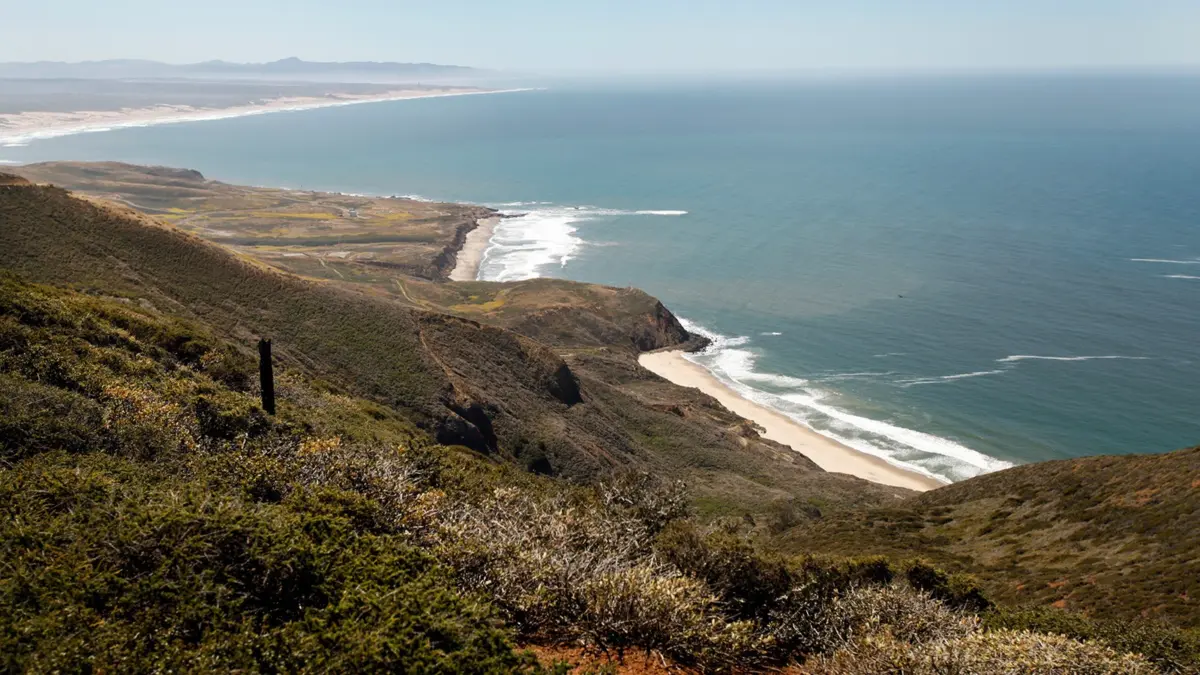
The proposed Point Sal State Marine Conservation Area would encompass approximately nine square miles off the rugged coast of Santa Barbara County. Within this designated zone, a prominent geographical headland naturally shelters the waters on its southern side from fierce prevailing winds. This sheltering effect creates calmer environmental conditions where delicate fish larvae can linger and mature safely away from turbulent currents.
Nearby Lion Rock serves as a bustling natural gathering place for seals and sea lions, as well as an essential roosting habitat for a wide variety of seabirds. Meanwhile, the surrounding kelp forests and complex rocky reefs provide indispensable shelter and foraging grounds for fish, sharks, sea otters, and countless other marine species. Field scientists have documented upwards of 880 sea lions gathered at the site in a single day. "It’s a little tiny paradise," Walker said.
For the Northern Chumash Tribal Council, which proudly co-sponsored the proposal, Point Sal holds profound cultural significance that stretches back centuries. Walker described ancient village sites scattered up and down the coast, representing an intimate relationship with the marine environment that is deeply woven into the fabric of Chumash history. "Our people lived and thrived there for thousands of years," she noted.
Preserving Marine Ecosystems and Cultural Connections
That deep historical connection forms the cornerstone of another defining feature of the current MPA network review: the integration of formal Tribal stewardship. California’s existing network of MPAs currently lacks formal Tribal co-management systems, despite the fact that Indigenous Tribes have actively stewarded the lands and waters of the Central Coast for more than 10,000 years. The Point Sal and Mishopshno proposals mark a paradigm shift as some of the very first potential additions to the state network led directly by California Tribes.
Walker emphasized her desire to see the state establish a clear, institutional pathway for coastal Tribes to maintain continuous participation in ocean management. This includes guaranteeing access for traditional cultural practices and securing a genuine decision-making role in conservation administration. "Being able to reconnect and offer our vision and our help with dealing with climate resiliency and coastal stewardship is critical," she said.
The proposed Mishopshno State Marine Conservation Area offers another compelling model of what modern Tribal stewardship can achieve in practice. Situated farther down the coast near Carpinteria, the location features another unusual and biologically rich convergence of habitats. Just offshore lies a 1.6-mile rocky reef that supports one of the Central Coast’s most resilient and enduring kelp forests.
Adjacent sandy-bottom habitats, pristine beaches, and a protected coastal salt marsh combine to create interconnected nursery and feeding grounds. These diverse zones support hundreds of bat rays, large predatory fish species, and juvenile white sharks. The Santa Ynez Band of Chumash Indians, alongside the NRDC and the Environmental Defense Center, sponsored the proposal to protect the area, which derives its name from a historic Chumash village once established in the region.
A Refuge for Marine Wildlife
Renowned shark filmmaker, documentarian, and researcher Carlos Gauna has dedicated thousands of hours to documenting the marine environment that the Mishopshno MPA is designed to protect. "I live and breathe sharks daily, and this is one of the most amazing spots in the world to see a great white shark. There is literally nothing like it anywhere else on the California coast," he stated.
Over years of underwater filming in the area, Gauna has personally documented numerous instances of destructive behavior, including illegal fishing operations, jet skiers deliberately ramming into marine wildlife, and other human-induced threats to local animal populations. "I’ve seen sharks get hit and injured by boats, or even deliberately killed," he said. He pointed out that establishing formal MPA status could help deter these damaging actions by clearly signaling to the public that the region is a strictly enforced safe haven for marine wildlife.
Gauna also highlighted successful marine reserves around the world as tangible proof of what the proposed Mishopshno MPA could accomplish. At Cabo Pulmo in Baja California, he noted, the ecological contrast across the protected area boundary is stark. Inside the reserve lies a thriving, highly abundant ecosystem. "It’s one of the most stable and beautiful areas in the world for marine wildlife," he observed. Conversely, just outside the boundary where intensive commercial and recreational fishing continues unabated, "it’s an underwater desert."
An Urgent Moment
California voters consistently demonstrate a profound appreciation for the state’s iconic coastal waters and overwhelmingly support policies designed to keep them healthy. Recent polling indicates that roughly 70 percent of California voters support expanding MPA protections at both the Point Sal and Mishopshno sites. While a small contingent of commercial and recreational fishing interests has voiced opposition to the new MPA proposals, fisheries science indicates that well-managed MPAs do not cause long-term financial harm to local fishing economies.
In fact, empirical data often demonstrates the exact opposite effect. A comprehensive 2021 scientific study evaluating two Southern California MPAs established in 2012 revealed that commercial lobster catches in surrounding, unprotected boundary waters actually increased by approximately 225 percent over a six-year period, as fish populations spilled over from the safety of the reserves.
Final votes by the California Fish and Game Commission regarding the proposed modifications to the state’s MPA network are scheduled to take place between October 14 and October 16. "We have an opportunity now to protect the areas where California has jurisdiction, at a time when the Federal government is undoing protections more broadly," McCauley warned. Because formal reviews of California’s MPA network occur only once every ten years, the Fish and Game Commission is unlikely to reconsider these specific proposals for another decade if they are not advanced now.
The final outcome of the October 2026 proceedings will likely define the trajectory of California’s marine conservation efforts for a generation. For leaders like Walker, the stakes extend far beyond the immediate political moment. "The ocean, given the opportunity, will thrive," she said. "But we have to give it the space and the time to heal itself."