
Insurance is, at its core, a social contract. When a homeowner signs up with a major carrier like State Farm or Allstate, they are confirming their membership in a community. Their premium dollars go toward fixing someone else’s burned or flooded home, and in turn, the collective pool supports theirs if disaster strikes. Society lets insurance companies sell policies on a private market, while electing or appointing public officials to oversee that market and protect the interests of everyday citizens.
That is how the system is designed to work, but it is not how it panned out for Lynn McIntyre.
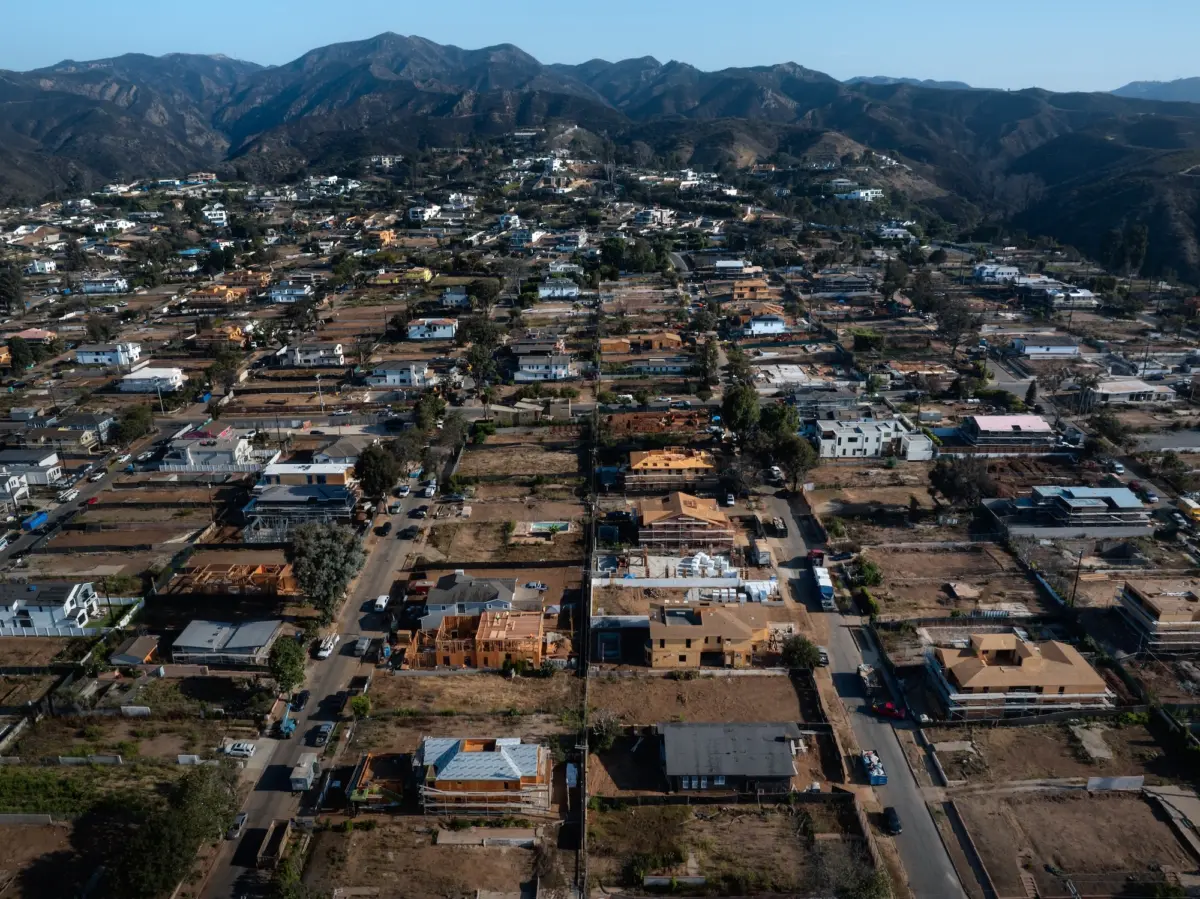
When McIntyre’s mother passed away in 2022, she inherited her longtime home in the "Alphabets," a charming neighborhood situated not far from the coast in western Los Angeles. McIntyre and her daughter had only lived there for a year when her insurance provider, Liberty Mutual, abruptly withdrew her fire coverage. Unable to find another private company willing to shoulder the home’s wildfire risk, she was forced to enroll in the California FAIR Plan—the state-backed "insurer of last resort"—forcing her to fork over an extra $5,000 a year on top of her regular home insurance payments to Liberty.
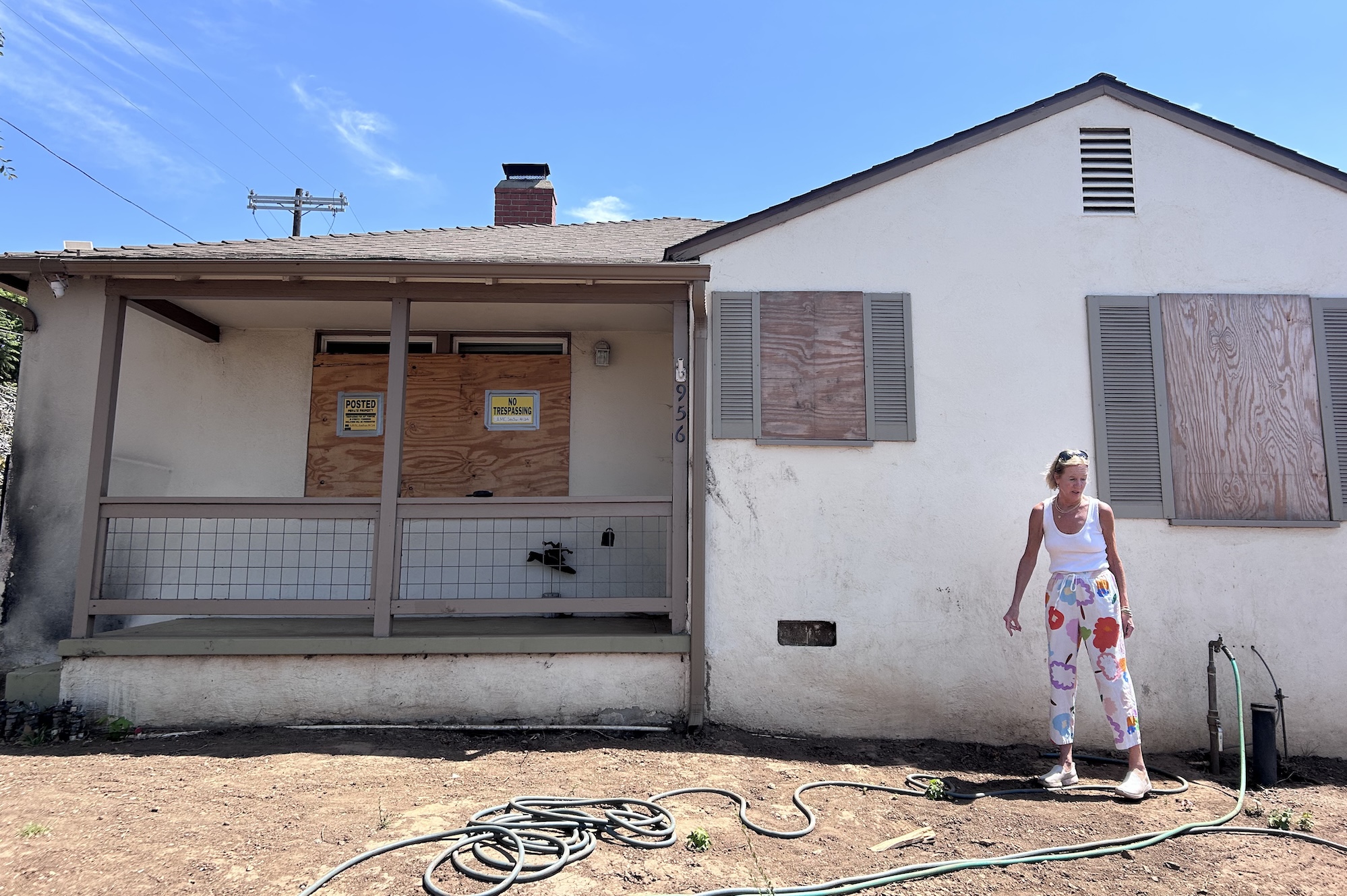
When the Palisades Fire tore through the Alphabets in early 2025, McIntyre’s modest bungalow miraculously remained standing. Yet it was heavily infiltrated by thick smoke and ash that crept in through the vents and windows, leaving her belongings stained beyond recognition. When she filed a claim with the FAIR Plan, however, plan adjusters informed her she was entirely out of luck. They agreed to pay for a temporary apartment, but nothing more.
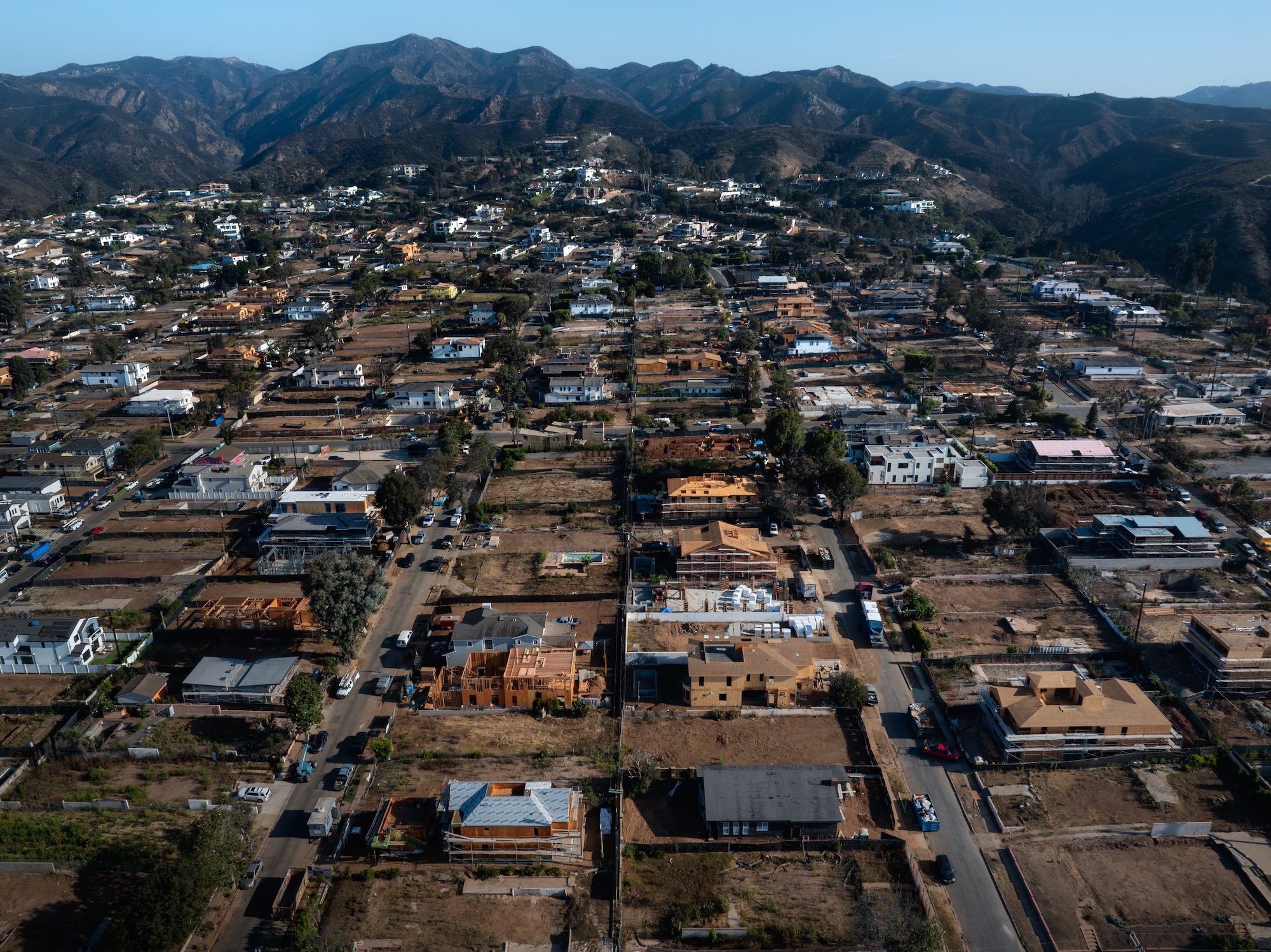
McIntyre, who spent years working as a real estate broker, found herself locked in a grueling months-long battle with 10 different adjusters and dozens of FAIR Plan representatives. Nothing worked. Employees rebuffed her at every turn, hiring third-party adjusters proved completely fruitless, and her own attorney expressed deep confusion over the FAIR Plan’s stubborn obstinance. While most of her neighbors cleared away their debris and began constructing new, fire-resilient homes—many of them much larger than their original properties—her bungalow sat abandoned and stained with soot.
It was only in late August, more than a year and a half after the wildfire, that she was finally able to begin repairs. The work was not funded by insurance money, but rather by a nearly $200,000 federal loan that she will eventually have to pay back. Adding insult to injury, the FAIR Plan attempted to cut off her temporary housing stipends, claiming that power and water had been restored to her neighborhood and demanding she move back home—ignoring the reality that her house still featured boarded-up windows and a scorched exterior. Meanwhile, Liberty Mutual informed her that summer that they were canceling her remaining non-fire coverage as well.
"The next time a fire comes through, I’m just going to light it on fire, because I’m not going to go through this again," McIntyre said wryly while standing in her doorway as construction machinery rattled outside at neighboring properties.
An Overlooked Office Faces an Unprecedented Crisis
Ensuring that Californians like McIntyre have access to affordable, reliable insurance falls to an elected official whom many residents have likely never heard of: the state insurance commissioner. This commissioner, one of only eight statewide elected executive positions in California, regulates the private companies providing fire, home, and auto coverage across the Golden State.
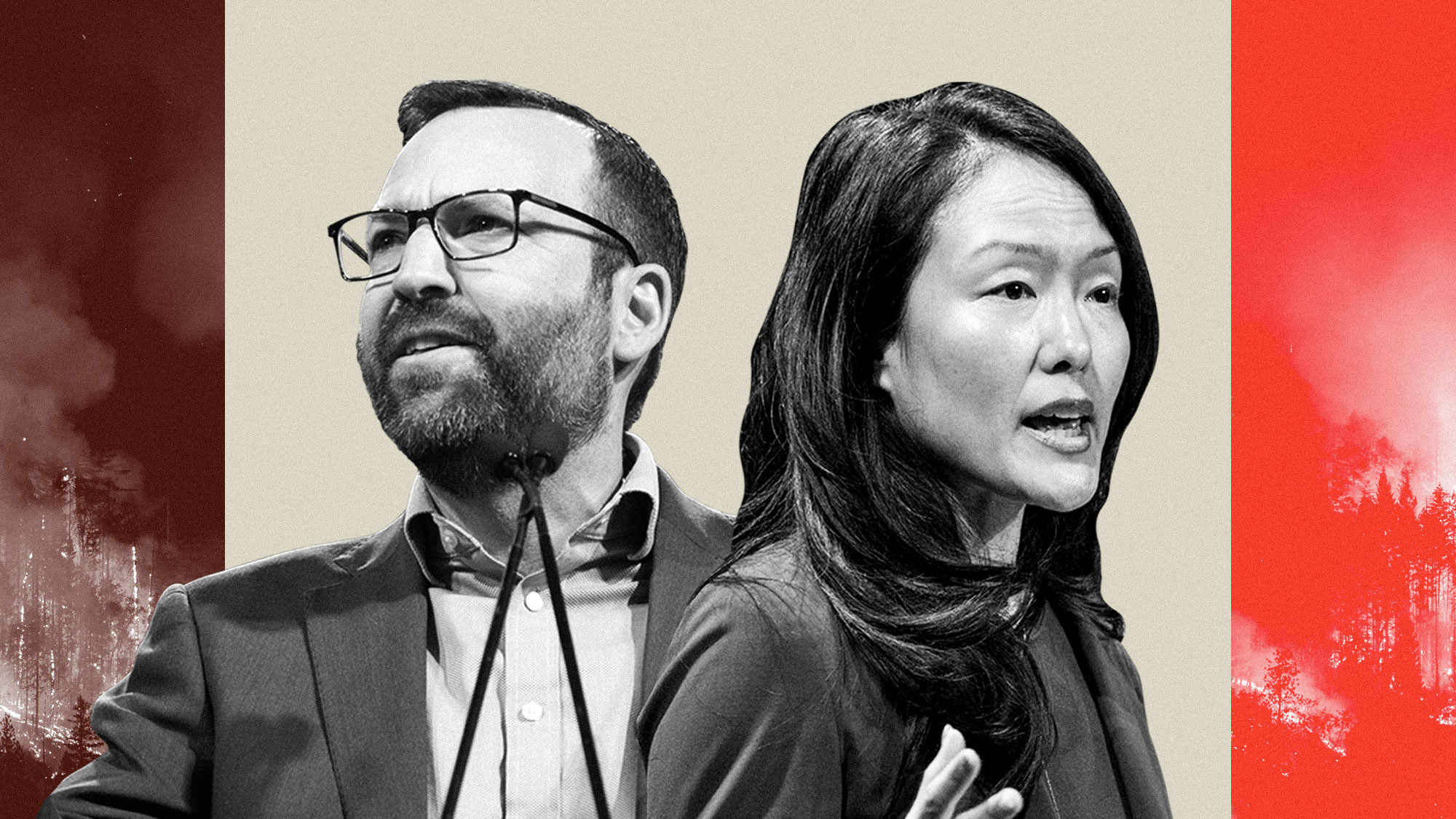
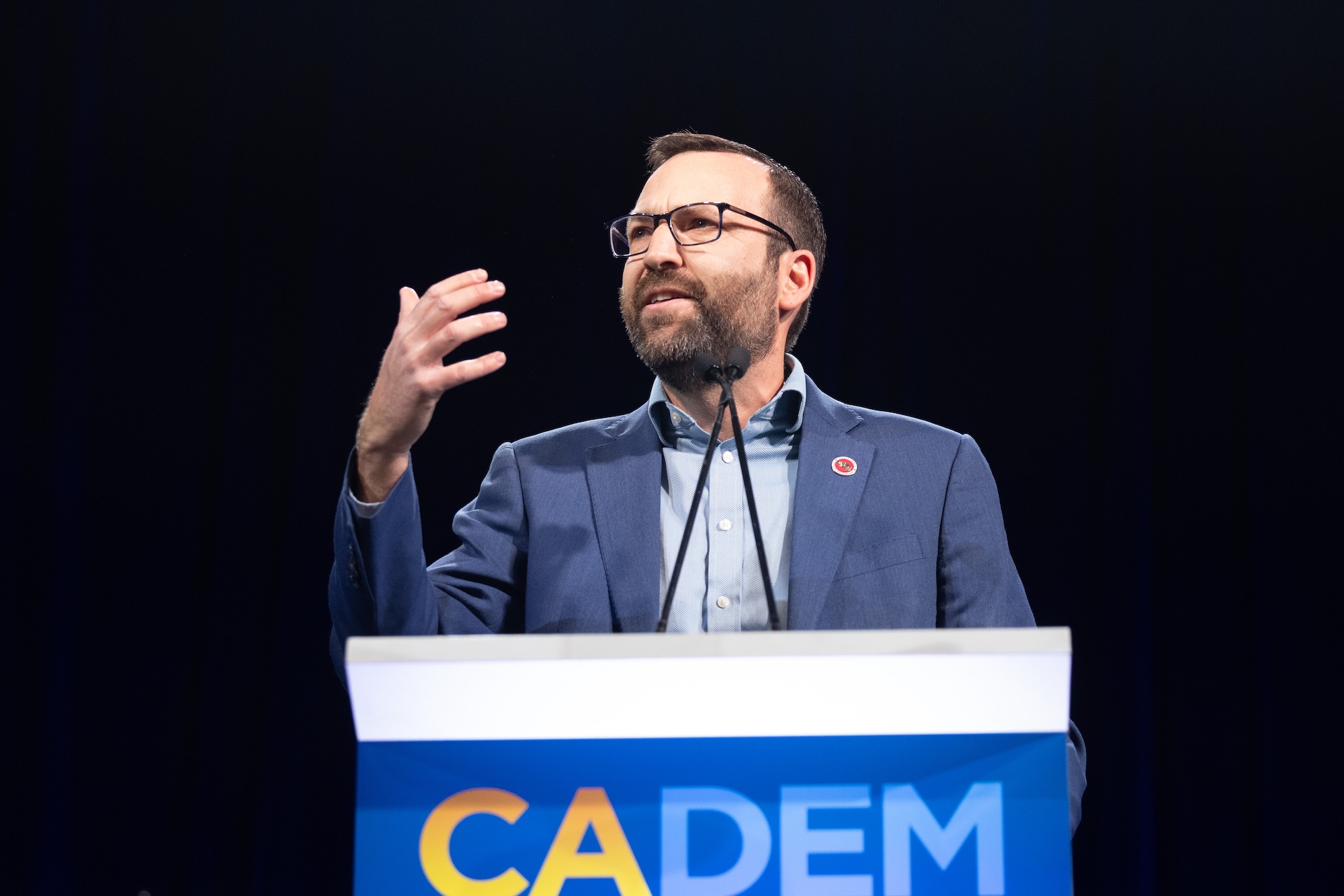
Over the past eight years, the incumbent commissioner presided over what stakeholders on all sides have bluntly labeled a disaster, a crisis, and a complete collapse of the state’s property insurance market. Now, as the current commissioner terms out of office, two prominent Democratic candidates—State Senator Ben Allen and former San Francisco Supervisor Jane Kim—have emerged, each claiming they hold the solution. Their candidacies embody a deeper ideological debate within the Democratic Party regarding how best to adapt to a rapidly warming planet. Allen, an established legislator representing the Pacific Palisades, aims to rebuild and stabilize the private market, while Kim, a progressive organizer from San Francisco, argues that it is time to abandon the private market model entirely.
Whoever wins the upcoming November election will inherit a system battered by a decade of catastrophic wildfires, mass insurer pullouts, and widespread financial turmoil. Climate change, compounded by decades of poor forest management, has transformed California’s woodlands into dangerous tinderboxes, a trend projected to worsen as global temperatures continue to climb.
The current insurance crisis traces its roots to a series of unprecedented wildfires between 2015 and 2020. Those blazes scorched approximately 4 million acres and destroyed 35,000 homes, many located in regions with little historical precedent for burning. Insurance giants like State Farm and Farmers were forced to pay out billions of dollars in claims—wiping out the entirety of the profits they had accumulated from writing fire insurance policies across the state over the preceding two decades.
Insurers maintained they were charging Californians far too little given the escalating risks, but insurance pricing lacks the elasticity of commodities like gasoline or paper towels. Carriers must secure formal approval from the state insurance commissioner before enacting rate hikes. California maintained strict oversight over those requests, blocking carriers from passing their post-fire financial burdens directly onto homeowners. In response, major insurance companies began retreating from the state, dropping tens of thousands of customers and announcing plans to halt the issuance of any new policies altogether.
"There’s something broken that so many of us are facing the same issues," McIntyre noted, "and they just think they can just roughshod right on over all of us."
The evaporating availability of coverage is rippling through the state’s broader economy. Roughly 1 in 7 California realtors reported having a home sale fall through in 2024 due to insurance complications, the state FAIR Plan completely exhausted its claims reserves last year, and average insurance premiums across the state were projected to surge by 16 percent. This pressure is bleeding out of traditional high-risk zones, leaving homeowners in historically low-risk areas struggling to secure basic coverage.
The outcome of the election will directly dictate insurance costs for millions of residents and determine the long-term viability of fire-prone communities throughout the state. It will also serve as a national bellwether for how American voters wish to navigate the immense financial and logistical hurdles of climate adaptation.
A Century of Development Meets a Warming Planet
While the current insurance crunch feels sudden, its foundational causes stretch back generations. Over the past century, California permitted the construction of millions of homes within the wildland-urban interface—the highly flammable transitional zone ringing the state’s major cities. Developers rushed into the mountains surrounding Lake Tahoe and the desert foothills east of San Diego, frequently building without incorporating basic fire-mitigation standards, utilizing wooden sidings and vulnerable fences on dense lots. These are the exact neighborhoods burning in modern wildfires, and precisely the areas private insurers are abandoning en masse.
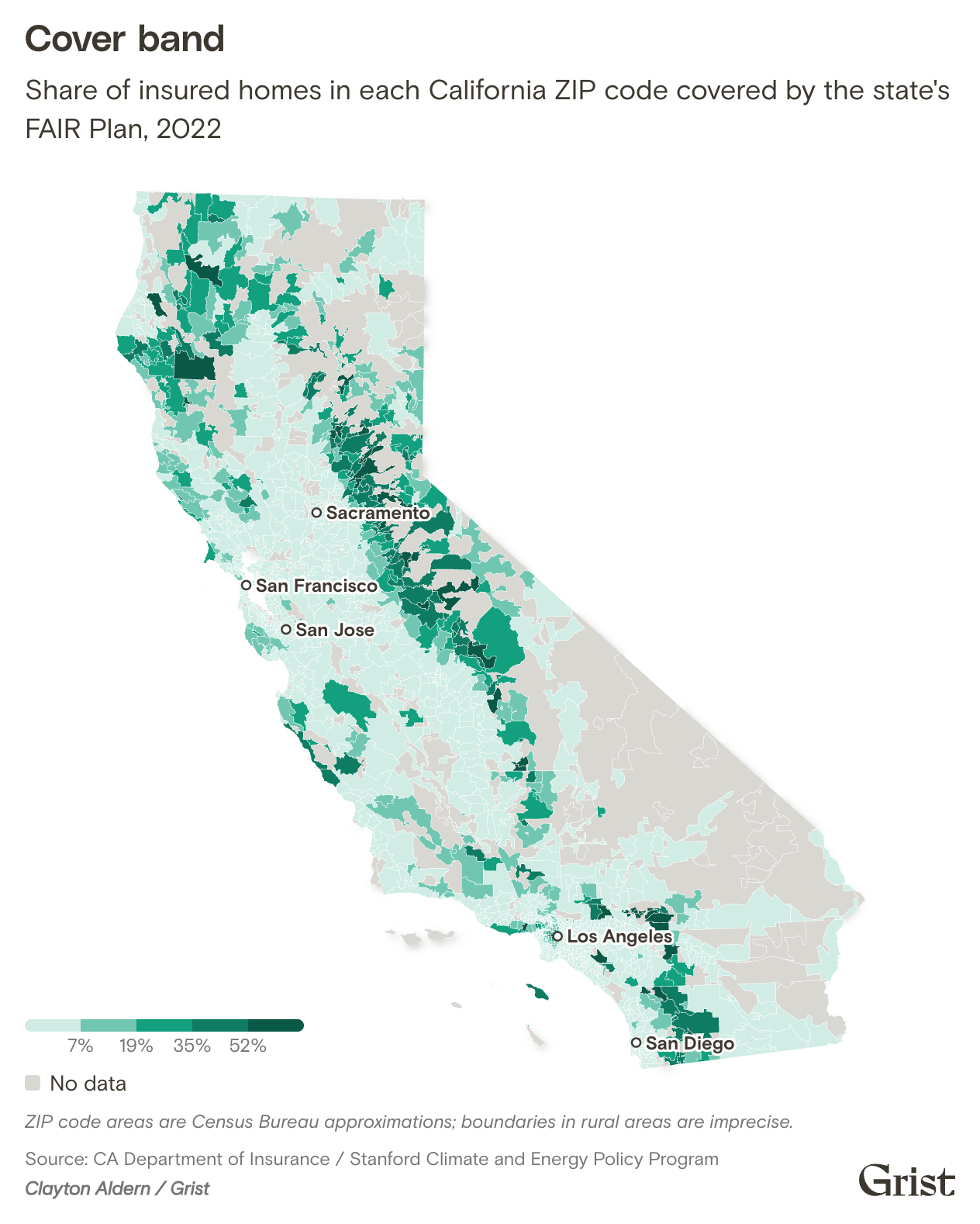
This history of risky development has generated what scholar Carolyn Kousky terms "a tale of two markets." While rates crept upward in safer, wetter regions like San Francisco and Fresno, the market went entirely haywire in high-risk zones such as Malibu and the High Sierras. Nearly half of all households located in high-fire-risk regions lost their private coverage between 2018 and 2024. The California FAIR Plan, originally conceived as a minor safety net for a fraction of properties, absorbed a massive share of the market, growing from less than 1 percent of coverage to roughly 5 percent statewide—and reaching as high as 80 percent in specific vulnerable zip codes.
California voters theoretically possess significant sway over this unstable market. While every U.S. state features an insurance commissioner, California is one of roughly a dozen where the position is elected. That structure is a legacy of the state’s consumer advocacy movement; in 1988, voters furious over soaring car insurance costs passed a ballot measure converting the role from an appointed office to an elected one.
In practice, however, it is a uniquely difficult job. The commissioner holds the authority to approve or reject rate increases and police industry compliance with state law, as well as oversee the FAIR Plan. Yet the commissioner holds limited power to force private insurers to write new policies or actively reduce regional wildfire risks on private land.
"The insurance commissioner has a lot of power and authority himself or herself that they should use, but the insurance commissioner alone cannot address these challenges," said Dave Jones, who served as state insurance commissioner from 2011 to 2019.
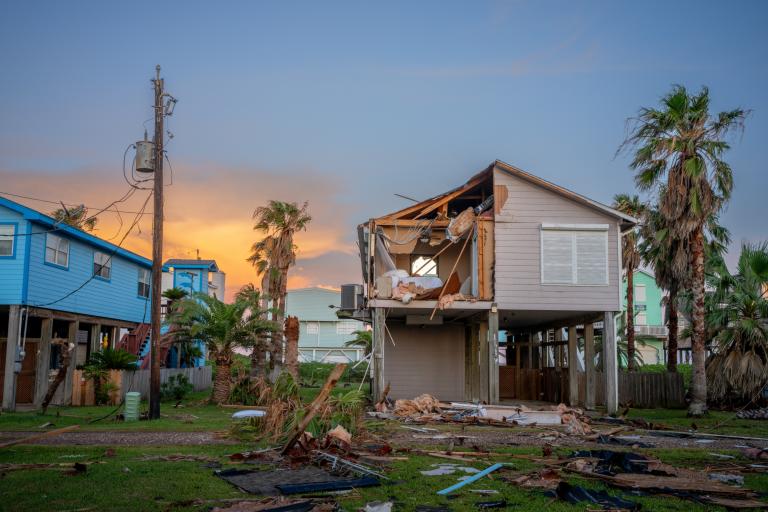
Outgoing Commissioner Ricardo Lara served through nearly the entirety of the market collapse. His tenure was marked by political turbulence as he alternated between collaborating with insurance companies and attempting to crack down on them, risking further corporate flight. After initially pledging to reject insurance industry campaign contributions, he later accepted some donations, leading to accusations that he stalled on rate hikes and inadvertently prompted companies like State Farm to drop additional policyholders.
Lara ultimately attempted to broker a grand bargain with the industry: permitting carriers to pass the costs of their own reinsurance onto consumers and allowing them to utilize forward-looking catastrophe models to predict future risk—practices standard in nearly every other state. In exchange, insurers committed to writing more policies in high-fire-risk zones. However, the agreement contained loopholes that allowed companies to meet quotas without returning to the most hazardous areas, while the FAIR Plan continued to swell following the Los Angeles fires of 2025. Lara later remarked in an interview that the insurance industry had "bullied" him.
Two Democrats, Two Visions for the Future
Despite the immense challenges of the office, a dozen candidates entered the primary race to succeed Lara, resulting in a crowded field of Democrats, Republicans, and independents. In the end, the two candidates advancing to the November runoff were both Democrats. Jane Kim secured first place with approximately 27 percent of the vote, running on a progressive platform centered on a government-run, single-payer disaster insurance program. State Senator Ben Allen, a recognized legislative expert on insurance policy, finished second.
While Allen and Kim share overlapping goals—such as simplifying standard policies, demanding transparency regarding fossil fuel investments, expanding the FAIR Plan to cover smoke damage, and cracking down on insurers who delay claims—their core philosophies diverge sharply on how to fix the market.
Allen believes the private market can be rehabilitated. By allowing insurers to raise rates on risky properties, investing heavily in home-hardening initiatives, and utilizing data-driven risk assessments, he argues the state can entice private carriers back and restore a functional, competitive marketplace.
Kim, conversely, advocates for discarding the private market for disaster coverage entirely. She proposes establishing a universal, state-run public insurance program for all homes and disasters, effectively replacing private wildfire insurers and the FAIR Plan. Rather than generating profits for investors, excess revenue from this public program would be funneled directly into hardening older homes against wildfires. Private carriers could continue writing policies for standard perils like burglary, but the state would collect all fire insurance premiums and manage all payouts, drawing inspiration from similar models in France and New Zealand.
This philosophical rift highlights a fundamental debate: whether private markets can ever truly protect communities against the mounting costs of climate change.
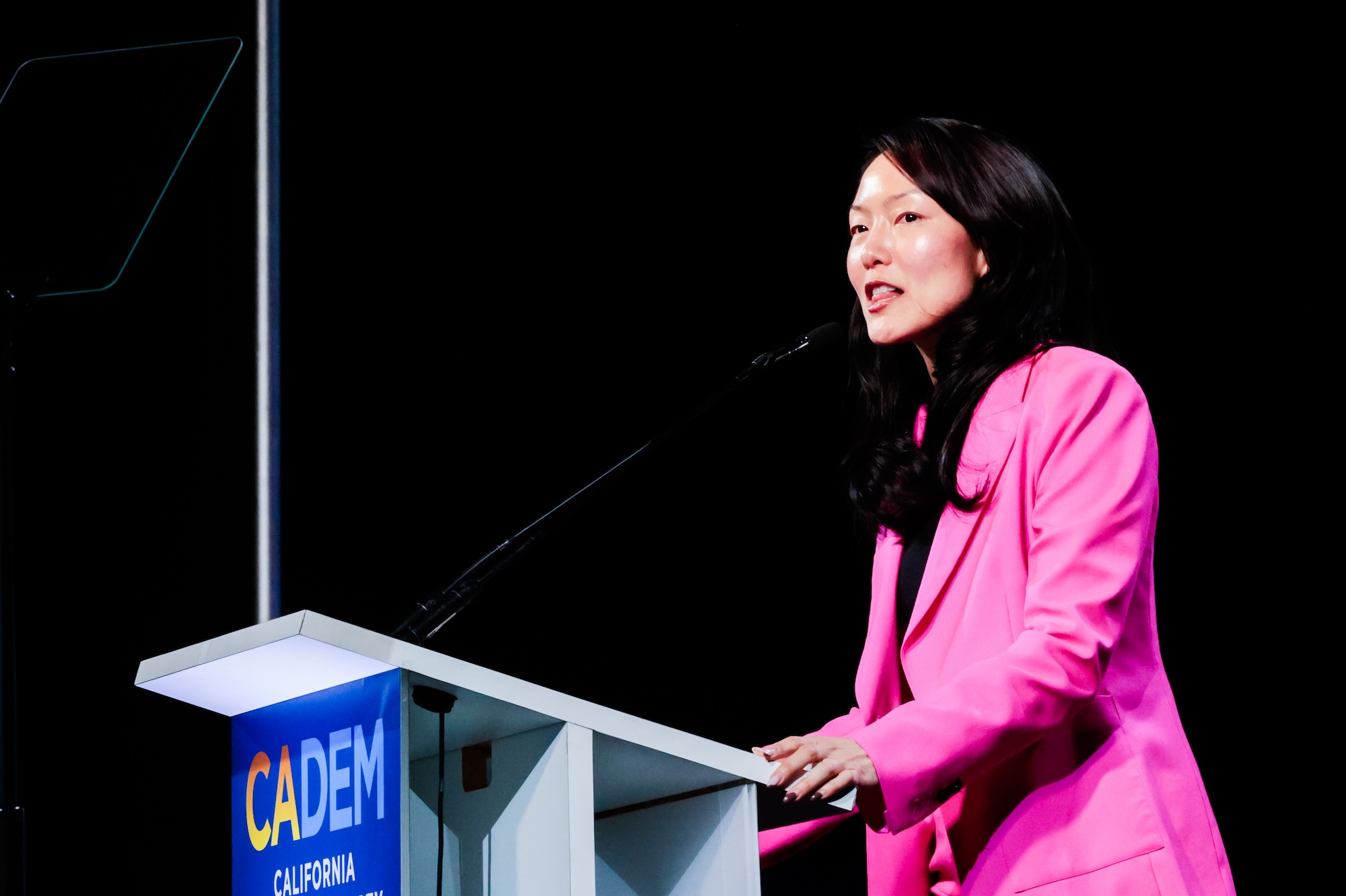
Allen approaches the issue from a deeply personal and legislative standpoint. Having represented the Pacific Palisades as the area was scorched by the devastating Palisades Fire, he witnessed firsthand the displacement and litigation experienced by his constituents. Having spent years leading legislative committees focused on insurance and energy, he argues his background makes him uniquely prepared for the post.
"I think we need someone in this office who really understands climate science, who understands the markets, who understands the legislature," Allen said.
Rather than pursuing a massive statutory overhaul like a public fund, Allen emphasizes the concept of poder de convocatoria, or convening power. He plans to bring state agencies and insurance executives together to coordinate risk reduction and coax private capital back into the market. He recently helped pass legislation offering low-interest loans to homeowners seeking to fire-harden their properties, aiming for a compromise that speeds up rate decisions while strictly penalizing insurers who drag their feet on claims.
Kim’s bold public insurance proposal has struck a powerful chord with voters, outperforming Allen in many counties during the primary—including Allen’s home base of Los Angeles.
"There’s this sense of immense unfairness, and once we articulate the problem, and then on top of that, actually propose big policy ideas, I think that that resonates," Kim said.
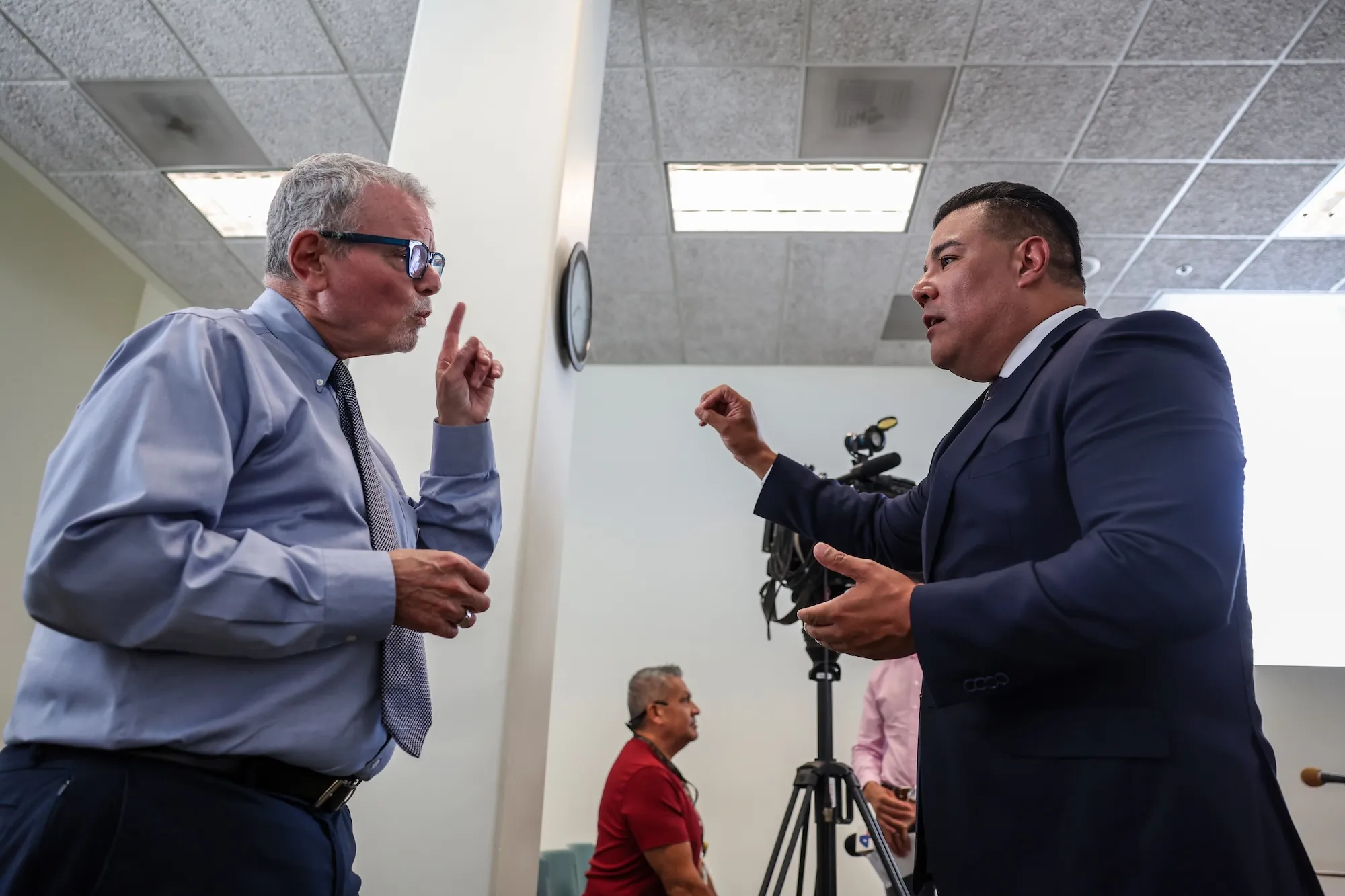
Industry veterans, however, remain skeptical of a government takeover. Former commissioner Dave Jones argued that Kim’s promise of affordability could translate to keeping rates artificially low for expensive estates in high-risk zones, while noting that California’s public budget would struggle to assemble the tens of billions of dollars in capital reserves required to handle major disaster losses.
Recognizing potential legislative hurdles, Kim maintains a fallback compromise: transforming the existing FAIR Plan into a single-payer style entity by assessing extra fees on major insurers to fund community-wide fire hardening.
"What the insurance industry does is that they price risk, but they don’t actually address it," Kim argued, asserting that an industry unwilling to reduce risk should not dictate public safety.
The Monumental Task of Reducing Risk
Regardless of who wins in November, any candidate faces a staggering hurdle: mitigating decades of accumulated development risk is extraordinarily difficult and expensive.
For homeowners like Tony Byers, a retired utility worker living in Placerville in the forest-covered foothills east of Sacramento, options are severely limited. After being dropped by AAA and rejected by State Farm over disputed fire hydrant access, Byers bounced through online insurers before landing on the FAIR Plan, where he now pays $3,400 annually just for fire coverage—triple his previous rate. Living at the end of a narrow mountain road, retrofitting his property to meet private market standards would cost tens of thousands of dollars, an impossibility on his fixed retirement budget.
Meanwhile, wealthier homeowners have gravitated toward the unregulated "surplus lines" market. Kevin Roberts, a retired golf course owner in the wealthy Huntington Palisades neighborhood, purchases boutique coverage from Chubb through a surplus lines policy that bypasses state rate regulations. While his annual premium exceeds $30,000, the company delivered a $2.65 million payout for smoke damage following the Palisades Fire. The number of such surplus lines policies in California has doubled over the past four years to approximately 1.3 million.
For the vast majority of residents without access to elite boutique insurance, however, risk reduction remains a steep climb. Lake County, located north of San Francisco, illustrates the immense scale of the challenge. Having seen roughly 85 percent of its landmass burn since the turn of the century, the mountainous, economically disadvantaged county is among the state’s most vulnerable. Insurers have fled the area, driving residents onto the FAIR Plan or leaving them entirely uninsured.
Lake County recently became the first recipient of a $117 million state grant program designed to retrofit entire communities against wildfire. In the dense ridge-side community of Kelseyville, the local poverty-fighting nonprofit North Coast Opportunities is utilizing the funds to provide participating homeowners with roughly $70,000 each for fire-hardening upgrades—such as clearing defensible space, replacing vinyl siding with fiber cement, and removing flammable wooden decks.
Yet even with state grants, the work is painstaking. Many homeowners remain hesitant to participate, and funding only covers a fraction of the eligible properties in the neighborhood.
"A home is only as strong as the weakest link," said Steve Hawks, director of wildfire at the Insurance Institute for Business & Home Safety. "If you leave a weak link on the table, a fire of [significant] magnitude can exploit any vulnerability."
Retrofitting millions of aging homes across California’s fire zones would cost tens of billions of dollars, forcing both candidates to confront an inescapable reality: fixing the insurance crisis will require significant capital, much of it originating from Californians themselves. As Allen noted, risk does not simply disappear; it gets reallocated. The true affordability challenge is not merely keeping pace with inflation, but paying down a multi-decade debt of high-risk land development.
The scale of the undertaking is immense, but the stakes extend far beyond financial ledgers. When citizens purchase insurance, they are buying into a shared social contract—the assurance that a community stands ready to support its members through crisis. As the state confronts the realities of a warming planet, maintaining a functional insurance market remains a vital pillar of economic and social stability.