
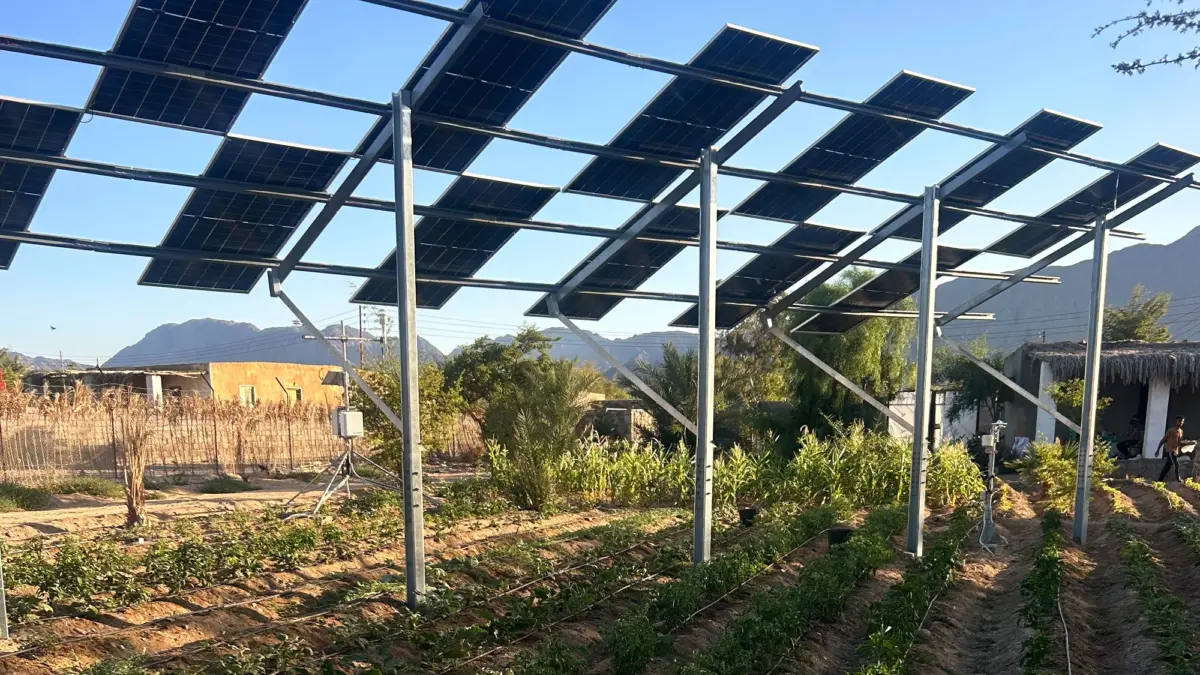
It is cranberry season once again across the picturesque landscape of southeastern Massachusetts. At historic bogs throughout the region, local growers are busy collecting the vibrant ruby-red berries destined for holiday cakes, juice bottles, and classic cans of jellied sauce that grace autumn and winter tables. Yet, at a pair of innovative farms in the area, the traditional harvesting process looks distinctly modern: agricultural workers must navigate their heavy equipment around sturdy metal poles stationed comfortably beneath the cooling shade of elevated solar panels.
These two unique bogs stand as the first commercial operations in the country—and quite possibly the entire world—to successfully cultivate cranberries beneath an active, operating solar installation. This fall marks the second consecutive season that a full crop of cranberries has been harvested from directly beneath the sprawling arrays, offering a tangible proof of concept for a farming technique that merges renewable energy generation with traditional agriculture.
“We are literally proving it can be done,” said Prateek Tare, co-founder and executive vice president of Distributed Energy Infrastructure. His firm engineered and constructed the two pioneering projects: a substantial 4.4-megawatt solar array paired with a 13.5-megawatt-hour battery storage system located in the town of Kingston, and a separate 1-megawatt solar array situated in neighboring Plymouth.
The successful harvests arrive at a critical juncture for Massachusetts, where aggressive solar development serves as a cornerstone of the state’s broader climate strategy to reach net-zero carbon emissions by the year 2050. To drive this transition, the state has offered targeted solar incentives since 2001, continuously evolving and expanding these financial programs over the decades to accelerate clean energy deployment across the commonwealth.
However, finding appropriate and acceptable land for large-scale solar development has emerged as a major point of socio-political contention in the densely populated and heavily wooded state. Building photovoltaic arrays on rooftops and parking lots in already developed urban and suburban areas can significantly increase construction costs while severely limiting overall energy generation capacity. Conversely, proposals to install arrays on previously undeveloped greenfield land frequently spark fierce protests from local residents worried about preserving the rural character of their communities, as well as from environmental advocacy groups opposed to disrupting local ecosystems.
Using pre-cleared agricultural land offers an appealing middle ground, but it simultaneously raises difficult questions about taking valuable farming acres out of food production. Many of these exact same complex land-use dynamics are currently at play in rural and suburban communities across the United States as the demand for clean energy continues to surge.
To address these competing land-use pressures, Massachusetts has increasingly encouraged the adoption of agrivoltaics, commonly referred to as dual-use solar. This emerging strategy involves constructing elevated solar panel systems directly above active agricultural operations. The approach, which is rapidly gaining traction nationwide, allows a single plot of land to simultaneously serve a dual purpose: generating vital renewable electricity while livestock graze or traditional crops continue to flourish beneath the protective canopy of the arrays.
Recognizing the potential of this approach, Massachusetts made history in 2018 by becoming the first state in the nation to offer specific financial incentives designed to boost dual-use solar projects. Under the state’s current solar incentive program, participants are paid a set rate for every kilowatt-hour of clean electricity they generate. For instance, a standard solar array with a capacity between 1 megawatt and 5 megawatts currently receives a base rate of 23.17 cents per kilowatt-hour, while certified agrivoltaic projects qualify for an additional bonus of 9 cents per kilowatt-hour.
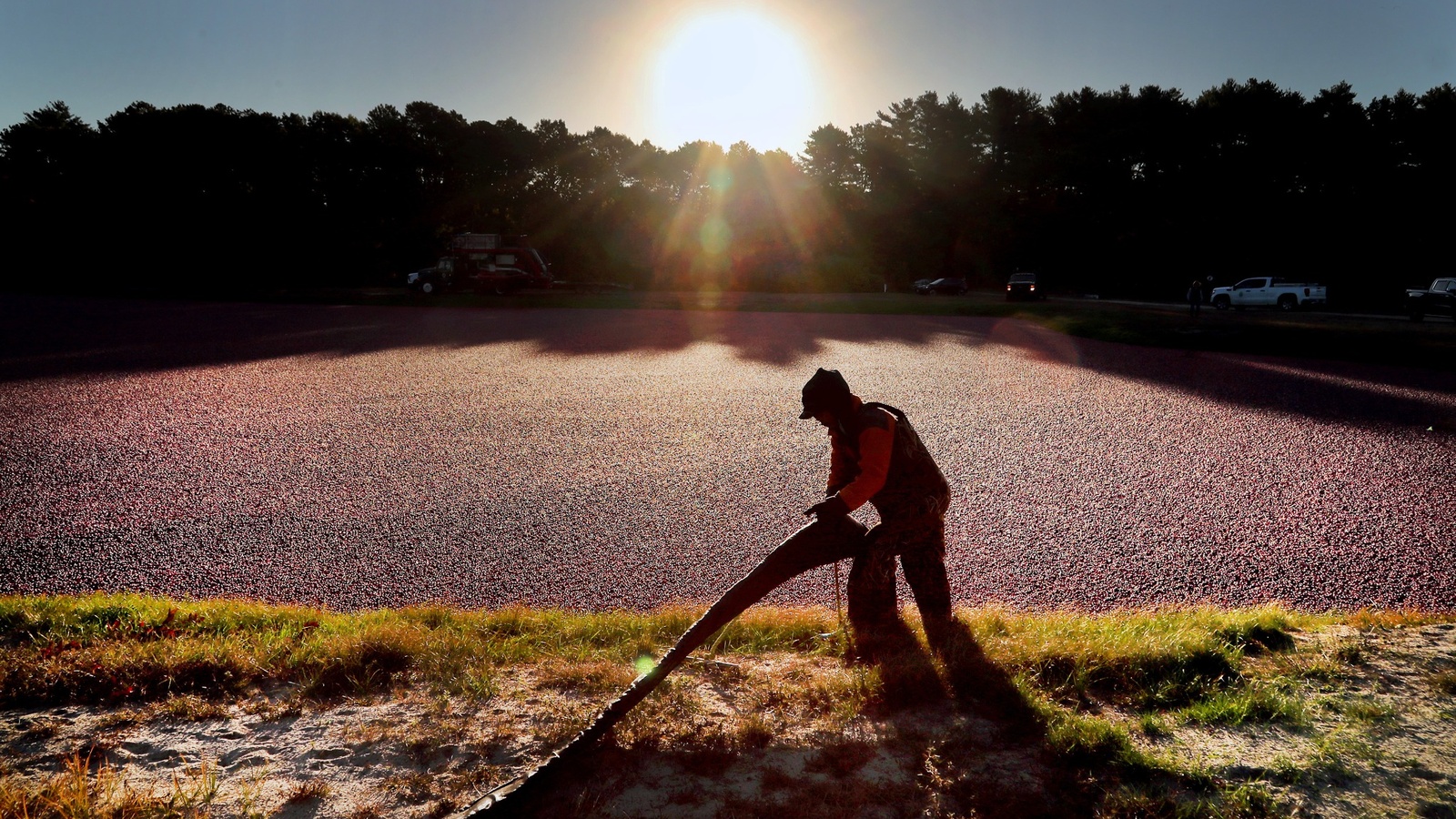
This financial framework can provide enough economic momentum to attract clean energy developers interested in leasing agricultural land for solar arrays or, on rarer occasions, purchasing the property outright with a legally binding agreement to keep the land in active agricultural production. Furthermore, participating farmers who agree to lease their land are typically compensated for their ongoing services in maintaining the landscape, managing vegetation, and ensuring the grounds around the panels and supporting poles remain clear and functional.
In Kingston and Plymouth, the clean energy developer Greenbacker Renewables chose the outright purchase model, acquiring land that had served as a cranberry-growing operation for decades after the previous farmers decided to exit the industry. Greenbacker subsequently partnered with Distributed Energy Infrastructure to construct the solar arrays and hired Iain Ward, a seasoned solar consultant and longtime local cranberry farmer, to manage the agricultural operations. Both of these installations utilize a community solar model, selling the generated clean power directly to local customers who are eager to benefit from lower electricity prices and the environmental advantages of renewable energy.
Solar energy can offer a particularly advantageous lifeline for cranberry farmers in Massachusetts, which currently produces more of the iconic tart fruit than any other state in the country, second only to Wisconsin. While traditional family farms growing sheep, corn, or vegetables can frequently be sold off to housing developers or commercial enterprises when farming becomes financially unsustainable, Massachusetts cranberry bogs are classified as protected wetlands. Even if a bog goes completely out of production and ceases to harvest fruit, strict environmental regulations dictate that the land cannot be built upon or converted into residential or commercial real estate.
While not every cranberry bog is geographically or logistically positioned to connect easily to the local electrical grid, for the bogs that do possess viable interconnection access, the addition of solar panels can transform an unprofitable property into a reliable financial asset.
“This is a farm viability opportunity,” Ward explained, emphasizing how dual-use installations can help preserve agricultural heritage without violating environmental protections.
How to put solar on a cranberry bog
Figuring out the logistics of engineering and constructing a modern solar array over a saturated cranberry bog presented an entirely unique set of structural puzzles, Tare noted. The primary engineering challenge began with the foundations. For a typical solar array built on standard dry terrain, structural foundations usually extend 8 to 10 feet into the earth. However, in a water-logged cranberry bog, construction crews have to drive structural pilings significantly deeper to locate ground that is sufficiently solid and stable to hold the heavy steel framework.
It required considerable trial and error on the part of the engineering team to identify and test the right specialized machinery capable of sinking piles to the necessary depths in the boggy substrate. Additionally, traditional underground electrical wiring could not be buried directly into the saturated, fragile soil of the bog, necessitating an overhead wiring architecture instead.
“You’re trying to figure it out from a farmer’s perspective,” said Tare, who collaborated closely with Ward throughout the design and implementation phases of the Kingston and Plymouth projects.
The resulting installations feature advanced photovoltaic panels mounted a full 10 feet off the ground on a single-axis tracking system that enables them to tilt gracefully throughout the day to continuously follow the sun. Furthermore, the structural pilings are spaced significantly farther apart from one another than they would be in a standard commercial solar array, allowing heavy agricultural harvesting equipment to move freely through the flooded bog without obstruction.
The proven successes of the Kingston and Plymouth installations have subsequently opened the door to additional agrivoltaic opportunities for Tare’s company. Distributed Energy Infrastructure is now exploring or developing arrays tailored for apple orchards, cattle pastures, and even Christmas tree farms, with preliminary work already underway at another regional cranberry bog.
Meanwhile, a previously stalled cranberry solar project located in the nearby town of Carver may soon be resuscitated. Five years ago, a different pair of cranberry bogs in Carver were slated to become the nation’s very first cranberry agrivoltaic operations. Although the solar arrays were successfully constructed and crops continued to grow underneath them, the original development company unfortunately went bankrupt before the projects could be officially interconnected and brought online. Today, the new owner of the bog has expressed every intention of finishing the unfinished work, according to Ward.
“They’re not a failure,” Ward said regarding the Carver site. “There is an opportunity for them to be finished.”
Looking ahead, Tare expects that future cranberry solar projects will become smoother and more efficient to build as his company continues to apply the valuable technical lessons learned from its initial ventures. Although industry momentum has taken time to build, Ward anticipates that development will accelerate as familiarity with the concept spreads across the agricultural community.
“It is picking up steam, and the lessons learned have been significant,” Ward said. “When you change a paradigm, it takes a little time.”