
What does going on a first date have to do with the global fossil fuel industry? Absolutely everything, according to a prominent commercial produced by the pipeline company Energy Transfer. In the advertisement, a man applies hair gel and a woman puts on lipstick before the two meet at a lively neighborhood bar, their romantic connection underscored by a narrator declaring, “That connection was brought to you by petroleum products. But what if we lived in a world without oil and natural gas?”
The commercial then rewinds to the beginning, illustrating a stark alternative reality. The woman watches in utter bewilderment as her smartphone and the dating app it displays evaporate directly from her hands. When she rides in a car, the vehicle’s tires vanish, causing it to hit the bare pavement and sending her flying forward, leaving a streak of smudged lipstick across her cheek. The man looks into a mirror as his hair gel disappears into thin air. Once they finally sit across from one another at the bar, their makeup, hair dye, and even their eyeglasses fade away entirely. On a television screen in the background, a football disintegrates just a fraction of a second before a kicker swings his leg at nothingness.
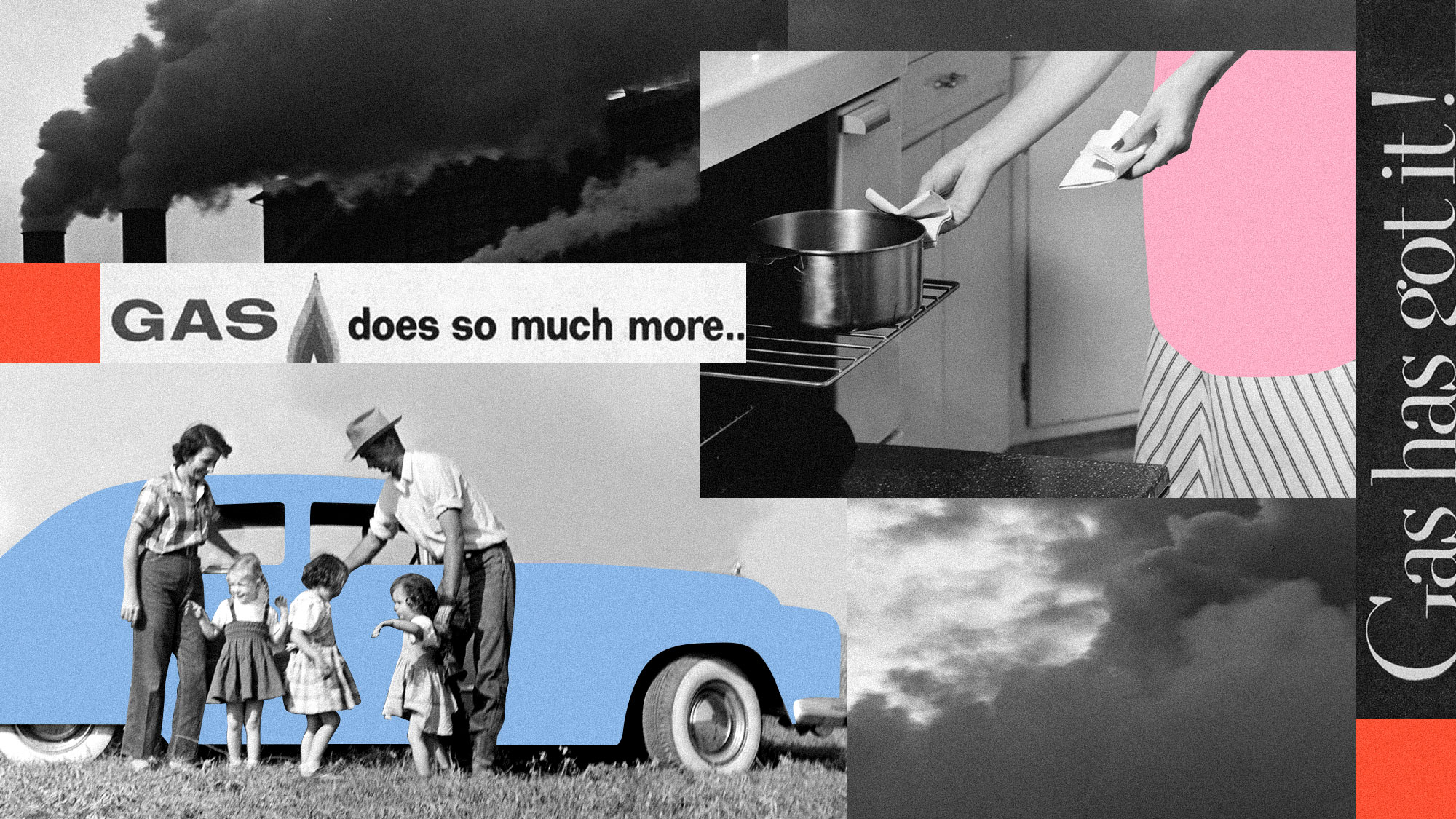
The commercial, which has accumulated millions of views online, taps into a profound reality: fossil fuels have become seamlessly embedded in American life. What could feel more quintessentially American than football? Oil and gas influence not only how citizens commute and travel, but also where they choose to live, how they dress, and how they cook food in their home kitchens. This reliance feels so ordinary and mundane that most people rarely notice how pervasive petroleum truly is, powering modern existence while hiding in plain sight. Although it might seem inevitable that society functions this way, an investigation by Grist reveals that this baseline assumption of what is considered "normal" was deliberately shaped over decades of aggressive advertising, public relations propaganda, and broader cultural engineering, ranging from early radio programs to major Hollywood films.
“Our dependence on oil didn’t just happen,” said Robert Brulle, an environmental sociologist at Brown University.
This systematic campaign began roughly a century ago, when corporate strategists recognized the need to engineer long-term, sustained demand for fossil fuels and the machinery that consumed them. Billboards showcased smiling families hitting the open road in automobiles, films depicted stylish homemakers cooking over the clean flame of a gas stove, and magazines featured suburban husbands pushing gas-powered mowers across immaculate, perfectly manicured lawns. The underlying message was frequently left unspoken, yet unmistakable: the entire American way of life runs on fossil fuels.

While there is a well-documented history showing that corporate giants like Exxon understood the severe risks of global warming by the 1970s based on their own internal scientific research—yet still spent subsequent decades publicly downplaying or outright denying those findings—the story of how oil and gas companies coaxed Americans into accepting, and eventually actively desiring, a lifestyle built entirely on petroleum has largely escaped widespread public scrutiny, remaining buried in the yellowed pages of obscure trade journals.
During the 1940s and 1950s, the oil industry funneled millions of dollars annually into public relations campaigns designed to educate the public about the alleged wonders of petroleum and how it advanced the "American way." The natural gas industry similarly promoted all-gas "dream kitchens," parading them before the influential editors of publications like Better Homes and Gardens, Good Housekeeping, and The Ladies’ Home Journal. They sold a captivating vision of the American Dream that fundamentally required their products—leaving a deep cultural legacy that has severely complicated modern efforts to rein in climate change and transition toward a cleaner energy future.
This historical context sheds considerable light on why contemporary Americans have often reacted so intensely to policy proposals aimed at phasing out polluting gas ranges—exemplified by viral declarations that regulators would have to pry the appliances from people’s "cold dead hands"—or mandates requiring increased sales of electric vehicles over traditional gas-powered cars. The underlying question remains whether these intense public debates are genuinely about technology, or rather about what the burning of fossil fuels has come to represent: personal freedom, autonomy, and national identity. Political platforms emphasizing economic nationalism often display a deep nostalgia for the promises once offered by oil, including economic might, a higher standard of living, and the promise of upward mobility.
As the global economy enters an increasingly electricity-driven era powered by solar, wind, and other low-carbon energy sources, the United States has frequently found itself politically polarized over the pace of this transition. Federal policy shifts have at times sought to prolong the operational life of coal-fired power plants, open new federal lands to oil and gas leasing, and scale back offshore wind development. Explanations for these policy directions frequently return to familiar themes of economic protection and cultural preservation, often framing regulatory rollbacks as measures necessary to protect household budgets and restore traditional ideals of prosperity.
How Oil Became the "American Way"
Before highways, sprawling asphalt parking lots, and automobile-centric suburbs transformed the American landscape, human mobility was organized quite differently. Travelers moved between growing cities via an extensive passenger railroad network, while local towns bustled with horses, municipal buses, bicycles, and streetcars. Then the automobile arrived, and natural ecosystems—forests, meadows, and wetlands—were rapidly paved over, permanently altering the country’s geography.
It was never a foreordained conclusion that automobiles would run primarily on gasoline. At the dawn of the 20th century, early electric vehicles were noticeably quieter and simpler to operate, quickly capturing a significant share of the market and making up roughly a third of all vehicles on the road. However, Henry Ford’s introduction of the cheaper, mass-produced Model T in 1908 changed the trajectory, anchoring personal transportation to gasoline.
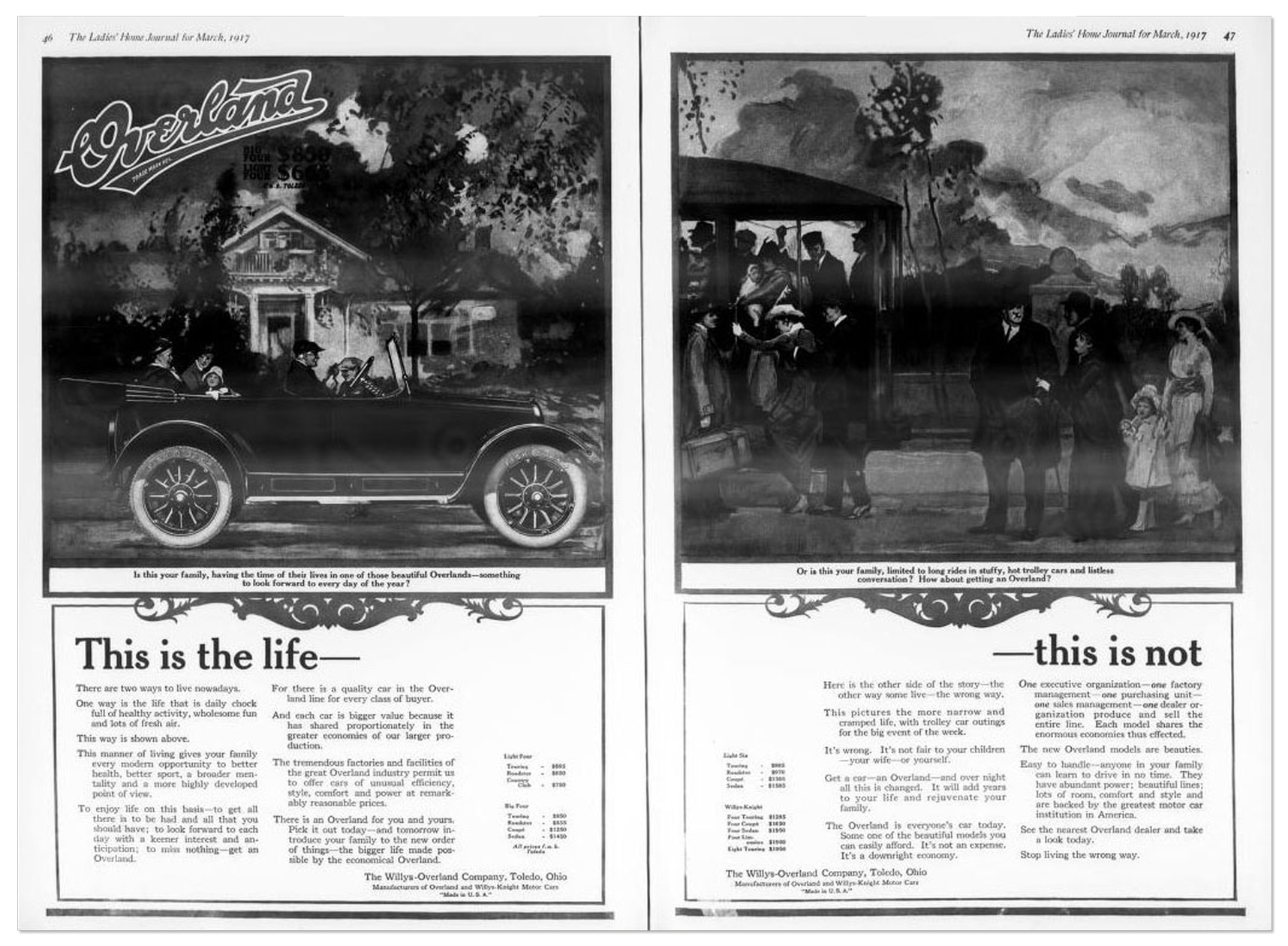
Up to that point, gasoline was largely treated as a troublesome and nearly useless byproduct of kerosene refining, but the burgeoning automotive industry created an immediate and voracious market. Automakers aggressively promoted their vehicles as superior alternatives to public transit, framing car ownership as a vital step up in social status. In a 1917 advertisement featured in The Ladies’ Home Journal, the Willys-Overland Company marketed its automobiles as packed with healthy activity, wholesome fun, and fresh air, promising a "bigger life" in stark contrast to what it termed the "wrong way"—families enduring long, stifling rides in crowded trolley cars.
This marketing strategy previewed a profound transformation across the advertising industry leading up to the 1930s. Previously, car advertisements focused heavily on technical specifications, such as favorable weight-to-horsepower ratios or fine French leather upholstery. Soon, however, companies shifted to selling the experiential benefits of product use, painting vivid scenarios in which a car elevated a person’s social standing and lifestyle. Selling the American Dream increasingly meant packaging leisure, enjoyment, beauty, and popularity alongside the physical product itself.
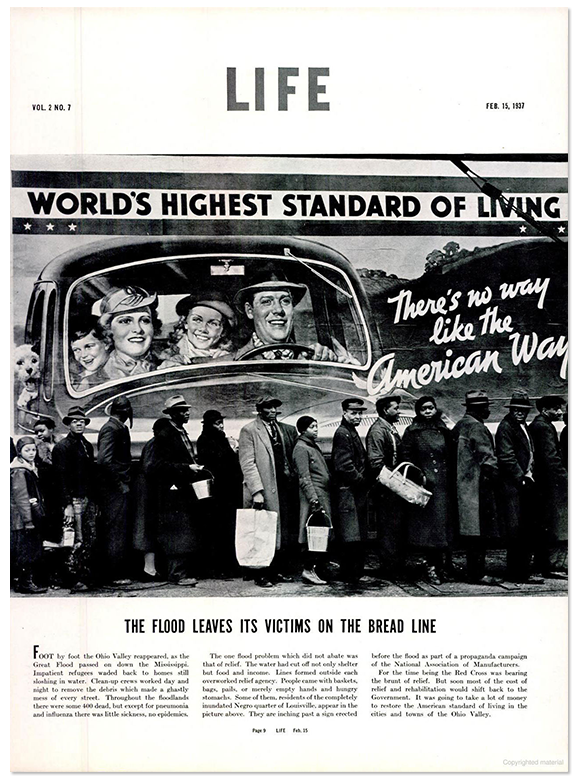
As the Great Depression took hold, the stark contrast between corporate advertising imagery and economic reality became painfully evident. A famous 1937 photograph by Margaret Bourke-White for Life magazine captured this irony in Louisville, Kentucky, where Black flood refugees waited for Red Cross relief directly beneath a massive billboard sponsored by the National Association of Manufacturers that proclaimed, “There’s no way like the American way,” illustrated by a smiling white family driving through the countryside.
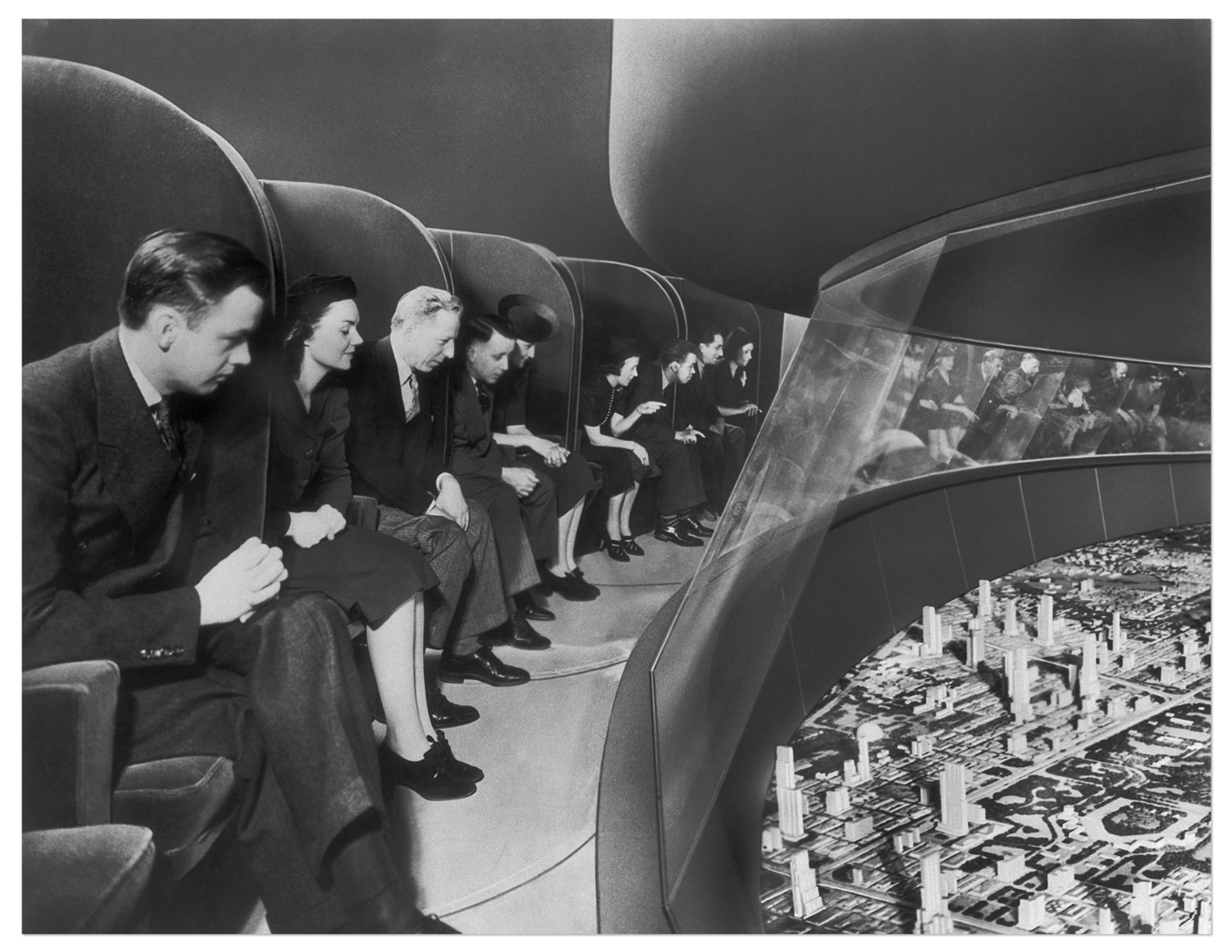
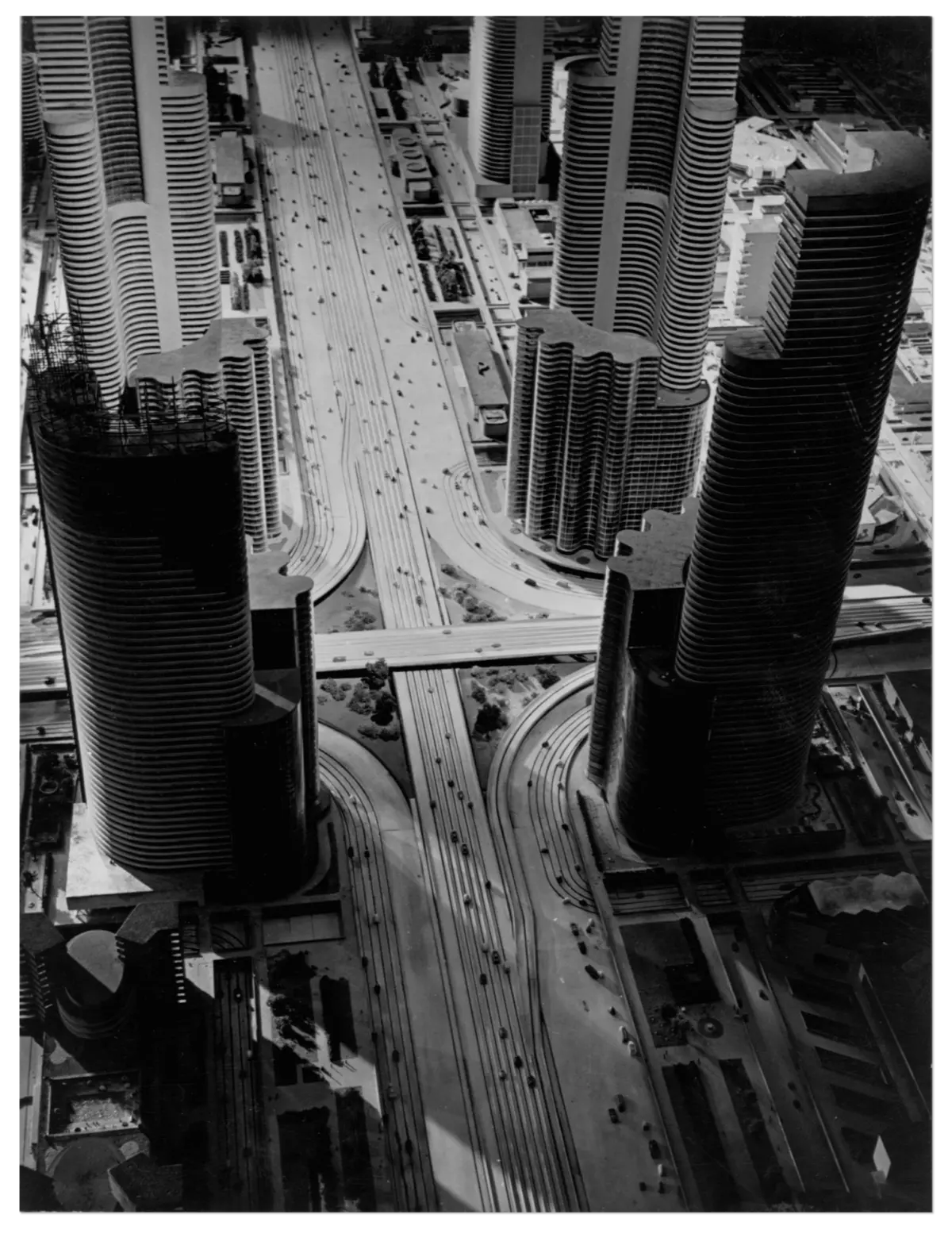
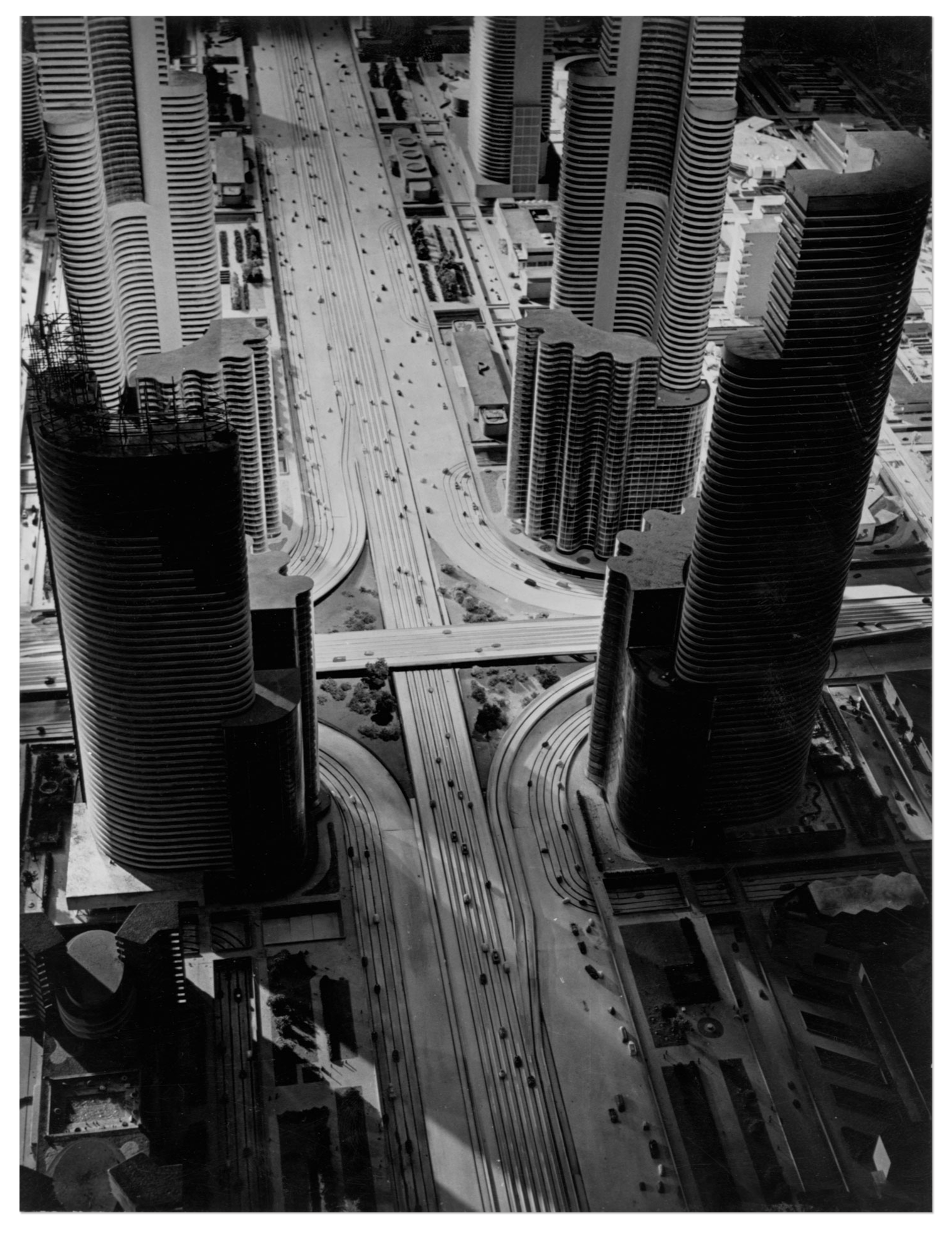
As economic recovery began, automakers seized the opportunity to pitch a brighter, highly motorized future. At the 1939–1940 New York World’s Fair, General Motors hosted "Highways and Horizons," the event’s most popular exhibit. Its centerpiece, a massive 35,000-square-foot diorama titled "Futurama," invited millions of visitors to view a futuristic American city of 1960 featuring towering skyscrapers and expansive 14-lane highways while seated on a moving conveyor-belt ride. Promotional booklets promised that superhighways would set the pace for an advancing civilization and enhance public welfare, handing out souvenir pins to departing visitors declaring, “I Have Seen the Future.”
Following America’s entry into World War II in 1941, the petroleum industry experienced a massive boom, supplying vital fuel for military aircraft and mechanized divisions. Seeking to overcome widespread public suspicion of large corporations left over from the Depression, oil executives reframed their industry as patriotic and indispensable to national survival. James H. Tanham, an executive at the Texas Company, wrote in 1943 that the petroleum sector deserved favorable public opinion because its work was fundamentally aligned with protecting the American way of life against external and internal threats.
Simultaneously, the Union Oil Company of California launched an initiative dedicating a significant portion of its advertising budget to championing the "free enterprise" economic system. Postwar suburbanization further cemented car dependency. Beginning in 1946, developers like the Levitt family converted thousands of acres of agricultural land into sprawling residential subdivisions, constructing tens of thousands of standardized homes. From the end of World War II through the mid-1950s, millions of Americans relocated to these new suburbs, becoming permanently locked into an automobile-dependent lifestyle that consumed unprecedented volumes of petroleum.
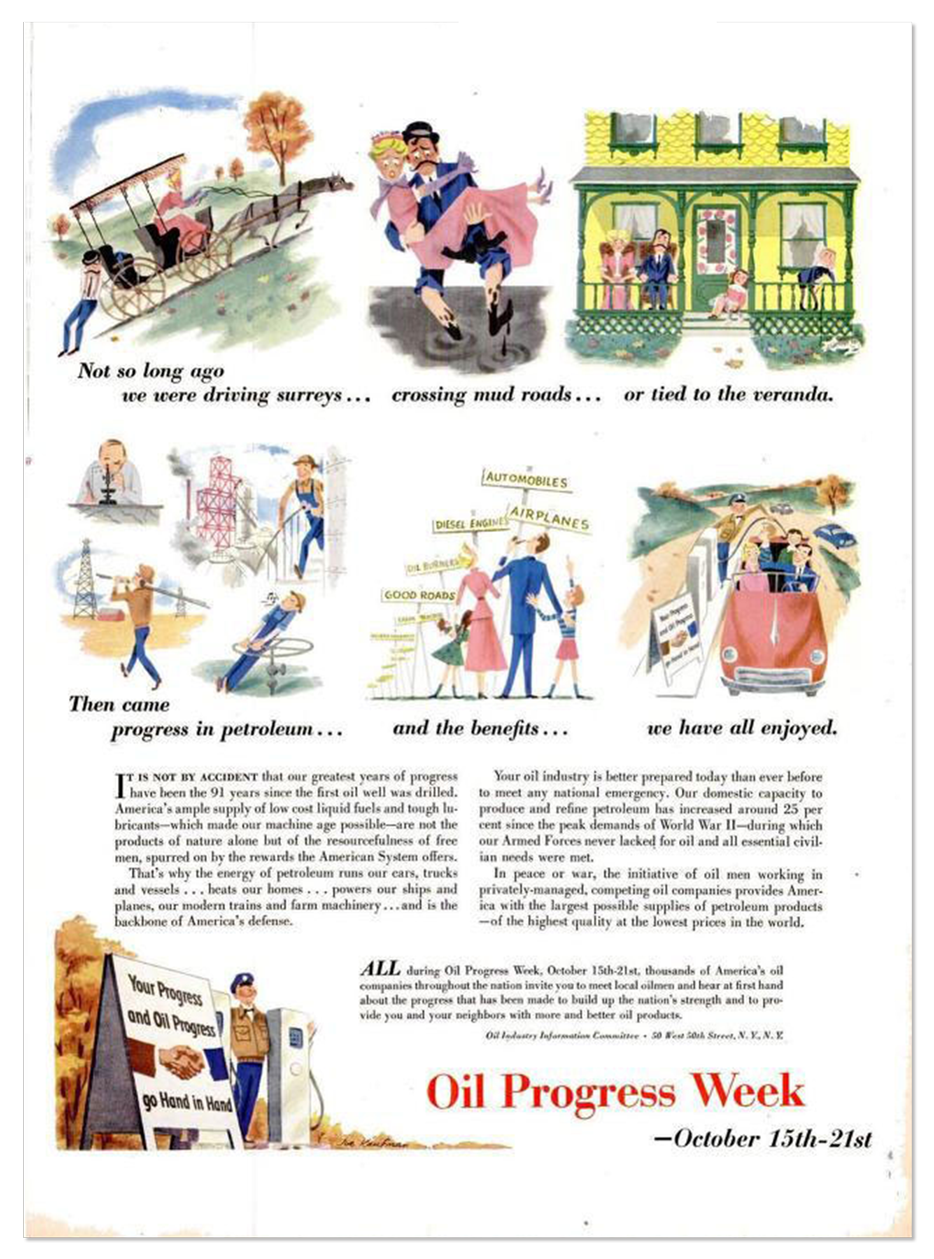
Recognizing an ongoing "opinion vacuum" regarding the social value of their business, the American Petroleum Institute established the Oil Industry Information Committee in 1948. This public relations arm launched coordinated campaigns across schools, community parades, and media channels, producing educational pamphlets, sponsored radio programs, and films—including the 1956 animated short Destination Earth, which featured a visiting Martian discovering that oil was the secret behind America’s high standard of living.
"A Word to the Wives": Fossil Fuels Invade the Home
The expansion of fossil fuel consumption was not limited to transportation; it systematically penetrated the domestic sphere through a coordinated campaign targeting American homemakers. In the early 20th century, the transition from traditional wood and coal stoves to modern gas and electric appliances required extensive education and persuasion. Utility companies deployed home service directors, such as Ada Bessie Swann in New Jersey, to demonstrate the convenience of manufactured gas appliances through lectures, radio broadcasts, and home visits.
Gas executives recognized that securing long-term residential demand required influencing the influencers. Throughout the 1930s and 1940s, the industry successfully integrated gas ranges, refrigerators, and water heaters into women’s magazines, radio broadcasts, and Hollywood motion pictures. Representatives worked closely with studio production teams to ensure that contemporary films prominently featured modern, all-gas kitchens.
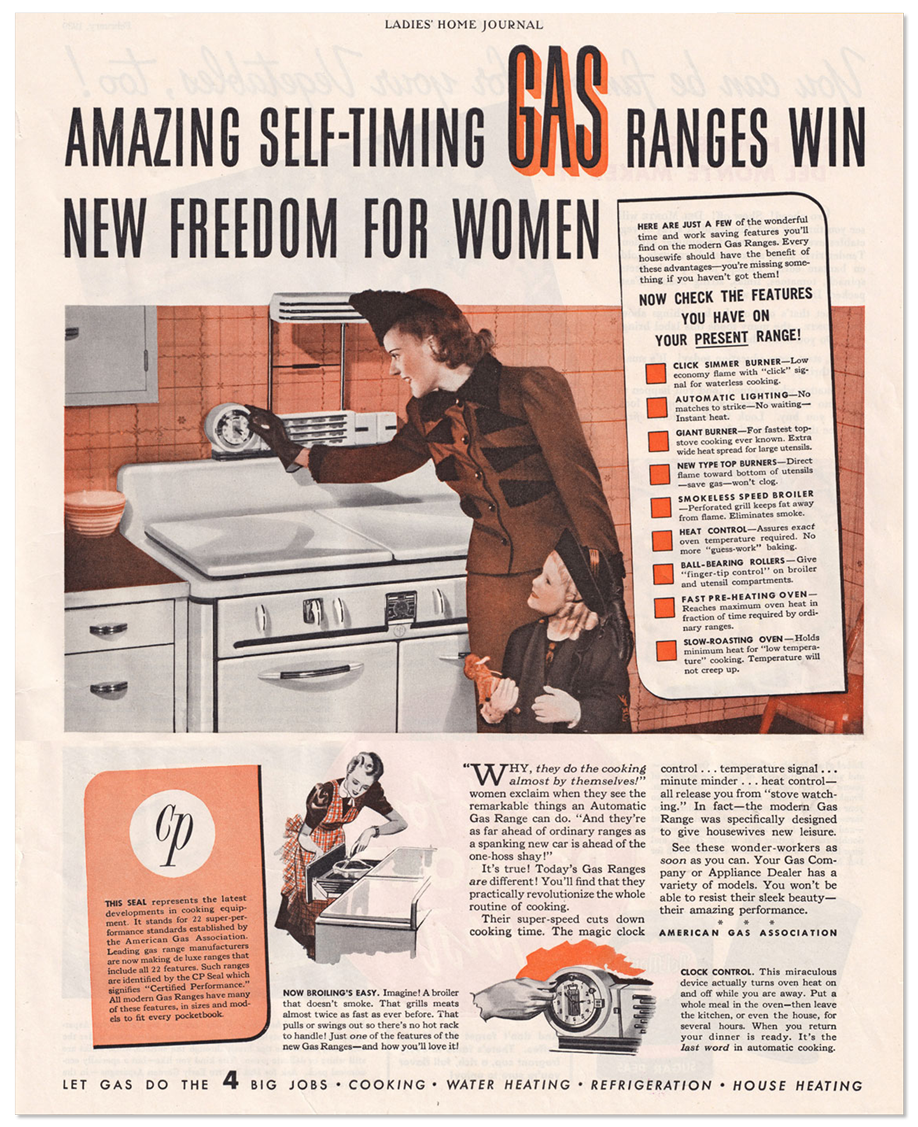
Following World War II, the American Gas Association launched the "New Freedom Gas Kitchen" campaign, promising homemakers liberation from the traditional drudgery of housework through streamlined, automated appliances. Sponsored short films, such as the 1955 production A Word to the Wives, humorously depicted women scheming to convince their skeptical husbands that modern gas appliances were an absolute domestic necessity. Concurrently, oil companies launched campaigns celebrating petrochemical innovations, highlighting how synthetic materials, plastics, and modern insulation were turning the single-family home into a structure built by oil.
"The American Lifestyle Is Not Up for Negotiation"
As environmental awareness grew during the 1960s and 1970s—marked by urban smog, major oil spills, and the establishment of Earth Day—the ecological costs of fossil fuel consumption became increasingly visible. These tensions came to a head during the 1973 Arab oil embargo, when sudden supply restrictions and soaring prices threatened the car-dependent lifestyle that Americans had come to view as a birthright.
When international scientific consensus regarding global warming emerged in the late 1980s, threatening new regulatory limits on carbon emissions, the fossil fuel industry mobilized defensive public relations campaigns. During international climate negotiations, U.S. delegations repeatedly insisted that "the American lifestyle is not up for negotiation," framing emissions reductions as an assault on national prosperity and personal freedom.
Despite decades of industry pushback, growing public concern over severe weather events and climate impacts has continuously reshaped political debates. While progressive and conservative political movements have offered sharply contrasting visions regarding the future of energy policy and economic development, the cultural legacy established by a century of strategic corporate messaging continues to shape how Americans view energy, personal choice, and the fundamental meaning of the modern good life.