
What does going on a first date have to do with fossil fuels? Everything, according to the petroleum industry.
An advertisement from the major pipeline company Energy Transfer follows two young people getting ready for a night out. The man primps his hair with styling gel, while the woman carefully applies lipstick before they meet at a crowded bar. "That connection was brought to you by petroleum products," the commercial’s narrator tells viewers. "But what if we lived in a world without oil and natural gas?"
The narrative then rewinds to the beginning of their evening, except this time, the woman looks utterly bewildered as her smartphone, complete with its dating app, evaporates right out of her hands. She gets lipstick smeared all over her cheek when the car she is riding in suddenly hits the pavement without its rubber tires. As his hair gel vanishes into thin air, the man stares into his mirror, completely baffled. When they finally sit down across from each other at the bar, their makeup, hair dye, and even their eyeglasses fade away into nothingness. On the television screen above them, a football disintegrates a split second before a kicker swings his leg at completely empty air.
The commercial, which has racked up millions of views since it first appeared, taps into a powerful underlying reality: fossil fuels have become deeply embedded in American life. What could feel more authentically American than football? Yet, oil and gas influence far more than just how people commute around town; they dictate where citizens live, how they dress, and how they cook food in their home kitchens. This entire lifestyle feels so ordinary that most people rarely notice how pervasive petroleum truly is, powering modern existence while hiding in plain sight.
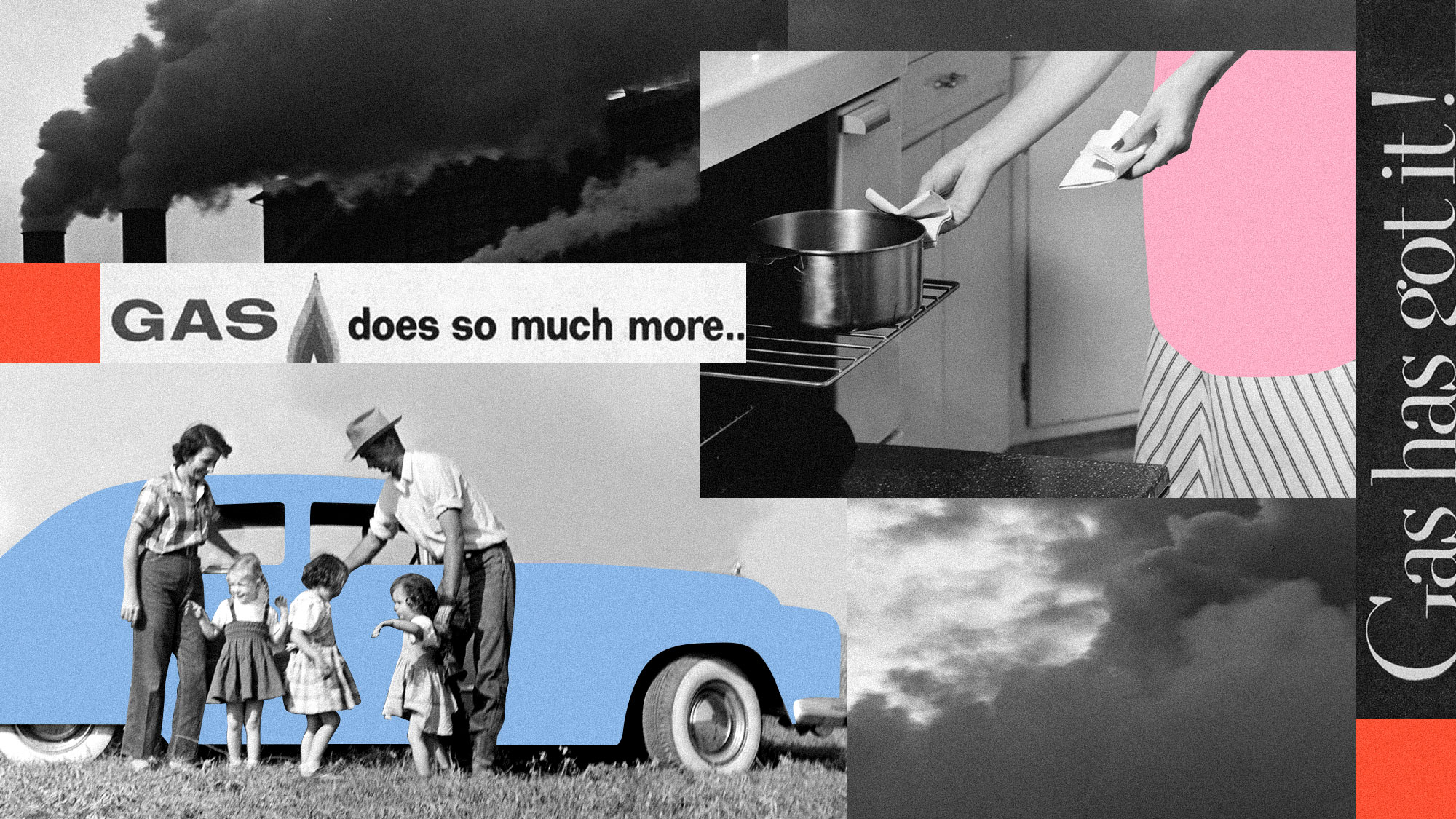
Although it might seem entirely inevitable that modern society functions this way, an investigation by Grist reveals that this collective notion of what is "normal" was carefully shaped over the course of decades. It was forged through aggressive advertising, public relations propaganda, and broad efforts to sway American culture across mediums ranging from early radio programs to Hollywood feature films.
"Our dependence on oil didn’t just happen," said Robert Brulle, an environmental sociologist at Brown University.
How Oil Became the "American Way"
This calculated cultural campaign began roughly a century ago, when visionary companies first began strategizing how to create long-term, permanent demand for fossil fuels and the mechanical products that ran on them. Billboards showcased happy families cruising down newly paved roads in their automobiles, while films depicted stylish women cooking their meals over the steady, blue flame of a gas stove. Magazines frequently featured suburban men pushing their gas-powered mowers across impeccably manicured lawns. The core message was often left unspoken, yet unmistakable: the entire modern American way of life runs on fossil fuels.
While there is a well-documented history showing that oil giants like Exxon understood the severe dangers of global warming by the 1970s based on their own internal research—and still spent decades publicly downplaying or outright denying the science—the story of how the industry coaxed Americans into accepting, and eventually actively desiring, a life built on fossil fuels has largely escaped mainstream attention. That history has remained buried in the yellowed pages of obscure trade journals.

During the 1940s and 1950s, the oil industry spent millions of dollars annually on campaigns designed to "educate" the public about the wonders of petroleum and how it supposedly advanced the "American way." Simultaneously, the natural gas industry promoted all-gas "dream kitchens," parading them directly in front of the influential editors of publications like Better Homes and Gardens, Good Housekeeping, and The Ladies’ Home Journal. They successfully sold a vision of the American Dream that strictly required their products—a cultural legacy that has since proven devastating for modern efforts to rein in climate change and transition toward a cleaner future.
This deep-rooted history offers a clear explanation for why contemporary Americans have reacted so fiercely to proposals to phase out polluting gas ranges—famously prompting the sentiment that officials would have to pry the appliances from citizens’ "cold dead hands"—or to mandates requiring higher sales of electric vehicles over traditional gas-powered cars. Is this ongoing political debate truly just about technology, or is it fundamentally about what the burning of fossil fuels represents: personal freedom and national identity?
The political agenda championed by leaders like Donald Trump is deeply nostalgic for what oil once promised the nation: immense economic might, a higher standard of living, and the promise of upward mobility. During his inauguration speech, Trump explicitly promised a return to these ideals, telling the nation that the liquid gold under its feet would help make the country rich again.
As the global economy enters an "age of electricity" powered increasingly by solar, wind, and other low-carbon energy sources, the United States often appears politically tethered to the past. Recent federal policy shifts have actively prolonged the lifespan of aging coal plants, opened new public lands to oil and gas drilling, and restricted offshore wind energy development. When officials defend these actions, they frequently return to the same foundational themes.
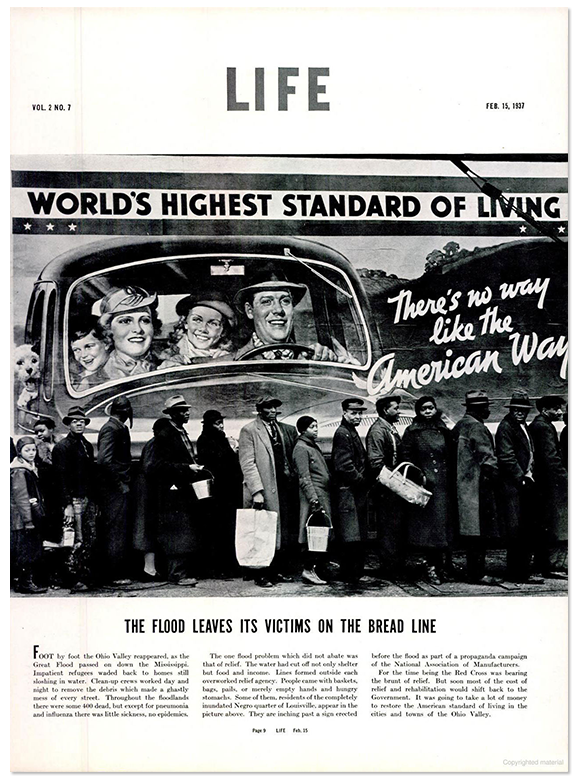
When federal environmental rules restricting car emissions are dismantled, administrations routinely tout the deregulation as a measure "restoring the American Dream." White House officials have repeatedly echoed the sentiment that radical climate policies are burning a hole through taxpayers’ wallets and jeopardizing the American dream for future generations. These words directly echo what the oil industry has been telling the American public for a full century: without fossil fuels, there is no good life, only hardship and sacrifice.
Before the proliferation of highways, parking lots, and sprawling suburbs, Americans moved about their cities quite differently. Travelers journeyed between regions primarily by railroad, and local towns bustled with horses, buses, bicycles, and streetcars. Then the automobile arrived, and natural landscapes of forests, meadows, and wetlands were systematically paved over, altering the American geography forever.
It was never a guaranteed certainty that automobiles would run on gasoline. At the turn of the 20th century, early electric vehicles were notably quieter and easier to operate, quickly capturing a significant share of the market and making up roughly a third of all vehicles on the road. However, Henry Ford’s cheaper, mass-produced Model T, unveiled in 1908, changed the trajectory of transportation by running on gasoline.
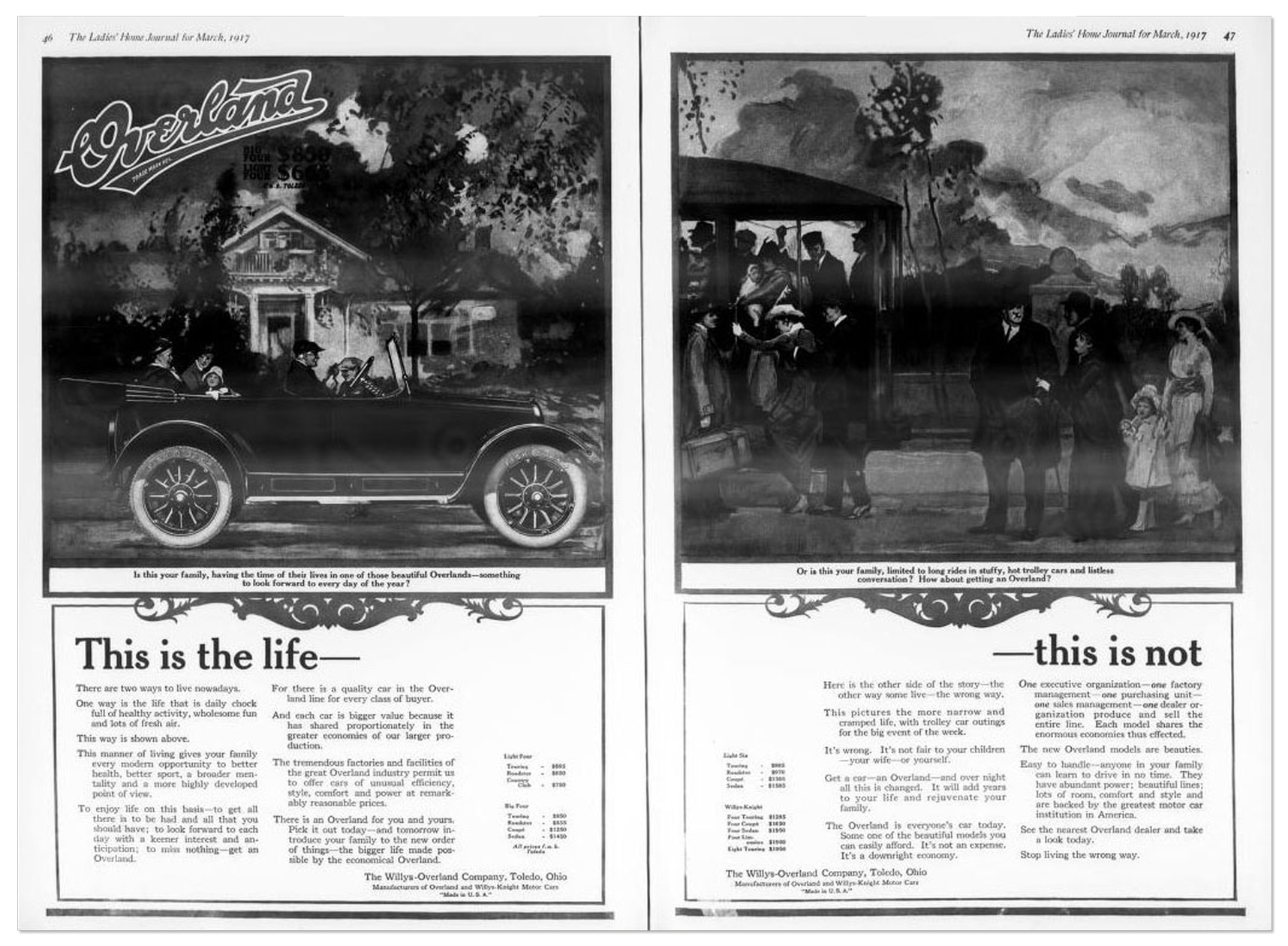
Up to that point, gasoline was viewed primarily as a useless byproduct of kerosene refining, but the rapidly expanding automobile industry provided an immediate, hungry market. Automakers aggressively promoted their vehicles as vastly superior to public transit, framing car ownership as a vital step up in social status. In a 1917 advertisement published in The Ladies’ Home Journal, the Willys-Overland Company marketed its cars as "chock full of healthy activity, wholesome fun, and lots of fresh air," contrasting this freedom with the perceived misery of long rides in crowded, hot trolley cars.
This marketing strategy previewed a major shift leading into the 1930s. Previously, car advertisements focused narrowly on mechanical features—such as weight-to-horsepower ratios or fine leather upholstery. Soon, however, companies began selling the emotional and lifestyle benefits of using their products, painting vivid pictures of how a car could improve personal status, leisure, and popularity alongside the mundane machine itself.
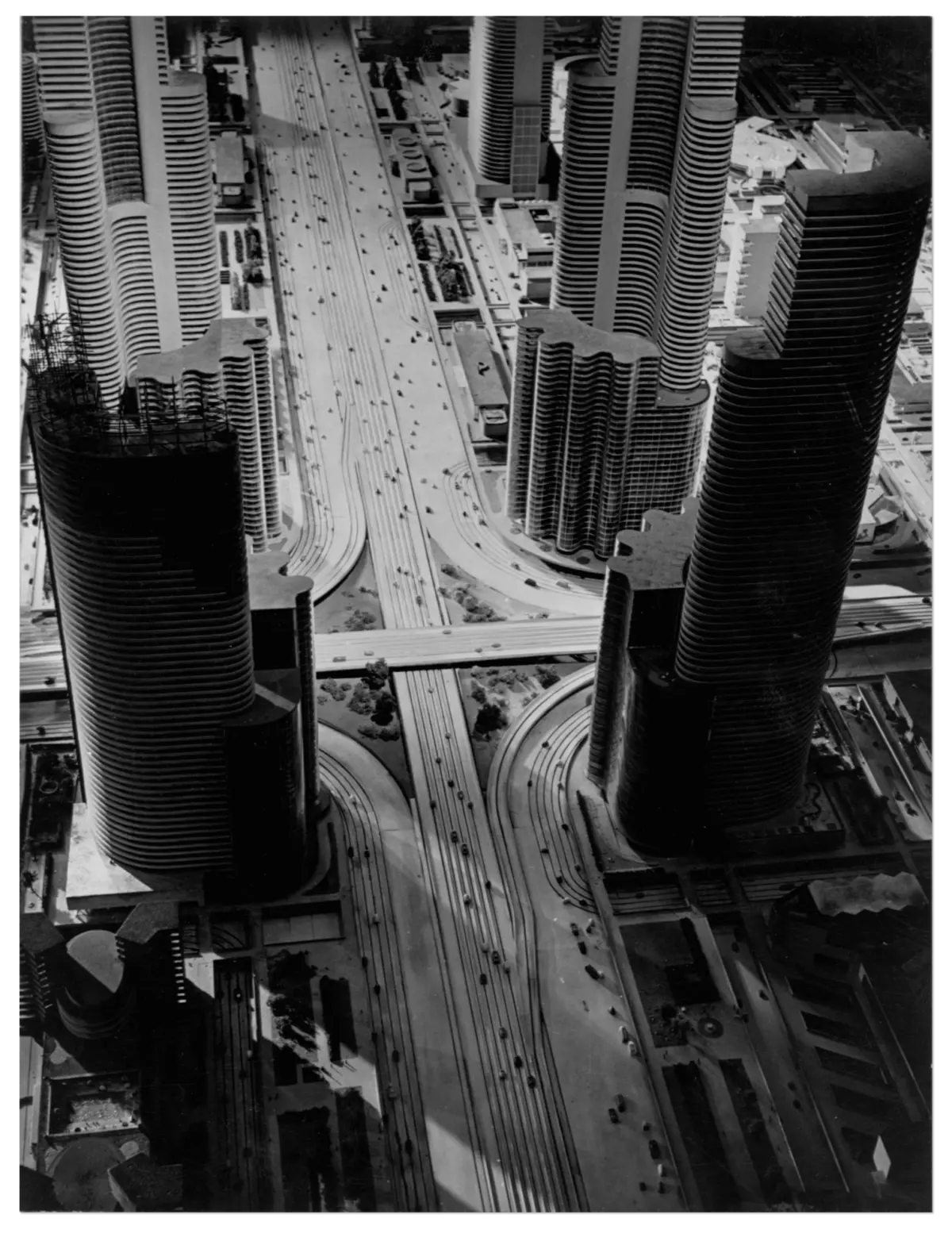
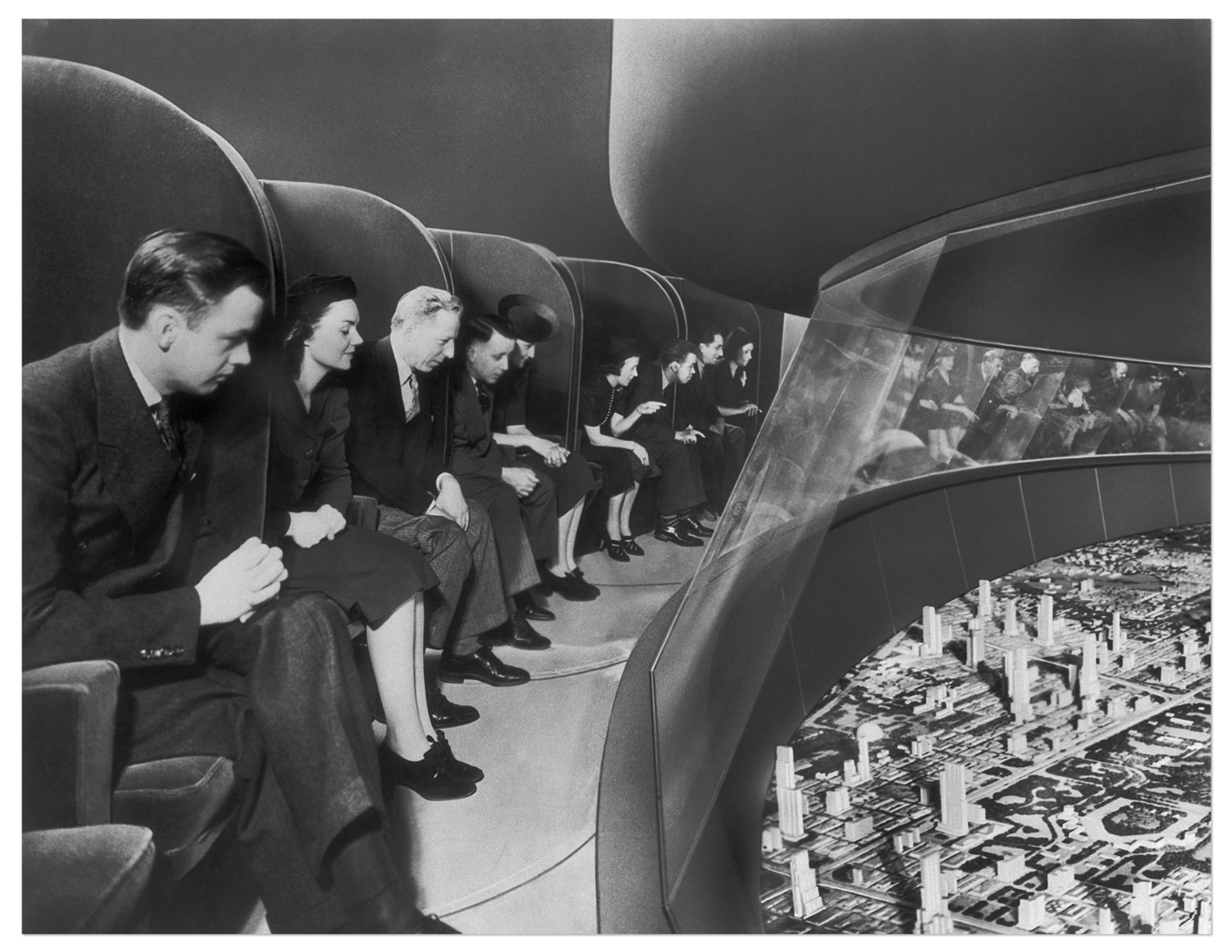
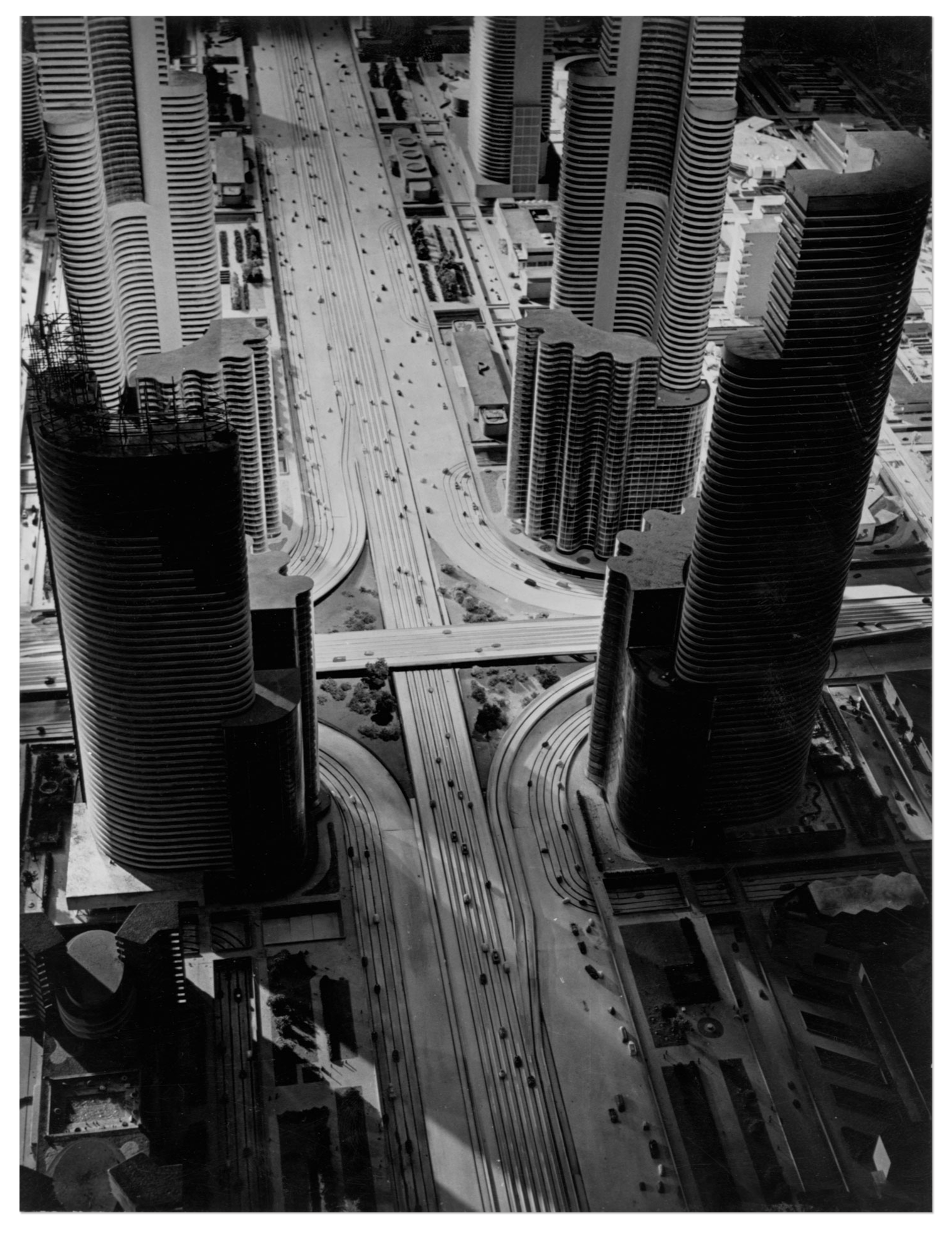
As the Great Depression set in, automakers eagerly seized the opportunity to pitch Americans on a brighter future fueled by private transportation. At the 1939–1940 World’s Fair in New York City, General Motors hosted its wildly popular "Highways and Horizons" exhibit. Its centerpiece, a massive diorama titled "Futurama," offered visitors a breathtaking view of a futuristic American city in the year 1960, complete with towering skyscrapers and 14-lane superhighways. Millions of awestruck visitors looked down upon the model from moving chairs, absorbing the visual message that advanced highways would set the pace for civilization and vastly improve human happiness.
When the United States entered World War II in 1941, the domestic oil industry experienced an unprecedented boom, producing massive quantities of fuel for military aircraft and explosives. Although the wider public had harbored deep suspicions of corporate power since the economic crash of the Depression, the oil industry cleverly leveraged the wartime effort, casting itself as uniquely patriotic and essential to the survival of the nation.
Shortly after the war, the "American way" became permanently intertwined with car ownership as suburbanization exploded. Developers leveled massive tracts of farmland to build cookie-cutter housing developments like Levittown. As millions of families relocated to distant suburbs far away from their workplaces, they became locked into a car-dependent lifestyle that consumed vast amounts of petroleum daily.
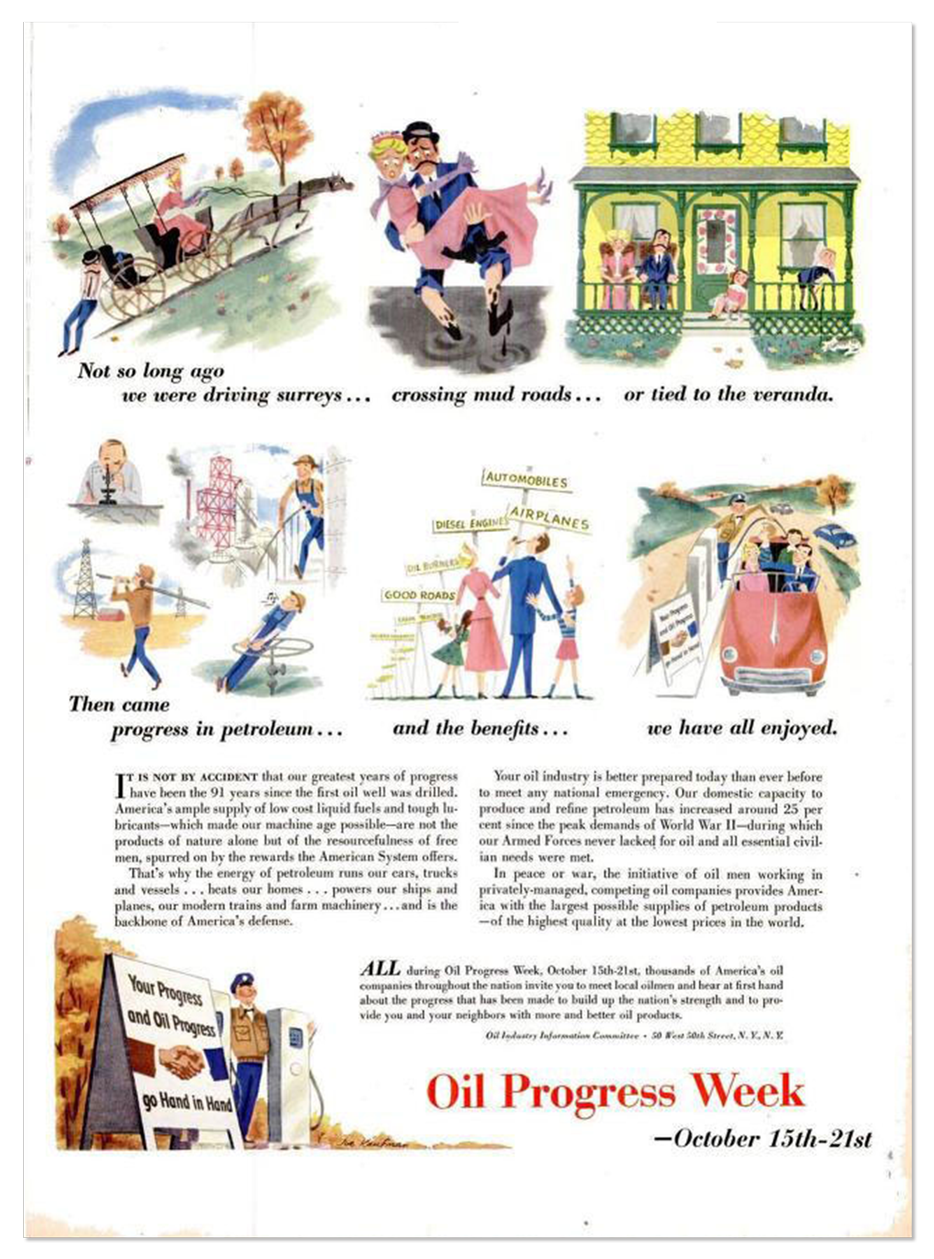
To ensure public support remained high, the American Petroleum Institute formed the Oil Industry Information Committee in 1948. The group built an extensive public relations apparatus that reached into schools, community parades, and classrooms through pamphlets, sponsored films, and radio programming. Its signature initiative, Oil Progress Week, featured national advertising blitzes celebrating how oil fueled modern innovation and everyday happiness.
"A Word to the Wives": Fossil Fuels Invade the Home
Meanwhile, the natural gas industry was executing a parallel campaign to conquer the American household. In the early decades of the 20th century, most homemakers were accustomed to cooking on wood or coal stoves and doing laundry by hand. Utilities deployed home economics experts—often referred to as apostles of home service—to demonstrate modern gas appliances directly to thousands of women every day.
Companies sponsored daily radio shows offering cooking advice, established model gas kitchens for public tours, and systematically monitored local building permits to convince homeowners and contractors to install gas lines in new construction. By the late 1930s, the industry had successfully recruited Hollywood filmmakers to feature all-gas kitchens and modern ranges as standard props in major motion pictures.
Following World War II, the gas industry launched the "New Freedom Gas Kitchen" campaign, promising homemakers liberation from the drudgery of traditional housework through streamlined layouts centered around gas ranges, refrigerators, and automatic water heaters. Films sponsored by trade associations explicitly followed women scheming to convince their skeptical husbands that modern gas appliances were an absolute necessity for domestic comfort.
Before long, petrochemicals began transforming the domestic sphere entirely. As chemists experimented with petroleum derivatives, plastics arrived in American homes in the form of Tupperware, synthetic clothing, and durable carpets. Major oil companies proudly advertised that petroleum research made possible everything from quick-drying paints to weather-defying asphalt roof shingles, prompting campaigns that declared the modern home to be "a house that oil built."
"The American Lifestyle Is Not Up for Negotiation"
As decades passed, this fossil-fueled version of the American Dream became thoroughly internalized, accepted simply as the natural state of progress. However, by the 1960s, the environmental toll of this lifestyle became increasingly impossible to ignore. Smog choked major metropolitan areas, catastrophic oil spills fouled coastal waters, and polluted rivers famously caught fire. These crises catalyzed the modern environmental movement, culminating in the first Earth Day in 1970 as millions of citizens demanded political action to clean up the environment.
The vulnerability of the petroleum-dependent lifestyle was starkly exposed during the 1973 oil embargo, when Arab oil-producing nations halted petroleum exports to the United States. As gas stations ran dry and rationing was instituted, oil prices quadrupled, threatening the car-dependent freedom Americans had come to take for granted. In response, industry-backed groups launched campaigns framing environmental regulations and energy conservation measures as direct threats to personal liberty.
When climate change emerged as a prominent global crisis in the late 1980s and 1990s, the oil industry faced a new existential challenge. As international treaties and domestic climate policies were proposed to curb greenhouse gas emissions, fossil fuel coalitions responded with aggressive advertising campaigns warning that binding carbon targets would inevitably alter lifestyles, shutter factories, and displace workers.
During international climate summits, U.S. delegations repeatedly insisted that "the American lifestyle is not up for negotiation." Whenever serious legislative efforts arose to limit fossil fuel use, industry groups reliably deployed economic studies and public relations warnings that cutting emissions would force families to sacrifice their standard of living.
Although contemporary political debates continue to pit aggressive climate action against the preservation of traditional American habits—with critics frequently characterizing green policies as elitist efforts to restrict consumer choices—the reality of climate change itself has begun imposing severe economic costs on the country. Rising temperatures, intensifying storms, and soaring home insurance rates now threaten the financial stability and housing security of millions of Americans, turning the very fossil fuels once sold as the keys to prosperity into forces that push the American Dream further out of reach.
For now, the United States remains a deeply entrenched "petroculture," where petroleum saturation makes charting an alternative path forward a profound challenge. Yet, as cultural historians and sociologists observe, this reality was not predestined by nature; it was deliberately engineered through a century of sustained public relations and marketing. As conversations surrounding energy abundance and technological transition continue to evolve, the underlying question remains whether a society built on petroculture can successfully imagine and construct a new version of the good life.