
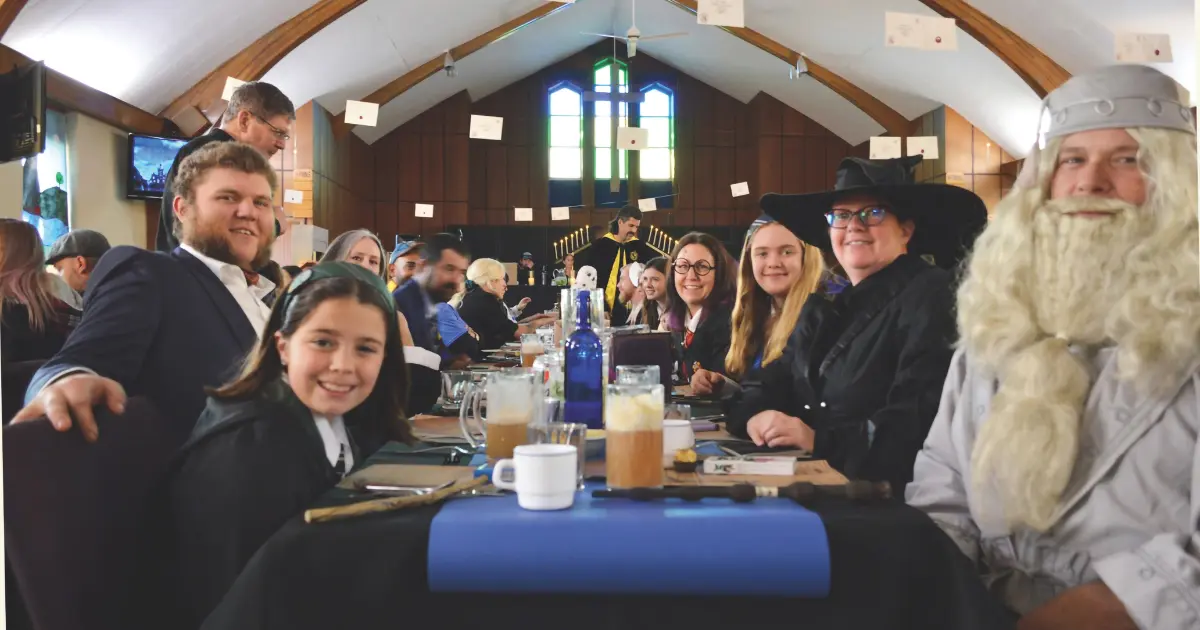
On a crisp Saturday afternoon in early May, St. Luke’s United Church in Sarnia, Ont., is a picture of vibrant community life. Parents, children, and volunteers dart between parked cars and the main church entrance, exchanging friendly greetings as they unload boxes and supplies. Inside the building, the enthusiastic hum of a community meeting unfolding in the basement spills past the stairwell and drifts softly up into the sanctuary overhead.
It is a typical weekend scene at what some of its roughly 60 active members affectionately refer to as the "little church on the corner." Situated strategically on the edge of an evolving neighborhood characterized by nearby schools and low-income housing, St. Luke’s has spent more than eight decades shaping its core ministry around the direct, practical needs of the surrounding community.
For the congregation, the church’s physical presence in the neighborhood has always carried a profound sense of purpose.
"We feel our purpose of being on that corner is to support the community in any way we can," explains Larry McLaren, the chair of the church’s board of trustees.
Over the years, St. Luke’s has cultivated a robust network of partnerships with both national and local organizations. Among them are the Canadian Foodgrains Bank and Sarnia-Lambton Rebound, a prominent local agency dedicated to working with at-risk youth. Many of these relationships are remarkably long-term, built fundamentally upon the church’s willingness to share its physical space.
In the beginning, these arrangements were driven primarily by pure altruism. For instance, the church historically charged just a nominal fee of one dollar a year to the Dow Centre for Youth, a facility that occupies church land on the opposite side of the parking lot. The Dow Centre houses vital community groups like Rebound and Big Brothers and Big Sisters of Sarnia-Lambton. A similar arrangement was previously extended to Community Living, which utilizes the church’s former manse as supportive residential housing for young adults finding their footing in the community.
However, as the economic realities of maintaining an aging building shifted over time, the congregation recognized that it needed to secure additional revenue streams to sustain its daily operations. In response to these financial pressures, church trustees made the pragmatic decision in 2018 to raise Community Living’s lease to $500 a month. Continuing with this measured approach to financial sustainability, the trustees negotiated a two percent annual increase on the lease in 2024 to proactively offset the impacts of inflation.
The evolution of the church’s space-sharing model took a major leap forward in 2017. That year, St. Luke’s made the bold decision to open up substantial space within its main building to allow Rebound to establish a dedicated youth drop-in center. Accommodating this new facility required significant structural alterations, including the elimination of the traditional fellowship room and the relocation of the Sunday school program down to the basement.
During the initial deliberations, admits Rev. Melanie Kirk-Hall, the church’s minister, some congregants felt hesitant about relinquishing familiar spaces. Yet, through open dialogue and shared reflection, members eventually came around. They supported the initiative, she notes, "because they believed in the mission and ministry that would be possible."
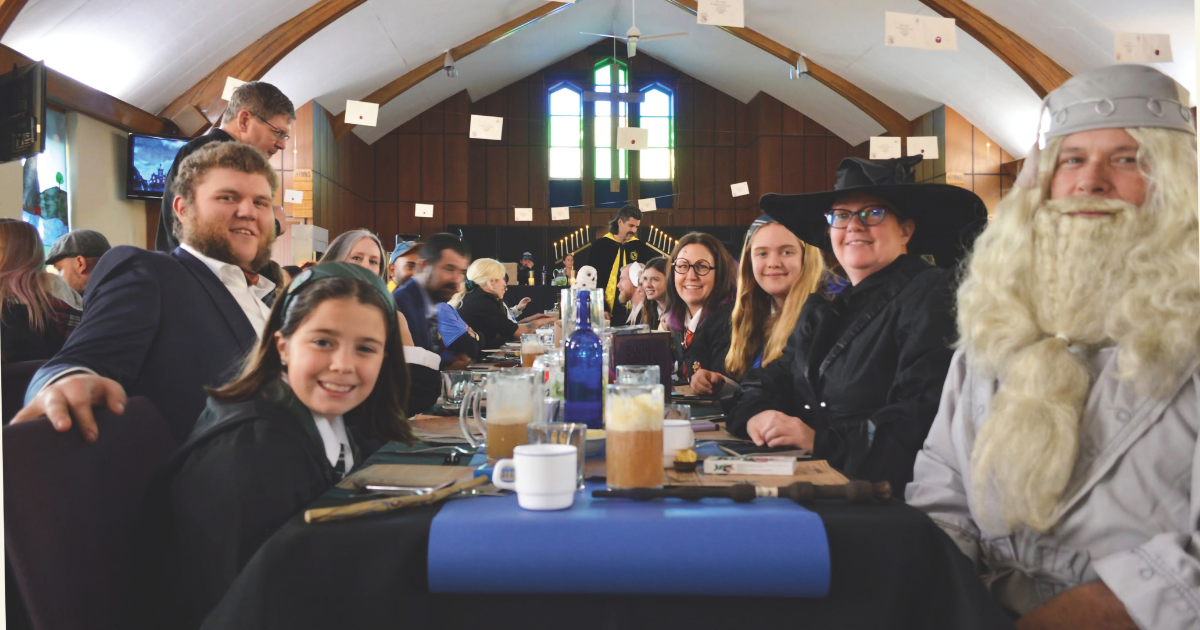
The transformation of the interior was made possible by a $75,000 grant from the United Church of Canada Foundation’s Seeds of Hope program, which financed the necessary renovations. Today, that vision is a thriving reality known as "The Nest." Characterized by an L-shaped layout featuring a functional kitchen, laundry facilities, and a spacious lounge located conveniently next to the church’s administrative offices, The Nest hosts a youth drop-in program five days a week. The schedule alternates carefully between two distinct age groups: adolescents aged 12 to 15, and young adults aged 16 to 24. Rebound formally leases the space, paying a predictable rate calculated by the square foot.
Buoyed by the undeniable success of these space-sharing initiatives, the congregation began to see untapped potential for generating even more revenue through versatile rentals tailored for community events, private meetings, and local gatherings. In 2021, the leadership turned its critical eye toward the main sanctuary, embarking on a visionary project to redevelop the sacred space into a flexible, multi-use community hub.
The comprehensive renovation introduced modern amenities designed for comfort and accessibility, including air conditioning, an accessibility lift, a portable sound system, a high-definition projection screen, and reliable internet access. Traditional wooden pews were removed to make way for movable, comfortable chairs, and the choir loft was taken down to clear the floor space for a proper stage. At the same time, St. Luke’s completely updated its kitchen facilities to meet modern culinary standards.
As was the case with previous changes, some congregants initially resisted the transformation of the sanctuary, McLaren recalls. However, those objections were ultimately put to rest by intentionally retaining key historical and spiritual elements of the church—such as the altar cross and the pulpit—while pairing them with softer, contemporary seating. Existing basement tenants, including local chapters of Alcoholics Anonymous, quickly integrated into the newly modernized space, and the church remains actively open to exploring collaborations with new renters.
Recognizing that true long-term sustainability involves looking far beyond immediate financial ledgers, the congregation is also thoughtfully planning for an uncertain future. Members are actively considering what steps to take if the congregation eventually shrinks to a size where it can no longer operate independently or safeguard its cherished outreach projects. One proactive measure under serious consideration is making the United Church’s regional council a trustee. This strategic move would ensure that physical operations continue seamlessly and protect the occupancy rights of the church’s vital primary tenants.
While ongoing operational challenges are simply part of modern church life, McLaren proudly points to the congregation’s creative, evolving use of its facilities as a clear and modest success story. Community outreach programs continue to flourish, new members who deeply support the church’s progressive mission have stepped forward to join the fold, and the church’s financial statements currently remain securely in the black.
Reflecting on the journey, Kirk-Hall expresses deep admiration for the spiritual dedication and relentless passion demonstrated by her congregation week after week.
"St. Luke’s has often worked toward a big vision," Kirk-Hall says, capturing the ethos of the community. "There’s just this real internal consistency about who they are and who they want to be as followers of Christ in the world."