
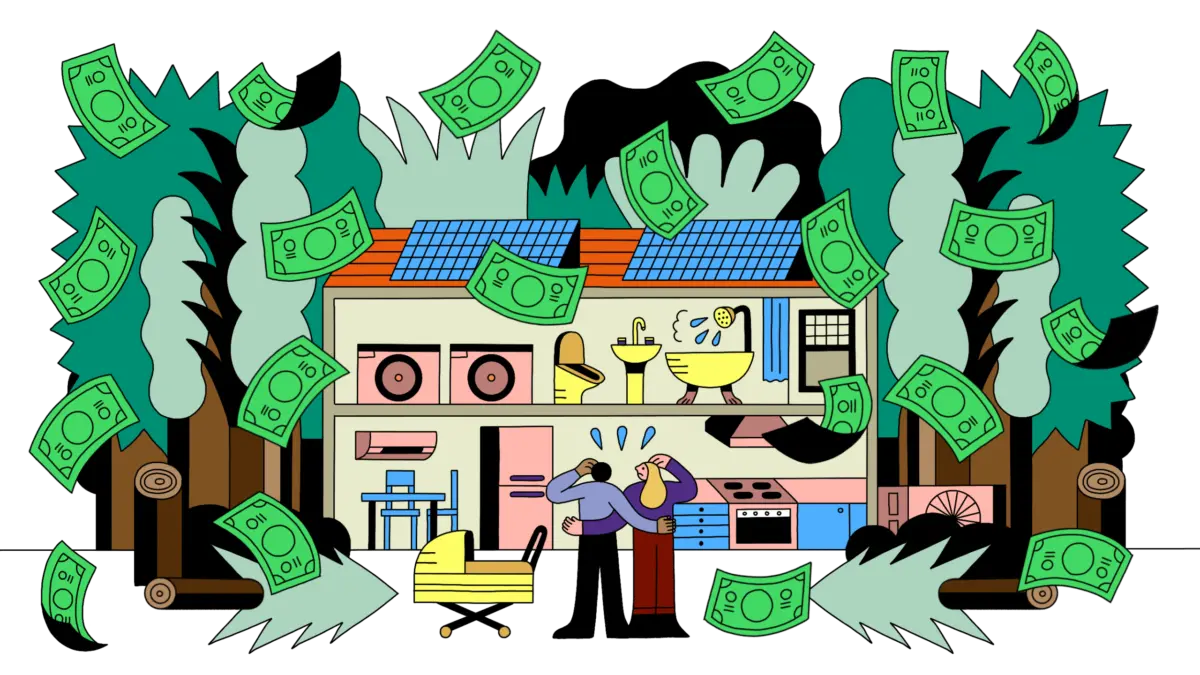
“Electrify everything” has become a central mantra in the global fight against climate change. Switching a home’s heating, cooling, and other major energy-intensive loads from fossil fuels to clean electricity can drastically reduce planet-warming emissions. Yet, this necessary green transition has frequently run into a major, and often prohibitively expensive, hurdle: upgrading a home’s underlying electric capacity to handle the new demand.
A home’s connection to the municipal electrical grid is typically rated by amperage, or amps, which serves as a hard cap on the maximum amount of electrical current the building can safely draw at any given moment. For houses constructed over the last few decades, 200 amps has generally become the modern standard. However, a significant portion of older residences possess a much lower limit because they were built during an era when electricity powered little more than basic lighting, a refrigerator, a microwave, and perhaps a clothes dryer.
Comprehensive research from the Lawrence Berkeley National Laboratory found that roughly a third of all homes in the United States currently feature a panel capacity of 100 amps or less. In regions like the Northeast, that share climbs even higher, reaching closer to half of the existing housing stock.
As modern homeowners increasingly install heavy-draw appliances such as heat pumps, induction stoves, and electric vehicle chargers, they frequently run into a couple of distinct logistical issues. Often, an electric panel may simply run out of physical slots to install new circuit breakers, in which case the relatively straightforward and inexpensive fix of adding a subpanel can easily do the trick. But sometimes homeowners run into a much larger problem, where a visiting electrician calculates the total load and declares that all the new appliances will push the household well past its peak power limits.
Upgrading an existing electrical service can start at a few thousand dollars and quickly skyrocket, particularly in rural areas or in neighborhoods where power lines run underground and require extensive utility coordination. AJ Rossman, an electrical engineer with VEIC—a clean energy contractor that runs much of Efficiency Vermont’s state-level program—noted that they have seen estimates ranging anywhere from $10,000 to $20,000 for standard residential service upgrades.
The exact scope of this financial bottleneck remains somewhat unclear because there is scant public data tracking how many service upgrades are performed each year, let alone the countless instances where upgrades are recommended by contractors but ultimately abandoned by homeowners due to the prohibitive cost. Even so, the Lawrence Berkeley research suggests there may be thousands, if not millions, of homeowners across the country who are told they need to upsize their electrical service simply to transition away from fossil fuels.
The encouraging news is that practical, cost-effective workarounds exist—provided that homeowners or their electricians know where to look. It is a valuable lesson that one Vermont homeowner and his wife recently learned firsthand while attempting to expand their living space.
When they first moved into their Burlington, Vermont, home, natural gas powered the furnace, the kitchen stove, and the household dryer. Knowing they would eventually want to electrify the property, the homeowner had the service proactively increased from 150 amps to 200 amps. Because the electrical work was bundled as part of a larger renovation project, the initial bill was manageable.
That modest upgrade successfully allowed them to install an EV charger, transition entirely to heat pumps, adopt an induction stove, and plan for an eventual electric clothes dryer. They were thrilled to reside in a home largely free of fossil fuels.
Then, they decided to build a home addition.
The architectural plans for an extra 800 square feet of living space would require two additional small heat pumps, along with standard lighting, additional electrical outlets, and the permanent ditching of their remaining gas dryer. None of these additions initially seemed cause for concern until their local electrician sat down to run the mathematical load calculations.
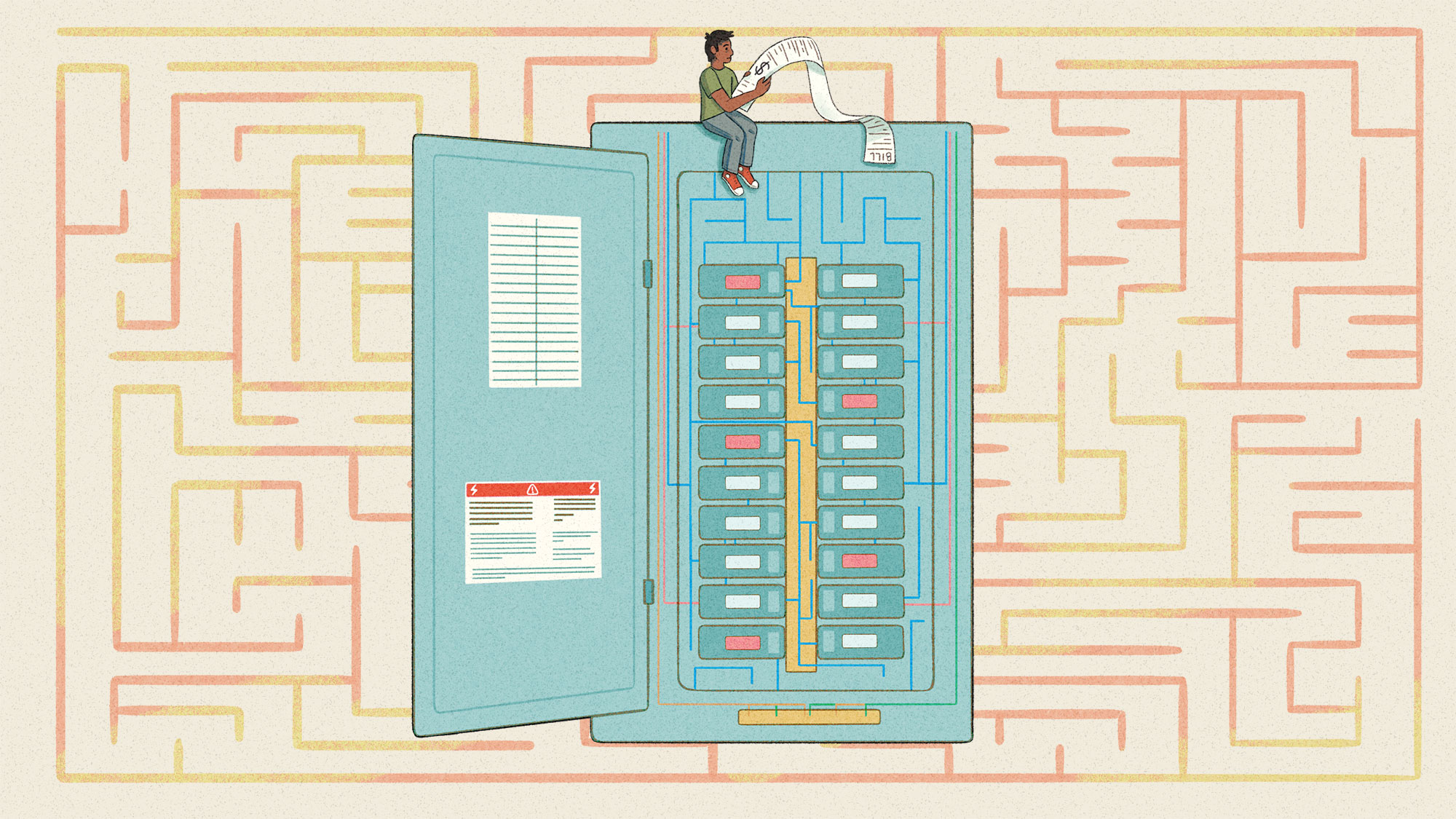
The electrician determined that the laundry room swap alone would push the home’s theoretical electrical load to around 192 amps. Furthermore, upgrading the service to 300 or 400 amps would require trenching a brand-new underground utility line and potentially even overhauling the neighborhood transformer serving their specific block. The total expense, the contractor warned, could easily land well over $10,000.
Faced with an unexpected financial crisis, the homeowner began frantically searching for alternative solutions. He had previously heard about a growing array of advanced products designed precisely to help people in his exact predicament. For instance, a friend had recently installed a smart electrical panel that actively monitors how much electricity each individual circuit is drawing to ensure that total demand never exceeds the home’s overall capacity. If power consumption gets dangerously close to the limit, the smart panel automatically shuts off lower-priority breakers as needed, turning them right back on once power levels safely drop.
While appealing, this technology was undeniably expensive. Converting an entire panel to a smart system would have cost around $4,000 in hardware alone. Even smaller options that only control a handful of targeted circuits start at about $2,000. When factoring in professional labor costs, the total outlay seemed almost as staggering as a full utility service upgrade.
The homeowner then came across a cheaper category of hardware devices known as load-sharing switches, or smart splitters. These devices allow two high-demand appliances to share the exact same physical circuit, with only one permitted to run at a given time. This means that only the heavier of the two loads counts toward the home’s total demand calculation. Each switch costs roughly $800, depending on the manufacturer. The catch was that his household would likely need at least two such devices to bring the calculated load safely below the 200-amp threshold. That was certainly an improvement over a full upgrade, but it remained costly and left very little wiggle room for future energy needs.
Convinced there had to be a better, more holistic option, the homeowner made a last-ditch effort to call his local utility provider, assuming they must have dealt with other customers in a similar position. An advisor immediately asked a fundamental question that the homeowner had entirely taken for granted: Is your electrician entirely sure that you actually need a service upgrade?
When the electrician had originally calculated how much electrical power the house would require, he had relied upon the standard method outlined in the National Electrical Code. Put simply, this conventional approach takes the rated electrical loads of every single item, appliance, and fixture in a home and aggregates them to calculate a theoretical maximum load. Using one of the many online electrical calculators available to replicate the electrician’s work, the homeowner arrived at the exact same conclusion: the house was already taking up about 187 amps, and the proposed addition would push that figure to roughly 227 amps—comfortably beyond the panel’s existing 220-amp structural limit.
However, Burlington Electric informed the homeowner about a lesser-known section of the electrical code that could yield a radically different answer. Commonly referred to as Section 220.87—even though it was recently relocated to Section 120.87 in code updates—this alternative evaluation method uses a full year’s worth of actual utility smart meter data to identify a home’s true peak electrical demand, rather than relying on hypothetical worst-case usage scenarios. Like 73 percent of residences around the country, the Burlington home was equipped with a standard smart meter, making it relatively easy to request that historical consumption data directly from the utility. A comprehensive spreadsheet arrived in the homeowner’s inbox the very next day.
Because the data file contained thousands of rows of granular usage information, the homeowner uploaded it into TrueLoadapp.com, a specialized digital tool designed for electricians to evaluate customer electrical loads using this precise alternative code pathway. The software rapidly parsed the raw data to identify the home’s actual annual peak, which occurred on January 20, when the entire property topped out at just under 62 amps. The electrical code mandates a mandatory 25 percent safety buffer when running these calculations, which bumped the operational total up to about 77 amps.
Even with the built-in safety buffer, the household was utilizing less than 40 percent of its total service capacity and less than half of what the traditional theoretical calculation had projected. The homeowner then factored in the brand-new loads using traditional methods and discovered there was already more than enough existing capacity without needing to spend a dime on a service upgrade, successfully saving thousands of dollars in the process.
“My mission is to get anybody who is considering any sort of electrification to do this first,” said Jake Marin, the founder of TrueLoad. “There are many, many, many situations where there is nothing wrong with your panel.”
Marin previously worked at VEIC, where he was personally involved in dozens of residential panel upgrades before beginning to question whether there was a fundamentally better approach to the industry-wide problem. That professional curiosity led him to discover Section 220.87 and eventually build TrueLoad. He notes that the data consistently tends to show homeowners have a lot more electrical headroom than they initially assumed, leading many to spend $10,000 or more that they simply do not need to spend.

This real-world experience closely aligns with the findings from the Lawrence Berkeley National Laboratory research, which concluded that only a small fraction of homes genuinely require a costly service upgrade, particularly when applying Section 220.87 evaluations. Lead author Sean Murphy noted during a public webinar earlier this year that the vast majority of existing residential electrical panels already possess substantial hidden headroom for additional clean energy loads. Efficiency Vermont has also explored this exact issue, publishing white papers that yielded remarkably similar conclusions.
Local experts emphasize that the outcome often depends heavily on the familiarity and expertise of the individual electrician. Rossman, who co-authored the Efficiency Vermont white paper on the topic, found that many contractors continue to rely heavily on simplistic rules of thumb when evaluating panel headroom, and relatively few surveyed electricians were even aware that Section 220.87 existed. Consequently, even homes equipped with smaller electrical services frequently retain significantly more remaining capacity than either the homeowners or their contractors realize. For a reasonable household, real-world usage rarely comes close to maxing out a 200-amp service, and it is remarkably rare for a fully electrified home to genuinely require anything exceeding 100 amps of actual peak capacity.
Ultimately, whether an alternative load calculation is formally accepted rests entirely in the hands of local municipal building inspectors. While some jurisdictions do not require a formal load calculation at all, those that do generally raise no objections to Section 220.87 because the provision has actually been a part of the national code for decades, according to Dean Austin, a senior electrical specialist at the National Fire Protection Association.
Master electrician Johnathan Quong, who owns New England Electric, has been turning to the code provision for years whenever traditional calculations mistakenly suggest a home lacks sufficient electrical capacity. He noted that his team has successfully kept numerous residential customers on standard 100-amp panels, adding that he has never once had a local inspector reject a project utilizing Section 220.87.
The far greater obstacle, according to Quong, lies in getting the broader electrical trade to adopt the alternative methodology. At an industry conference where the topic was recently discussed, he sensed noticeable skepticism from professional colleagues who had grown deeply accustomed to traditional worst-case calculations. Many contractors simply did not know about the code provision or felt uncomfortable relying on historical data, viewing it as their absolute professional responsibility to ensure 100 percent safety through rigid conservative margins. In Quong’s view, however, there should be no professional resistance whatsoever once the empirical data is properly understood.
One notable caveat for homeowners is the requirement to obtain historical usage data directly from their electric utility, and Marin points out that digital access varies widely across different regions and utility providers. While some utilities conveniently print a home’s peak load directly on the monthly paper bill, and TrueLoad features built-in tools to assist users with formal data requests, customers can still occasionally find themselves forced to dig through complex digital portals. Navigating these utility systems can prove frustrating even for seasoned industry experts.
Ric O’Connell, executive director of the clean energy nonprofit GridLab, noted that he initially had no idea how to extract such consumption data from his own smart meter. After a long bureaucratic battle with what he described as a genuinely poor user interface, he finally managed to obtain his consumption history from Pacific Gas and Electric Company in California, which revealed that his own household peaked at a mere 65 amps.
For homeowners who encounter roadblocks trying to access raw smart meter data, alternative code pathways remain available. Another section of the national code, Section 220.83—recently renumbered to Section 120.83—allows certain household electrical loads to be discounted based on the statistical reality that not every appliance in a home will operate simultaneously. In specific operational scenarios, that calculation method may produce an even lower calculated demand than Section 220.87, according to Jenny Low, director of panel optimization and electrical reassessments for Build It Green, a nonprofit working to create equitable and healthy neighborhoods. At the very least, she notes, it provides a much more forgiving framework than standard cumulative assessments.
While the homeowner in Vermont considered various pathways, the 220.87 data route proved to be the most definitive and effective solution for his specific expansion project. The updated 2026 version of the national electrical code further expands compliance options by allowing both actual demand data and load discounting techniques, though broader adoption will ultimately depend on which specific code version a given municipal jurisdiction has formally adopted. The overarching challenge remains ensuring that both electricians and homeowners are widely educated on these existing alternatives.
For anyone who genuinely remains short on electrical capacity even after exhausting these alternative calculation methods, modern load-management technologies such as smart panels and automated switches continue to offer the cheapest secondary pathways to full home electrification. As Low emphasizes, there are many innovative ways to completely avoid an expensive utility panel upgrade.
As for the Vermont homeowner, construction contractors officially broke ground on the residential addition. If everything proceeds according to plan, the family will spend a grand total of zero dollars on an electrical service upgrade project that could have otherwise cost them well over $10,000.