
NEW DELHI — India has called on both the Russian Federation and Ukraine to immediately establish and observe safe passage guarantees for commercial shipping through the Black Sea, warning that an escalating campaign of maritime strikes is putting civilian merchant crews in grave peril and threatening to disrupt essential global food and energy lifelines.
The diplomatic push from New Delhi follows a sharp resurgence in hostilities targeting commercial vessels traversing the strategic waterway. With Indian nationals making up a substantial share of global commercial maritime personnel, the risks of the ongoing war in Eastern Europe have directly reached Indian citizens serving aboard international cargo ships and tankers.
Government officials in New Delhi confirmed that direct communications are actively underway with counterparts in both Moscow and Kyiv, as Indian diplomats seek to secure firm commitments from both warring capitals to de-escalate maritime hostilities and protect civilian navigation.
Addressing the deteriorating security situation in the maritime corridor, Indian Ministry of External Affairs spokesperson Randhir Jaiswal delivered an unequivocal demand for an immediate cessation of strikes against non-military vessels.
"The targeting of commercial shipping and seafarers in the region must end, and free and unimpeded navigation and commerce through the international waterways must be restored at the earliest," Jaiswal said during a regular press briefing.
India’s forceful diplomatic intervention reflects not only broad geopolitical and macroeconomic worries, but also deep domestic anxiety regarding the safety of its citizens abroad. India accounts for more than 12% of the global seafaring workforce, representing an immense cohort of 311,936 maritime professionals according to industry data. Given that Indian sailors serve on a vast spectrum of internationally flagged and managed vessels operating across major maritime choke points, any deterioration in regional waterway security routinely catches Indian personnel in the crossfire.
Recent weeks have repeatedly exposed the dangerous realities civilian crews face along Black Sea shipping channels, where drone strikes and naval munitions have turned commercial lanes into high-risk battlezones.
The vulnerability of commercial shipping was underscored on Monday by the fatal incident involving the Turkish-owned MV Royad Mammadov. The cargo ship, which was laden with grain supplies departing Ukraine, was struck, caught fire, and ultimately sank beneath the waves. The strike claimed the lives of two crew members. While three Indian nationals aboard the vessel managed to survive the catastrophe, all three suffered injuries and had to be evacuated across the maritime boundary into neighboring Romania to receive urgent medical care.
Ukrainian President Volodymyr Zelenskyy placed the blame for the deadly strike squarely on the Russian military, decrying the deliberate bombardment of merchant shipping vital to regional grain distribution.
For its part, the Russian Defense Ministry separately acknowledged conducting military strikes against two Ukrainian cargo vessels in the Black Sea, asserting their connection to war-related operational targets, though Moscow’s military communique stopped short of publicly identifying the specific vessels struck by name.
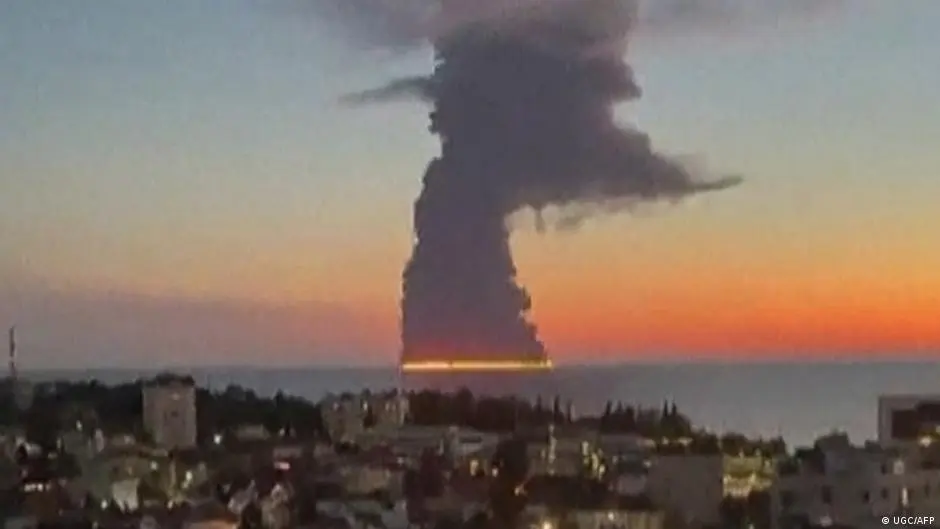
The perils facing Indian sailors are not confined to Ukrainian export corridors or vessels loaded with agricultural products. Farther east, off the Russian Black Sea coastline near the resort city of Sochi, the Liberian-flagged oil tanker Aframax Rio was recently targeted and attacked by unmanned maritime vessels, according to Russian official statements. The tanker had a contingent of 23 Indian nationals serving on board. Russian emergency and maritime authorities reported that all 23 Indian crew members were successfully rescued, averting what could have been a catastrophic loss of life.
The succession of near-misses and fatal encounters has spurred New Delhi to intensify its bilateral overtures, leveraging its longstanding relationship with Moscow and its evolving dialogue with Kyiv to carve out a viable arrangement for maritime neutrality.
Can Diplomacy Deliver Safety?
The primary challenge facing Indian negotiators is translating diplomatic channels into enforceable security on the open water, where operational military objectives frequently collide with civilian commerce.
Anil Wadhwa, a former senior Indian diplomat, pointed out that India’s conceptual framework to end strikes on commercial maritime traffic is comprehensive in scope. According to Wadhwa, New Delhi’s proposal spans protections for broader energy infrastructure, safe passage protocols for both critical grain and fuel exports, and a definitive halt to all armed strikes against commercial merchant hulls navigating the international waterway.
However, Wadhwa emphasized the immense difficulty of isolating maritime transit from the overarching land and air campaign raging between the two nations.
"Securing an ironclad guarantee depends entirely on a broader cessation of hostilities between Russia and Ukraine in the maritime theater," Wadhwa told DW, highlighting the reality that localized shipping promises remain deeply fragile so long as wider naval warfare continues.
New Delhi occupies a distinctive position in international diplomacy due to its careful diplomatic balancing act. India maintains deep-rooted, historic defense and economic ties with Russia, while concurrently expanding its diplomatic dialogue and direct engagement with Ukraine. This dual positioning provides Indian diplomats with direct access to top leadership in both capitals—an asset shared by very few other nations.
Yet, foreign policy analysts caution that access does not automatically confer compliance. While both Moscow and Kyiv appear willing to hear Indian proposals, neither combatant is guaranteed to honor a shipping non-aggression pact if doing so interferes with tactical military objectives or economic warfare strategies.
Kyiv has signaled significant interest in New Delhi’s diplomatic initiatives. Ukrainian Foreign Minister Andrii Sybiha recently characterized India’s proposal regarding a potential ceasefire framework with Russia as the "broadest" of the four separate international peace and mediation proposals that Ukraine has reviewed to date.
Conversely, the response from Moscow remains more measured. While Russian leadership has repeatedly welcomed New Delhi’s overarching efforts to facilitate peace and dialogue, the Kremlin has not formally or publicly endorsed a legally binding safe-passage mechanism along the lines proposed by Indian negotiators.
Despite these hurdles, academic and foreign policy experts argue that India holds unique assets that could alter calculations in Moscow. Rajan Kumar, an associate professor at the Center for Russian and Central Asian Studies at Jawaharlal Nehru University, noted that New Delhi’s significant economic engagement with Russia gives it genuine diplomatic traction.
"India could play a constructive role in facilitating dialogue between Russia and Ukraine, particularly on the issue of ensuring the safety of commercial shipping in the Black Sea," Kumar told DW.
Working with Other Powers to Reach a Deal
Beyond direct bilateral interactions, foreign policy analysts suggest that India’s push for maritime security would gain greater momentum if coordinated with a broader coalition of non-aligned international players.
Kumar suggested that New Delhi should seek closer coordination with key counterparts across the Global South, pointing directly to powers such as China, Brazil, and South Africa, which collectively maintain distinct ties with both combatants and have repeatedly voiced concerns regarding global supply chain interruptions.
"A coordinated approach with these countries could enhance their collective diplomatic leverage and strengthen their capacity to persuade both parties to adopt mutually acceptable arrangements for maritime security," Kumar said.
The timing of India’s diplomatic initiative intersects with fluctuating diplomatic maneuvers from Washington. Over the weekend, United States President Donald Trump announced what was described as an "energy ceasefire" between Russia and Ukraine. However, the precise operational scope, legal parameters, and compliance mechanisms of the purported truce remain largely undefined.
Harsh Pant, vice president of studies and foreign policy at the New Delhi-based think tank Observer Research Foundation, observed that while Trump’s high-profile intervention could potentially open space for negotiation, it risks yielding an overly narrow framework that fails to encompass India’s specific maritime worries.
"The energy ceasefire could be an initial confidence-building measure, whereas a Black Sea shipping arrangement requires additional commitments on attacks against merchant vessels, ports, maritime routes and the security of commercial traffic," Pant told DW.
Pant argued that rather than seeking sole ownership of the peace process, Indian diplomats should adopt a pragmatic posture toward Western efforts.
"India need not compete with Washington for the public credit of mediation. It could instead press for the inclusion of broader maritime provisions in any US agreement," Pant explained.
Will India Face a Higher Import Bill?
Beyond the pressing issue of seafarer safety, India’s intervention in the Black Sea crisis is anchored in domestic economic and supply chain considerations.
Wadhwa observed that even an initial, limited energy truce could deliver immediate relief to Indian sailors if it effectively guaranteed non-aggression toward energy transport corridors.
"Although Ukraine alleges that the Russians have already breached this so-called truce, there will be pressure on both sides to allow energy cargoes safe passage. India is bound to gain as far as its crews are concerned in such a scenario," Wadhwa noted.
At the same time, any persistent disruption across the Black Sea basin risks cascading through India’s macroeconomy in the form of delayed trade flows, elevated shipping insurance, and ballooning import costs. The Black Sea functions as a primary logistics artery for key agricultural commodities, including vegetable oils, as well as critical flows of energy products moving to global distribution hubs.
Lekha Chakraborty, a professor at the National Institute of Public Finance and Policy, warned that protracted military friction in the maritime basin would translate directly into financial headwinds for Indian consumers and the state exchequer.
"A prolonged Black Sea disruption would elevate India’s import bill mainly via higher freight on Russian crude and constrained soft oil supplies, with the strongest near-term transmission to domestic edible oil prices and food inflation," Chakraborty said.
With commercial merchant crews facing immediate operational danger and domestic inflation exposed to global shipping shocks, New Delhi is maintaining its push to convince both Moscow and Kyiv that the preservation of commercial shipping corridors remains a necessary priority.