
The absence of dependable internet access remains one of the most persistent developmental hurdles across the globe, cutting off isolated communities from commerce, education, and modern public services. When American technology entrepreneur Elon Musk originally conceived Starlink under his aerospace company SpaceX, the project was presented as an ambitious, technologically disruptive solution to that exact challenge. By deploying a vast constellation of satellites capable of beaming connectivity directly to the Earth’s surface, Starlink promised to bridge the global digital divide, delivering high-speed internet into remote, mountainous, and rural areas where digging fiber-optic trenches or erecting conventional cellular towers was either physically impossible or financially prohibitive.
In the years since its initial orbital launches, however, Starlink’s real-world footprint has expanded far beyond rural schools, remote homesteads, and maritime research vessels. The satellite network has evolved into an indispensable piece of strategic infrastructure operating in the heart of modern conflicts, political uprisings, and humanitarian catastrophes. Whenever terrestrial telecommunications are severed by artillery strikes, natural disasters, or authoritarian regimes imposing nationwide digital blackouts, Starlink often remains the sole operational link to the outside world.
Yet this rapid transformation from a commercial internet service provider into a vital instrument of war and civil resistance has exposed serious vulnerabilities. Across global conflict zones—most visibly along the frontlines of Eastern Europe—military forces and civilian agencies find themselves critically dependent on a private commercial network owned by a single, unpredictable billionaire. As reports of operational disruptions, black-market distribution networks, and geopolitical disputes continue to mount, the world is confronting the profound implications of having global connectivity concentrated in private hands.
How does Starlink work?
Traditional satellite telecommunications have relied for decades on large, heavy satellites placed in geostationary orbit roughly 36,000 kilometers (approximately 22,000 miles) above the equator. While these spacecraft cover broad geographic swaths from a fixed point in the sky, their tremendous distance from Earth introduces significant latency. Signals must travel tens of thousands of kilometers into space and back, creating unavoidable delays that make real-time applications—such as video calls, interactive software, and precise drone guidance—sluggish and unreliable.
Starlink departs fundamentally from this legacy architecture by operating an expansive low-Earth-orbit (LEO) megaconstellation consisting of approximately 10,000 small satellites. Orbiting at an altitude of only about 550 kilometers, these satellites fly dozens of times closer to the planet’s surface than geostationary systems. This close proximity slashes data transmission latency down to speeds comparable to terrestrial broadband, allowing users on the ground to maintain fast, responsive internet connections.
Furthermore, Starlink’s satellites communicate with one another using inter-satellite optical space lasers. This mesh network architecture enables data packets to travel directly between satellites in orbit before beaming down to ground destinations, significantly reducing the necessity of having a continuous, direct visual line of sight to a nearby local ground gateway station.
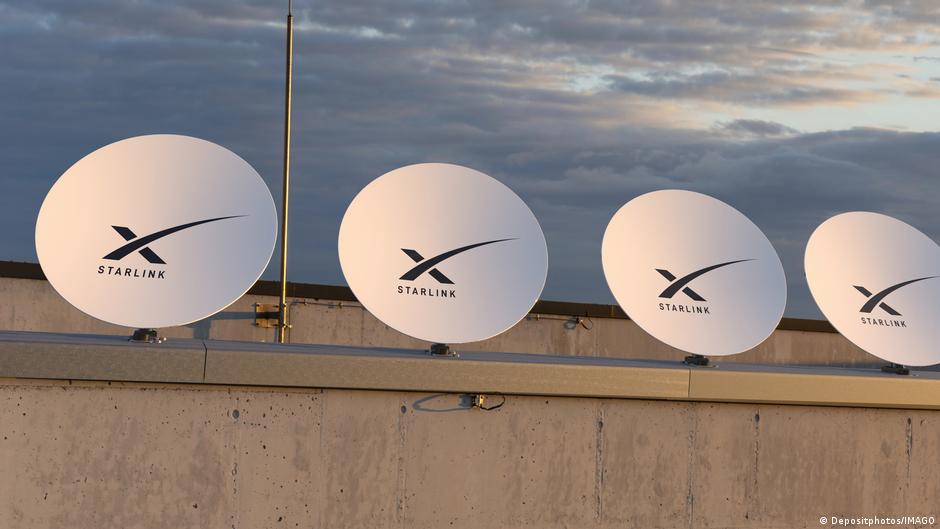
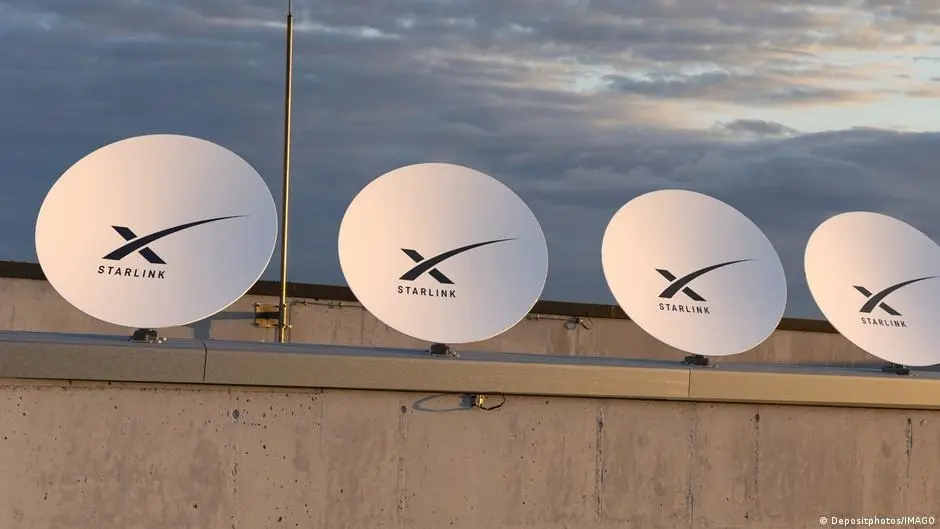
For end users on the ground, connecting to this orbital mesh requires minimal hardware. The user setup consists of a compact terminal equipped with an electronically steered phased-array antenna, commonly mounted on a rooftop, vehicle, or open ground. The terminal’s motorized base and internal software automatically locate, track, and switch between Starlink satellites as they streak across the sky at orbital speeds. The terminal converts the incoming space signals and routes them to a local Wi-Fi router, instantaneously establishing broadband coverage for nearby computers, smartphones, and specialized military or medical hardware.
Where has Starlink already been deployed?
The unique resilience and mobility of Starlink have turned it into an essential tool in volatile regions around the world, fundamentally shaping conflicts, civil uprisings, and emergency responses across multiple continents.
Ukraine
Nowhere has the geopolitical weight of Starlink been more apparent than in Ukraine. Following Russia’s full-scale invasion in February 2022, missile strikes and cyber warfare devastated Ukraine’s domestic communication infrastructure. In response, Starlink was swiftly deployed across the country, transforming almost overnight into a foundational pillar of Ukraine’s national defense and civilian survival.
On the frontlines, the Ukrainian armed forces rely heavily on Starlink terminals to coordinate troop movements, transmit battlefield intelligence, pilot reconnaissance and combat drones, and control experimental unmanned ground vehicles. Beyond direct combat operations, Starlink serves as a critical lifeline for Ukrainian civil society. Hospitals in bombed-out cities depend on the terminals to maintain telemedical consults and critical hospital records, while emergency rescue services, municipal energy providers repairing sabotaged power grids, and the state-run railway network utilize the satellites to keep transportation and essential utilities functioning under daily bombardment.
However, Ukraine’s absolute reliance on the system has also highlighted the hazards of vendor lock-in during active combat. In mid-October, frontline Ukrainian military units experienced widespread, unexpected disruptions to data transmission services. The outages severely degraded the command and control of combat drones, interceptor craft, and airborne reconnaissance assets at crucial tactical moments. Addressing the incident, Elon Musk stated that operational policies, performance speeds, and geographic restrictions governing Starlink are dictated by the United States military and ultimately the U.S. presidency. Despite these statements, the exact administrative source and specific reasoning behind the sudden restrictions remain mired in ambiguity.
Iran
Starlink has also emerged as a powerful counterweight to state censorship in the Middle East. In early January 2026, widespread demonstrations and anti-government unrest erupted across Iran, presenting one of the most serious challenges to the regime in Tehran in years. In an effort to crush the movement and prevent the dissemination of footage documenting state security forces’ crackdowns, Iranian authorities implemented near-total nationwide internet blackouts.

To circumvent the state’s digital iron curtain, civil society networks, activists, and international sympathizers smuggled thousands of Starlink receivers into Iran across porous borders. The illicit terminals quickly fed a booming domestic black market. Operating from clandestine rooftops and hidden courtyards, protest organizers used the encrypted satellite uplinks to bypass state filtering, coordinate street demonstrations, and transmit documentation of the unrest to the international community.
The Iranian regime has met this technology with severe hostility. Mohammad Amin Aghamiri, the secretary of Iran’s Supreme Council of Cyberspace, openly characterized Starlink as a hostile "tool of war," asserting that the state possesses electronic countermeasures capable of disrupting satellite feeds. The service is strictly prohibited under domestic law, with users facing baseline prison sentences ranging between six months and two years. Individuals caught operating the terminals under supplementary charges of espionage or undermining national security risk the death penalty.
Sudan
In Sudan, where a devastating civil war has pit the internationally recognized government against the Rapid Support Forces (RSF), Starlink has become a decisive battlefield technology. Terrestrial communication grids have suffered catastrophic destruction during the fighting, pushing both combatants and civilians toward satellite solutions.
In this theater, Starlink is utilized predominantly by the RSF paramilitary organization. Hundreds of terminals have been smuggled into Sudanese territory via supply routes crossing the United Arab Emirates, establishing a lucrative black-market trade across regional hubs. The RSF has leveraged these satellite terminals to establish persistent tactical communications, synchronize decentralized militia movements, and direct localized strikes. In response, the regular Sudanese Armed Forces have sought to cut off this capability by attempting to interdict hardware smuggling rings and criminalize terminal ownership in territories under their control.
Venezuela
In Latin America, Starlink has historically served as a critical workaround for citizens seeking independent information amidst government-enforced media censorship and crumbling domestic telecommunications infrastructure. For years, ordinary Venezuelans had to rely entirely on unauthorized hardware kits imported by regional gray-market vendors at inflated prices.
The dynamic shifted dramatically in early January 2026, following a direct U.S. intervention that culminated in the capture of long-standing head of state Nicolás Maduro. In the immediate aftermath of the regime’s collapse, Musk announced that SpaceX would provide the population of Venezuela with a month of completely free broadband internet access via Starlink, a move aimed at stabilizing civil communications and assisting humanitarian relief amid the political vacuum.

Gaza
Amid the widespread destruction across the Gaza Strip, Starlink has been deployed since July 2024 to support targeted humanitarian and medical interventions. With standard communications infrastructure largely leveled by continuous fighting, international aid organizations and emergency field hospitals operating in the enclave have utilized the satellite receivers to sustain emergency logistics and coordinate real-time telemedical care for wounded civilians. However, general civilian access to the network remains tightly constrained, owing to persistent operational and security restrictions imposed by Israeli authorities over fears that the technology could be co-opted.
Why has Starlink been criticized?
The widespread adoption of Starlink as an indispensable emergency communications tool has sparked intense geopolitical, ethical, and ecological controversies.
From a geopolitical standpoint, Starlink’s dominance has created an unprecedented situation where crucial military and civilian communications are tethered to the individual decisions of Elon Musk and the management of SpaceX. Because Starlink is frequently the sole operational network in war zones, Musk wields extraordinary personal leverage over international events.
This leverage has previously had direct operational consequences on the battlefield. Musk famously refused Ukrainian military requests to activate Starlink connectivity in Russian-occupied Crimea, an intervention that preempted a planned Ukrainian drone strike against Russian naval assets. Political leaders have also capitalized on this reliance. U.S. President Donald Trump has issued overt threats to sever Starlink satellite coverage over Ukraine as a strategic bargaining chip to force the government in Kyiv into accepting negotiated peace concessions. These dynamics have fueled growing alarm among military strategists, who point out the inherent risks of outsourcing sovereign defense communications to a private, profit-driven enterprise.
At the same time, the astronomical scale of Starlink’s megaconstellation has generated mounting environmental and scientific concerns:
- Atmospheric Degradation: Starlink satellites are engineered for a relatively brief operational lifespan of less than five years. As their thrusters fail or operational lifecycles end, one or two satellites reenter the Earth’s atmosphere on an average daily basis, incinerating upon descent. Scientists caution that this steady vaporization of satellite hulls injects significant quantities of aluminum oxide into the stratosphere, a byproduct that has the potential to deplete the protective ozone layer and contribute to broader climatic disruptions.
- Light Pollution and Astronomical Disruption: Orbiting thousands of satellites with reflective solar arrays has visibly altered the night sky. The reflective surfaces bounce sunlight down to Earth during twilight and dawn hours, creating bright streaks across wide-field telescope images and hindering professional astronomical observation. Furthermore, this artificial brightening of the nocturnal environment raises ecological concerns regarding disruptions to wildlife navigation, migratory birds, and nocturnal animal behaviors.
Any Starlink alternatives?
Faced with Starlink’s near-monopoly and the uncomfortable strategic dependence it creates, governments and competing corporate conglomerates are pouring billions into establishing rival low-Earth-orbit constellations.

The European Union has prioritized digital sovereignty as a critical strategic objective, seeking to insulate European institutions and defense partners from foreign satellite dependence. Europe’s primary commercial competitor to SpaceX is currently Eutelsat, which operates the OneWeb constellation. Operating a fleet of over 600 low-orbit satellites, OneWeb does not match Starlink’s direct-to-consumer footprint, focusing instead on specialized enterprise clients, governments, and maritime industries.
To bridge this operational gap, Eutelsat has joined a broader European initiative to develop IRIS² (Infrastructure for Resilience, Interconnectivity and Security by Satellite). Backed by the European Union, IRIS² is envisioned as a secure, sovereign satellite communications network dedicated to governmental, military, and civilian emergency use cases across member states. The project aims to permanently eliminate Europe’s reliance on Starlink, though it is not scheduled to achieve full operational capability until approximately 2032.
In the United States, commercial competition is emerging from another private aerospace heavyweight. Amazon founder Jeff Bezos has committed massive capital toward Amazon Leo, the commercial telecommunications constellation formerly known as Project Kuiper. Designed to rival Starlink’s consumer and enterprise reach, Amazon Leo envisions an initial network of over 3,200 low-Earth-orbit satellites. Amazon is preparing to begin rolling out consumer services across the United States, Canada, the United Kingdom, France, and Germany.
Meanwhile, space is becoming significantly more contested as China advances its own sovereign satellite networks designed to challenge Western hegemony in low Earth orbit. Beijing has prioritized two separate mega-constellations:
- Guowang: A state-managed program slated to encompass up to 13,000 satellites, Guowang is explicitly designed to serve national strategic, governmental, and military operational priorities.
- Qianfan: A complementary commercial venture projected to deploy roughly 12,000 satellites, Qianfan is tailored toward consumer and commercial markets, with a specific diplomatic and commercial push into newly industrialized and developing economies.
With both Chinese initiatives scheduling initial mass orbital launch campaigns, the race to control the orbital high ground and dominate next-generation telecommunications is rapidly accelerating. As satellite numbers swell from thousands to tens of thousands, the battle between sovereign states and billionaire-led corporations is poised to reshape not only digital connectivity, but also the broader geopolitics of global security.