
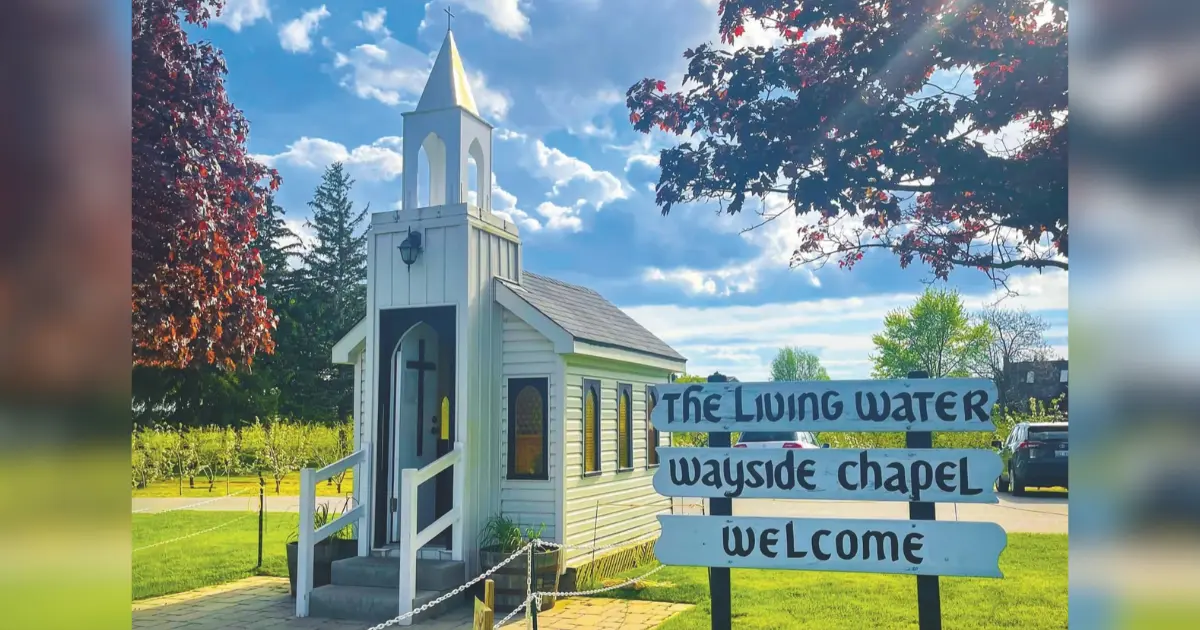
For some travelers making their way along the winding, scenic stretches of Ontario’s Niagara River Parkway, the quaint white structure is little more than a roadside curiosity. It presents a unique, unexpected opportunity to step inside what is widely recognized as the smallest church in Canada, offering a quick photo opportunity and a momentary break from the open road.
For countless others, however, the tiny sanctuary serves as a profound place of reverence, quiet reflection, and spiritual grounding. It is a space where visitors pause from their busy itineraries to offer a word of thanks, a silent prayer, or simply to take a lingering moment to appreciate the natural beauty of Creation that surrounds them on all sides.
Each year, an estimated 10,000 people make a deliberate pilgrimage to the Living Water Wayside Chapel in Niagara-on-the-Lake. Situated along one of Ontario’s most historic and heavily traveled scenic routes, the chapel keeps its doors welcomingly open to the public between the months of April and December, shutting its tiny latch only when the harsh winter weather of the Niagara Peninsula makes regular visitation impractical.
Measuring a mere 72 square feet, the miniature church is exceptionally compact, accommodating barely a half-dozen people at any given time. Its interior is intimate, stripped of elaborate ornamentation, focusing instead on a profound sense of solitude and sacred quiet. Surrounded by picturesque vineyards, lush farm fields, and the gently flowing "living" waters of the nearby Niagara River—from which the chapel draws its evocative name—the building has stood as a silent witness to the region’s changing seasons for decades.
The chapel first opened its doors to the public in 1965, a project originally conceived and constructed by three local Niagara-area Christian Reformed churches. From its inception, the founders envisioned a space that belonged to no single congregation in a strict administrative sense, but rather to the community at large and to any weary traveler or seeker in need of a quiet sanctuary.
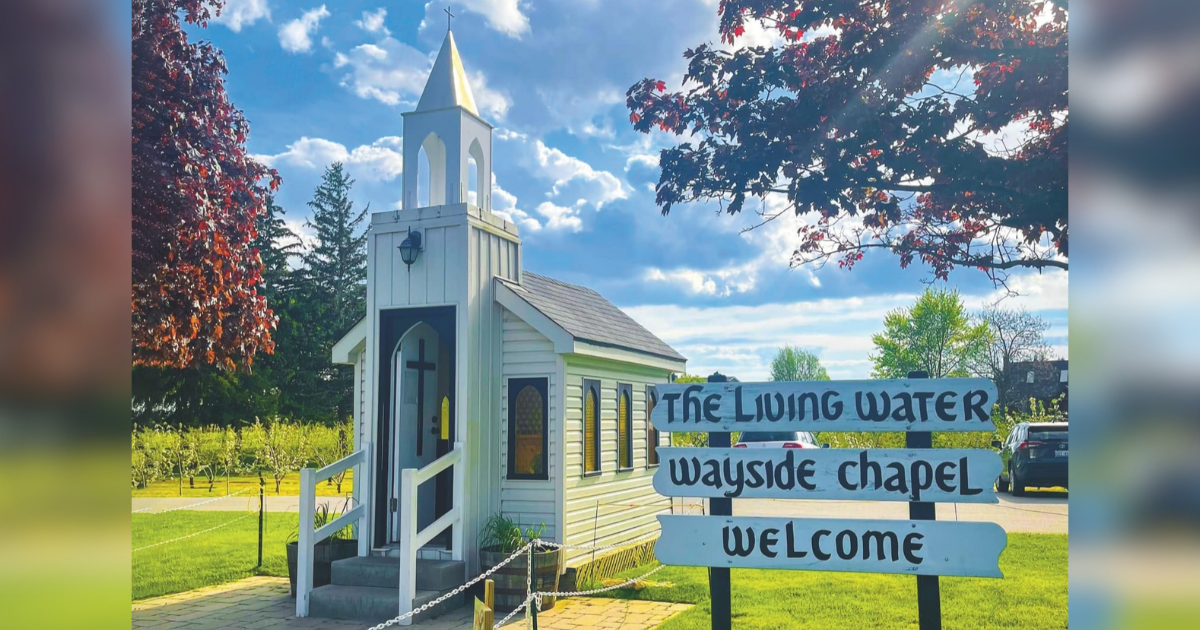
Over the course of its nearly six-decade history, the miniature house of worship has woven itself deeply into the local cultural and spiritual fabric of the Niagara region. It has served as the picturesque home for traditional Easter Sunday sunrise services for more than 50 years, drawing early-morning worshippers to witness the dawn breaking over the surrounding orchards and vineyards. More recently, the chapel’s tradition expanded to include a festive Christmas carol singalong starting in 2022, proving that the tiny landmark’s utility and charm extend well beyond the traditional tourism season.
Maintaining such a historic and diminutive structure requires dedicated community support. Rick Meloen, a community volunteer who has devoted significant time and energy to helping maintain the chapel and leading occasional services there, points out that the miniature church has experienced a nomadic history over the decades. Due to shifting land use, road realignments, and property developments, the chapel has been physically moved a couple of times since it was first erected in the mid-1960s.
However, for nearly 20 years now, the chapel has found a stable and enduring home back near its original site. It currently sits on private land generously made available by the Walkers, a prominent local farming family who operate a popular fruit market nearby. This ongoing partnership between community volunteers and the local agricultural family ensures that the chapel remains accessible to the public, preserved as a living monument rather than a neglected historical relic.
"The chapel passively, quietly, surprisingly has touched the lives of thousands of people," Meloen says, reflecting on the profound, understated impact the landmark has had on generations of visitors and locals alike. "For many, it is much more than a landmark. It is a sacred place of personal memories, devotional life and even journeys into faith."
While the physical presence of the chapel is undeniably subtle—easily missed by a speeding motorist if they are not paying close attention to the pastoral scenery of the Niagara River Parkway—its emotional and spiritual impact can be immense. The steady stream of visitors who pull their vehicles off the asphalt daily, stepping out into the quiet air to pause, reflect, and pay their respects, stands as a daily testament to the enduring human desire for silence, contemplation, and sacred space in a fast-paced world.
As the seasons turn and the doors of the Living Water Wayside Chapel continue to welcome thousands of pilgrims year after year, this remarkable 72-square-foot sanctuary remains a quiet anchor along the Niagara River, proving that a space does not need to be grand in scale to leave a lasting mark on the human heart.