
Following a consequential election cycle that delivered both the House of Representatives and the Senate to the Democrats, American voters have issued a broad rebuke of Donald Trump’s policies and governance. While the immediate political dust is beginning to settle in Washington, faith leaders across the country are grappling with what these results mean not just for policy, but for the moral and spiritual fabric of a deeply fractured nation.
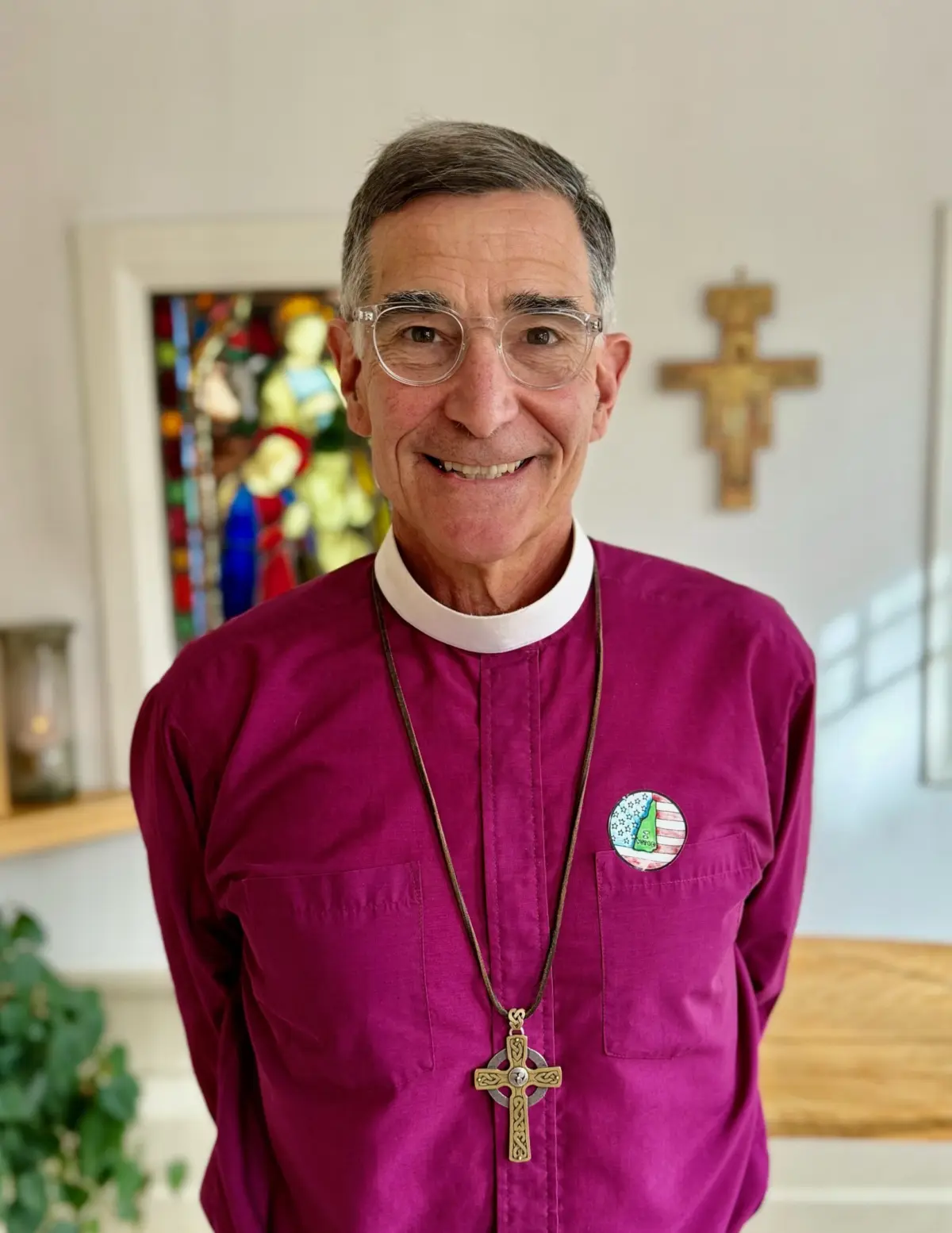
Among them is the Rt. Rev. A. Robert Hirschfeld, bishop of the Episcopal Church of New Hampshire. In the wake of the midterm elections, Hirschfeld is turning his attention away from the immediate scoreboard of partisan victory and defeat and toward a deeper question of how citizens—and Christians in particular—ought to conduct themselves. He argues that faith communities are called to model love and unity without demanding uniformity, even when navigating intense political polarization, profound moral atrocities, and widespread human suffering.
The Theological Roots of the "Middle Way"
Notably, election day coincided with the feast day of Richard Hooker, a 16th-century priest and theologian who helped establish the foundational tenets of Anglicanism. Commemorated as a saint within the Episcopal Church, Hooker lived and wrote during an era of intense religious conflict in the wake of the Protestant Reformation.
Faced with deep-seated hostility, Hooker articulated the vital need for the church to chart a via media, or a "middle way," avoiding the extremes of an autocratic Roman Catholic Church on one side and unbridled individual interpretations of the Bible on the other. Hooker envisioned an authentic church that would embody truth precisely by charting a path between extremes, rejecting the notion that this approach was merely an uneasy compromise meant to forge a flimsy peace. Instead, he viewed it as a pathway toward comprehension—a genuine embrace of truth found across conflicting positions.
Drawing on this historical precedent, Hirschfeld warns that contemporary religious communities risk losing their spiritual identity if they become mere reflections of partisan machinery.
"Unless my church aspires to be either the Democratic or Republican Party-at-prayer, we have to get over the fantasy that either a uniformly conservative or liberal church membership will lead us to the heavenly kingdom," Hirschfeld noted.
He points to the denomination’s Book of Common Prayer, which reminds believers that "Jesus stretched out his arms of love on the hard wood of the Cross so that all might come within the reach of his saving embrace." Fulfilling that calling, the bishop emphasizes, is neither easy nor comfortable. It demands that citizens engage in difficult conversations with neighbors who view political outcomes through an existential lens—whether seeing a partisan victory as a triumph over an enemy, or carrying the lingering grievances, fears, and anger that drove support for the MAGA movement over the past decade.
Navigating the Human Cost of Polarization
Hirschfeld has expressed dismay at seeing some clergy members express outright contempt for members of their own congregations whose political alignments differ from their own. Such behavior, he argues, runs directly counter to episcopal vows, which commit leaders to keeping doors and hearts open to all people—strong or weak, rich or poor, regardless of where they fall on the ideological spectrum, including those labeled as racist or anti-racist. Jesus, the bishop notes, walked alongside a diverse and often conflicting array of people.
Adopting this posture is rarely comfortable. Hirschfeld admits that stepping into a neighbor’s garage to ask for prayer requires a deep, sometimes nerve-wracking exercise of love and trust in God. Yet, the personal result is often a transformation of the "other" from an abstract political opponent into an individual with a name and a story.
He highlights examples like Texas state figures and lawmakers, such as Democratic Senator-elect James Talarico expressing love for his Republican opponent Ken Paxton, as a powerful witness to the country. When the national political fever eventually breaks—perhaps sooner rather than later—Americans of all political stripes will find themselves needing to care for one another once again.
A Measured Response to Election Outcomes
Hirschfeld expresses explicit gratitude for the clarity of the electorate’s message on election day, pointing to a rejection of the war in Iran, the xenophobic rhetoric and contempt aimed at immigrants and people of color, and what he views as a deliberate callousness toward the poor and the working class. He has voiced deep concern over the ways scripture has sometimes been distorted in public discourse, effectively omitting foundational teachings like the Sermon on the Mount or the accounts of the Crucifixion, while simultaneously welcoming the election of mainline Christian pastors into Congress as a sign of hope.
At the same time, the bishop remains cautious, stating he is far from celebrating in the streets. His primary anxiety is that the decisive rebuke of the previous administration’s failed policies and a compliant Congress might simply serve as fuel for more retribution and contempt, merely executed from the opposite side of the aisle.
Looking ahead to the new legislative term, Hirschfeld offered a clear prayer for political leaders: that the Democrats avoid getting bogged down in cycles of impeachment and retaliation, leaving accountability to the ballot box, and instead focus on crafting well-reasoned, soundly deliberated economic, foreign, and immigration policies.
Paraphrasing Psalm 123, the bishop emphasized a collective exhaustion with hostility, declaring that the nation has had "more than enough of the contempt." While expressing thankfulness for the peacefulness and clarity of the election results, he offered a fervent prayer that both the newly elected officials and the church at large will actively practice the virtues that have too often vanished from modern civil discourse: mercy, justice, prudence, patience, forbearance, compassion, and love.