
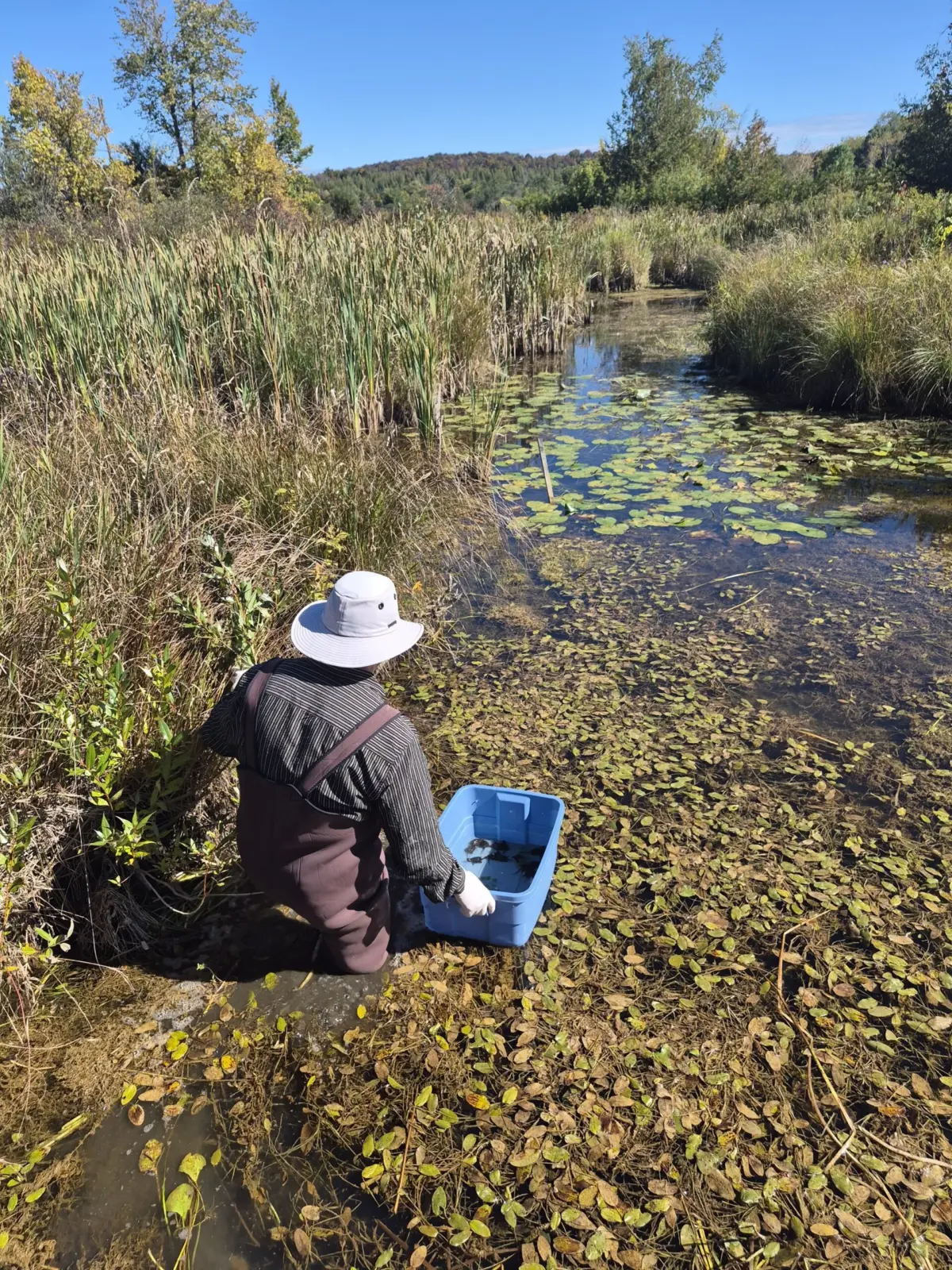
Across Ontario, thousands of passionate volunteers are coming together to build a vital emergency transportation network with a single, urgent goal: saving turtles. Their ultimate destination is Peterborough’s Ontario Turtle Conservation Centre (OTCC), which houses the province’s only wild turtle hospital accredited by the College of Veterinarians of Ontario. At this specialized facility, dedicated veterinary teams provide critical care, medical treatment, and comprehensive rehabilitation for turtles injured in vehicle strikes, left stranded, or harmed in encounters with other wildlife, among a host of other life-threatening situations. When adult turtles cannot be saved, specialized volunteers and staff often step in to carefully transport eggs recovered from deceased female turtles. These eggs can sometimes be successfully incubated, hatched, and eventually released back into their natural habitats. The OTCC affectionately and aptly refers to this massive, grassroots volunteer effort as the “Turtle Taxi.”
Because Ontario’s native turtle species are geographically dispersed across a massive province, transporting an injured turtle to the OTCC frequently demands a precarious, multi-thousand-kilometre journey by land or air. Ensuring these vulnerable animals successfully complete this trip requires a finely coordinated network of more than 1,500 volunteers who work collaboratively to secure the specialized help the reptiles desperately need.
The logistical hurdles are immense, particularly given the sheer geography of the province. Wayne Harvey, a pilot and devoted Turtle Taxi volunteer, has completed multiple flights to pick up injured turtles from remote corners of the province. Flying to distant locations like Dryden, Ontario, from his home base near London, Ontario, Harvey offers a dramatically faster route for many injured turtles that would otherwise face an arduous journey of more than 1,500 kilometres by highway. He routinely keeps an eye out for dispatch calls from the OTCC requesting urgent assistance with turtle transports. When a call comes in, he carefully plans his flight route and can complete up to four such rescue missions a year.
“If I see a few places that I know have small airports, I’ll offer to pick them up at, say, three or four airports,” Harvey explains. At each scheduled stop along his flight path, local volunteers meet him on the tarmac with turtles safely secured in individual carriers designed for the flight. These ground crews frequently include local turtle First Responders—many of whom are professional veterinarians and veterinary technicians—who can properly assess and stabilize the injured animals before they depart on the next leg of their journey.
Pilot Isaiah Frazao also generously donates his time and aircraft to the cause. This past summer marked his very first season transporting injured turtles across the province. He notes that the volunteer experience has provided him with a profound sense of purpose and personal fulfillment, as well as fostering a much deeper appreciation and connection with Canadian wildlife.
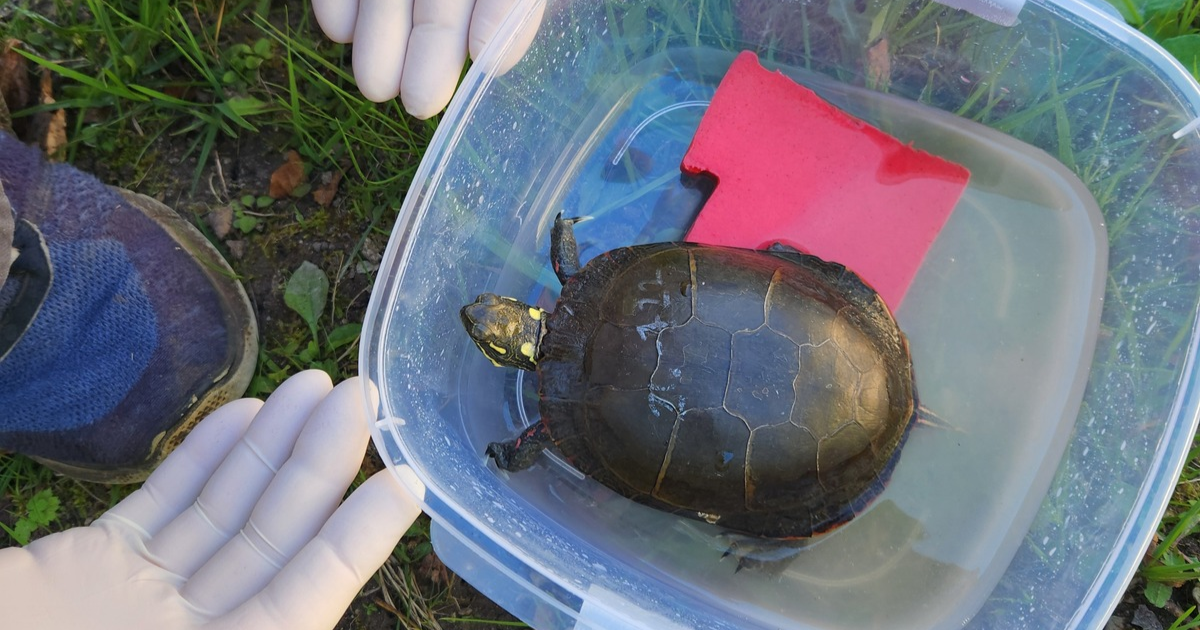
“Turtles are very quiet animals,” Frazao observes, reflecting on his time in the cockpit with his unusual passengers. “But once we bring them to Peterborough, and they see all the OTCC representatives, they come right out of their shells.”
This remarkable network of support and rescue could not come at a more critical juncture for Ontario’s reptiles. All eight of the province’s native freshwater turtle species are currently considered at risk by the Committee on the Status of Endangered Wildlife in Canada (COSEWIC), an independent panel of scientists and conservation experts that evaluates species status at the national level. Frequent vehicle strikes on busy roadways, ongoing habitat loss, and high rates of nest predation are among the most
severe threats facing the populations. These mounting environmental pressures are further compounded by the biological realities of turtles, which feature notoriously long maturation periods and low reproduction rates, making population recovery exceptionally slow.
For Turtle Taxi volunteer Kelly Holman, a simple personal interest in observing wild turtles during her outdoor excursions sparked her broader curiosity about the conservation network. “I would go for walks through these conservation areas and see a whole bunch of painted turtles basking, and it was the best part of my day,” she says. Now based in Arkona, Ontario, Holman coordinates regularly with other Turtle Taxi volunteers to facilitate the relay-style transfer of turtles along their journey toward the OTCC, frequently meeting other drivers at public, accessible locations such as commercial parking lots.
Volunteers also play an indispensable, hands-on role in the final stage of the rehabilitation process: releasing the turtles back into the wild after they have fully recovered. Conservation protocols dictate that it is vital to return individual turtles to the exact same geographic areas where they were originally found to ensure they can thrive in familiar ecosystems.
“We use coordinates given to us by the Centre, but then you also have to rely on your phone having service and the conditions,” Holman explains. When local wetlands have dried up due to seasonal droughts or environmental changes, she occasionally has to exercise creative problem-solving to find a suitable, safe release site while ensuring strict adherence to OTCC and governmental wildlife regulations.
For fellow Turtle Taxi volunteers Dean and Sharon Davidson, who are based near Owen Sound, Ontario, participating in the release of rehabilitated turtles back into the wild is considered one of the absolute highlights of their volunteer work. Understanding the specific ecological preferences of different species is part of the challenge. “Some like running water, some like quiet water, some like it weedy, some like it muddy,” Dean notes. Collaborating with the OTCC to locate suitable release sites also opens up valuable opportunities to engage private rural landowners, who frequently agree to allow turtles to be released into healthy waterways located on their private properties. This level of grassroots engagement helps foster a profound sense of community involvement and shared responsibility in local turtle conservation efforts.
The OTCC operates as an integral component of the broader Ontario Turtle Conservation Network (OTCN), which is dedicated to expanding the reach of public education, scientific research, and targeted conservation initiatives across the province.
Leora Berman serves as the founder of the Haliburton-based organization Turtle Guardians, which is also an active member of the OTCN. She works extensively to integrate specialized turtle educational programs and training protocols for young people and municipal or industrial workers who operate heavy machinery or vehicles near Ontario’s roadways. The Turtle Guardians’ Road Researchers Program actively advocates for safer designated turtle crossings and protected nesting areas, particularly during peak migration and nesting seasons when turtles are most vulnerable to vehicular traffic.
“Turtles cross between wetlands primarily, but other turtle crossings are very random… so you’ve got hundreds and thousands of kilometres of [potential] turtle crossings,” Berman explains. She adds that the installation of specialized infrastructure, such as wildlife culverts and exclusion fencing, could go a long way toward saving countless turtles from vehicle strikes by physically directing them safely away from dangerous roadways.
When reflecting on what ultimately motivates people to dedicate their time, resources, and energy to this demanding work, Berman and the various Turtle Taxi volunteers view turtle conservation as a deeply reciprocal way to live. They see it as an activity that allows ordinary individuals to embrace their place within the wider ecological community and build a lasting relationship with the natural world.
“It connects you to the Earth, and creation, and also the next generations,” Berman says. “Turtles get under your skin in ways that are unexpected. There is something incredibly healing or awakening about the sentience of animals when you can hang with one that doesn’t move very fast.”