
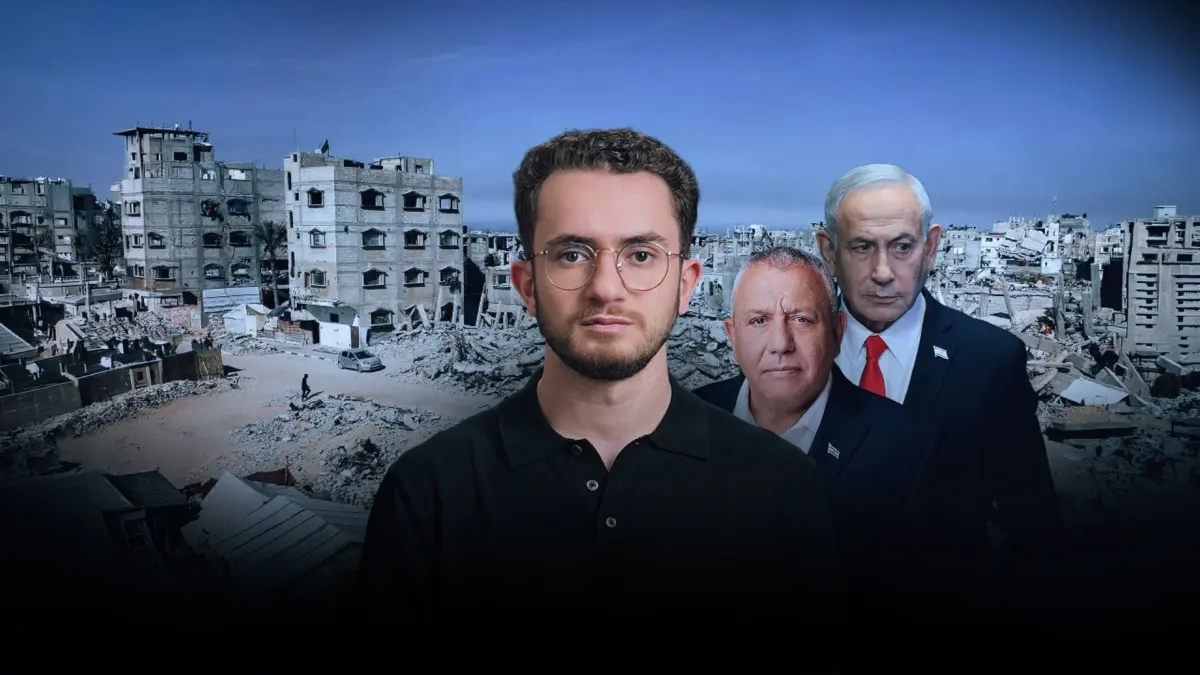
In Gaza, a solemn mass funeral was conducted for 70 Palestinians whose bodies were recently recovered from beneath the rubble of collapsed buildings, marking another heartbreaking day for a population burdened by overwhelming loss and destruction. The collective burial brought together grieving families, local residents, and emergency workers who gathered to pay their final respects to victims whose remains had been trapped under shattered concrete and twisted metal for prolonged periods. Meanwhile, across the border in Israel, intense political turmoil continues as Prime Minister Benjamin Netanyahu attempts to navigate fierce internal disputes over the formation and maintenance of his governing coalition, fighting to cling to power amidst mounting domestic political friction.
The mass funeral in Gaza highlights the extreme human cost of the ongoing conflict and the daunting operational challenges faced by emergency and civil defense teams on the ground. Search-and-rescue personnel, operating with severely limited resources and basic tools, worked for days to clear heavy debris in an effort to retrieve those trapped beneath ruined structures. For many families, the recovery of these 70 bodies provided a painful conclusion to days of agonizing uncertainty, allowing them to finally fulfill religious and cultural burial traditions, even as entire neighborhoods remain reduced to wasteland.
The process of retrieving victims from collapsed buildings in Gaza has been severely hindered by a catastrophic shortage of heavy equipment, specialized machinery, and fuel. Emergency workers and volunteers are frequently forced to dig through tons of fallen masonry using simple hand tools or their bare hands, prolonged by the constant risk of secondary structural collapses. The task of identifying the deceased is further complicated by the widespread destruction of civic infrastructure and the displacement of families, leaving rescue teams to perform their work under hazardous and emotionally exhausting conditions.
Islamic tradition emphasizes prompt burial following death, but the immense scale of structural damage in Gaza has repeatedly disrupted standard funeral customs. With mortuaries and hospital morgues overwhelmed beyond capacity, local authorities and communities have had to organize mass burials to ensure the deceased are treated with dignity while adhering to essential public health protocols. The gathering of hundreds of mourners for the mass funeral of 70 individuals served as a collective expression of grief for a society where individual memorial services have become nearly impossible due to the frequency and volume of casualties.
While communities in Gaza mourn their dead and struggle for survival, the political landscape in Israel is dominated by bitter disputes over executive power and governance. Prime Minister Benjamin Netanyahu remains locked in intricate negotiations to hold his ruling coalition together, facing intense pressure from both political allies and opposition factions. The rows over cabinet appointments, policy priorities, and parliamentary support reflect deep divisions within the Israeli political establishment, even as the country faces unprecedented security and diplomatic challenges.
Israel’s political system, which relies on multi-party coalitions to form a government, places significant leverage in the hands of smaller, specialized political factions. Netanyahu’s efforts to maintain a viable governing majority have required constant political maneuvering to balance the conflicting demands of far-right, religious, and political allies against broader domestic and international expectations. Disputes within the coalition have touchpoints across numerous policy areas, including military draft exemptions for religious groups, legal and judicial reforms, national budget allocations, and the overarching strategy regarding the conflict in Gaza.
Netanyahu, a dominant figure in Israeli politics who has served as prime minister longer than any other leader in the nation’s history, has historically demonstrated a high degree of resilience in navigating political crises. However, the current governance struggle is taking place under intense public scrutiny and amid sharp criticism from political rivals who argue that coalition preservation should not supersede broader national interests. Supporters of the prime minister maintain that stable leadership is vital during times of national emergency, while opponents contend that political calculations are stalling necessary decision-making and deepening societal divisions.
Reporting on these simultaneous developments, Al Jazeera’s Mohamad Saleh detailed the stark contrast between the physical reality in Gaza and the political friction in Jerusalem. While families in Gaza spend their days searching through ruins and holding mass burials for recovered bodies, Israeli political leaders are consumed by strategic maneuvering, parliamentary arithmetic, and cabinet bargaining. Saleh’s report captures the profound divide defining the region—one side overwhelmed by human suffering and infrastructure destruction, and the other entangled in high-stakes political battles over the future of its government.
The retrieval of the 70 bodies in Gaza represents only a portion of the total number of individuals believed to remain buried under shattered infrastructure across the territory. Local rescue officials estimate that thousands more remain missing under the ruins of homes, commercial sites, and public buildings. The lack of functional heavy-lifting machinery makes it nearly impossible to clear heavy slabs of reinforced concrete, leaving emergency crews unable to reach deeper layers of collapsed multi-story buildings where victims are believed to be located.
The strain on Gaza’s health sector continues to exacerbate the crisis. Hospitals across the enclave operate under extreme stress, struggling with severe shortages of essential medicines, medical equipment, clean water, and reliable power. Managing both the continuous influx of wounded patients and the deceased individuals retrieved from search sites has pushed medical infrastructure to the point of collapse. Mass burials have become a necessary logistical mechanism for municipal and medical officials striving to maintain basic sanitation standard while providing a structured, respectful environment for families to bid farewell to their loved ones.
In Israel, the ongoing political disputes highlight the fragile nature of Netanyahu’s governing alliance. Opposition leaders have repeatedly challenged the prime minister’s coalition management, accusing his administration of prioritizing political self-preservation over cohesive national policy. The friction within the cabinet has manifested in public arguments between ministers, threats of party withdrawals from the coalition, and persistent uncertainty over whether the current government can maintain its parliamentary majority without making significant concessions to hardline political partners.
These internal political dynamics in Israel carry significant implications for the broader region and international efforts to address the humanitarian crisis. The diverse ideological perspectives within Netanyahu’s coalition complicate diplomatic negotiations regarding humanitarian access, potential ceasefire agreements, post-conflict governance structures, and international relief initiatives. Factions within the government often hold opposing views on diplomatic compromises, creating internal roadblocks that influence the timing and scope of official policy decisions.
For the people of Gaza, the physical and emotional toll of the ongoing destruction continues to mount. The mass burial of 70 individuals offers a momentary pause for collective mourning, but the immediate daily realities of displacement, scarcity, and ongoing risk remain unchanged. Emergency personnel continue to monitor search sites, knowing that as long as heavy equipment remains unavailable, recovery operations will proceed at a agonizingly slow pace, leaving many families without closure for missing relatives.
Within the Israeli political arena, Netanyahu’s balancing act shows no signs of immediate resolution. The prime minister must continually recalibrate his approach to satisfy coalition partners whose withdrawal could trigger the collapse of the government and force new elections. This ongoing political struggle reflects the deep structural challenges inherent in Israel’s political system during periods of major crisis, where individual factional interests can exert decisive influence over executive action.
The convergence of the mass funeral in Gaza and the political rows in Israel underscores the dual reality that defines the ongoing crisis. As 70 more lives are laid to rest beneath Gaza’s soil, emphasizing the human devastation of the conflict, the political battles in Jerusalem illustrate how power dynamics and coalition arithmetic continue to shape the regional landscape. With search efforts persisting beneath the rubble and political leaders remaining locked in disputes over governance, both the humanitarian crisis in Gaza and the political instability in Israel remain deeply unresolved.