
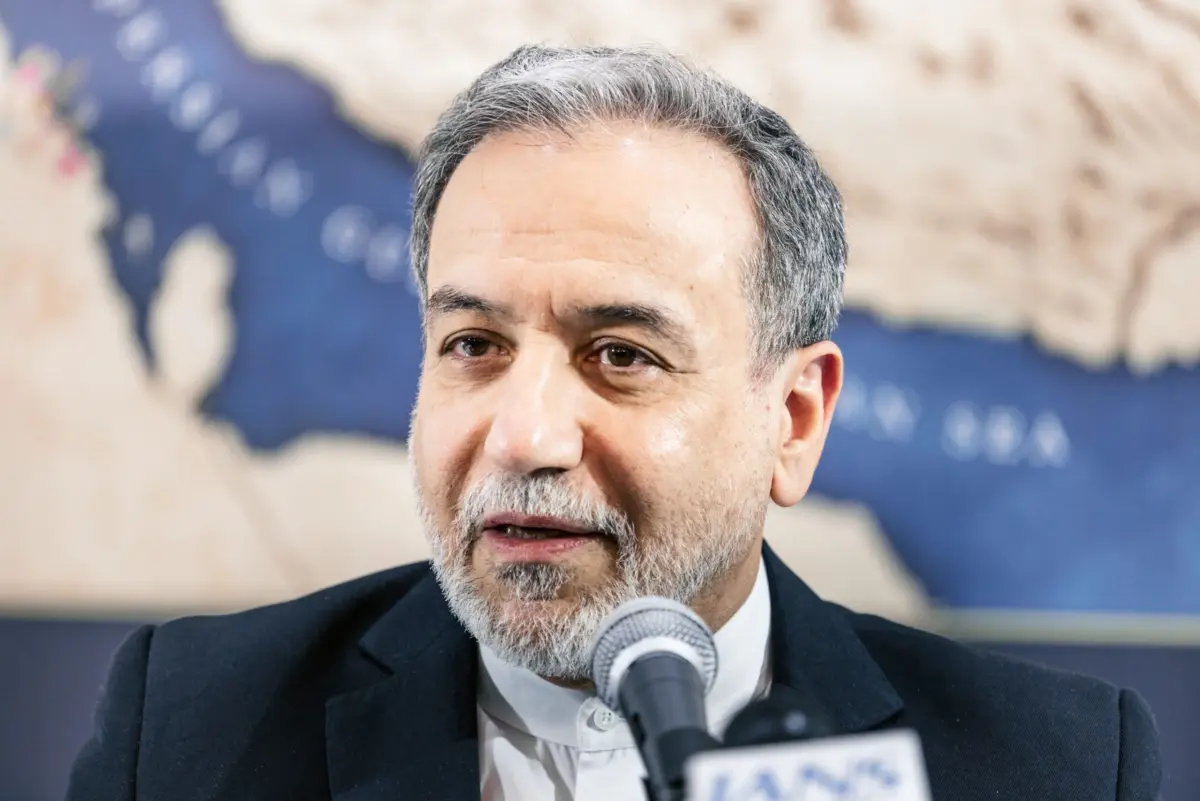
Tehran considers recent diplomatic overtures by the United States to open channels of dialogue as a "positive step," but sees no immediate necessity for direct bilateral meetings between Iranian and American officials, Iranian Foreign Minister Abbas Araghchi said in an exclusive interview with Al Jazeera.
While keeping diplomatic pathways open through regional intermediaries, Araghchi delivered a firm assessment of the geopolitical situation, stressing that Tehran remains prepared for all contingencies—including potential military conflict. He emphasized that Iran’s armed forces have upgraded their capabilities, addressed past vulnerabilities, and stand at peak readiness to defend the country against any potential aggression.
The Iranian foreign minister’s comments follow high-level evaluations within Tehran regarding a letter sent by U.S. Vice President JD Vance to Iranian official Rezaei. Araghchi stated that senior Iranian leadership carefully reviewed the correspondence to determine Washington’s intentions and to establish Tehran’s position regarding renewed negotiations and security in the Persian Gulf.
According to Araghchi, the primary milestone for paving the way toward broader diplomatic negotiations with Washington relies on establishing clear conditions for reopening the strategic Strait of Hormuz, a critical maritime choke point for international energy supplies.
The foreign minister highlighted the ongoing role of regional mediators, confirming that an Iranian delegation had traveled to Doha for further discussions. This visit followed a trip by senior Qatari officials to Tehran aimed at salvaging and reviving a U.S.-Iran ceasefire agreement. Araghchi confirmed that one of his key aides remains stationed in Qatar to manage ongoing consultations.
"The American side’s attempt to open the door to dialogue and understanding more broadly is a positive step," Araghchi told Al Jazeera, acknowledging the shift in tone from Washington.
However, he coupled his acknowledgement with a stern warning regarding American strategic intent. "If Washington’s goal in sending this letter is to stir up discord, it would be yet another mistake to add to its previous ones," he cautioned, signaling that Tehran remains watchful of any attempts to create internal divisions or regional instability.
‘No need to meet with the Americans’
Addressing widespread speculation regarding potential direct encounters between American and Iranian representatives, Araghchi firmly dismissed claims that face-to-face meetings are imminent. He characterized reports predicting immediate high-level discussions as inaccurate, asserting that direct contact remains premature until foundational issues are resolved.
"What is being circulated in this regard is merely media speculation," Araghchi stated, refuting rumors of scheduled bilateral meetings. "We see no need to meet with the Americans at this stage. Our conditions are clear, and mediators are continuing their consultations regarding them."
The foreign minister emphasized that whether Tehran ultimately decides to engage in direct or indirect talks with the United States depends entirely on Washington meeting Iran’s explicit conditions. Rather than rushing into direct engagements, Tehran is utilizing established diplomatic conduits to evaluate U.S. seriousness.
Third-party intermediaries, particularly from Qatar and Pakistan, continue to play a pivotal role in relaying proposals and maintaining communication between Tehran and Washington. Araghchi revealed that these mediators have submitted detailed proposals regarding the nuclear dossier, which are currently undergoing structured evaluation in Tehran.
"Mediators have presented proposals concerning the nuclear dossier, which we are currently reviewing as part of the second phase," Araghchi explained. He added that diplomatic channels remain active as regional partners work to narrow the gap between the two sides. "Qatari and Pakistani mediators are continuing consultations regarding our conditions."
Conditions for Hormuz
A central focus of the ongoing mediated talks centers on the status of the Strait of Hormuz. Araghchi outlined the specific requirements established by Tehran for fully restoring normal transit through the vital waterway, framing these measures as an essential prerequisite for any broader diplomatic breakthrough with Washington.
Through intensive exchanges with Qatari envoys, the proposed timeframe for implementing Iran’s framework regarding the strait has been significantly condensed. Araghchi noted that initial discussions involved a longer operational window, which has since been streamlined through mediated negotiation.
"The Qatari side proposed shortening the implementation period of the Iranian proposal to five days," Araghchi revealed. "We have reached a proposal at this stage that reduces the implementation period to two days."
This reduced two-day implementation window is intended to provide a rapid mechanism for restoring maritime traffic once political and economic terms are satisfied.
Tehran’s explicit conditions for reopening the Strait of Hormuz involve significant economic, military, and diplomatic demands directed at the United States and its regional posture:
- Sanctions Removal: Iran demands the complete lifting of economic sanctions that were imposed following the Islamabad memorandum.
- Military Reductions: Tehran calls for a verifiable reduction of U.S. military forces and assets deployed across the Middle East.
- Energy and Financial Relief: Iran insists on the formal restoration of oil export waivers to permit unimpeded petroleum sales, alongside the release of all frozen Iranian financial assets held abroad, explicitly including those deposited in Qatari banking institutions.
"Our conditions include lifting the sanctions imposed following the Islamabad memorandum and reducing US forces in the region," Araghchi stated. "We demand the restoration of oil waivers and the release of all our frozen funds, including those held in Qatar."
Furthermore, the Iranian proposal sets specific parameters for maritime navigation within the Strait of Hormuz itself. Araghchi explained that Iran requires formal recognition of designated shipping lanes through the strait that were developed and agreed upon during consultations with Oman. Concurrently, Iran demands the official closure of alternative maritime channels, asserting greater control over navigation through the choke point.
‘Prepared for all scenarios’
While outlining the terms under which diplomatic progress could occur, Foreign Minister Araghchi underscored that Iran is maintaining a strong defense posture. He emphasized that Tehran does not discount the threat of external military aggression and is preparing accordingly.
Araghchi explicitly stated that his country does not rule out the possibility of a military strike against Iranian territory. Consequently, the nation’s security architecture has taken comprehensive steps to bolster its defense measures.
"We are prepared for all scenarios," Araghchi stated, reiterating that Iran’s defense leadership has evaluated all potential contingencies.
To address potential security challenges, Iran’s armed forces have implemented tactical enhancements and updated their military hardware. Araghchi reported that military commanders have systematically addressed identified operational vulnerabilities while testing and deploying new generations of domestic weapons systems.
"We have upgraded our weaponry, addressed our vulnerabilities, and tested new arms," Araghchi stated. "Our forces are at the highest level of readiness."
The foreign minister’s statements articulate a dual strategy: remaining open to mediated diplomacy provided economic and security demands are met, while simultaneously reinforcing military readiness to deter any potential hostilites. By conditioning progress on sanctions relief, troop reductions, and maritime guarantees, Tehran has placed the onus on Washington to demonstrate whether its outreach will lead to substantive negotiations.