
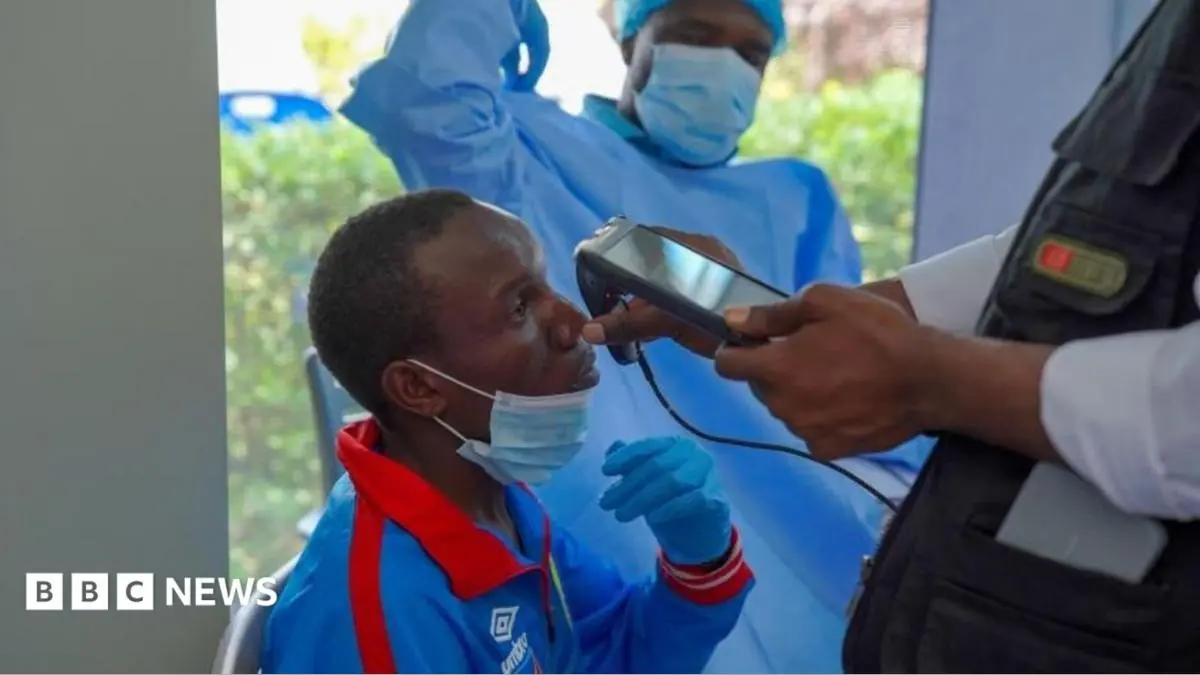
The Democratic Republic of Congo is facing one of the most severe public health emergencies in its history as the death toll from an ongoing Ebola epidemic has surpassed 5,000 people, according to official data released by the country’s health ministry. The virus, which has now spread across eight of the nation’s 26 provinces, has infected more than 10,300 people in a crisis that public health authorities describe as unprecedented in its rapid progression and high mortality. First detected in May, the epidemic quickly intensified over the summer months, becoming the country’s deadliest Ebola outbreak on record by August. With the current case fatality rate standing at an alarming 48.6 percent, international public health bodies and local responders are struggling to curb the transmission of the virus under increasingly dangerous operational conditions.
According to the latest epidemiological assessment from the health ministry, the epicentre of the epidemic remains concentrated in the northeastern province of Ituri. The area has long been destabilized by active armed conflict and violence, creating a highly volatile environment that severely complicates disease surveillance, contact tracing, and patient care. The ongoing instability in Ituri has severely hindered the ability of emergency medical teams to access affected communities, establish quarantine zones, and deliver vital medical supplies. Public health officials emphasize that the combination of active warfare and a high-consequence pathogen has created a uniquely dangerous setting, allowing the virus to propagate in remote and insecure areas where medical intervention is frequently disrupted.
Adding to the complexity of the medical response is the specific pathogen driving the current crisis. Laboratory testing has confirmed that the epidemic is caused by the Bundibugyo species of the Ebola virus. Unlike the more commonly encountered Zaire strain of the virus—for which approved vaccines and specialized therapeutic treatments were successfully deployed during prior outbreaks—there is currently no approved vaccine or specific antiviral treatment available for the Bundibugyo species. While diagnostic testing, supportive care, and clinical trials for experimental vaccines are currently underway, healthcare providers on the ground are limited to managing symptoms and attempting to break chains of transmission through infection control and isolation protocols.
The scale of the current catastrophe has eclipsed all previous recorded outbreaks within the Democratic Republic of Congo. United Nations health agencies noted that this outbreak represents the 17th time the nation has battled Ebola since the virus was first discovered in 1976. Prior to the current crisis, the country’s deadliest outbreak occurred between 2018 and 2020, resulting in 2,299 deaths over a two-year period. The present epidemic surpassed that historic death toll in August, just three months after the initial cases were reported, prompting the United Nations to warn that the virus is taking lives at a much faster rate than in any previous outbreak in the DRC.
On a global scale, the crisis now ranks as the second largest Ebola outbreak in recorded history. It is surpassed only by the massive West African epidemic that occurred between 2014 and 2016, which claimed more than 11,325 lives across several countries, including Guinea, Liberia, and Sierra Leone, while also reaching international destinations such as the United States, the United Kingdom, and Italy.
The response effort in the eastern DRC has been severely compromised by targeted violence and hostility directed against frontline healthcare personnel and local leaders. Misinformation, fear, and deep-seated community mistrust have fueled widespread resistance to official public health interventions and hygiene directives.
In a tragic incident reported earlier this week, a nurse was killed and another health worker suffered serious injuries in a violent attack while responding to an Ebola alert in a local community. According to details reported by the UN-backed Radio Okapi, local youths ambushed the response team after falsely accusing them of contaminating local water sources and actively spreading the deadly virus.
This violent assault is part of a broader pattern of hostility facing those involved in containment efforts. Last month, a local politician was beaten to death after publicly advocating for preventive measures to halt the spread of Ebola. Hostility was evident early in the crisis as well; in August, the Red Cross reported that its volunteers had been injured and a medical ambulance was set on fire in 11 separate violent incidents during the first 100 days of the response effort.
In response to these operational hurdles, the World Health Organization Regional Office for Africa stated that a continued scale-up of key control measures is urgently required to end the outbreak. The agency stressed the vital need for greater and safer access to conflict-affected regions, alongside intensified community outreach to counter harmful rumors and build public trust. The WHO confirmed that testing and clinical management are ongoing alongside clinical trials of candidate vaccines, but reiterated that field operations cannot succeed without improved security and community cooperation.
The epidemic has also demonstrated a regional impact, with cases recorded in several neighboring and nearby nations. In Uganda, which shares a porous border with eastern DRC, two deaths and 20 cases were confirmed shortly after the outbreak began in May. However, rapid containment measures successfully halted local transmission, and no new cases have been reported in Uganda since August. Despite the stabilization of local cases, official travel restrictions remain enforced for individuals crossing into Uganda from the DRC to prevent secondary importations.
In Kenya, health authorities have confirmed nine cases of Ebola and recorded two deaths connected to the outbreak. Meanwhile, vigilance has been heightened in West Africa following developments in Nigeria. The Nigeria Centre for Disease Control announced on Saturday that two suspected cases had been identified and immediately isolated while awaiting diagnostic test results. This follows an incident earlier in October when a woman in Nigeria was confirmed to have contracted the virus before being medically evacuated to Switzerland for specialized treatment.
Despite these cross-border events and the medical evacuation to Europe, global public health authorities maintain that the international threat remains localized. The European Centre for Disease Prevention and Control issued an assessment concluding that the likelihood of Ebola infection for individuals within the European area remains very low.
Ebola is a rare but severe and often fatal illness caused by viral infection, characterized by a sudden onset of symptoms. Initial signs typically include acute fever, severe fatigue, muscle pain, headache, and sore throat. As the disease progresses, patients frequently suffer from persistent vomiting, diarrhoea, impaired kidney and liver function, and in severe cases, multi-organ failure. A portion of affected patients may also experience internal and external bleeding.
The virus is transmitted between humans through direct contact with the blood, secretions, organs, or other bodily fluids of infected individuals, as well as contact with surfaces or materials contaminated with these fluids. Because fluids such as blood and vomit carry high viral loads, healthcare workers and family members caring for the sick face an exceptionally high risk of infection, particularly when personal protective equipment is unavailable or health protocols are disrupted by violence.
With mortality figures rising rapidly and response workers facing armed conflict, physical violence, and an untreatable viral strain, health authorities and international partners face an increasingly difficult battle to halt the trajectory of the epidemic across Central Africa.