
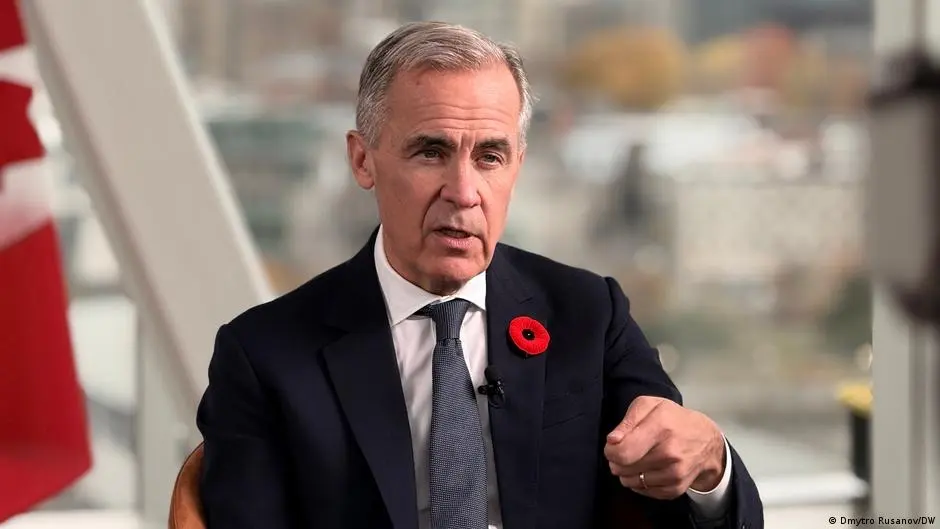
MONTREAL — Faced with persistent economic headwinds and unpredictable trade friction with Washington, Canadian Prime Minister Mark Carney has signaled a decisive strategic shift toward Europe, declaring that Canada must urgently address its heavy reliance on the United States by building domestic capacity and expanding partnerships with traditional international allies.
Speaking in an exclusive interview with DW at the Port of Montreal Tower, Carney reflected on high-level summit discussions with senior European Union leadership aimed at constructing an unprecedented framework for bilateral cooperation. The talks, held in Montreal on Friday, brought together Canadian officials and top Brussels figures to examine the architecture of a proposed "associate membership" for Canada within the European bloc.
Carney’s assessment of Canada’s geopolitical and economic positioning comes amid an increasingly combative relationship with US President Donald Trump, whose tariff threats and aggressive trade renegotiations have cast a shadow over North American commerce. While acknowledging that the United States remains Canada’s single largest trading partner, Carney framed the current moment as a turning point that has exposed the risks of vulnerability to unilateral policy shifts south of the border.
"The lesson we’ve taken, Canadians as a whole, is we’re overdependent on the United States. Too closely connected to the United States," Carney said. "And we need to build our strength here at home and diversify and deepen our partnerships with like-minded countries internationally."
The Montreal summit, conducted against the backdrop of strained transatlantic relations and widespread global economic realignment, underscored Ottawa’s determination to translate long-standing diplomatic affinities with Europe into tangible strategic and industrial integration.
Carney’s Push for ‘Associate Membership’ and Deepened Ties to Brussels
The centerpiece of Friday’s meetings in Montreal was the exploration of a novel diplomatic arrangement dubbed "associate membership," a status championed by European Commission President Ursula von der Leyen. Leading the European delegation alongside European Council President António Costa, von der Leyen arrived in Canada seeking to chart an elevated level of engagement that has not yet been granted to any non-European sovereign state.
The initiative has sparked debate within European capitals. While European Commission leadership has enthusiastically promoted the label to signal a uniquely intimate alliance, the concept has encountered domestic hesitations inside the European Union, most notably from the German government under Chancellor Friedrich Merz, which has voiced skepticism regarding the formal establishment of a new associate tier.
Carney, however, pushed past semantics, firmly aligning Ottawa with von der Leyen’s ambitious terminology and underscoring the substantive intention behind the phrase.
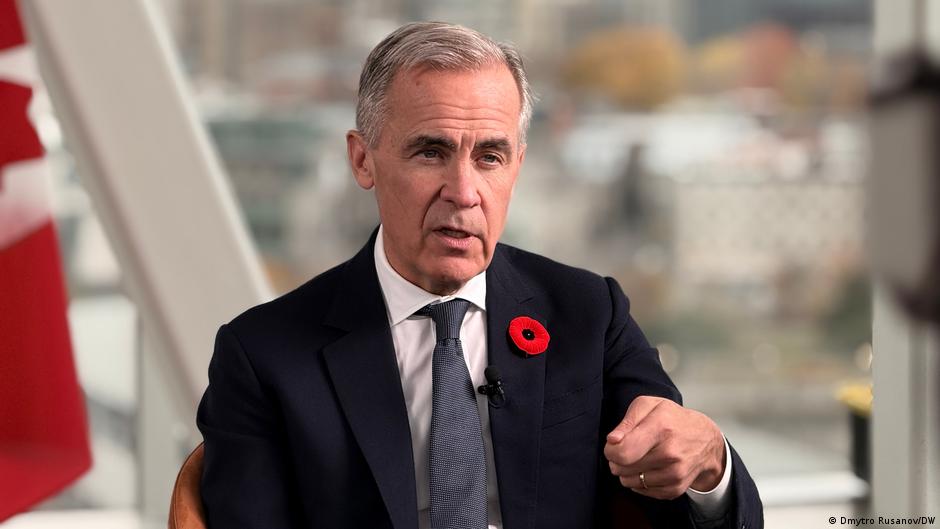
"Well, I think the advantage of what we’re doing is that a few things are absolutely clear, irrespective of the exact terminology that’s used. President von der Leyen uses associated membership. We use associated membership," Carney told DW’s Katharina Kroll.
Clarifying the legal and geographical realities of such an arrangement, Carney addressed the constitutional boundaries that prevent Canada from entering the European Union in a conventional manner.
"What does that mean? It means the closest possible partnership without being a full member of the European Union, because Canada is not in Europe geographically and therefore cannot have accession," Carney explained.
For Canadian policymakers, the concept of associate membership serves as a vehicle to bridge the geographic divide, offering Ottawa access to European decision-making corridors, technological consortia, and strategic planning initiatives without triggering the formal accession criteria that govern full member states. Despite reservations voiced by Merz’s administration in Berlin about creating new legal categories for external partners, Carney made clear that both Ottawa and the leadership in Brussels share a mutual interest in crafting the highest level of institutional integration permissible under European treaties.
From Critical Minerals to AI: The Scope of Future EU-Canada Cooperation
When pressed on whether Ottawa’s overtures to Europe were intended to assemble a new transatlantic coalition that deliberately sidelines Washington, Carney dismissed the notion that Canada was turning its back on North America. Instead, he presented the outreach as a pragmatic diversification strategy designed to complement existing alliances rather than dismantle them.
"We’re both partners of the United States, obviously close partners, alliance partners in NATO. And there are many, many opportunities for cooperation with the United States," Carney said. "But in many cases, there’ll be much deeper cooperation for Canada between Canada and Europe than Canada and the United States."
The prime minister highlighted existing frameworks that already link Canadian and European interests, pointing to the Comprehensive Economic and Trade Agreement (CETA) as a cornerstone of the bilateral relationship. Carney characterized the pact as "one of the most successful free trade agreements in the world," crediting it with lowering non-tariff barriers, opening public procurement, and fostering cross-border commerce across a broad range of industrial sectors.
Beyond commercial trade pacts, Carney emphasized the scientific and educational integration that already connects Canada to European institutions. He singled out Ottawa’s participation in Horizon Europe—the bloc’s multi-billion-euro research and innovation program—alongside the Erasmus+ student exchange scheme, as prime examples of how people-to-people and academic linkages are already flourishing across the Atlantic.

Looking ahead, Carney argued that the evolving global economy necessitates rapid expansion into specialized and forward-looking domains. He identified three specific sectors where Canadian resources and European technological capabilities could generate significant mutual advantages: critical raw materials, artificial intelligence, and space exploration.
Canada’s extensive reserves of critical minerals—essential for electric vehicles, defense manufacturing, and green technologies—offer Europe a dependable alternative to volatile global supply chains. Simultaneously, Carney outlined opportunities for joint development in artificial intelligence governance, high-tech engineering, and aerospace initiatives. In Carney’s view, deep alignment with the European Union in these sectors provides Canada with resilient economic buffers that can withstand bilateral market disruptions in North America.
Navigating Trump, Tariffs, and the Enduring Pull of Washington
Despite the ambitious vision articulated in Montreal, the geopolitical shadow cast by the White House remained an inescapable presence throughout the summit discussions. Relations between Ottawa and Washington have grown increasingly fraught during Trump’s presidency, characterized not only by trade disputes but also by unusual public provocations.
Tensions have been highlighted by rhetorical clashes and public antics, ranging from Trump’s unilateral assertions regarding the renaming of Lake Ontario to provocative, AI-generated videos circulating online that depicted the US president dressed as an ice hockey player physically overpowering Carney.
Yet despite the theatrics and the sharp policy disagreements emanating from Washington, Carney maintained that the fundamental underpinnings of the US-Canada partnership are resilient enough to survive administrative hostility on either side of the border.
"The bonds between Canadians and Americans are longstanding. They’re very strong. And big elements of that will be maintained regardless of the government in Canada, the government in the United States, the combination of the two," Carney stated.
When asked to describe his approach to handling negotiations with Trump, Carney stressed the importance of firmness, discipline, and emotional detachment, advising that talks must always be steered away from rhetoric and grounded in core interests.
His approach, Carney noted, is "to be direct, to be clear, to be absolutely clear about your bottom lines are." He emphasized that while treating the American administration with diplomatic respect remains essential, Canadian negotiators must relentlessly bring "the negotiations back to the core issues."

Nevertheless, Carney acknowledged the economic scale of the challenge confronting Ottawa. Given that the United States accounts for the overwhelming majority of Canadian export revenue, the prime minister conceded that the sheer magnitude of the American economy means it cannot be replaced overnight, regardless of the success of ongoing discussions with European partners.
Addressing concerns that Canada’s visible pursuit of deeper ties with Brussels might antagonize Trump and trigger fresh punitive trade measures, Carney indicated that Ottawa is already accustomed to managing economic friction with the White House.
"We’ve been living with this for some time," Carney remarked regarding the threat of newly imposed tariffs. "There have been many justifications for trade action against Canada that the United States has had. Our view is that all of them are unjustified under our trade agreement."
Carney concluded by underscoring that Canada’s outreach to Europe should not be interpreted in Washington as an act of hostility or isolationism. Instead, he framed the Montreal summit as a proactive effort to confront broader international challenges through collective diplomacy.
"It’s not against somebody. It’s for. It’s a positive act," Carney said, reiterating that the pursuit of an associate partnership with the European Union represents a constructive effort to safeguard mutual interests, stabilize democratic supply lines, and address pressing global crises alongside trusted partners.