
J.C. Penney experienced a notably challenging second quarter relative to its peers in the department store sector, underscoring broader competitive pressures as the retail landscape continues to evolve. While competitors such as Dillard’s and Macy’s managed to secure small top-line gains during the period, and Kohl’s limited its sales decline to less than 1%, J.C. Penney’s performance lagged behind the broader market. For the first half of the year, the department store chain’s total net sales dropped by 6.5%, highlighting an uphill battle to capture consumer wallet share in an environment where overall market segments actually expanded.
The contrast between J.C. Penney’s trajectory and that of its industry counterparts has drawn scrutiny from retail analysts. Neil Saunders, managing director at GlobalData, pointed out in an email commentary that the sales decline over the previous year is concerning, particularly because it places J.C. Penney near the bottom of the retail league table. Given that the market, even within the traditional department store category, experienced growth during the quarter, J.C. Penney’s sales dip signifies a serious loss of market share rather than a reflection of broader macroeconomic contraction.
Despite creative marketing initiatives and noticeable, tangible improvements within physical stores, a distinct lack of momentum has persisted. Company leadership acknowledged that several internal factors hampered apparel sales during the period, including lower unit inventory levels, recurring in-stock gaps, and softer consumer demand across seasonal categories. These supply and inventory constraints made it difficult to capitalize fully on seasonal shopping trends, creating friction at the checkout counter and leaving potential sales unrealized.
Nevertheless, the retailer’s second-quarter report was not without notable bright spots, demonstrating that certain segments of the business are responding well to strategic interventions. Active apparel sales emerged as a standout category, growing approximately 12% year over year. This growth was propelled by strong performances from Nike, team sports merchandise, and select Adidas footwear, with GlobalData specifically highlighting effective merchandising surrounding the World Cup as a key driver of engagement and conversion.
Other departments also delivered robust gains, proving that targeted category management can yield positive results. Furniture sales surged by 41%, jewelry increased by 9%, and the salon division posted a 7% improvement, benefiting from a combination of retail product sales and in-salon services. Furthermore, J.C. Penney appears to have successfully navigated the operational fallout from the termination of its high-profile Sephora partnership nearly four years ago.
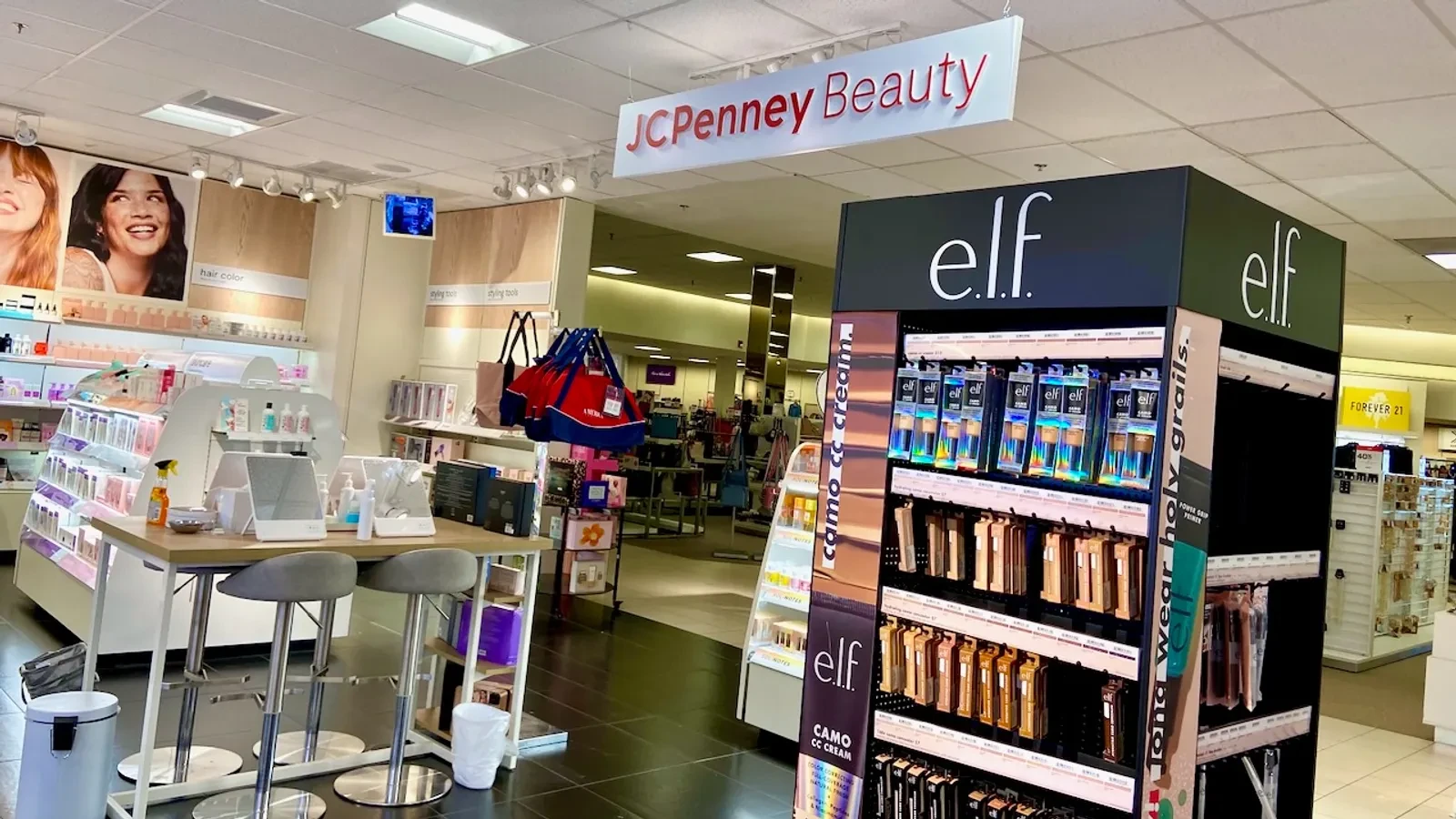
When Sephora departed J.C. Penney to launch shop-in-shops inside Kohl’s—where those partnerships have paradoxically proven to be a drag on sales in recent quarters—J.C. Penney was forced to rethink its entire beauty strategy. In the most recent quarter, the retailer reported that beauty sales received a welcome boost from skincare products and new color cosmetic launches, including lines from Milani and various K-beauty brands. Saunders noted that J.C. Penney has been quite thoughtful about creating a modern beauty proposition that effectively replaces the void left by Sephora.
The overarching challenge, however, remains the holistic nature of department store operations. For a traditional department store model to function optimally and generate sustainable profits, nearly all of its constituent departments need to operate efficiently at the same time. Because J.C. Penney is currently not firing on all of these cylinders, the business remains under considerable financial and operational pressure.
Moreover, while a struggling retail chain might typically consider closing underperforming store locations to prune its portfolio and protect margins, that outcome is less likely for J.C. Penney. The likelihood of widespread store closures is mitigated by the unique corporate structure governing the retailer, specifically the fact that two of its primary landlords are also its corporate owners. This real estate alignment provides a stabilizing cushion that separates J.C. Penney’s current situation from the fate of other historical department store liquidations.
In an effort to diversify its revenue streams and capture digital growth, the department store launched a new online marketplace late in the quarter, which has reportedly been outperforming expectations so far. This newly established J.C. Penney Marketplace is anticipated to contribute meaningful incremental growth to the company’s e-commerce operations over the long term, offering shoppers an expanded assortment without requiring the traditional inventory holding costs associated with brick-and-mortar retail.
Looking ahead to the critical holiday shopping season, J.C. Penney outlined plans to lean into its traditional strengths while remaining adaptable to consumer sentiment. The company stated that it will continue its value-focused pricing activities, center its holiday marketing presentations squarely on clear value and family moments, and closely monitor the broader consumer environment and customer response. Management intends to make strategic adjustments as necessary to navigate shifting economic pressures.
More broadly, the retailer benefits from its integration into Catalyst Brands, the operational and financial entity formed when J.C. Penney joined forces with Brooks Brothers operator Sparc Group. This alignment provides vital financial backing and operational support, ensuring a long-term strategic vision that shields the company from short-term market volatility.
Saunders emphasized that J.C. Penney remains financially stable and, with the steadfast backing of Catalyst Brands and its investors, the company is fundamentally secure. He added that, to be fair to the enterprise, it is not being mismanaged or run into the ground in the manner of historical liquidations like Sears. On the contrary, there is active investment, genuine effort, and a concerted strategic focus dedicated to rebuilding and modernizing the historic retailer for the modern consumer.