
While tiredness serves as his brand, it is fundamentally a conversation starter. It functions as a diagnostic tool to assess and unpack the cumulative strain that modern family life, relationships, and professional obligations place on individuals. Gustin’s social media feed operates as a sort of sacred space, characterized by a melancholy confessional tone. In posts featuring stark statements like, "I’m constantly thinking about what I’m leaving behind," he tackles familiar sentiments that people rarely dare to confront directly. In this sense, his digital presence evokes a nearly dystopian atmosphere, reminiscent of Lois Lowry’s The Giver, where Gustin acts almost as a Receiver of Memory, absorbing the invisible pains of society.
Yet, out of that darkness emerges Gustin the motivational speaker, coach, and teacher. By confronting difficult emotions, he consistently uncovers the light, frequently concluding his reflections with a grounding mantra: "Keep showing up."
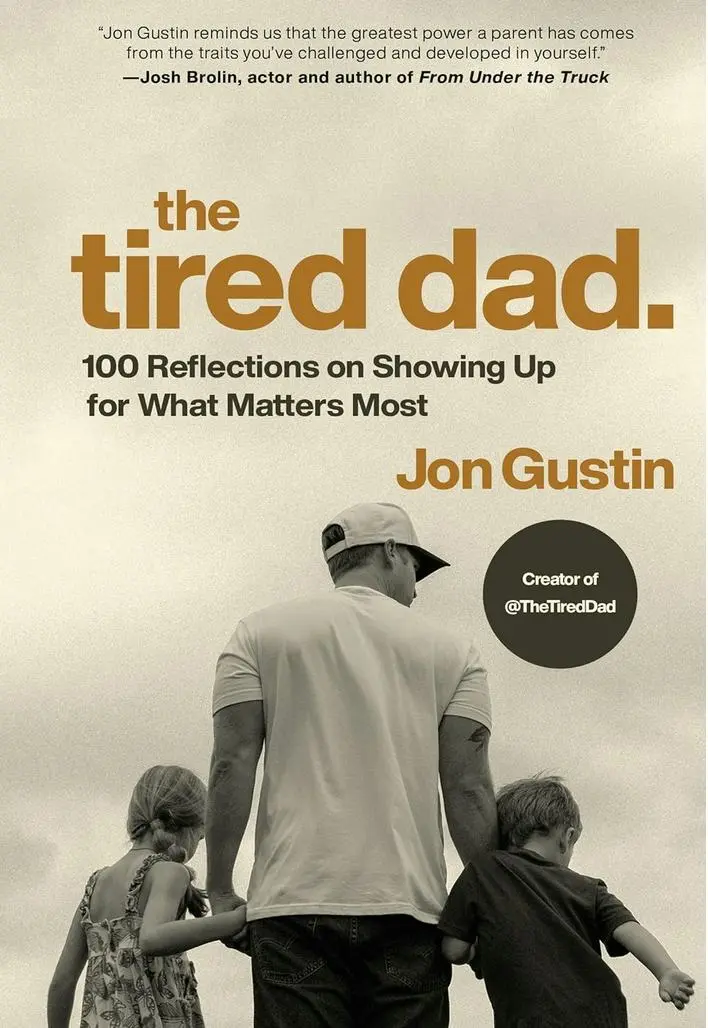
Gustin has now translated this digital philosophy into print with the release of his new book, The Tired Dad: 100 Reflections on Showing Up for What Matters Most. The volume offers fleshed-out contemplations, personal histories, and candid advice regarding masculinity, sobriety, marriage, fatherhood, and vulnerability.
Reflecting on his journey shortly before his book’s release, Gustin approached the conversation without the typical promotional energy of an influencer, leaning instead into a signature sincerity that anchors his entire practice. "Vulnerability is freedom," Gustin noted early in the discussion. "And not only is it freedom for yourself to be vulnerable, but it’s freedom for other people because they feel less alone."
Understanding Gustin’s perspective requires looking back at his own upbringing and the generational blueprint handed down to him. His father entered the Marine Corps at the age of 17, with his parents signing his enlistment papers, and was deployed to Vietnam by age 18, spending over two years in the conflict. That military background instilled a deep sense of structure and emotional restraint—an environment where men rarely displayed vulnerability.
Despite this emotional reserve, Gustin’s father taught him the value of character, a lesson passed down from Gustin’s grandfather, a World War II Navy veteran. True character, his father emphasized, meant doing the right thing even when no one was looking and following through on commitments. That consistency in action formed the foundation of Gustin’s understanding of fatherhood.
In his book, Gustin also pays tribute to his grandfather, who passed away at the age of 99 just as the manuscript was being written. Toward the end of his life, his grandfather shed much of his generational emotional armor, becoming remarkably expressive and unfiltered. He spoke openly about his profound love for his wife in a way that felt like a storybook romance. Full of wisdom, a voracious reader who cared little for material possessions, his grandfather prioritized human character and meaningful connections above all else. After retirement, he and his wife traveled extensively to visit their expansive family and famously donated so much of their wealth to charitable causes that government tax agencies routinely audited them, unable to fathom such radical generosity.
Addressing the broader societal issue of paternal absenteeism, Gustin acknowledges that fathers play a vital role in family dynamics. However, he observes that many friends who endured difficult or nonexistent relationships with their own fathers have channeled that pain into becoming exceptional parents. They use their experiences as motivation to break generational cycles of trauma and show up for their families in unprecedented ways.
Although Gustin admits he is not a perfect father and made numerous mistakes in his youth, he embraces his role as an imperfect guide. By modeling vulnerability, he hopes to show others that no one has life completely figured out. The objective is not perfection, but a lifelong journey of continuous progression, leading with wisdom and intentionality.
This emphasis on openness naturally intersects with discussions surrounding stoicism, a philosophy historically associated with masculine emotional repression that is currently experiencing a cultural resurgence among those seeking resilience and perseverance. Gustin notes that his perspective on stoicism shifted after engaging with modern thinkers like Ryan Holiday. He came to realize that true stoicism accommodates vulnerability—that acknowledging defeat and admitting a lack of answers does not equal weakness.
The pressure for men to project an infallible facade often stems from an underlying desire to fit into rigid definitions of strength, whether through warrior archetypes or modern hyper-masculine subcultures. Reflecting on the extreme corners of the modern manosphere, Gustin asserts that such movements are born from insecurity and a lack of true identity. Having experimented with hyper-masculine attitudes in his early twenties, he recognizes how easily impressionable young men fall into the trap of overcompensation, masking deep-seated insecurities with ego and superficial markers of success.
Rather than chasing status symbols, wealth, or power—pursuits he describes as ultimately empty—Gustin views time as life’s greatest currency. True strength, he argues, lies in self-awareness and abandoning the performative facade of invulnerability.
Rejecting the title of expert, Gustin maintains that claiming expertise implies a final destination, whereas human growth is a continuous process of learning and adapting. This philosophy heavily informs his view on modern relationships, particularly the immense strain that children introduce to a marriage. When the going gets tough, Gustin stresses the importance of effective communication and the elimination of the ego. Successful partnerships require viewing one’s spouse as a teammate rather than an adversary, engaging in constructive problem-solving rather than defensive reactions, and focusing on personal accountability rather than attempting to fix the other person.
As a father who frequently operates in public parenting spaces, Gustin advocates for a fundamental shift in how society views paternal responsibilities. He pushes men to move beyond the antiquated notion that a father’s sole obligation is financial provision, insisting that the role of a dad is paramount and requires active, daily engagement.
Reflecting on the challenges of raising a family without nearby extended family support, Gustin admits to past moments of resentment toward those with a built-in "village." In hindsight, however, he views those exhausting early years as a blessing that forged deeper bonds with his children. The countless memories built through active parenting and the willingness to sacrifice professional convenience for family needs have defined his journey.
That relentless daily commitment—balancing career demands with active fatherhood until the day is done—remains the true badge of honor worn by the tired dad.