
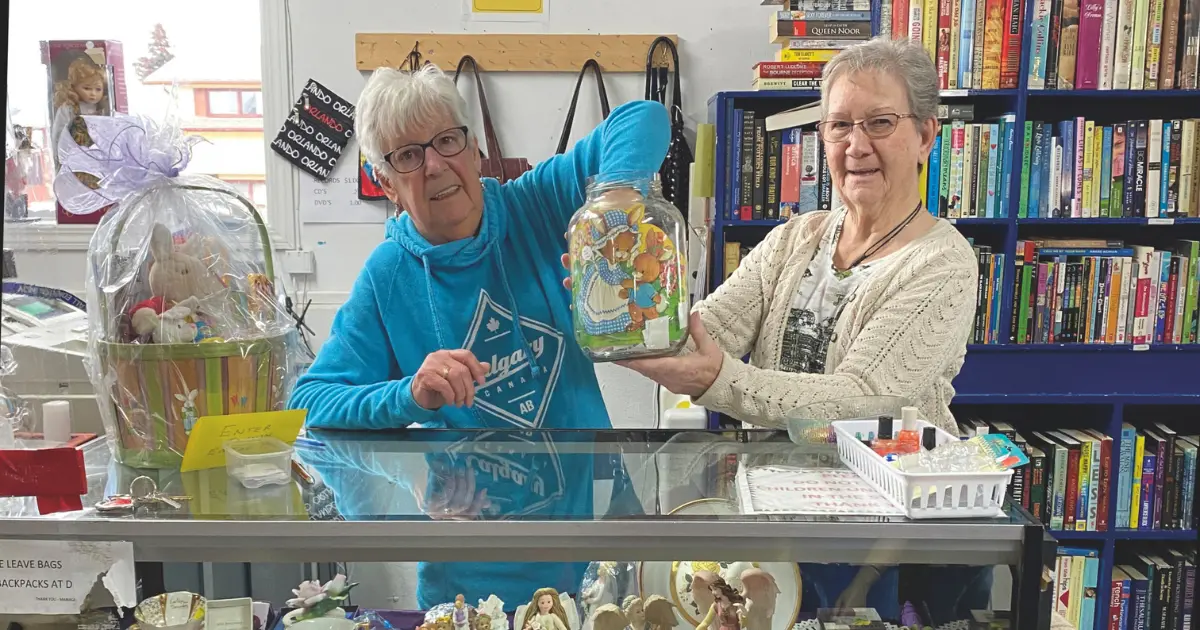
When Grande Cache United first started holding monthly garage sales in its basement more than a decade ago, nobody expected a huge turnout. Nestled in the mountain community of Grande Cache, Alberta—a town of just over 3,000 residents—the small congregation was simply looking for a practical way to engage with its neighbours, find a new use for donated items, and raise a modest amount of money to support its day-to-day operations.
The idea was straightforward and grounded in community building: sell donated goods, bring people into the church, and generate financial support. Yet, what began as a humble experiment in church fundraising has gradually evolved into a permanent fixture of local life. Today, the project stands as one of the church’s most visible and impactful ministries, extending its active presence well beyond Sunday morning worship and weaving itself deeply into the social fabric of the isolated mountain town.
"We didn’t think it’d work," says Carol Burrill, the manager of the Grande Cache United thrift store, reflecting on the initiative’s hesitant beginnings. Skepticism was common in the early days, she recalls, noting that visiting clergy members were often doubtful about the town’s potential to sustain such an effort. "One minister that came in said, ‘You’ll never get enough donations in this small town.’"
Despite those early doubts, the monthly sales proved to be remarkably successful, drawing consistent crowds and generating more inventory and interest than anticipated. Buoyed by this unexpected enthusiasm, the congregation ultimately made the decision to transition from occasional garage sales to setting up a permanent storefront inside the church building. "It’s just grown so much. It’s unbelievable," Burrill says.
Operating a permanent thrift store in a small community requires steady dedication, and volunteers work continuously behind the scenes, sorting through contributions and adding new donations to the inventory on a regular basis. While space limitations mean the store is unable to accept large furniture items, the shelves and racks are consistently stocked with a wide array of everyday necessities. Visitors can browse through clothing, housewares, books, toys, home décor, and other essential items carefully curated to meet the practical needs of local residents.
Over the years, these inventory items have taken on a heightened significance, becoming especially vital for newcomers arriving in Grande Cache to start a new chapter of their lives. This includes recent immigrants and families moving to the region who are trying to establish households from scratch with very few financial resources.
"A lot of new people come in and get a lot of housewares because they come in with nothing," Burrill explains, describing the foundational role the store plays during transitions. "Mainly stuff to get by on."
Beyond serving as a retail outlet for affordable goods, the store functions organically as a grassroots outreach program. For many who walk through the doors, the space offers much more than shopping; it provides a reliable source of human connection and emergency support. Burrill recalls numerous instances where the physical items on the shelves became secondary to the immediate, human-centered care provided by the volunteers.
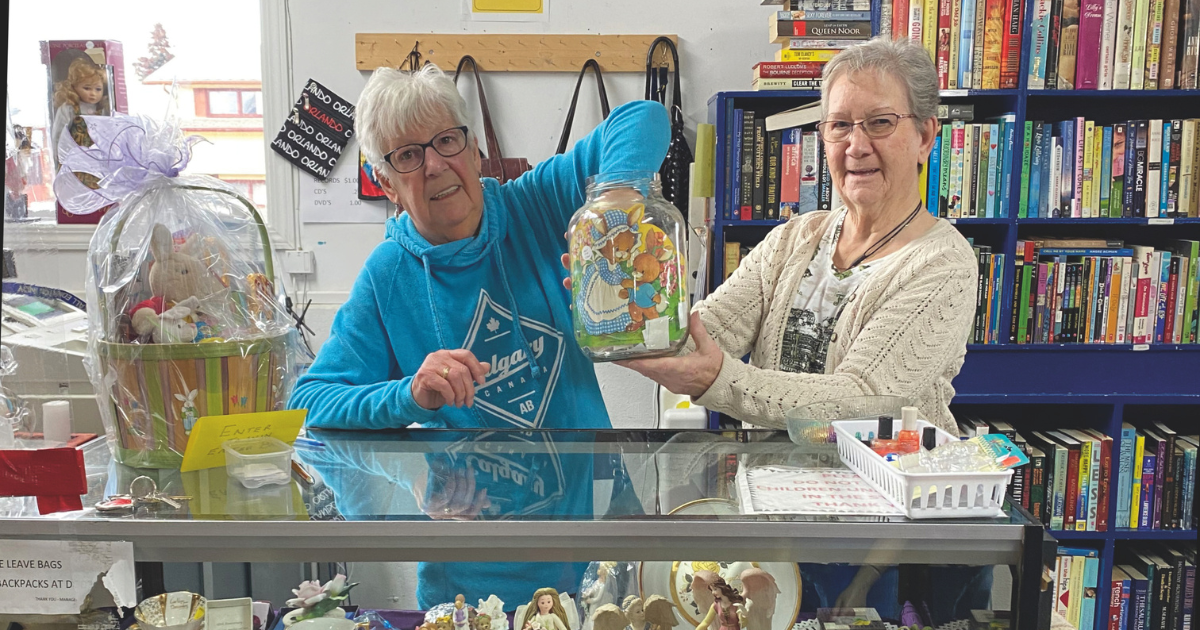
She remembers helping a couple who arrived at the store facing a severe crisis, lacking both appropriate warm clothing for the harsh mountain climate and a secure place to stay. Rather than simply offering items from the racks, the volunteers stepped in to provide immediate physical relief by giving them warm clothing, followed by active intervention to connect them with a local organization capable of arranging temporary accommodation and safe transportation.
For other visitors, the store acts as a welcoming social hub where transactions often give way to meaningful conversations. Burrill notes that some customers drop by primarily to browse the merchandise, but linger long after they are finished shopping simply to enjoy the atmosphere and company. She recalls one regular customer who, upon finishing her look around the store, lingered near the volunteers instead of heading straight for the exit.
"She said, ‘Well, I’m ready to go, but I just like to stay and listen to you girls talk… You’re always so funny,’" Burrill recalls with a smile, illustrating the warm, relational environment that has taken root inside the church basement.
This vibrant atmosphere has naturally attracted a diverse community of participants that extends far beyond the membership rolls of the local United Church congregation. The inclusive culture of the store is reflected directly in its volunteer base. Out of the twelve regular volunteers who keep the operation running smoothly, only four belong to Grande Cache United. The remaining eight volunteers come from entirely different backgrounds, representing other local churches and a mosaic of international origins, including China, Japan, Ukraine, Poland, and India.
"It’s a real mixer," Burrill says, emphasizing the mutual cultural exchange that happens among the crew. "We learn lots of things from them, about their countries and their life."
As the storefront has expanded its operational capacity and local footprint, it has also developed into a reliable source of financial support for the wider regional community during times of crisis and need. Demonstrating a commitment to solidarity beyond Grande Cache, the thrift store stepped up following the devastating Jasper wildfire in 2024, dedicating an entire month of its sales revenue directly to regional relief and recovery efforts. Closer to home, the store has consistently directed financial contributions toward the community’s four local schools. These educational partnerships have created a reciprocal relationship, frequently introducing more local families to the store and deepening its integration with families across the municipality.
For the congregation itself, the thrift store has become much more than a community service project; it has transformed into an essential mechanism for institutional survival. In an era when many small rural congregations struggle with declining attendance and financial sustainability, the retail ministry has provided a lifeline.
"It keeps our church going now," Burrill says, summarizing the vital economic and social role the project plays for the faithful few who maintain it. "We’re very fortunate that way."